

From
StayCurrentMD
Ovarian Tumors Video Podcast
With Dr. Fred Rescorla · hosted by Dr. Sophia Abdullahi & Dr. Todd Ponsky
Educational content from recorded physician discussions — not medical advice. Talk to your (or your child's) care team about your situation.
Only a few other public items share this diagnosis — go deeper there →
Video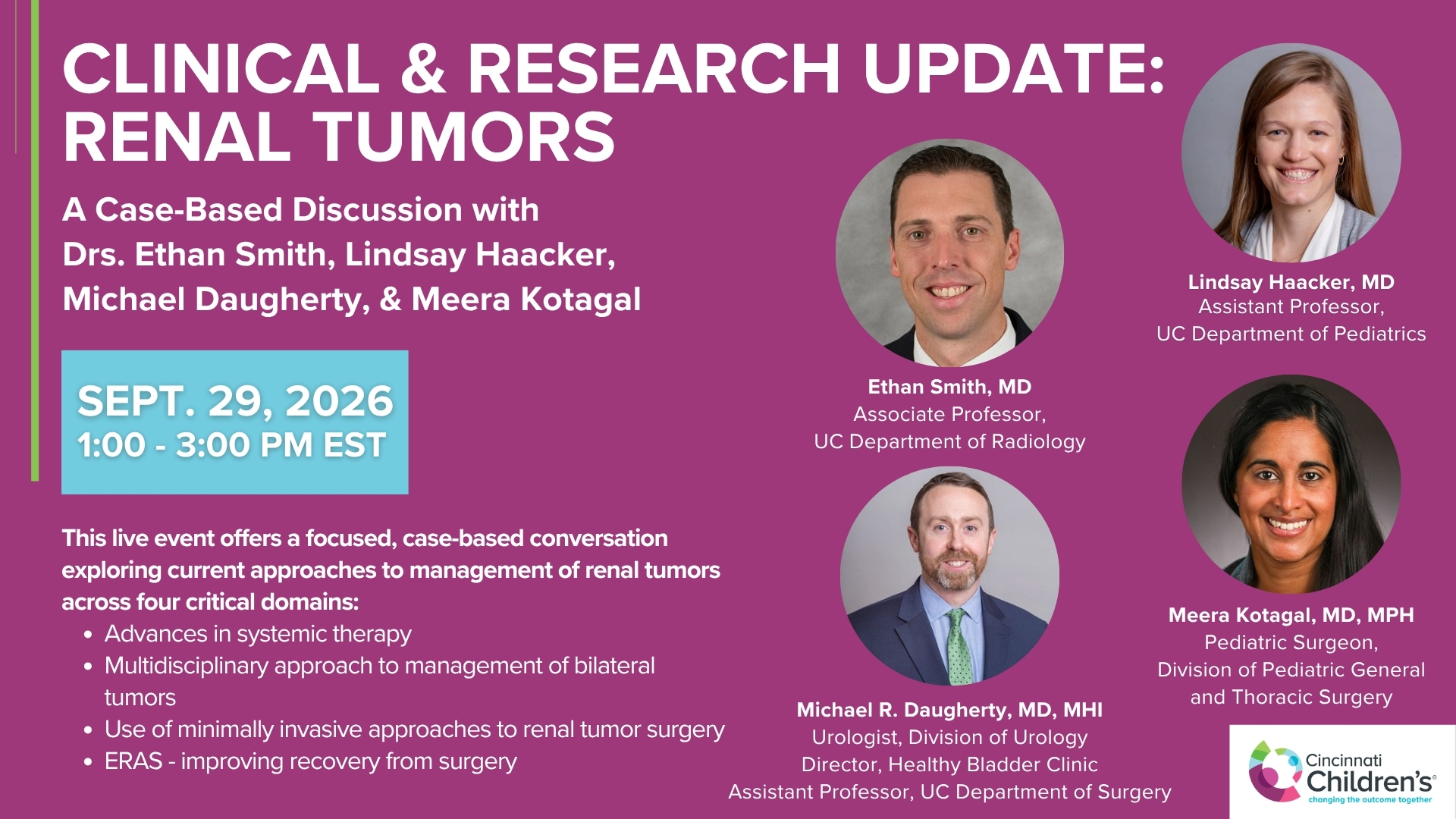
Clinical & Research Update: Renal Tumors with Drs. Ethan Smith, Lindsay Haacker, Michael Daugherty, and Meera Kotagal
71 min · Published Sep 2026
Video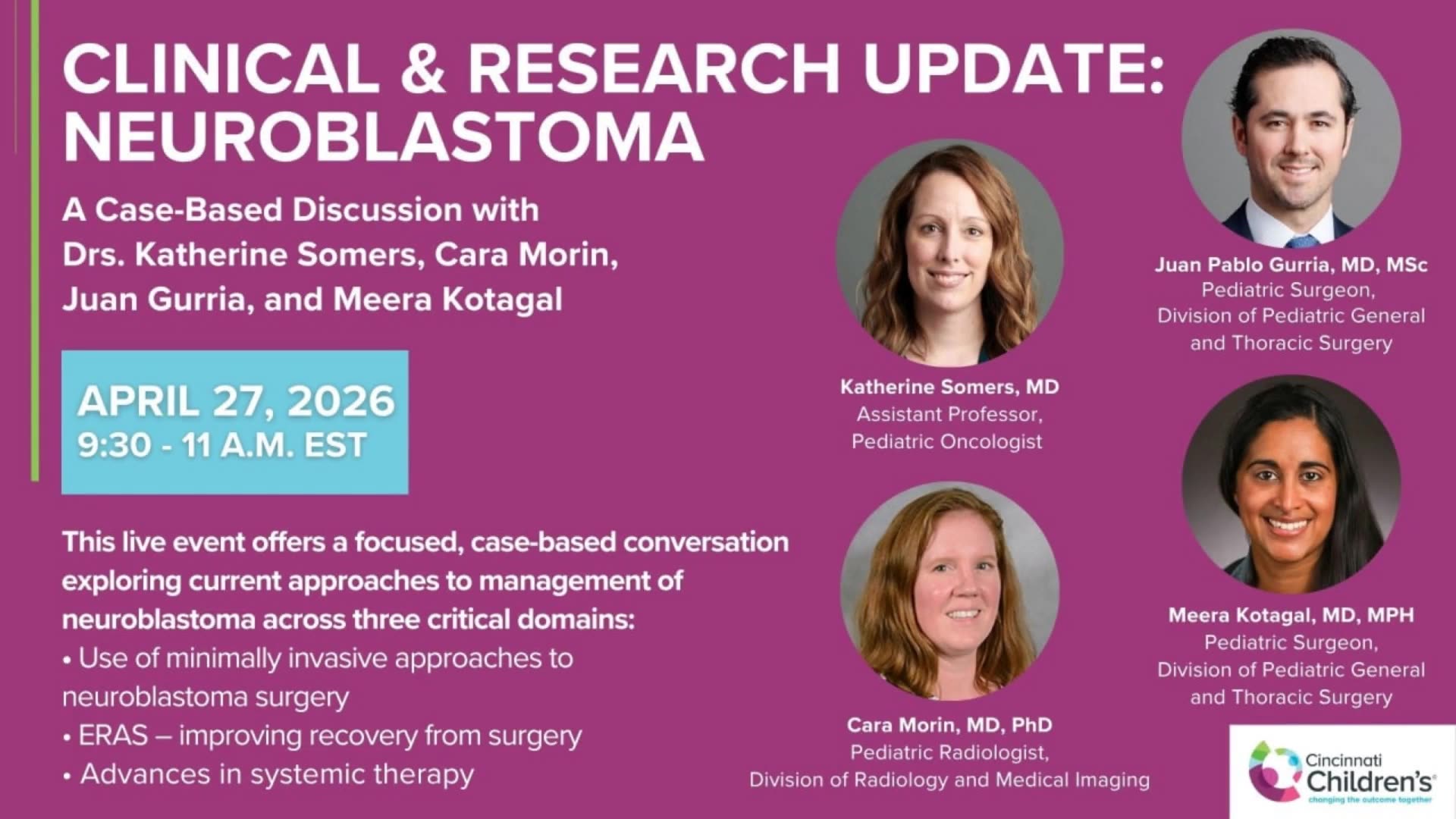
Clinical & Research Update: Neuroblastoma with Drs. Katherine Somers, Cara Morin, Juan Gurria, and Meera Kotagal
67 min · Published Sep 2026
Video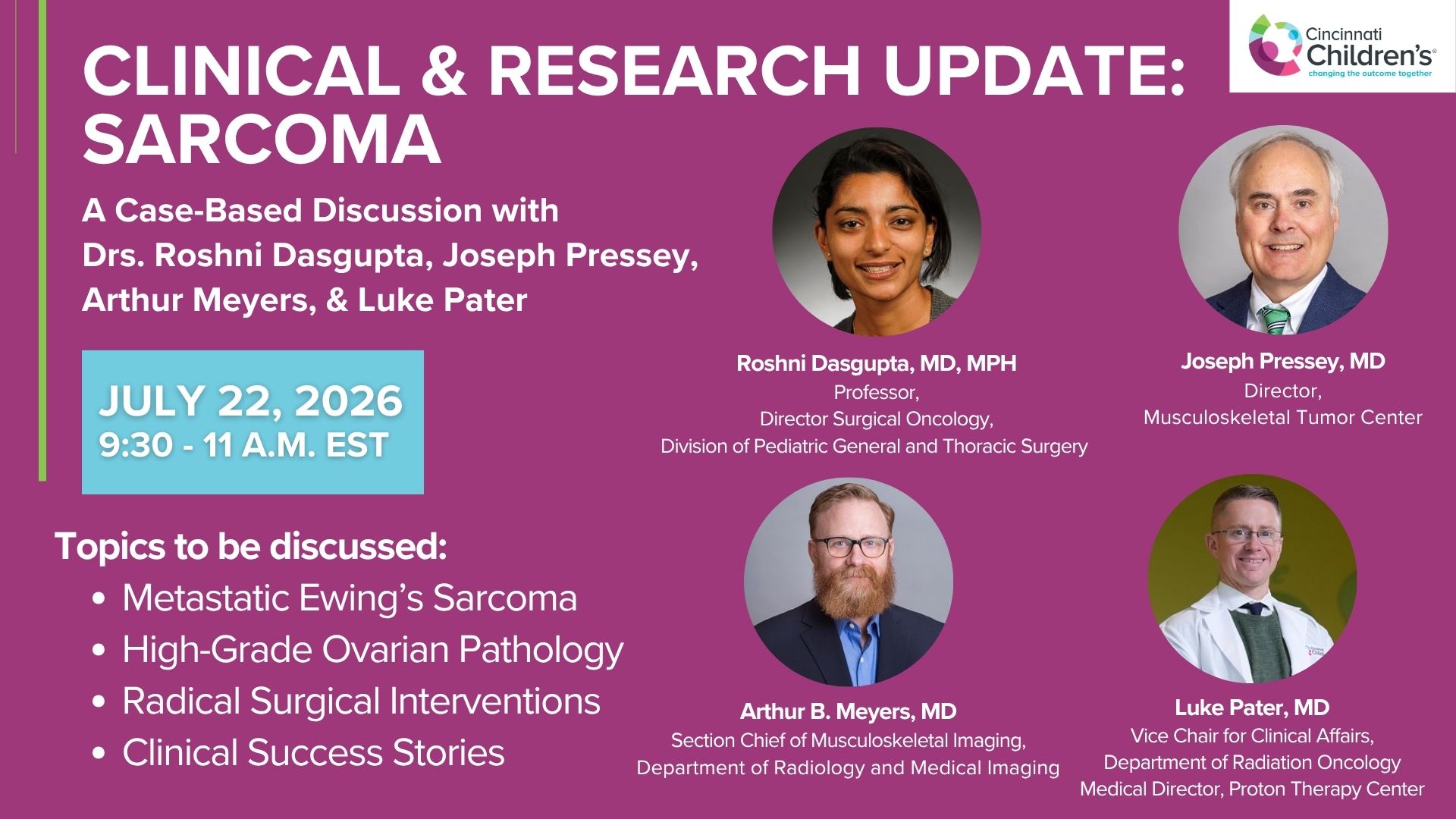
Clinical & Research Update: Sarcoma w/ Drs. Roshni Dasgupta, Joseph Pressey, Arthur Meyer, Luke Pater
66 min · Published Sep 2026
Video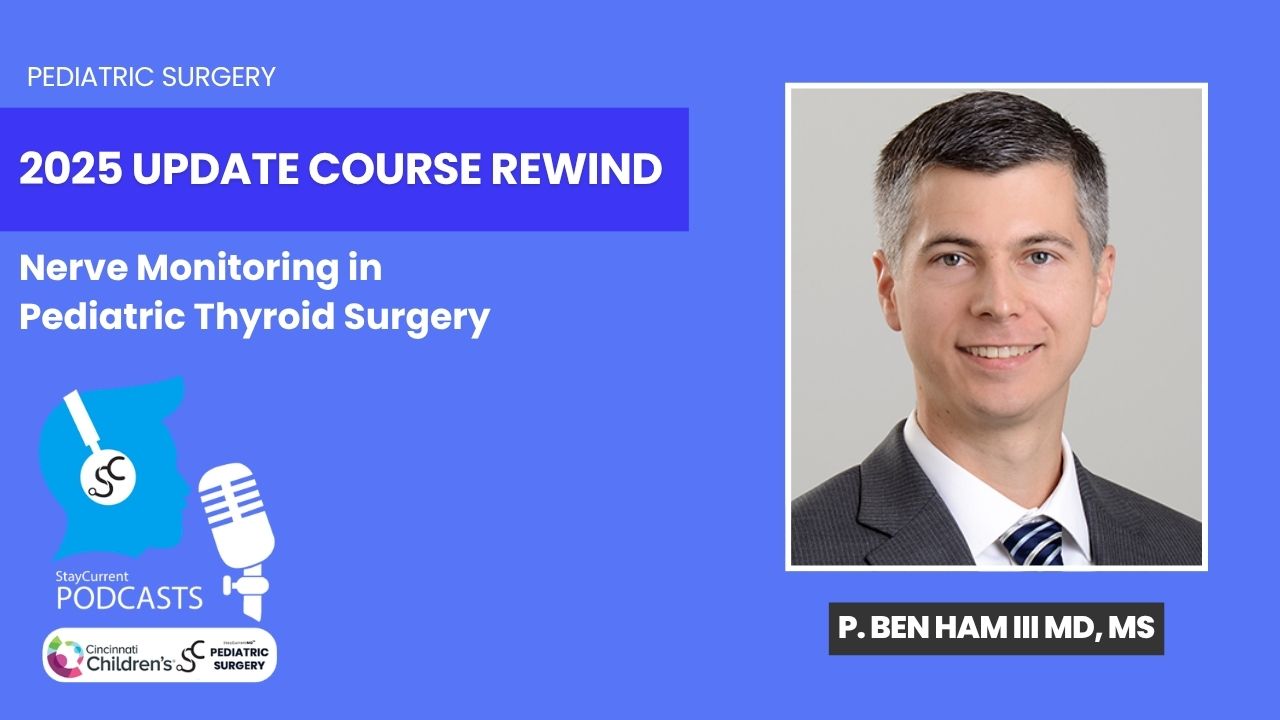
Update Course Rewind 2025: Nerve Monitoring in Pediatric Thyroid Surgery
6 min · Published Jul 2026
Video
Journal of Pediatric Surgery Article Review: June 2023, AAP Issue
Todd Ponsky · 13 min · Published Jul 2026
Video
Pediatric Surgical Oncology Research Collaborative (PSORC): Studying Rare Pediatric Tumors
56 s · Published May 2026
Video
Intestinal Atresia Types Explained: Grossfeld Classification for Pediatric Surgery
1 min · Published Sep 2026
Video
Derivation and validation of the Pediatric Community-Acquired Pneumonia Severity (PedCAPS) score: A prospective cohort study
50 s · Published Sep 2026
Video
FETO for Late-Diagnosed Severe Congenital Diaphragmatic Hernia (CDH) at Cincinnati Children's with Dr. Beth Rymeski
4 min · Published Sep 2026
Video
Severe Congenital Diaphragmatic Hernia (CDH) Case: FETO Management & Unexpected Findings with Dr. Beth Rymeski
3 min · Published Sep 2026
Video
Fetoscopic Endoluminal Tracheal Occlusion (FETO) Procedure: Step-by-Step Guide with Dr. Beth Rymeski
4 min · Published Sep 2026
Video
Choledochal Cyst Types Explained: Pediatric Surgery Fundamentals
1 min · Published Sep 2026
What the experts said
Alpha-fetoprotein (AFP) is the primary tumor marker for pediatric ovarian tumors; HCG is unlikely to be elevated in young children but is checked routinely
Predominantly cystic ovarian masses have approximately 3-4% malignancy risk
Heterogeneous ovarian masses have 15-20% malignancy rate
Solid ovarian masses have over 25% malignancy risk
Approximately 10% or less of all pediatric ovarian tumors are malignant
Among malignant pediatric ovarian tumors, germ cell tumors predominate at greater than 50%, possibly up to 80% in some series
Among benign pediatric ovarian tumors, mature teratoma comprises at least half of cases
Immature teratoma accounts for approximately 10-15% of benign ovarian tumors
For ovarian tumor surgery, six oncologic steps are recommended: peritoneal washings, tumor removal, contralateral ovary inspection (biopsy only if abnormal), omental assessment (remove if adherent to tumor), peritoneal cavity assessment for implants, and retroperitoneal lymph node palpation (remove only if enlarged)
Contralateral ovarian biopsy is now recommended only if the ovary appears abnormal, not routinely
For large predominantly cystic ovarian masses with normal markers, the malignancy risk is much less than 1%
Chest CT is required for staging of malignant ovarian tumors and should be obtained preoperatively
For malignant ovarian tumors amenable to resection, primary surgical resection is preferred even if metastases are present
Fallopian tube preservation during oophorectomy is optional; the tube should be preserved if not encased by tumor but can be removed if adherent or difficult to separate
Peritoneal washings are the main factor that can upstage an otherwise apparent stage I tumor to a higher stage
Pediatric surgeons manage primarily germ cell tumors (chemo-responsive) while gynecologic oncologists manage primarily epithelial tumors, explaining differences in surgical approach including lymph node dissection
Omental biopsy is not routine; omentum should be removed only if adherent to tumor or if abnormal on palpation
Radiation therapy has no role in treatment of pediatric germ cell ovarian tumors
Ovarian cryopreservation is not currently standard practice but may be considered in the future for patients receiving chemotherapy
For acute ovarian torsion with unclear mass characteristics, detorsion can be performed and the ovary left in place with delayed resection after obtaining markers and better imaging
A one-week delay for re-operation after detorsion makes no oncologic difference and allows for proper workup and ovarian-preserving surgery
Stage I malignant germ cell ovarian tumors have 96% overall survival
Stage I germ cell tumors managed with observation alone have approximately 50% relapse rate
Salvage rate for relapsed stage I germ cell tumors is nearly 100%
Stage II and III germ cell ovarian tumors have 97% survival with chemotherapy
Stage IV germ cell ovarian tumors have approximately 80% overall survival
Stage IV germ cell tumors in patients under 11 years have 92% survival
Stage IV germ cell tumors in patients over 11 years have 60% survival
Standard chemotherapy for intermediate-risk germ cell tumors is platinum, etoposide, and bleomycin
Metastatic sites in stage IV germ cell tumors do not require biopsy if clearly metastatic on imaging; they are followed with imaging
Black, torsed ovaries should not be removed; detorsion alone is appropriate
Ovarian-preserving procedures (partial oophorectomy) are appropriate for cystic or mixed cystic-solid masses; oophorectomy is reserved for solid tumors
In a study of 20 stage III ovarian tumors, 5 were stage III only because peritoneal fluid was positive for malignant cells; without checking washings they would have been considered stage I with likely higher recurrence
Pre-menarchal girls have a higher risk of ovarian torsion compared to post-menarchal adolescents
Oophoropexy is recommended for pre-menarchal girls with ovarian torsion or for patients with recurrent torsion of the same ovary