

Educational content from recorded physician discussions — not medical advice. Talk to your (or your child's) care team about your situation.
Podcast
The invention of the PEG tube with Dr. Jeffrey Ponsky
Jeffrey Ponsky · 33 min · Published Jul 2026
Podcast
Update Course Rewind: Pediatric Biliary Stones - Preventing Gallstone Pancreatitis 2024
Jeffrey Ponsky · 3 min · Published Aug 2025
Video
ACS Icons in Surgery | Jeffrey L. Ponsky, MD, FACS
Jeffrey Ponsky · 20 min · Published Jul 2024
Video
SAGES Stories Episode 11 – Jeff Ponsky, MD
Jeffrey Ponsky · 61 min · Published Jun 2024
Video
From Idea to Ubiquity - the PEG Journey
Jeffrey Ponsky · Published Nov 2023
Podcast
Innovations in Surgery: PEG Tube
Jeffrey Ponsky · Published Aug 2023
Video
Intestinal Atresia Types Explained: Grossfeld Classification for Pediatric Surgery
1 min · Published Sep 2026
Video
Derivation and validation of the Pediatric Community-Acquired Pneumonia Severity (PedCAPS) score: A prospective cohort study
50 s · Published Sep 2026
Video
FETO for Late-Diagnosed Severe Congenital Diaphragmatic Hernia (CDH) at Cincinnati Children's with Dr. Beth Rymeski
4 min · Published Sep 2026
Video
Severe Congenital Diaphragmatic Hernia (CDH) Case: FETO Management & Unexpected Findings with Dr. Beth Rymeski
3 min · Published Sep 2026
Video
Fetoscopic Endoluminal Tracheal Occlusion (FETO) Procedure: Step-by-Step Guide with Dr. Beth Rymeski
4 min · Published Sep 2026
Video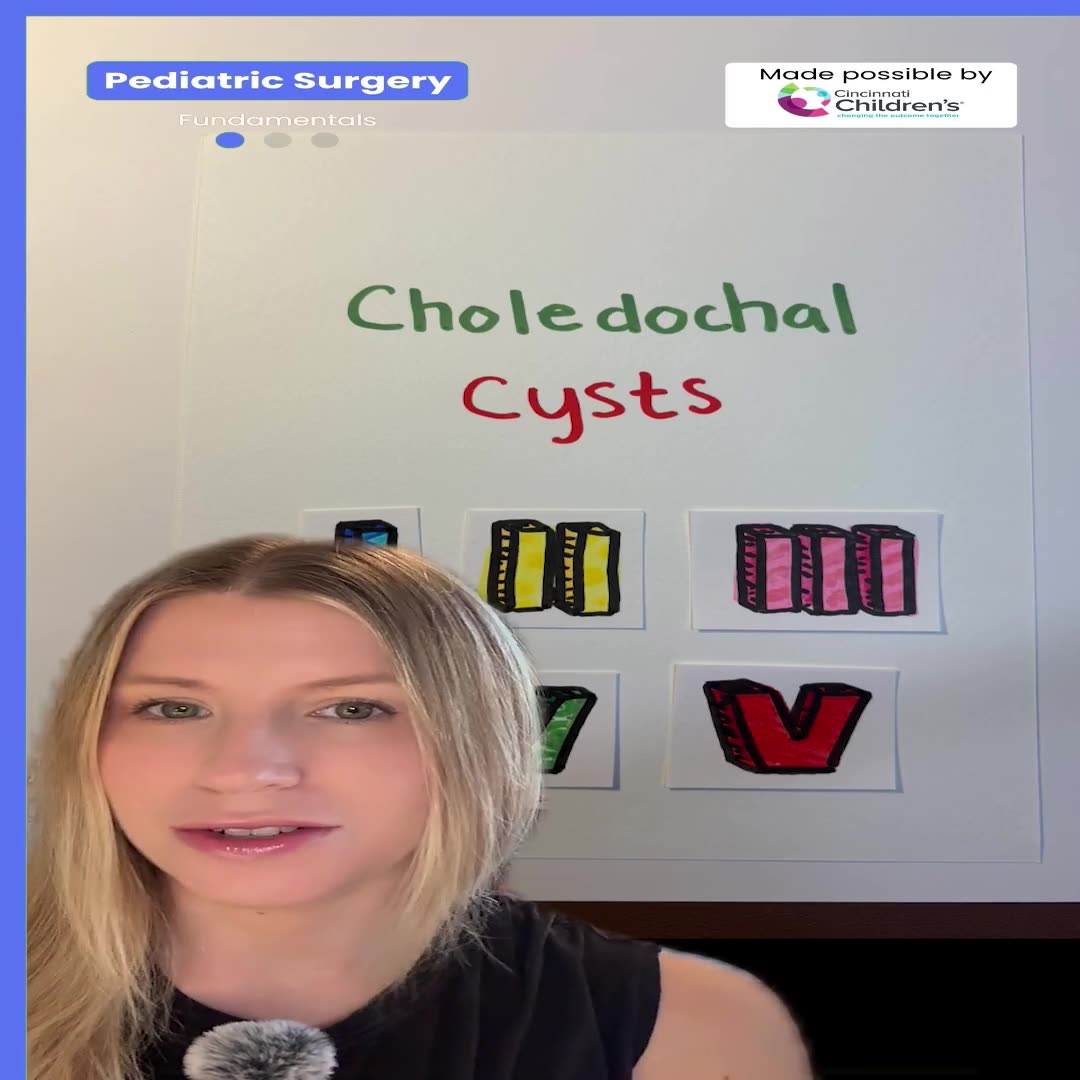
Choledochal Cyst Types Explained: Pediatric Surgery Fundamentals
1 min · Published Sep 2026
What the experts said
During surgical residency in the 1970s, residents were on call 36 hours on and 12 hours off for 5 years.
In 1974, the chairman of gastroenterology at University Hospital refused to allow a surgical resident to train in endoscopy, stating surgeons would not touch endoscopes at the institution.
Dr. Ponsky completed approximately 500 endoscopy cases during a 5-6 month training period in Canton, Ohio.
Upon returning from endoscopy training, the chief of gastroenterology again refused to allow Dr. Ponsky to train residents or perform endoscopy at the institution.
Dr. Ponsky's mother-in-law purchased an endoscope as a Hanukkah present, which he stored in his car trunk along with a light source.
By the end of residency, Dr. Ponsky was performing most of the private endoscopies at University Hospital.
Dr. Michael Gauderer, a pediatric surgeon, observed transillumination through an infant's abdominal wall during a procedure and proposed developing a simpler gastrostomy method.
The PEG tube device was constructed using a modified rubber pezzer (mushroom) catheter with one end modified to act as a dilator, and a medicut IV catheter to puncture the abdominal wall.
In 1976, University Hospital hired Dr. Ponsky to faculty and allowed him to start a section for endoscopy.
There was no pediatric gastroenterology specialty at the time Dr. Ponsky started his endoscopy section.
The first PEG tube procedure was performed on a neonate in May 1979.
The PEG tube technique was published in the Journal of Pediatric Surgery in 1980.
The 1980 Journal of Pediatric Surgery PEG tube article is one of the most cited articles ever published in that journal.
Hundreds of thousands of PEG tubes are placed annually in the United States alone.
One of Dr. Ponsky's original 1979 neonatal PEG patients, now 41 years old, continues to use his gastrostomy tube for feeding.