

From
StayCurrentMD
Journal of Pediatric Surgery Article Review: December 2023
With Dr. Whit Holcomb & Dr. David Diamond & Dr. Benjamin Zendejas & Dr. Ursula Adams · hosted by Dr. Em Gootee & Dr. Cecilia Gigena
Part of
Esophageal Atresia 77 items
Educational content from recorded physician discussions — not medical advice. Talk to your (or your child's) care team about your situation.
More about this diagnosis
VaricocelePodcast
Journal of Pediatric Surgery Article Review: 3rd Quarter (Jul-Sep) 2024
19 min · Published Oct 2024
Podcast
Journal of Pediatric Surgery Article Review: 2nd Quarter (Apr-Jun) 2024
17 min · Published Sep 2024
Podcast
Pediatric Gastroesophageal Reflux Disease
81 min · Published Aug 2018
Podcast
Gastroesophageal Reflux Disease
81 min · Published Aug 2018
Podcast
Biliary Atresia, Appendicitis, Intestinal Failure, and Anesthetic...
44 min · Published May 2017
Podcast
Appendicitis with Dr. Whit Holcomb
58 min · Published Apr 2017
Video
Intestinal Atresia Types Explained: Grossfeld Classification for Pediatric Surgery
1 min · Published Sep 2026
Video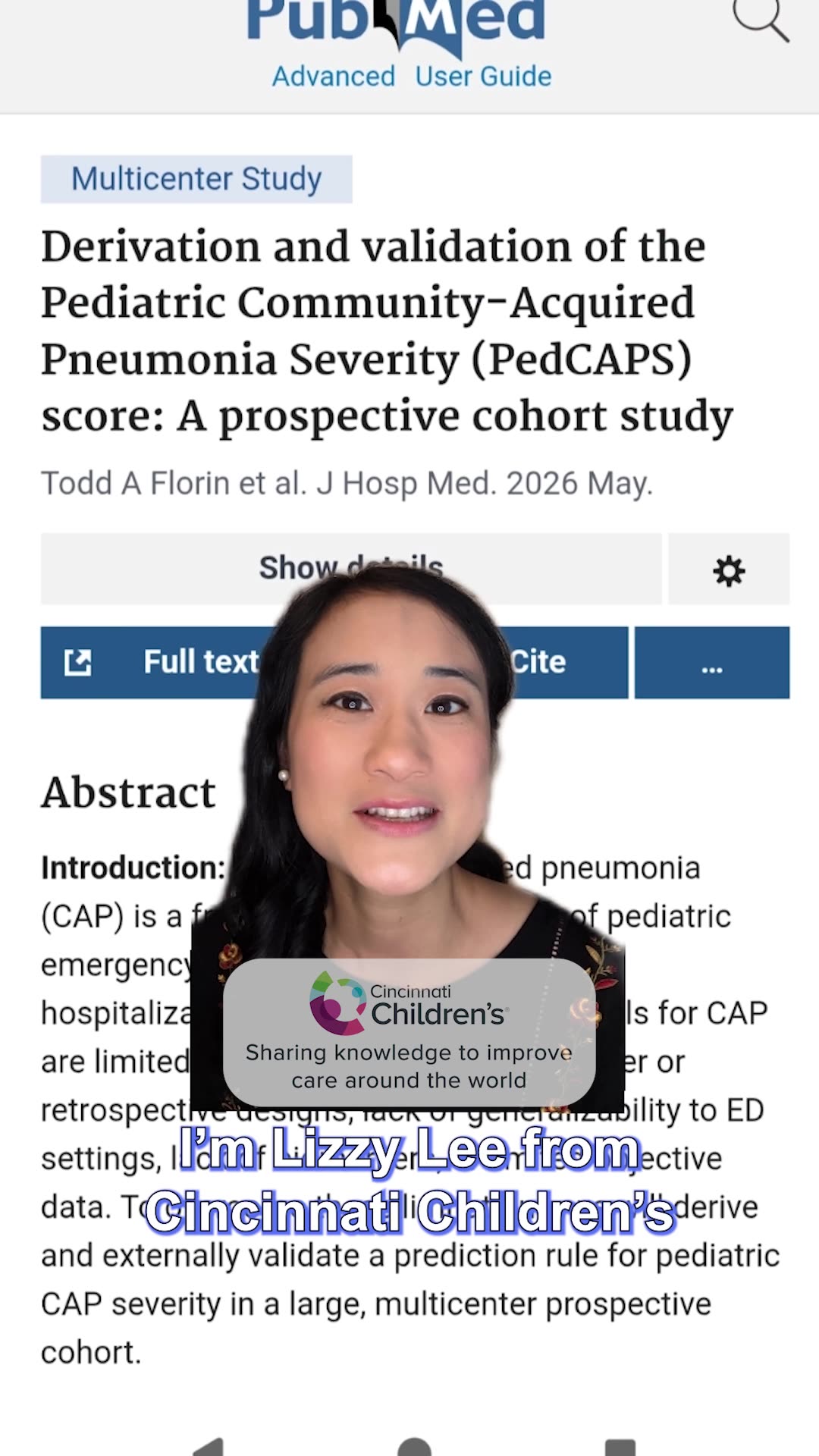
Derivation and validation of the Pediatric Community-Acquired Pneumonia Severity (PedCAPS) score: A prospective cohort study
50 s · Published Sep 2026
Video
FETO for Late-Diagnosed Severe Congenital Diaphragmatic Hernia (CDH) at Cincinnati Children's with Dr. Beth Rymeski
4 min · Published Sep 2026
Video
Severe Congenital Diaphragmatic Hernia (CDH) Case: FETO Management & Unexpected Findings with Dr. Beth Rymeski
3 min · Published Sep 2026
Video
Fetoscopic Endoluminal Tracheal Occlusion (FETO) Procedure: Step-by-Step Guide with Dr. Beth Rymeski
4 min · Published Sep 2026
Video
Choledochal Cyst Types Explained: Pediatric Surgery Fundamentals
1 min · Published Sep 2026
What the experts said
Study reviewed database of over 1600 adolescent varicocele patients to evaluate impact of varicocele correction on semen analysis
73% of patients had improvements in sperm morphology
Morphology is the semen parameter felt to improve the least with surgical correction
If morphology is poor, it may be a good reason to consider surgical correction
Doing varicocelectomy work in a children's hospital has limitations due to losing patients to follow-up over time
Unknown if improved sperm parameters will have positive impact on fertility, though results are exciting
Anastomotic stricture is a common complication after esophageal atresia repair
Anastomotic strictures are often treated with endoscopy, but outcomes of these interventions are not well known
Study reviewed treatment of anastomotic strictures in EA patients at two institutions from 2011 to 2022
Outcomes of intervening on a non-refractory stricture in the setting of going into the chest for something else are excellent
For truly refractory strictures, outcomes show 10% leak rate and 90+% esophageal preservation
Very few kids needed esophageal replacement
Risk factors for poor outcomes included leaks, stricture length, hiatal hernia, and lower patient weight
Surgery for refractory anastomotic stricture has low morbidity and high rate of preserving the esophagus
These are not easy operations; intent was to bring surgical stricture resection into the possibilities of treatment, not to recommend it universally
Study used IBM Watson administrative Claims database for ulcerative colitis patients who received IPAA
Patients with closure of enterostomy code within 6 months went into diverted cohort; those without went into non-diverted cohort
317 patients from 2000 to 2019: 238 had ileostomy (diversion), 79 had only IPAA
Rates of surgical site infections, intraabdominal drainage procedures, and 30-day readmissions were not significantly different between diverted and non-diverted groups
There may not be all the advantages thought to exist with performing diverting ileostomy
Equivalent outcomes suggest there is a population of kids who can be saved from additional surgery
Currently looking at impact of ileostomy on pediatric Crohn's patients who undergo surgery, presented at Academic Surgical Congress
Data need to clarify selection criteria for determining which patients may benefit from diversion
15 Tanner stage 5 patients with varicocele were identified; 12 of 15 achieved complete elimination of varicocele (80% success rate)
11 of 12 patients with complete varicocele elimination had significant improvement in total motile sperm count
Over half of patients had sperm count improve from abnormal range to normal range
Mean percentage improvement in total motile sperm count was 650%
Surgical repair occurred if anastomotic stricture was refractory to endoscopic therapy or was clinically symptomatic and patient was undergoing surgery for another indication
Evaluated outcomes included anastomotic leak, repeat surgery for strictures, and need for esophageal replacement
139 patients underwent 148 surgeries with treatments including strictureplasty, segmental resection, or resection with delayed anastomosis after lengthening
Follow-up was nearly 40 months
Study examined extended birth admission length of stay and relationship with readmission within the year after discharge in CDH patients
Single center retrospective cohort study of children with isolated CDH born and admitted between April 2008 to August 2019
Hospitalization duration divided into three categories: less than 35 days, 36 to 75 days, and more than 76 days
Children hospitalized for more than 76 days had significantly higher odds ratio of readmission
Children discharged with non-operative feeding tube had 4 times higher odds of readmission than those without feeding tube
Extended hospital stays at birth and presence of non-operative feeding tube at discharge are significant indicators of increased readmission rates in year following discharge for CDH children