

From
StayCurrentMD
Pediatric Thyroid Disorders with Dr. Diana Diesen
With Dr. Diana Diesen · hosted by Dr. Todd Ponsky
Part of
Pediatric Oncology 692 items
Educational content from recorded physician discussions — not medical advice. Talk to your (or your child's) care team about your situation.
Video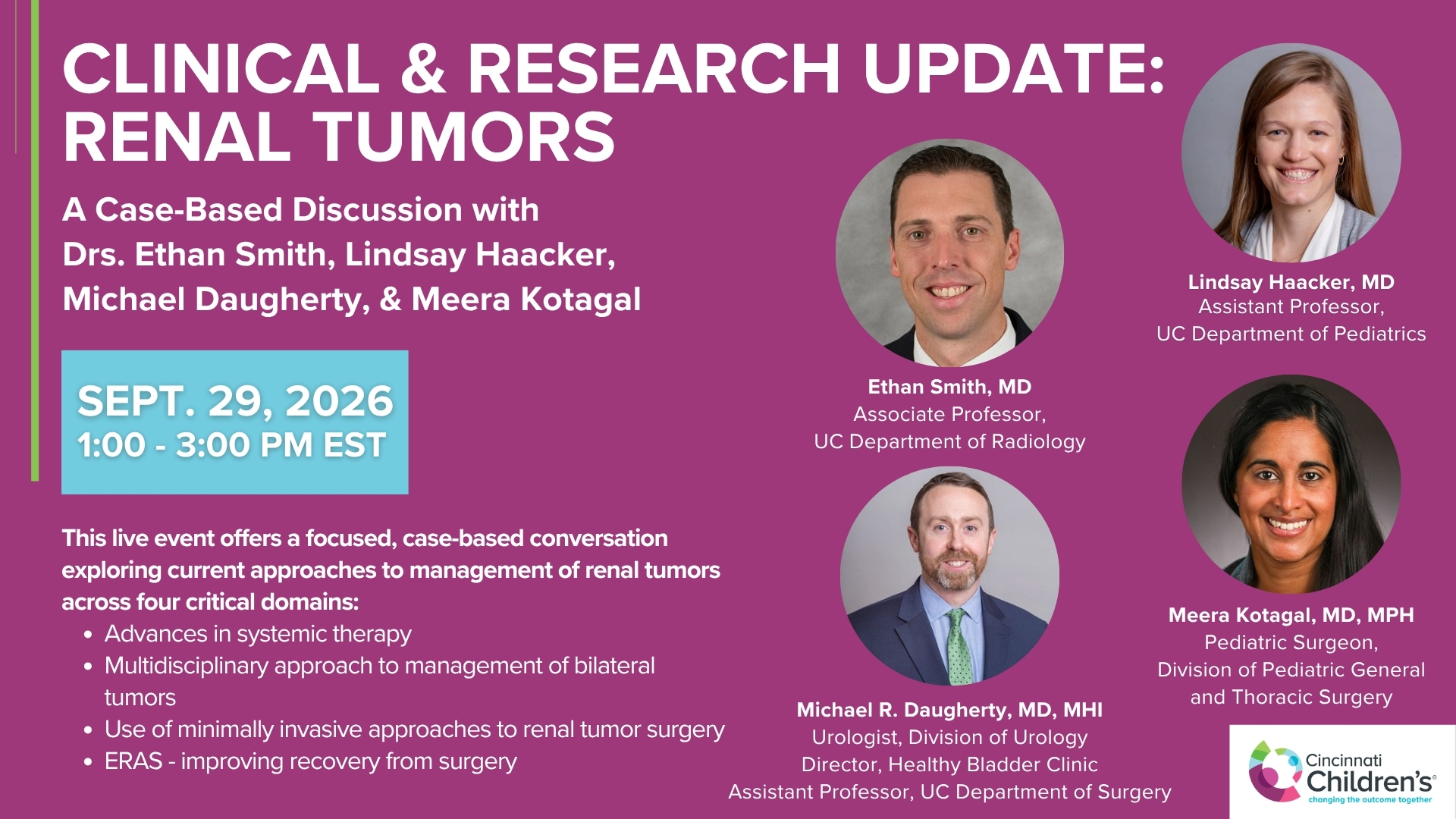
Clinical & Research Update: Renal Tumors with Drs. Ethan Smith, Lindsay Haacker, Michael Daugherty, and Meera Kotagal
71 min · Published Sep 2026
Video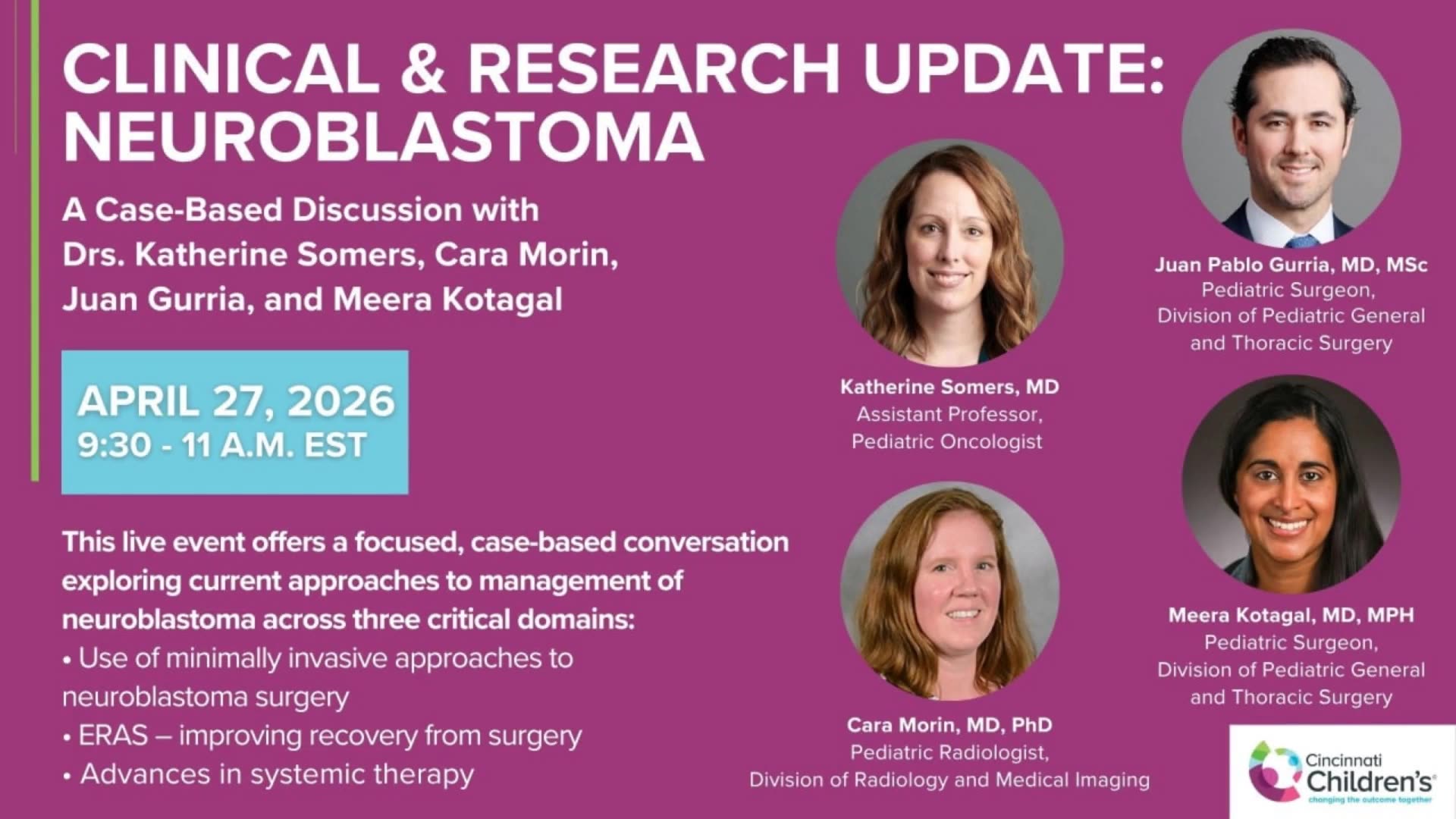
Clinical & Research Update: Neuroblastoma with Drs. Katherine Somers, Cara Morin, Juan Gurria, and Meera Kotagal
67 min · Published Sep 2026
Video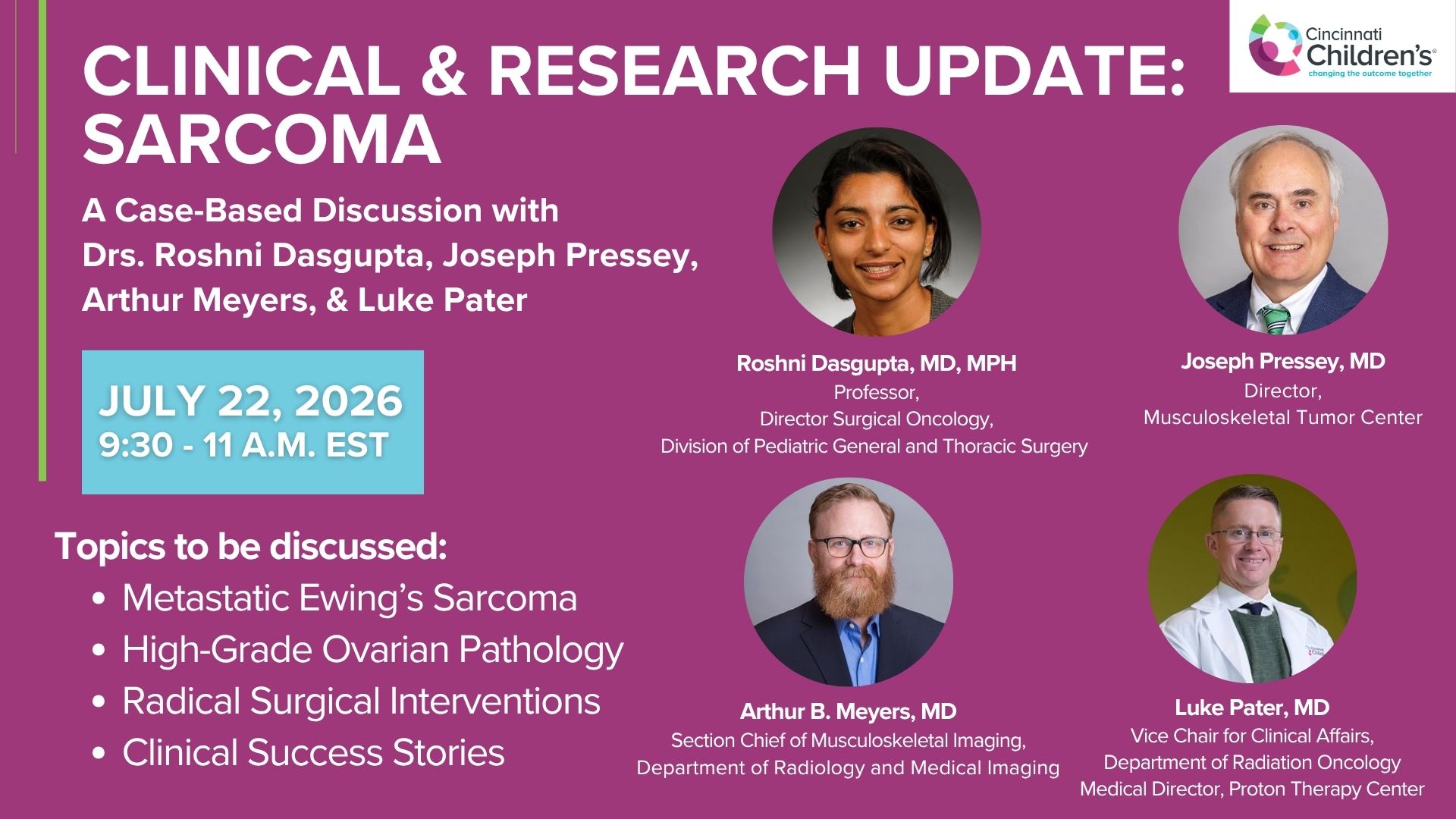
Clinical & Research Update: Sarcoma w/ Drs. Roshni Dasgupta, Joseph Pressey, Arthur Meyer, Luke Pater
66 min · Published Sep 2026
Video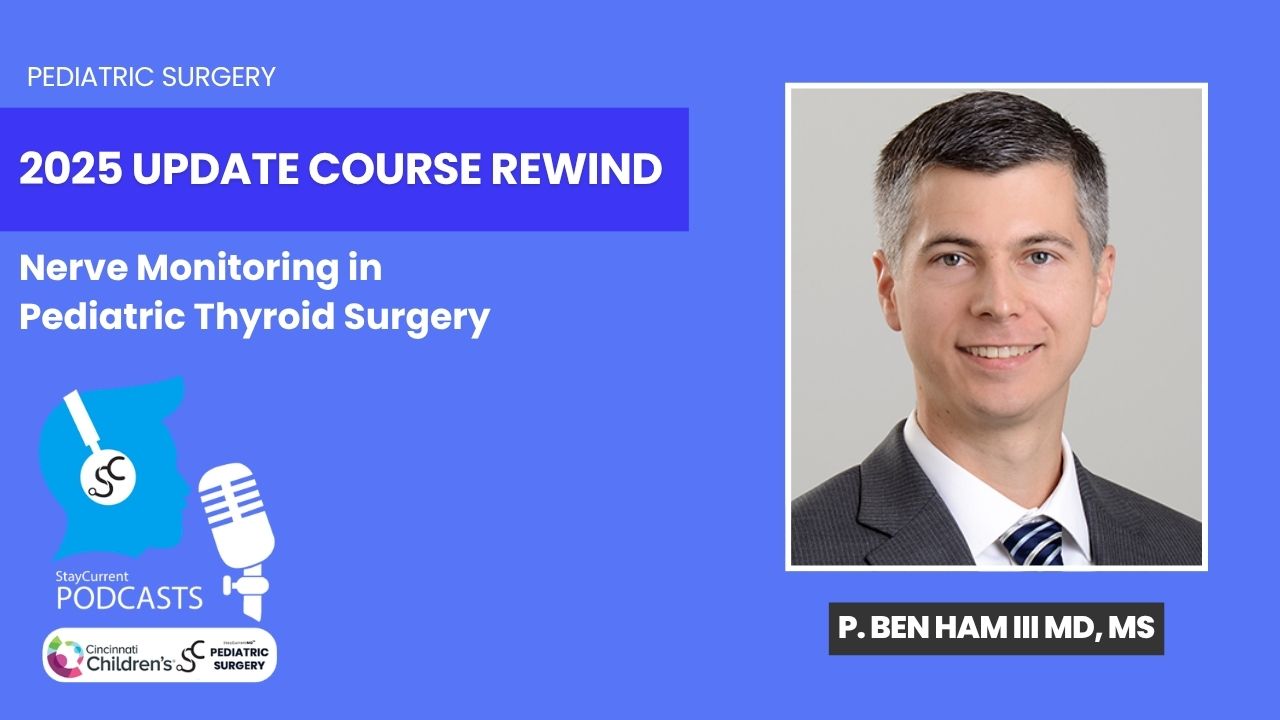
Update Course Rewind 2025: Nerve Monitoring in Pediatric Thyroid Surgery
6 min · Published Jul 2026
Video
Journal of Pediatric Surgery Article Review: June 2023, AAP Issue
Todd Ponsky · 13 min · Published Jul 2026
Video
Pediatric Surgical Oncology Research Collaborative (PSORC): Studying Rare Pediatric Tumors
56 s · Published May 2026
Only a few other public items share this expert — go deeper there →
Video
Intestinal Atresia Types Explained: Grossfeld Classification for Pediatric Surgery
1 min · Published Sep 2026
Video
Derivation and validation of the Pediatric Community-Acquired Pneumonia Severity (PedCAPS) score: A prospective cohort study
50 s · Published Sep 2026
Video
FETO for Late-Diagnosed Severe Congenital Diaphragmatic Hernia (CDH) at Cincinnati Children's with Dr. Beth Rymeski
4 min · Published Sep 2026
Video
Severe Congenital Diaphragmatic Hernia (CDH) Case: FETO Management & Unexpected Findings with Dr. Beth Rymeski
3 min · Published Sep 2026
Video
Fetoscopic Endoluminal Tracheal Occlusion (FETO) Procedure: Step-by-Step Guide with Dr. Beth Rymeski
4 min · Published Sep 2026
Video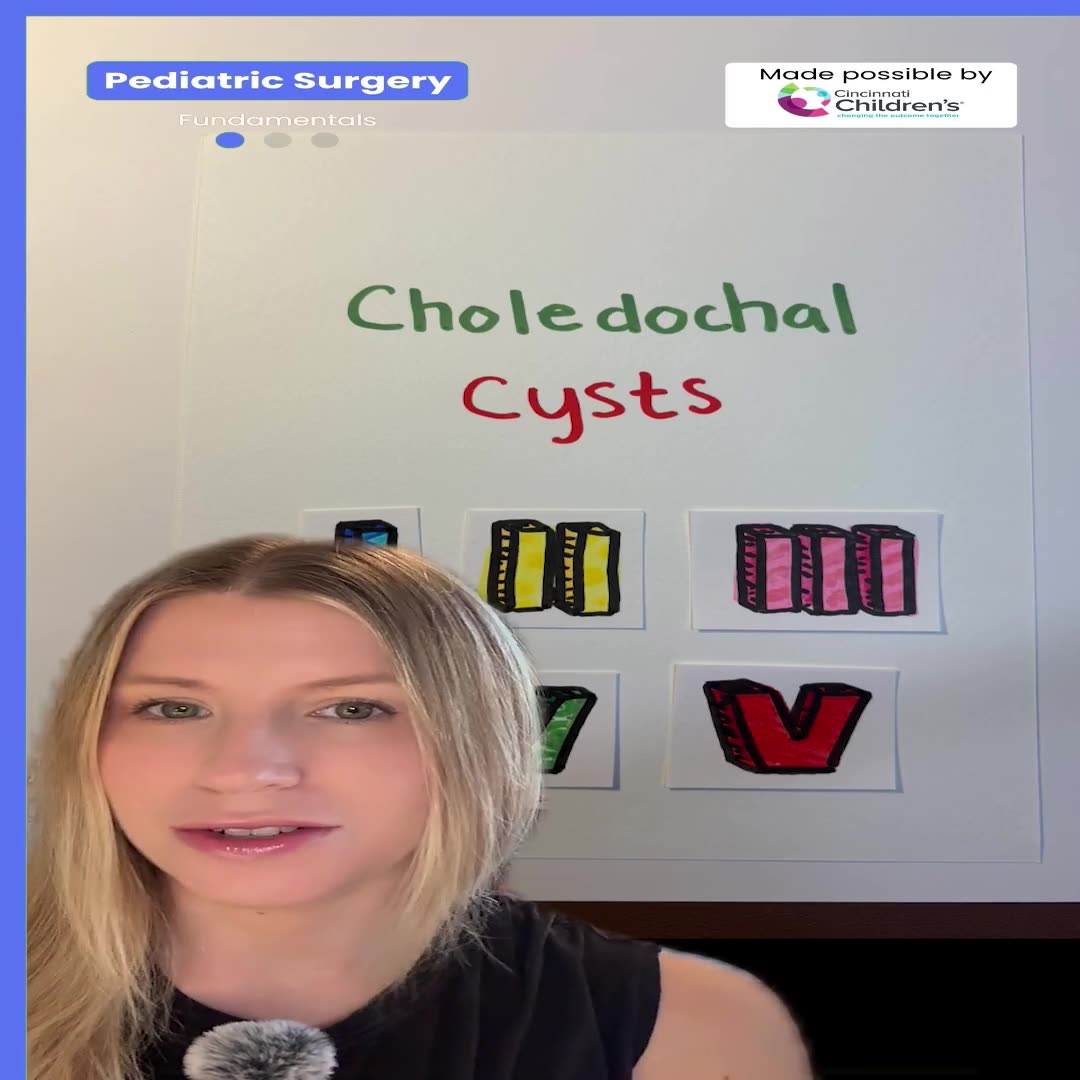
Choledochal Cyst Types Explained: Pediatric Surgery Fundamentals
1 min · Published Sep 2026
What the experts said
Risk factors for thyroid nodules and cancer include previous radiation exposure, alkylating agent exposure (treatment for Hodgkin's lymphoma, leukemia, CNS tumors), and family history including MEN syndromes, PTEN hamartoma tumor syndromes, and APC-associated polyposis syndromes.
Thyroid nodules are less common in children than adults, but when detected in children they are more likely to be malignant.
When children present with thyroid cancer, they are more likely to have extension outside the thyroid, regional lymph node involvement, and distant metastasis compared to adults.
If TSH is suppressed, the first imaging modality should be nuclear thyroid scintigraphy to identify hyperfunctioning nodules, which do not need FNA biopsy if they are going to be resected.
Suspicious ultrasound features for thyroid malignancy include hypoechoic mass, irregular margins, increased blood flow, microcalcifications, and association with abnormal lymph nodes.
In pediatric patients, size cutoffs cannot be used as in adults (1 cm threshold); instead ultrasound characteristics and clinical context determine FNA indications.
Suspicious lymph node characteristics include loss of hilum, irregularity, and increased blood flow, not just size (1 cm cutoff used in adults but not applicable to children).
For patients with large fixed thyroid mass and bulky metastatic lymphadenopathy, CT or MRI of the neck is recommended to visualize retropharyngeal and superior mediastinal nodes, and chest CT may be considered for high cervical lymph node burden.
Current recommendations for papillary thyroid cancer are total or near-total thyroidectomy (near-total leaving only 1-2% tissue near critical structures) due to 30% risk of bilateral disease and 65% risk of multifocal disease in pediatric patients.
Total thyroidectomy for papillary cancer reduces recurrence risk, avoids need for secondary surgery, optimizes radioactive iodine therapy if needed, and allows use of thyroglobulin as a marker without needing to ablate residual thyroid tissue.
Nerve monitoring is used routinely in thyroid surgery; while it does not decrease risk of nerve injury, it is helpful in identifying the recurrent laryngeal nerve, especially in patients with bulky cervical disease.
There is no evidence to support prophylactic lateral neck dissection; lateral dissection is performed only when lateral nodes are pathologically confirmed.
After total thyroidectomy, PTH and calcium levels are checked in recovery; PTH <10-15 indicates higher risk for hypocalcemia and prompts calcium or calcitriol replacement.
Low-risk papillary thyroid cancer patients (disease confined to thyroid, no nodal metastasis) require TSH suppression to 0.5-1, surveillance ultrasound at 6 months then annually for 5 years, and thyroglobulin monitoring.
Radioactive iodine is indicated for ATA pediatric intermediate-risk (extensive central neck or any lateral neck disease) and high-risk patients (extensive regional disease, local invasion, with or without distant metastasis).
The most recent ATA recommendations are that all indeterminate follicular lesions be resected in children, which differs from adult guidelines, due to higher malignancy risk in pediatric population.
For follicular lesions of undetermined significance, adult literature reports 5-15% malignancy risk, but pediatric literature shows approximately 28% malignancy rate.
For follicular neoplasms, reported malignancy rate was 15-30% but more recent data suggests 50-60% in pediatric patients.
Frozen section cannot distinguish follicular adenoma from follicular carcinoma, but can identify papillary component.
For follicular carcinoma, completion thyroidectomy is recommended if there is significant vascular invasion or tumor >4 cm; minimal vascular invasion with smaller tumor can be monitored.
About 30% of patients who undergo lobectomy may develop hypothyroidism at some point, so thyroid function monitoring is important even after hemithyroidectomy.
High-risk papillary thyroid cancer patients require TSH suppression to <0.1.
For benign thyroid lesions >4 cm, the sensitivity and specificity of FNA is decreased, so follow-up is important with repeat ultrasound in 6-12 months and repeat biopsy if enlarging or developing suspicious features.
For inadequate FNA specimens (occurs 1-3% of the time), repeat ultrasound with FNA should be done in 3-6 months, not immediately, to avoid picking up atypia from trauma of initial FNA.
Sporadic medullary thyroid cancer is unusual in children; current recommendations do not support routine calcitonin monitoring in every pediatric patient with a thyroid nodule.
For medullary thyroid cancer, calcitonin and CEA levels are measured for extent of disease assessment and tracking surgical response, and RET germline mutation testing is sent.
MEN2B patients (RET 918 mutation) have up to 50% risk of pheochromocytoma, which can present in teenage years; screening begins at age 11 or at initial diagnosis.
For medullary thyroid cancer with initial calcitonin >500, imaging to exclude metastatic disease is needed: CT neck, CT chest, MRI or CT abdomen (looking at liver), and possibly bone scan.
MEN2B patients can develop medullary thyroid cancer as early as 3 months of age; if family has MEN2B, genetic screening should occur right after birth, and if positive for 918 mutation, thyroidectomy is recommended before 1 year of age.
De novo RET mutations are more likely to be MEN2B than MEN2A.
MEN2A high-risk patients (most common being 634 mutation) should have total thyroidectomy before age 5, but surveillance with calcitonin, CEA, and ultrasound should start at age 3; if calcitonin elevates or ultrasound abnormalities appear, proceed with thyroidectomy at that point.
If calcitonin levels reach above 40 in MEN2A surveillance, central neck dissection is recommended at time of thyroidectomy.
Children under age 10 have increased risk of complications from thyroid surgery including hypoparathyroidism and nerve injury due to smaller anatomy and smaller parathyroid glands.
For MEN2A moderate-risk patients, total thyroidectomy is performed when serum calcitonin becomes elevated or if parents prefer not to proceed with frequent surveillance; prophylactic thyroidectomy may occur in childhood or early adulthood depending on mutation.
MEN2A moderate-risk patients do not tend to develop pheochromocytomas until their twenties or above; screening begins at age 16.
For prophylactic thyroidectomy in MEN patients, central lymph node dissection is not necessary if performed before calcitonin levels exceed 40 (in MEN2A patients).
There is debate about whether MEN2B patients need central lymph node dissection; decision depends on ability to identify, preserve, or transplant parathyroid glands, which are particularly small and translucent in infants.
After medullary thyroid cancer surgery, if calcitonin levels are undetectable or normal, follow with physical exam, ultrasound every 6 months for a year then annually, and close monitoring.
If postoperative calcitonin is >150, imaging for metastatic disease is needed: CT neck, CT chest, MRI or CT abdomen for liver metastasis, bone scan, and MRI of pelvis and axial skeleton.
Systemic therapy for medullary thyroid cancer (tyrosine kinase inhibitors, external beam radiation) is reserved for progressive disease not treatable with surgery, not used routinely for elevated calcitonin alone due to significant side effects.
For Graves disease in young children, concerns about secondary malignancy risk from radioactive iodine often lead to thyroidectomy for disease not controlled with methimazole; in school-age children, radioactive iodine vs surgery is discussed; as patients approach adulthood, radioactive iodine is often treatment of choice.
Subacute thyroiditis, thought to be viral in origin, presents with painful swollen thyroid, initial thyrotoxicosis followed by hypothyroidism, and usually resolves with normal thyroid function returning at 1-2 years.
Diffuse infiltrative papillary thyroid cancer is more common in children than adults; if a patient demonstrates infiltrative thyroid process especially with clinically suspicious nodes, consider biopsy to rule out papillary thyroid cancer.