

From
StayCurrentMD
Aerodigestive & Esophageal Surgery: Aspiration in TEFs
Educational content from recorded physician discussions — not medical advice. Talk to your (or your child's) care team about your situation.
More about this diagnosis
Cerebral palsyVideo
Aerodigestive Management of Pediatric Aspiration - FULL SHOW
CCHMC Pediatric Surgery · 157 min · Published Jul 2020
Video
Aerodigestive & Esophageal Surgery - Difficult Tracheal Esophageal Fistula
Dr. Todd Ponsky · 120 min · Published Nov 2018
Video
Gastroesophageal Reflux: Contemporary Management Pediatric Surgery Update...
32 min · Published Jul 2017
Video
Gastric Neurostimulators: Update Course 2017
35 min · Published Aug 2017
Video
2024 Fetal Care Center Frontiers in Fetal Neurology Day 1 - Hour 2 Q&A
8 min · Published Oct 2024
Video
ERCP: Pancreatic Disease
CCHMC Pediatric Surgery · 9 min · Published Sep 2016
Video
Surgeon annual volume impacts recurrence rates of pediatric inguinal hernia repairs: A multi-institutional study
54 s · Published Feb 2026
Podcast
Journal of Pediatric Surgery Article Review: 2nd Quarter (Apr-Jun) 2025
16 min · Published Aug 2025
Video
Tracheobronchopexy to Avoid Tracheostomy in Esophageal Atresia Patients With Severe Life-Threatening Tracheobronchomalacia
50 s · Published Apr 2025
Video
QUAD #27 - Multidisciplinary - How Do Teams Enhance Outcomes by the CCHMC ADEC Team
CCHMC Pediatric Surgery · 10 min · Published Apr 2025
Video
QUAD #25: Medical Management of Minor Laryngeal Clefts with Dr. Greg Burg
CCHMC Pediatric Surgery · 7 min · Published Feb 2025
Video
QUAD #22: What is CHARGE syndrome? with Dr. Catherine Hart
CCHMC Pediatric Surgery · 59 s · Published Dec 2024
Video
Intestinal Atresia Types Explained: Grossfeld Classification for Pediatric Surgery
1 min · Published Sep 2026
Video
Derivation and validation of the Pediatric Community-Acquired Pneumonia Severity (PedCAPS) score: A prospective cohort study
50 s · Published Sep 2026
Video
FETO for Late-Diagnosed Severe Congenital Diaphragmatic Hernia (CDH) at Cincinnati Children's with Dr. Beth Rymeski
4 min · Published Sep 2026
Video
Severe Congenital Diaphragmatic Hernia (CDH) Case: FETO Management & Unexpected Findings with Dr. Beth Rymeski
3 min · Published Sep 2026
Video
Fetoscopic Endoluminal Tracheal Occlusion (FETO) Procedure: Step-by-Step Guide with Dr. Beth Rymeski
4 min · Published Sep 2026
Video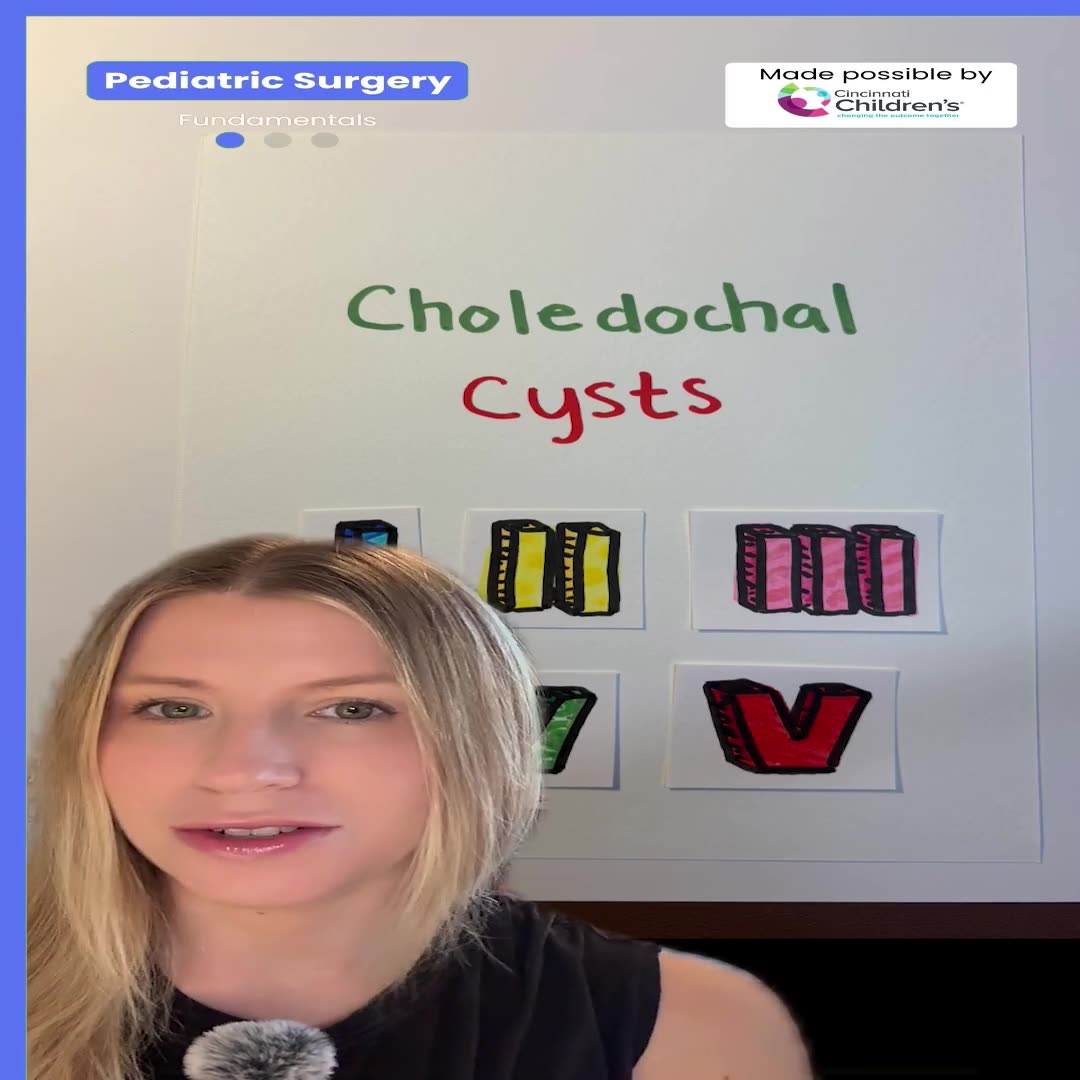
Choledochal Cyst Types Explained: Pediatric Surgery Fundamentals
1 min · Published Sep 2026
What the experts said
In a child with tracheostomy, the simplest test for aspiration is to put colored dye in the mouth and see if it comes out of the trach tube.
The dye test can be done at home in a normal setting and repeated, and is helpful to convince skeptical parents that the child is aspirating.
Video swallow studies and endoscopic swallow studies can be very useful for testing aspiration.
There are no unequivocal endoscopic markers of aspiration.
Lipid-laden macrophages are non-specific markers of aspiration.
Recovery of lipid-laden macrophages depends on what material was aspirated, how much lipid it contained, the amount aspirated, and how long since the aspiration event.
Lots of lipid-laden macrophages in the right clinical setting provide convincing evidence of aspiration, but it is not a black and white yes/no answer.
As markers for aspiration, reflux tests are not particularly good.
Multi-channel intraluminal impedance testing has mostly replaced simple pH testing for detection of reflux.
Multi-channel intraluminal impedance testing does not add anything to the diagnosis of aspiration itself; it tells whether something is being delivered from the stomach to the esophagus but not what happens after that.
Most children who aspirate have a functional or neurological problem.
Cerebral palsy and CHARGE syndrome are examples of functional/neurological causes of aspiration.
Anatomical problems causing aspiration include tracheoesophageal fistula and laryngeal cleft.
Bad pharyngeal scarring can cause aspiration in some children.
Esophageal stenosis with backup and spillover can cause aspiration.
For children who aspirate food and drink, nasogastric tube or gastrostomy tube can be considered.
Robinul (glycopyrrolate) can be tried for saliva management but generally does not work.
Botox injection of major salivary glands is a temporary solution and serves as a good test for how a child would cope with less saliva.
A drool procedure involves removing the submandibular glands and ligating the parotid ducts.
Tracheotomy allows suctioning of the airway clear of secretions.
BiPAP can be placed on a tracheostomy so that secretions are blown up and out of the mouth.
Laryngotracheal separation is the only guaranteed operation to stop aspiration but results in loss of ability to vocalize.
Nissen fundoplication or any fundoplication may assist with aspiration of gastroesophageal reflux, as may a GJ tube.
Children with tight fundoplication and non-motile esophagus can develop accumulation and spillover of esophageal contents leading to aspiration.
For saliva aspiration testing in a child with tracheotomy, a drop of green food dye on the tongue can be used to see if it comes out the trach tube.
Green is a good dye color because it is not natural, unlike red or blue which might be confused with body-produced substances.
For saliva aspiration testing without tracheotomy, a nuclear medicine scan with a drop of radioactive material on the tongue can show if it ends up in the lungs or stomach.