

From
StayCurrentMD
Quick Literature Updates Ep 19
With Dr. Carlos Colunga · hosted by Dr. Em Gootee & Dr. Lizzie Lee & Dr. Cecilia Gigena
Educational content from recorded physician discussions — not medical advice. Talk to your (or your child's) care team about your situation.
Video
Posterior Tracheopexy during Primary Esophageal Atresia Repair
Published Sep 2018
Video
Quick Literature Updates Ep 27
4 min · Published Feb 2026
Video
QUAD #2 Thoracoscopic Tracheopexy with Dr. Aaron Garrison
CCHMC Pediatric Surgery · 7 min · Published Jan 2024
Video
BOB Ped Surg 2023 - Basma Magdy, PAPSA - Presentation
Published Feb 2023
Video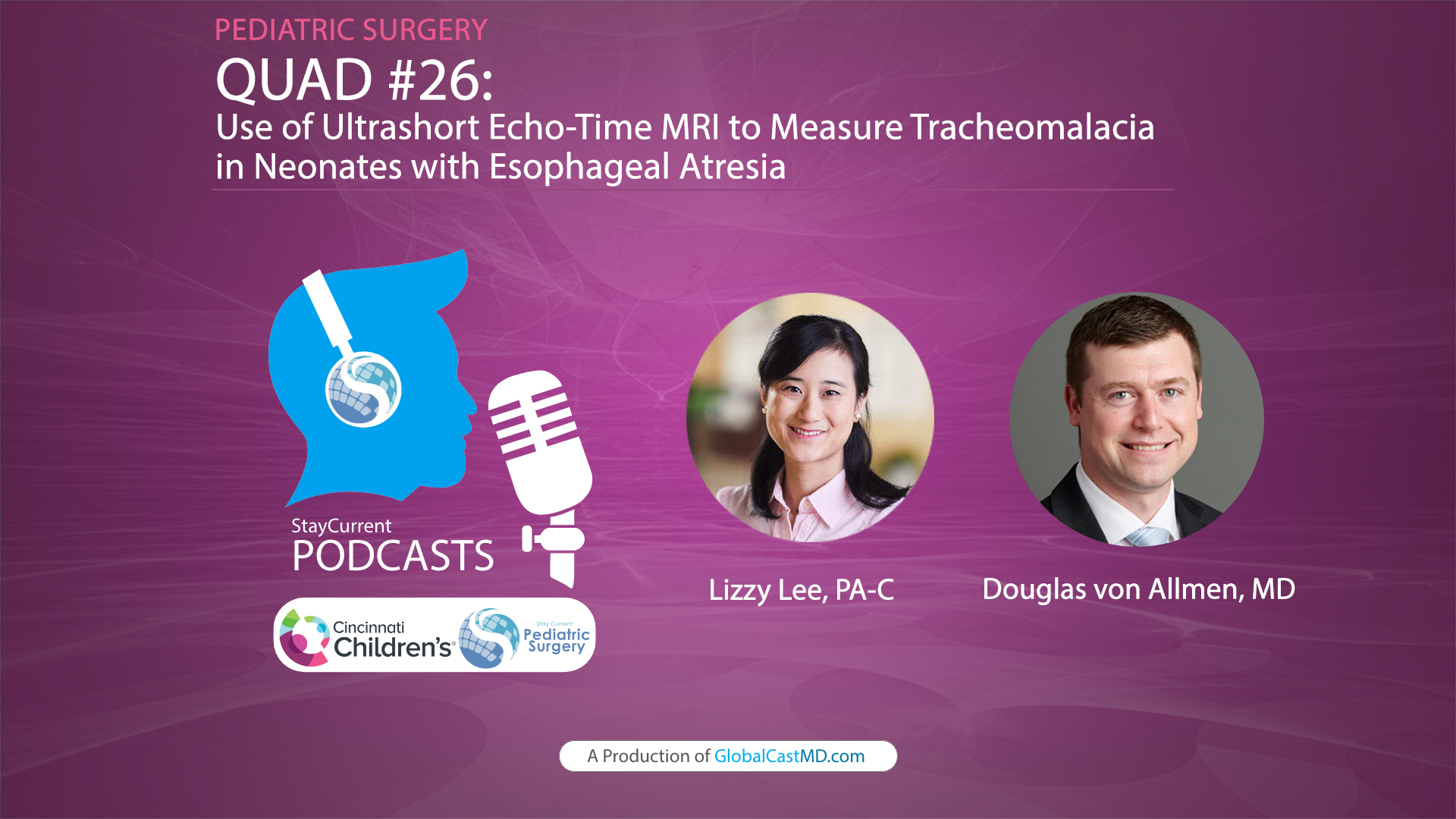
QUAD #26 - Use of Ultrashort Echo-Time MRI to Measure Tracheomalacia in Neonates with Esophageal Atresia with Dr. Douglas von Allmen
CCHMC Pediatric Surgery · 5 min · Published Feb 2025
Podcast
Journal of Pediatric Surgery Article Review: 4th Quarter (Oct-Dec) 2024
18 min · Published Feb 2025
Video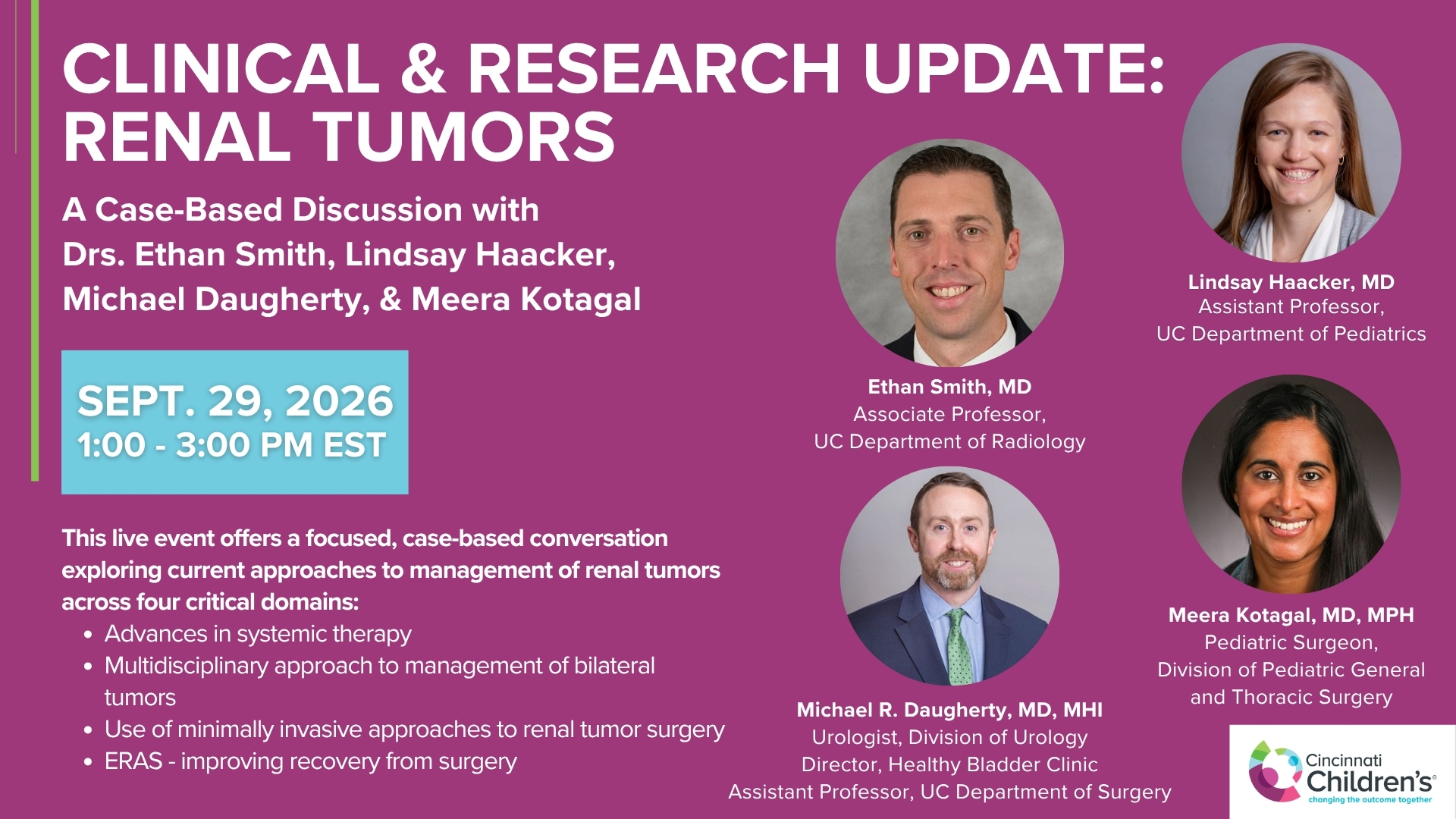
Clinical & Research Update: Renal Tumors with Drs. Ethan Smith, Lindsay Haacker, Michael Daugherty, and Meera Kotagal
71 min · Published Sep 2026
Video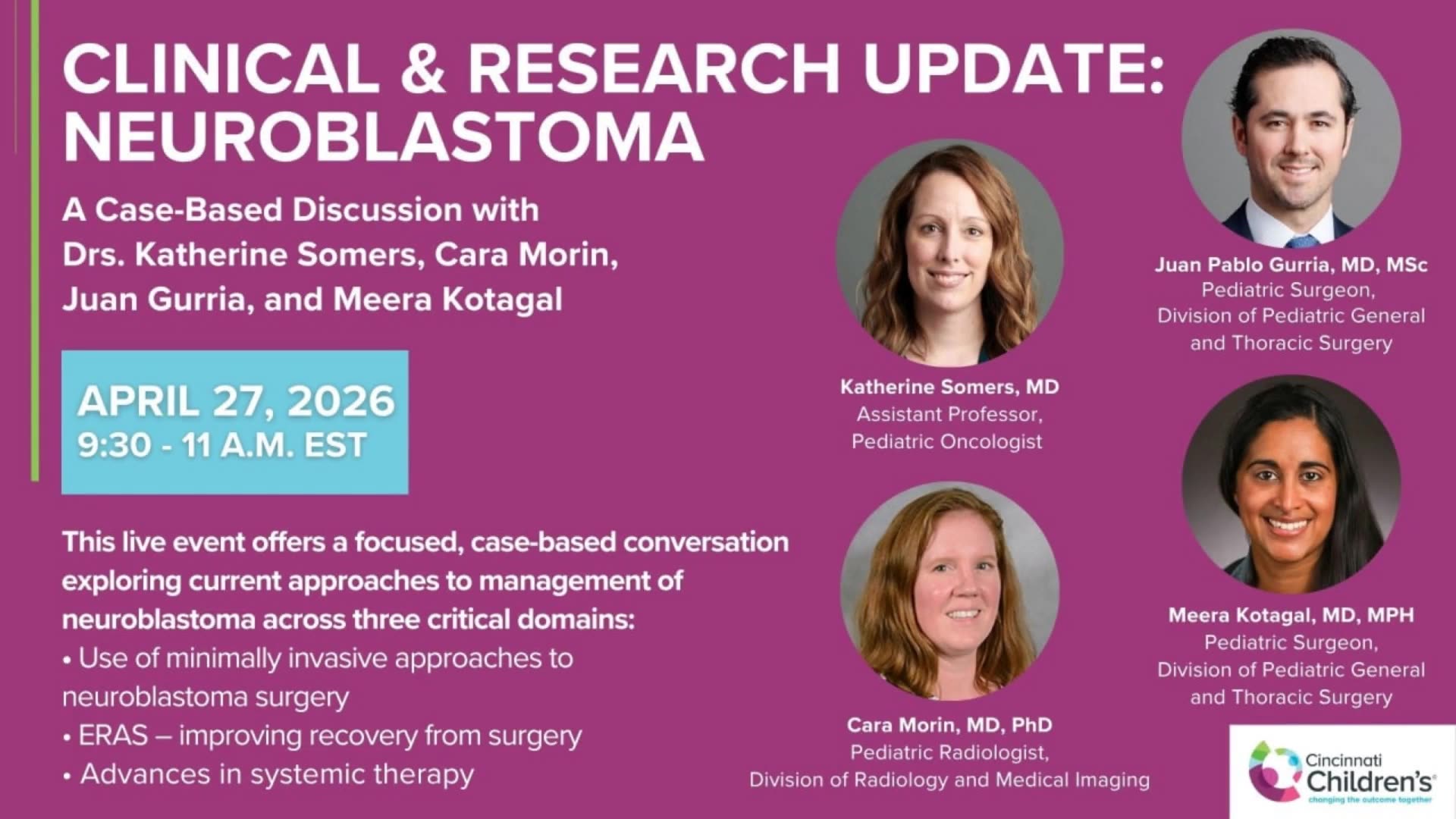
Clinical & Research Update: Neuroblastoma with Drs. Katherine Somers, Cara Morin, Juan Gurria, and Meera Kotagal
67 min · Published Sep 2026
Video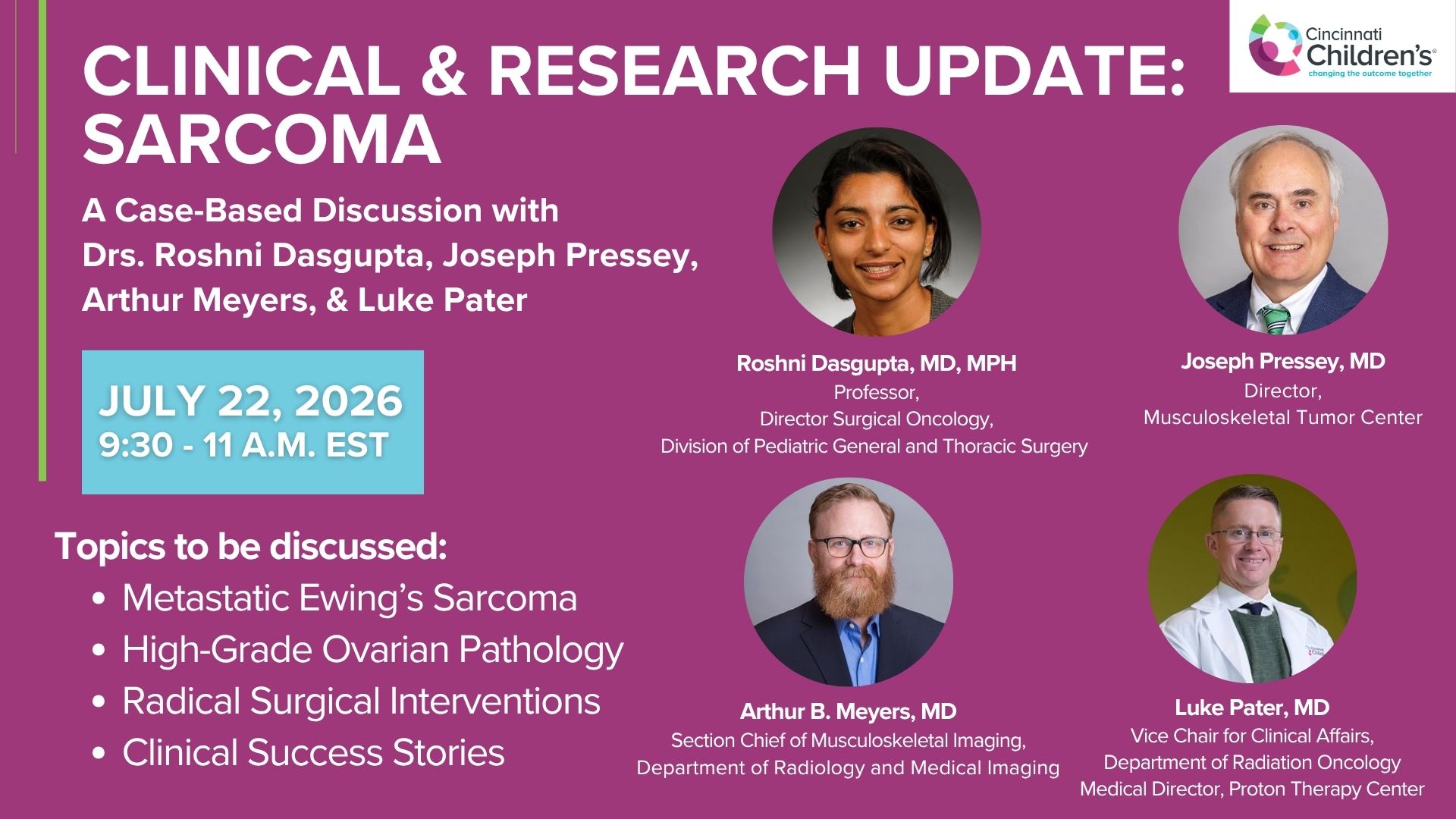
Clinical & Research Update: Sarcoma w/ Drs. Roshni Dasgupta, Joseph Pressey, Arthur Meyer, Luke Pater
66 min · Published Sep 2026
Video
Update Course Rewind 2025: Nerve Monitoring in Pediatric Thyroid Surgery
6 min · Published Jul 2026
Video
Journal of Pediatric Surgery Article Review: June 2023, AAP Issue
Todd Ponsky · 13 min · Published Jul 2026
Video
Pediatric Surgical Oncology Research Collaborative (PSORC): Studying Rare Pediatric Tumors
56 s · Published May 2026
Video
Quick Literature Updates Ep 24
4 min · Published Nov 2025
Video
Update Course Rewind: CO2 Laser Use Cases 2024
4 min · Published Mar 2025
Video
Tracheomalacia and tracheomegaly in infants and children with congenital diaphragmatic hernia managed with and without fetoscopic endoluminal tracheal occlusion (FETO): a multicentre, retrospective cohort study
59 s · Published Oct 2024
Video
Intestinal Atresia Types Explained: Grossfeld Classification for Pediatric Surgery
1 min · Published Sep 2026
Video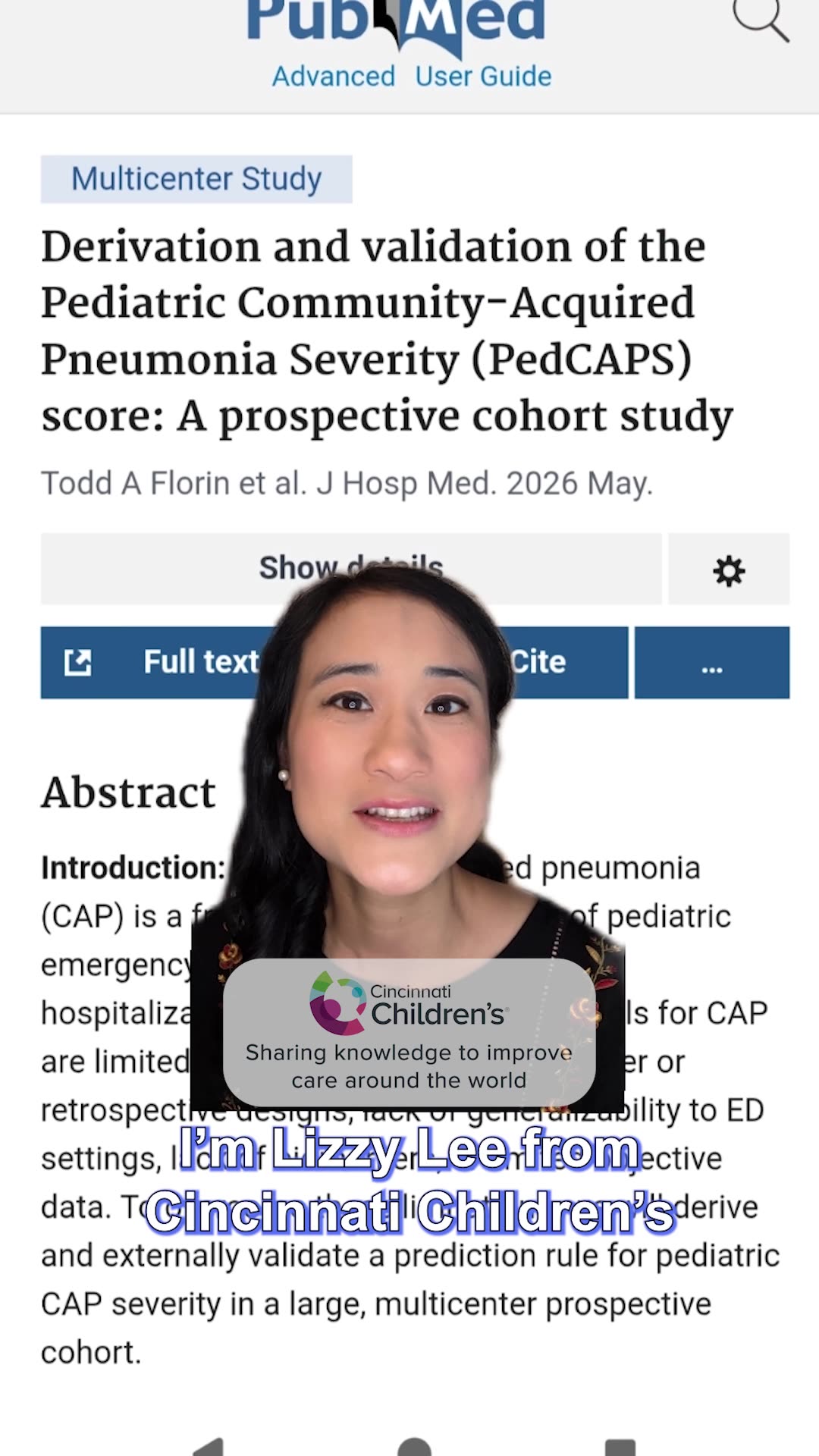
Derivation and validation of the Pediatric Community-Acquired Pneumonia Severity (PedCAPS) score: A prospective cohort study
50 s · Published Sep 2026
Video
FETO for Late-Diagnosed Severe Congenital Diaphragmatic Hernia (CDH) at Cincinnati Children's with Dr. Beth Rymeski
4 min · Published Sep 2026
Video
Severe Congenital Diaphragmatic Hernia (CDH) Case: FETO Management & Unexpected Findings with Dr. Beth Rymeski
3 min · Published Sep 2026
Video
Fetoscopic Endoluminal Tracheal Occlusion (FETO) Procedure: Step-by-Step Guide with Dr. Beth Rymeski
4 min · Published Sep 2026
Video
Choledochal Cyst Types Explained: Pediatric Surgery Fundamentals
1 min · Published Sep 2026
What the experts said
APSA created a peer support program for pediatric surgeons in 2020.
The goal of the APSA peer support program was to support surgeons after traumatic events.
The most common referral reasons for the peer support program were toxic work environments and adverse events.
50 surgeons total agreed to receive training on how to be a supporter in the APSA program.
Over 80% of trained peer supporters were able to use these peer support skills informally with colleagues, partners, and trainees.
The peer support program shows that this type of support system can work really well to help surgeons heal from traumatic experiences and toxic work environments.
Tracheomalacia was 5% more common in tracheal occluded infants with CDH, with 4% more cases.
Tracheomalacia symptoms in FETO-treated CDH infants typically receded within 55 months.
FETO-treated CDH infants typically showed a larger trachea, which was around 31% wider.
37% of tracheal occluded CDH cases retained metallic balloon components, although no significant complications were reported.
While tracheal occlusion is effective in promoting lung growth, it is associated with a higher risk of tracheomalacia, although most cases resolve and do not appear to have long-term effects.
The IPSO systematic review and meta-analysis gathered 8 retrospective studies with 490 patients comparing image-guided core needle biopsy to surgical biopsy for neuroblastoma.
Tissue adequacy and biological characterization of the biopsy was not significantly different between image-guided core needle biopsy and surgical biopsy groups for neuroblastoma.
Intraoperative transfusions and complications were higher in the surgical biopsy group compared to image-guided core needle biopsy for neuroblastoma.
Image-guided core needle biopsy is safe and effective for diagnosing neuroblastoma.