

From
StayCurrentMD
Update Course Rewind: Pediatric Biliary Stones - Preventing Gallstone Pancreatitis 2024
With Dr. Luke Neff & Dr. Jeff Ponsky & Dr. David Vitale · hosted by Dr. Em Gootee
Educational content from recorded physician discussions — not medical advice. Talk to your (or your child's) care team about your situation.
Video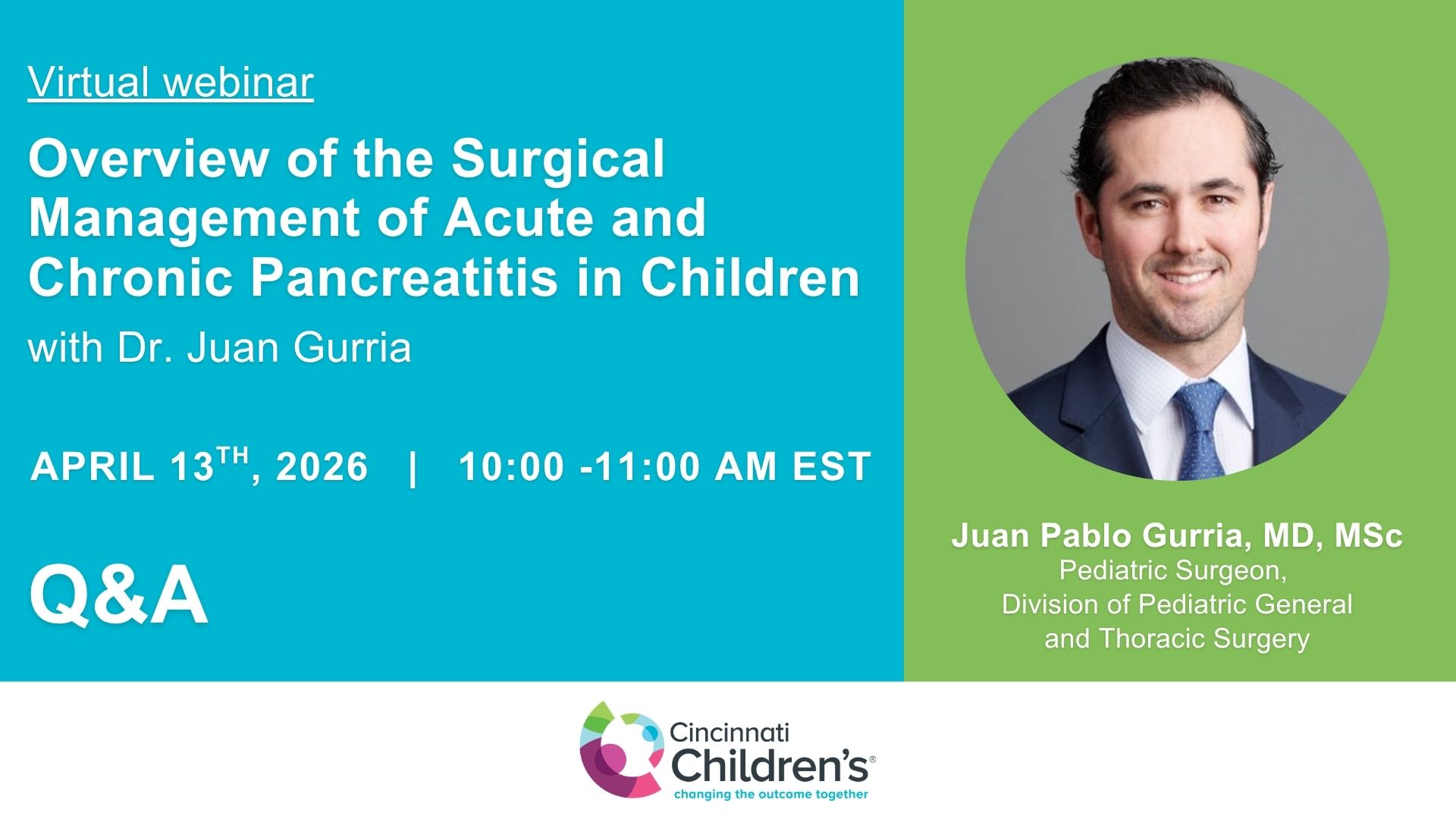
Overview of the Surgical Management of Acute and Chronic Pancreatitis in Children with Dr. Juan Gurria
66 min · Published Apr 2026
Video
Pancreatitis in pediatric patients with pancreatic solid pseudopapillary neoplasms- a single center experience
59 s · Published Apr 2026
Video
Update Course Rewind: Pediatric Biliary Stones - Surgery First Mindset 2024
Dr. Todd Ponsky · 7 min · Published Jul 2025
Video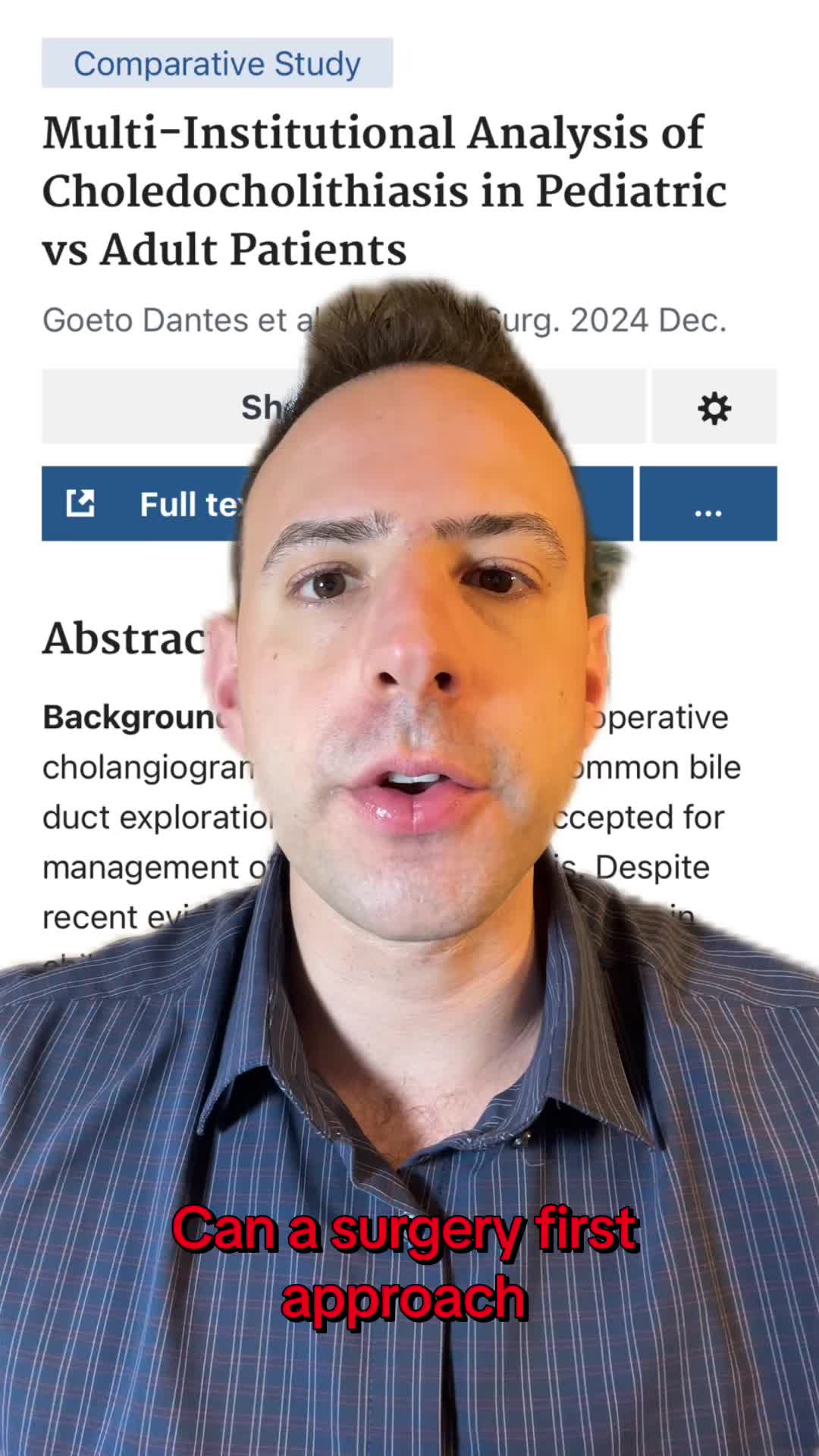
Multi-Institutional Analysis of Choledocholithiasis in Pediatric vs Adult Patients
59 s · Published Mar 2025
Video
Total pancreatectomy with islet autotransplantation (TPIAT) - Cincinnati Children's Pancreas Care Center
CCHMC Pediatric Surgery · 10 min · Published Dec 2024
Video
Chronic Pancreatitis - Pancreatic Pathologies by Cincinnati Children's Pancreas Care Center
CCHMC Pediatric Surgery · 8 min · Published Nov 2024
Video
Intestinal Atresia Types Explained: Grossfeld Classification for Pediatric Surgery
1 min · Published Sep 2026
Video
Derivation and validation of the Pediatric Community-Acquired Pneumonia Severity (PedCAPS) score: A prospective cohort study
50 s · Published Sep 2026
Video
FETO for Late-Diagnosed Severe Congenital Diaphragmatic Hernia (CDH) at Cincinnati Children's with Dr. Beth Rymeski
4 min · Published Sep 2026
Video
Severe Congenital Diaphragmatic Hernia (CDH) Case: FETO Management & Unexpected Findings with Dr. Beth Rymeski
3 min · Published Sep 2026
Video
Fetoscopic Endoluminal Tracheal Occlusion (FETO) Procedure: Step-by-Step Guide with Dr. Beth Rymeski
4 min · Published Sep 2026
Video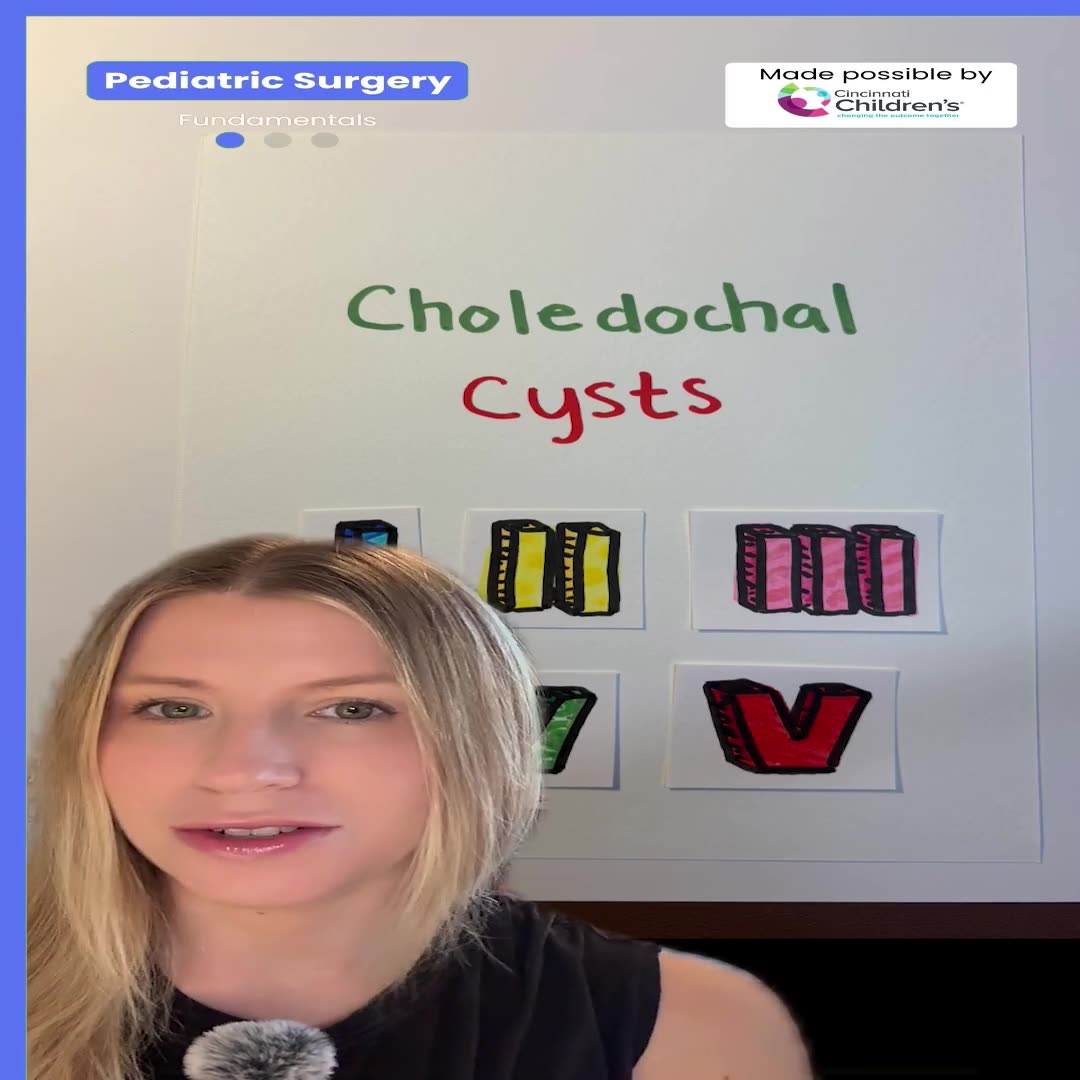
Choledochal Cyst Types Explained: Pediatric Surgery Fundamentals
1 min · Published Sep 2026
What the experts said
The patient spontaneously passed the stone, LFTs came back down, counts recovered, and he proceeded to elective cholecystectomy.
From an ERCP standpoint, unless there's a persistent biliary obstruction or cholangitis, ERCP is not performed right away in gallstone pancreatitis.
When symptoms are improving in gallstone pancreatitis (biochemical normalization is not required), the approach is to proceed to cholecystectomy with intraoperative cholangiogram and coordinate with ERCP availability in case it might be needed.
Studies show that if you wait one day when a patient comes in with acute biliary pancreatitis and the amylase/lipase go up, then you do ERCP because the stone is impacted; but most of the time the levels will go right down as the stone passes spontaneously, and you can proceed to cholecystectomy.
Most stones can be cleared, some stones pass spontaneously, and good clinical judgment with local resources must be factored into management decisions.
The patient is a 16-year-old currently undergoing treatment for acute lymphoblastic leukemia (ALL) who presents with right upper quadrant pain, neutropenia, markedly elevated liver function tests, and ultrasound findings consistent with acute cholecystitis and choledocholithiasis.
In this neutropenic and thrombocytopenic patient, the approach taken was to start antibiotics and address the elevated liver function tests.
Gallstone pancreatitis is inflammation of the pancreas triggered by a gallstone obstructing the bile duct, which can also impede pancreatic drainage, preventing pancreatic enzymes from reaching the small intestine and leading them to accumulate and damage the pancreas.
In neutropenic and thrombocytopenic patients with cholecystitis and choledocholithiasis, initial conservative management with antibiotics can be effective, particularly when spontaneous stone passage occurs.
For gallstone pancreatitis, early ERCP is typically reserved for cases with persistent biliary obstruction or cholangitis, as many patients improve without intervention.
The timing of cholecystectomy in gallstone pancreatitis should be based on clinical improvement rather than complete biochemical normalization, with intraoperative cholangiogram and ERCP coordinated as needed.