

From
Live Event Content
2025 Pediatric Surgery Update Course - Updates in Management of Neck Pathologies
With Dr. Douglas von Allmen
Educational content from recorded physician discussions — not medical advice. Talk to your (or your child's) care team about your situation.
Video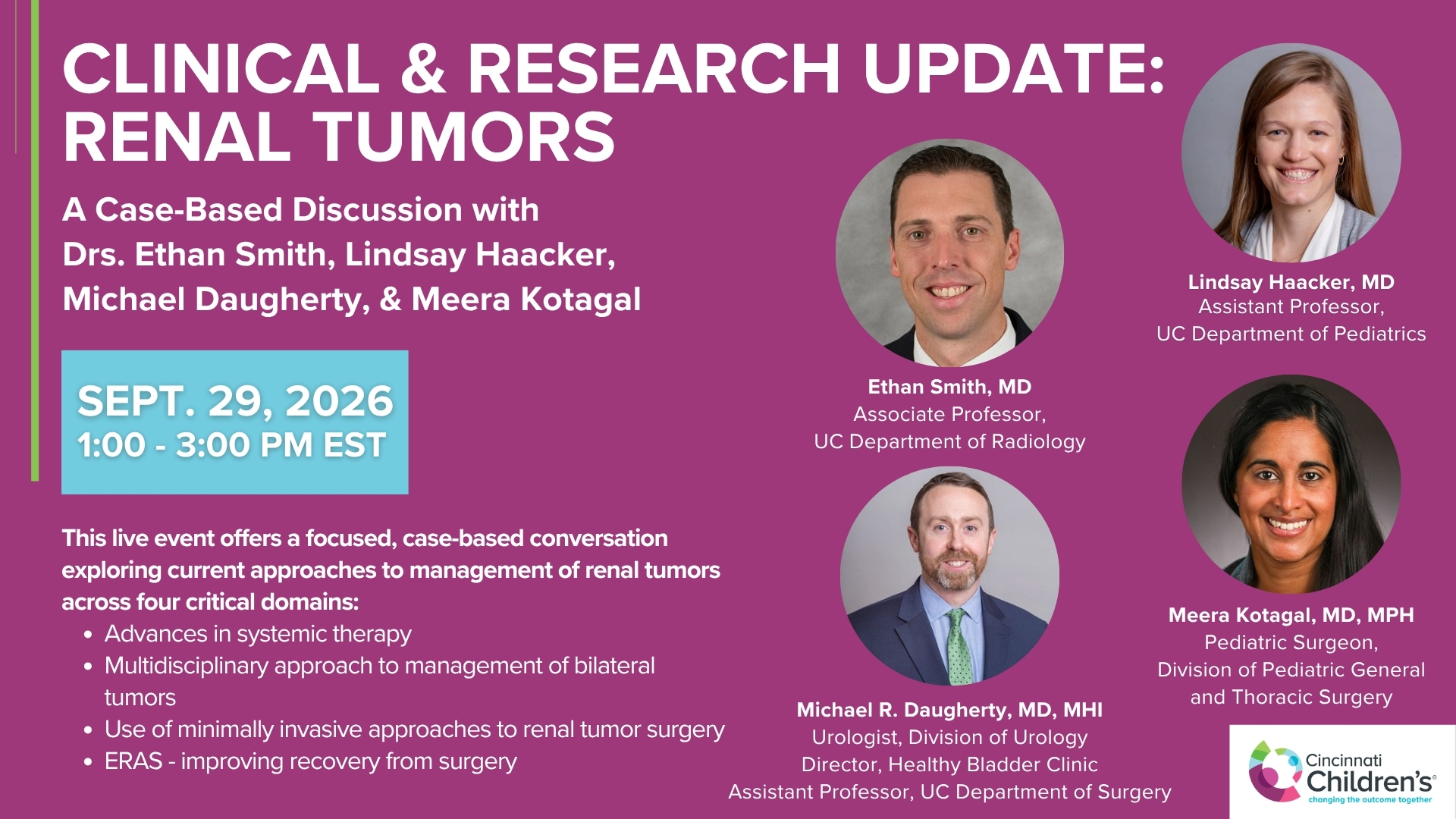
Clinical & Research Update: Renal Tumors with Drs. Ethan Smith, Lindsay Haacker, Michael Daugherty, and Meera Kotagal
71 min · Published Sep 2026
Video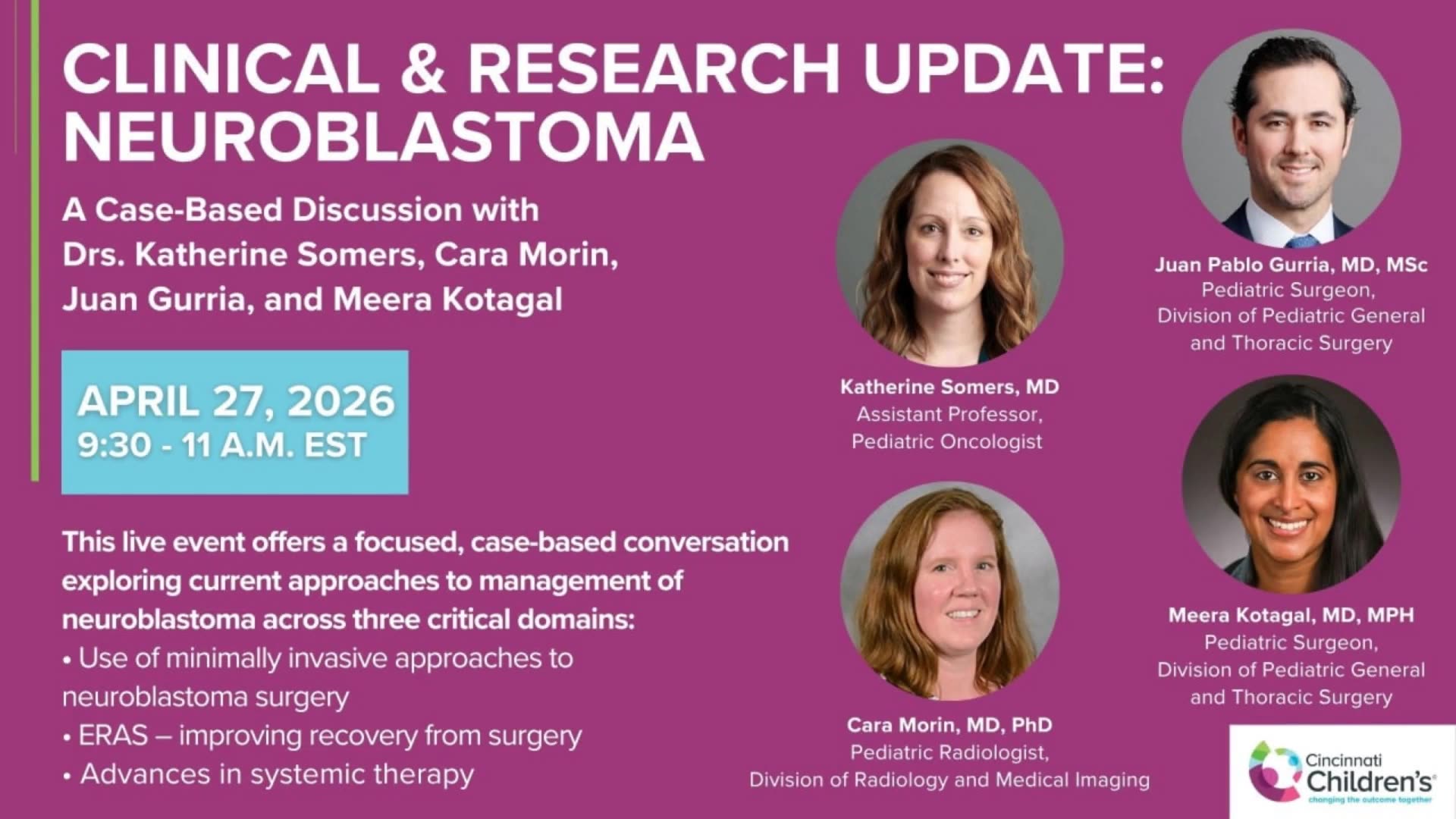
Clinical & Research Update: Neuroblastoma with Drs. Katherine Somers, Cara Morin, Juan Gurria, and Meera Kotagal
67 min · Published Sep 2026
Video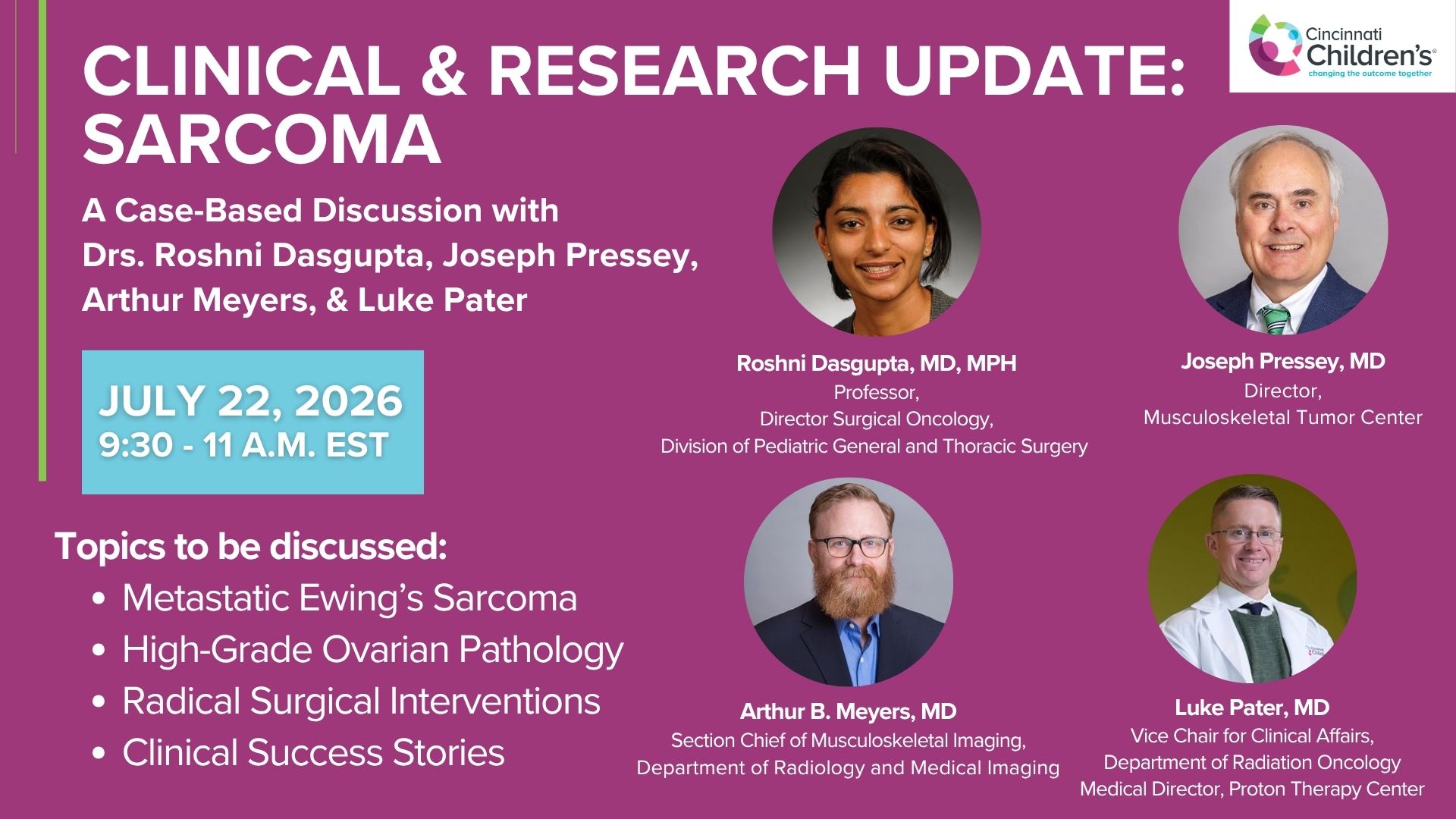
Clinical & Research Update: Sarcoma w/ Drs. Roshni Dasgupta, Joseph Pressey, Arthur Meyer, Luke Pater
66 min · Published Sep 2026
Video
2026 Laparoscopic Pediatric Hernia Repair
123 min · Published Jun 2026
Video
Beyond the Spectrum: Diagnosis, Myths & Management - Caitlin Couch & Leslie Lopez - APP Conference 2026
50 min · Published May 2026
Video
Dysautonomia: Navigating the Journey - Martha Willis - APP Conference 2026
55 min · Published May 2026
What the experts said
CT scans are frequently performed in the emergency department for neck swelling before surgical consultation
Incision and drainage of branchial cleft cysts can make future surgical removal more challenging
Type 3 and type 4 branchial cleft cysts typically have a tract going up to the piriform sinus
Type 3 and type 4 branchial cleft cysts can be associated with thyroiditis and may require hemithyroidectomy if the lesion is stuck to the thyroid during excision
Endoscopic cauterization of the piriform sinus tract can resolve branchial cleft cysts and prevent recurrence
For endoscopic cauterization of piriform sinus tracts, only the tip (about a centimeter) needs to be cauterized, not the whole tract
Endoscopic approach for branchial cleft cysts can avoid morbidity of open approach including thyroid resection and recurrent laryngeal nerve injury
When placing bulk tissue for interposition in TEF repair in younger children or those with posterior tracheal wall intrusion, excessive bulk can worsen obstruction
Trans-tracheal repair of high TEF involves making a tracheotomy over the fistula, dividing esophageal and tracheal layers through the tracheotomy, closing the esophageal side, placing interposition graft, and achieving three-layer closure
Recurrent laryngeal nerve injury is under-reported and requires regimented protocols with pre- and post-operative evaluation
Aspiration of cystic neck masses with amylase testing to differentiate ranula from lymphatic malformation has technical challenges: labs have trouble running thick fluid, and lymphatic malformations near glandular tissue can have saliva leaching causing false positives
Removal of the sublingual gland is the best practice for ranula treatment; cervical components should resolve after sublingual gland excision because ranulas are pseudo-cysts
Micro-marsupialization for ranulas involves placing silk sutures through the cyst for 30 days to develop a fistula, then cutting the sutures to allow spontaneous drainage into the mouth
PIK3CA mutations in lymphatic malformations indicate that alpelisib (a PI3K alpha inhibitor) can be useful for treatment
VanSEAT gene panel run in Seattle is the most comprehensive panel for lymphatic malformation genetic testing
Alpelisib cannot be used until patients are 2 years old; current practice is to use sirolimus until patients are eligible for alpelisib
Congenital developmental neck masses require addressing the embryological component or etiology, not just mass excision, to prevent recurrence
Trans-tracheal approach for high TEF completely eliminates recurrent laryngeal nerve injury risk
Children can compensate for recurrent laryngeal nerve injuries for some time, but true paralysis leads to muscle atrophy with long-term voice problems and potential aspiration issues
For trans-tracheal TEF repair, a separate distal tracheotomy should be made about two rings below the fistula site to avoid tearing through and creating one large hole