

From
Live Event Content
2025 Pediatric Surgery Update Course - Updates in Pediatric Surgery feat. JPS Articles
With Dr. Alex Halpern · hosted by Dr. Jill Knepprath
Part of
Anorectal Malformation 101 items
Educational content from recorded physician discussions — not medical advice. Talk to your (or your child's) care team about your situation.
Podcast
Colorectal Quiz Episode 17: Cloaca Part 1
27 min · Published Jul 2021
Podcast
Anorectal Malformations with Dr. Andrea Bischoff
47 min · Published Apr 2017
Video
Colorectal Quiz Episode 1 - Low Bulbar Fistua
Marc Levitt · 15 min · Published Dec 2021
Video
Vascular malformations: Update Course 2015
24 min · Published Jul 2017
Video
Toshio Harumatsu, MD, PhD - Best of the Best in Pediatric Surgery 2024
Dr. Todd Ponsky · 6 min · Published Feb 2024
Podcast
The Colorectal Quiz: Episode 1
Marc Levitt · 15 min · Published Jan 2021
Video
Quick Literature Updates Ep 27
4 min · Published Feb 2026
Video
Quick Literature Updates Ep 26
4 min · Published Jan 2026
Video
Quick Literature Updates Ep 23
4 min · Published Oct 2025
Video
Quick Literature Updates Ep 22
4 min · Published Oct 2025
Video
Quick Literature Updates Ep 21
4 min · Published Sep 2025
Video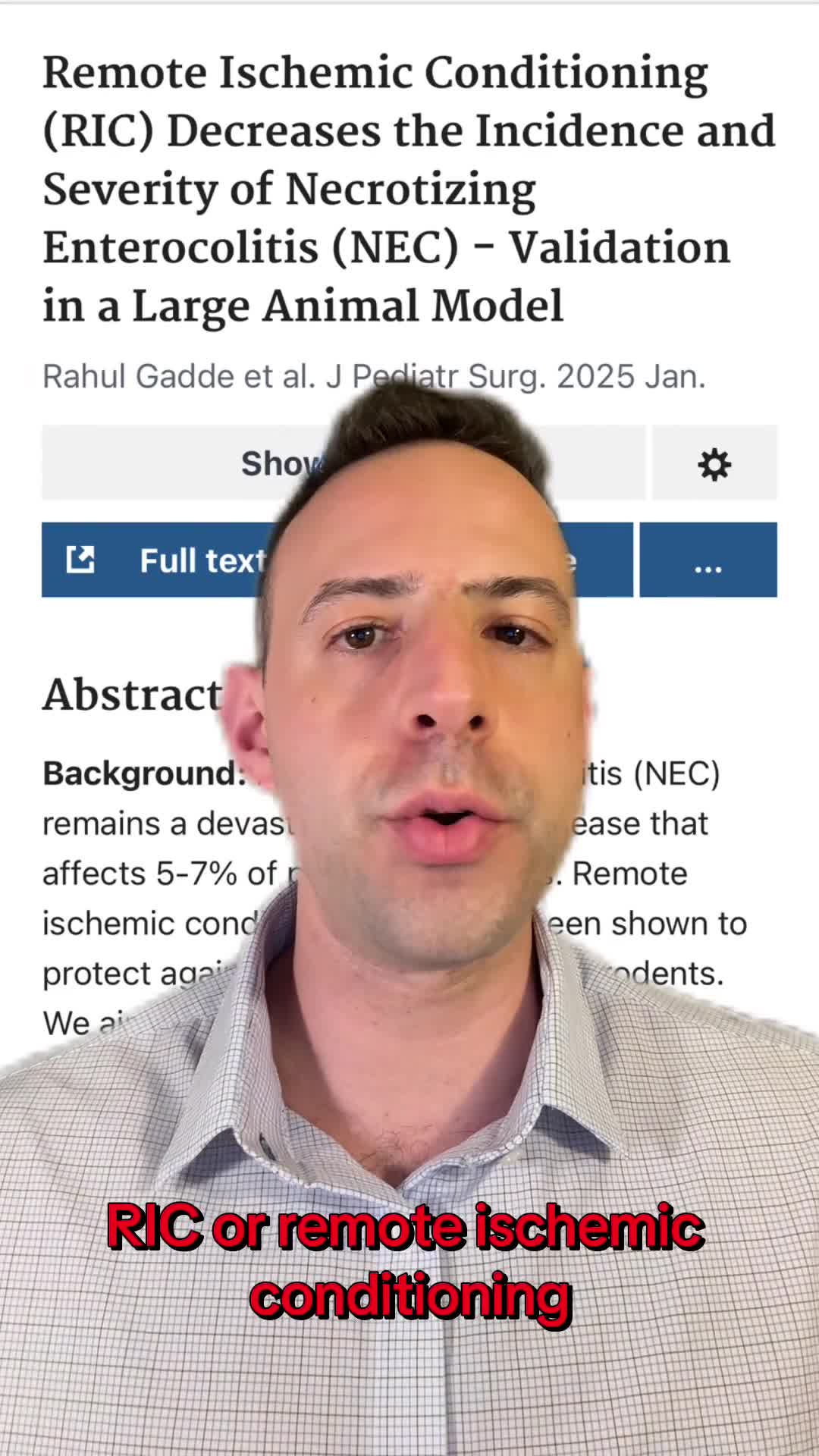
Remote Ischemic Conditioning (RIC) Decreases the Incidence and Severity of Necrotizing Enterocolitis (NEC) - Validation in a Large Animal Model
59 s · Published Apr 2025
Video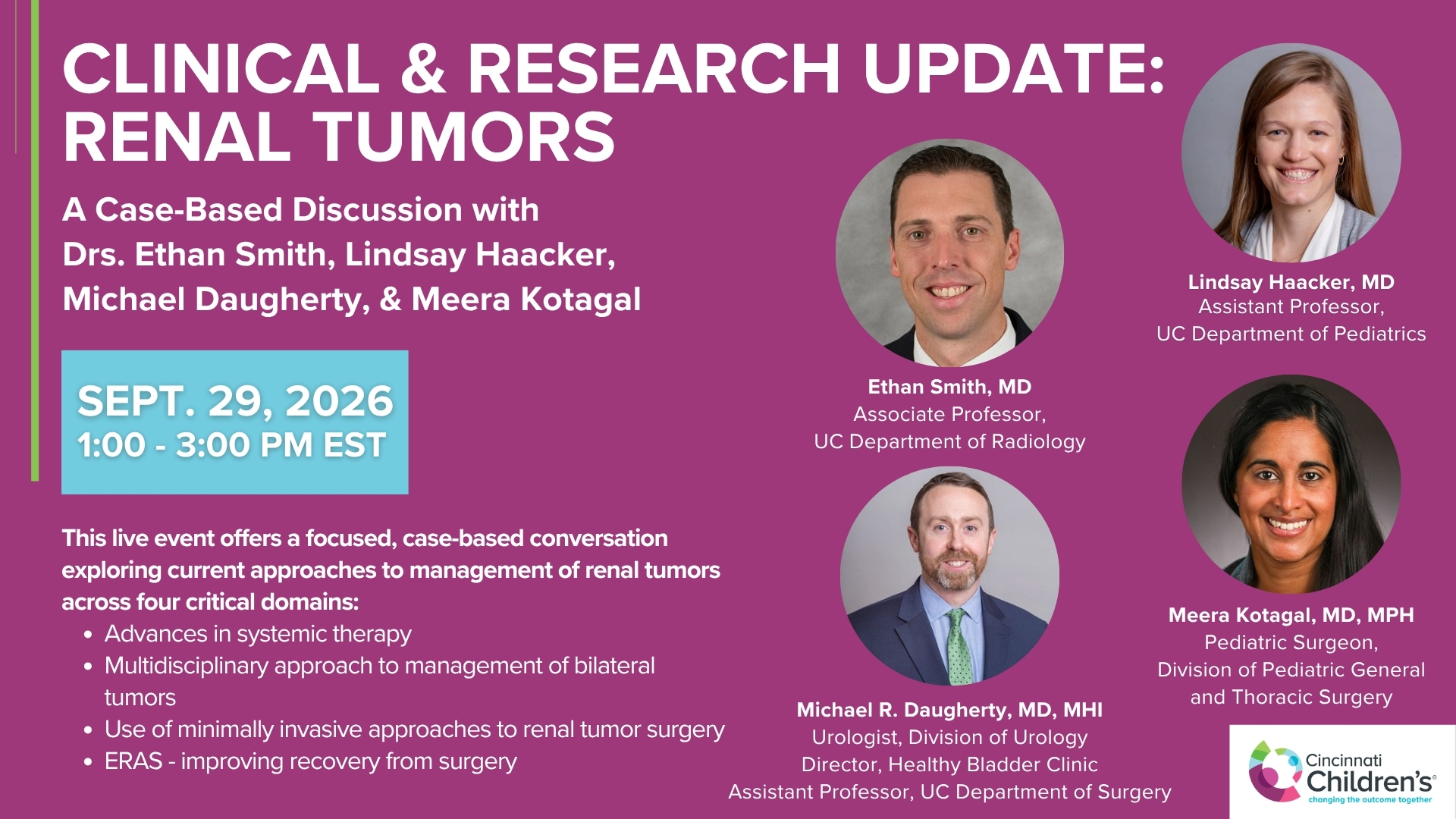
Clinical & Research Update: Renal Tumors with Drs. Ethan Smith, Lindsay Haacker, Michael Daugherty, and Meera Kotagal
71 min · Published Sep 2026
Video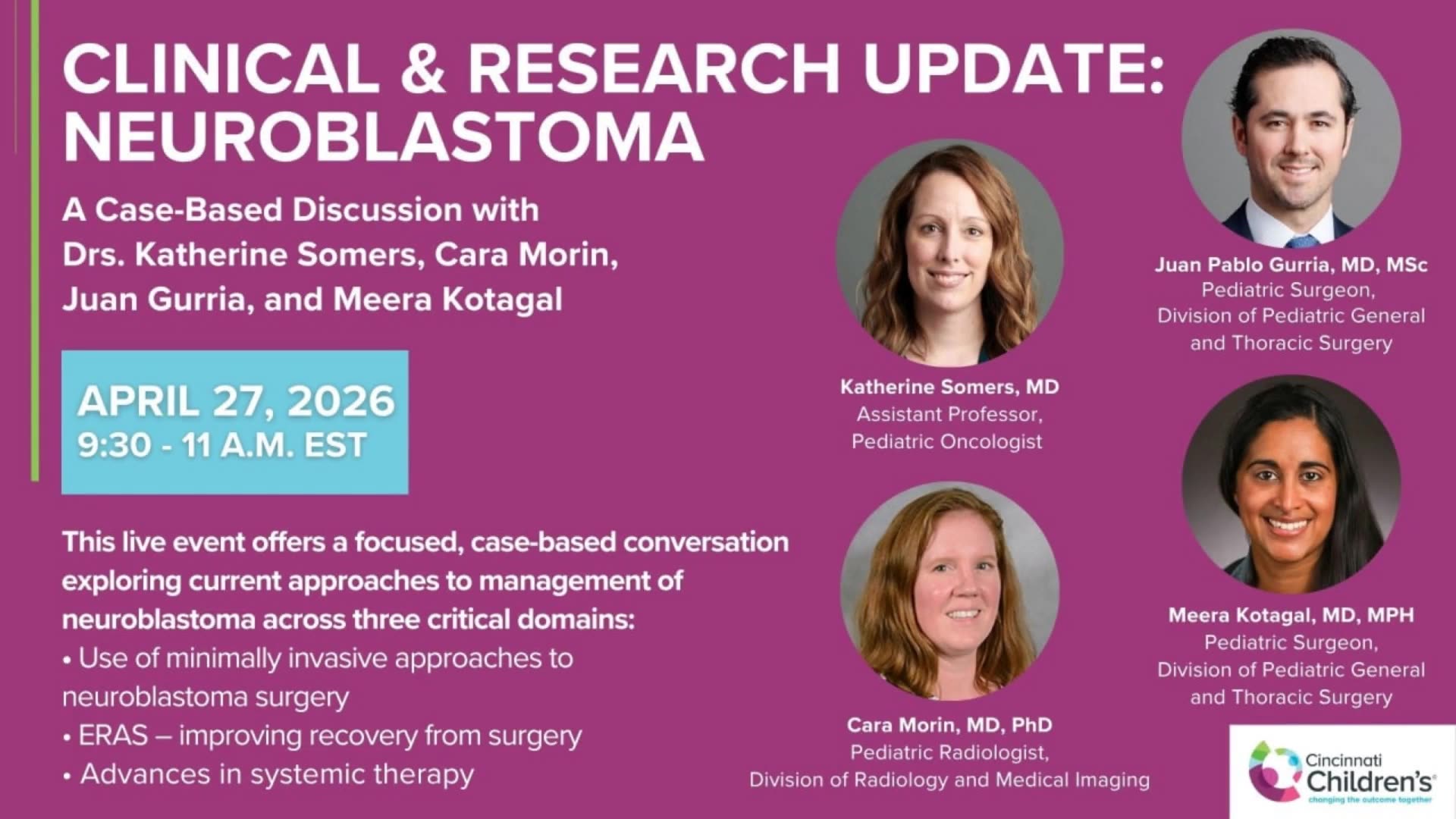
Clinical & Research Update: Neuroblastoma with Drs. Katherine Somers, Cara Morin, Juan Gurria, and Meera Kotagal
67 min · Published Sep 2026
Video
Clinical & Research Update: Sarcoma w/ Drs. Roshni Dasgupta, Joseph Pressey, Arthur Meyer, Luke Pater
66 min · Published Sep 2026
Video
2026 Laparoscopic Pediatric Hernia Repair
123 min · Published Jun 2026
Video
Beyond the Spectrum: Diagnosis, Myths & Management - Caitlin Couch & Leslie Lopez - APP Conference 2026
50 min · Published May 2026
Video
Dysautonomia: Navigating the Journey - Martha Willis - APP Conference 2026
55 min · Published May 2026
What the experts said
Home device delivery companies and ensuring patients have feeding pumps is a major bottleneck for same-day discharge after G-tube placement
Same-day discharge works best when patients already have an NG tube and feeding pump set up, requiring only G-tube education and care
Same-day surgery nurses' reluctance to teach G-tube care was a barrier to same-day discharge
Medical safety is not the reason clinicians keep G-tube patients in hospital overnight; logistics are the primary barrier
Morbidity does not change if a patient with penetrating abdominal trauma is observed for 24 hours without operation
Using two small holes to drain abscess, flushing it out, and placing a vessel loop resulted in one to two percent recurrence rate
Antibiotics can cool off perianal abscess and reduce recurrent problems, avoiding months of parental anxiety
Spinal ultrasound should be performed for imperforate anus to detect tethered cord and spinal dysraphism before spinal ossification
5,947 pediatric patients underwent elective laparoscopic gastrostomy tube placement in the study
4.7% of patients were discharged the same day after laparoscopic G-tube placement
Same day discharge rates nearly tripled during the study period for laparoscopic G-tube placement
There were no significant differences in any complications between patients discharged same day and those discharged one to two days postoperatively after laparoscopic G-tube placement
A NSQIP pediatric study from 2017 to 2021 found 6.2% of patients were discharged same day at the highest year, much lower than reported in the presented study
The American College of Surgeons study included approximately 1,900 patients with penetrating trauma
Laparoscopy was performed in 12% of penetrating trauma cases, mainly for stab wounds and at pediatric trauma centers
Laparoscopy for penetrating trauma showed no increase in complications compared to open surgery
Patients who had laparoscopy for penetrating trauma had shorter hospital stays and fewer follow-up procedures
The study found a low occurrence of missed injuries after laparoscopic exploration for penetrating trauma
Injury severity score was lower for patients who underwent laparoscopic surgery for penetrating trauma
A 2008 article by Amasiacos showed antibiotics decrease the formation of fistula in perianal abscess
The UK retrospective study included 43 patients managed surgically and 73 managed non-surgically for first episode of perianal abscess in children under 12 months
Surgical management for perianal abscess in infants included general anesthesia, incision and drainage, with some needing fistula treatment
Non-operative management for perianal abscess in infants included antibiotics, bedside aspiration, and bedside drainage
Non-operatively managed perianal abscess patients had higher risk of abscess recurrence and needing subsequent surgery, but avoided general anesthesia
The American Academy of Pediatrics recommends against incision and drainage for perianal abscess in infants
The American Academy of Pediatrics recommends against antibiotics if possible for perianal abscess in infants
If fistulas from perianal abscess are not operated on, they eventually go away in the high 90% of cases