
From
Live Event Content
Beyond ChatGPT_ AI Tools You’re Not Using (But Should) - Vail, CO
With Dr. Steven Rothenberg
Educational content from recorded physician discussions — not medical advice. Talk to your (or your child's) care team about your situation.
More about this diagnosis
ADHDVideo
Exercise Journal Club: Pediatric Obesity 2017
25 min · Published Feb 2018
Video
Traci Williams, MD - 2024 Pediatric Bariatric Surgery Update Course
19 min · Published Feb 2024
Video
Psychology Journal Club: Pediatric Obesity 2017
27 min · Published Feb 2018
Video
Psychosocial Outcomes: New Horizons in Medical and Surgical Fontan Management...
CCHMC Pediatric Surgery · 22 min · Published Jul 2017
Video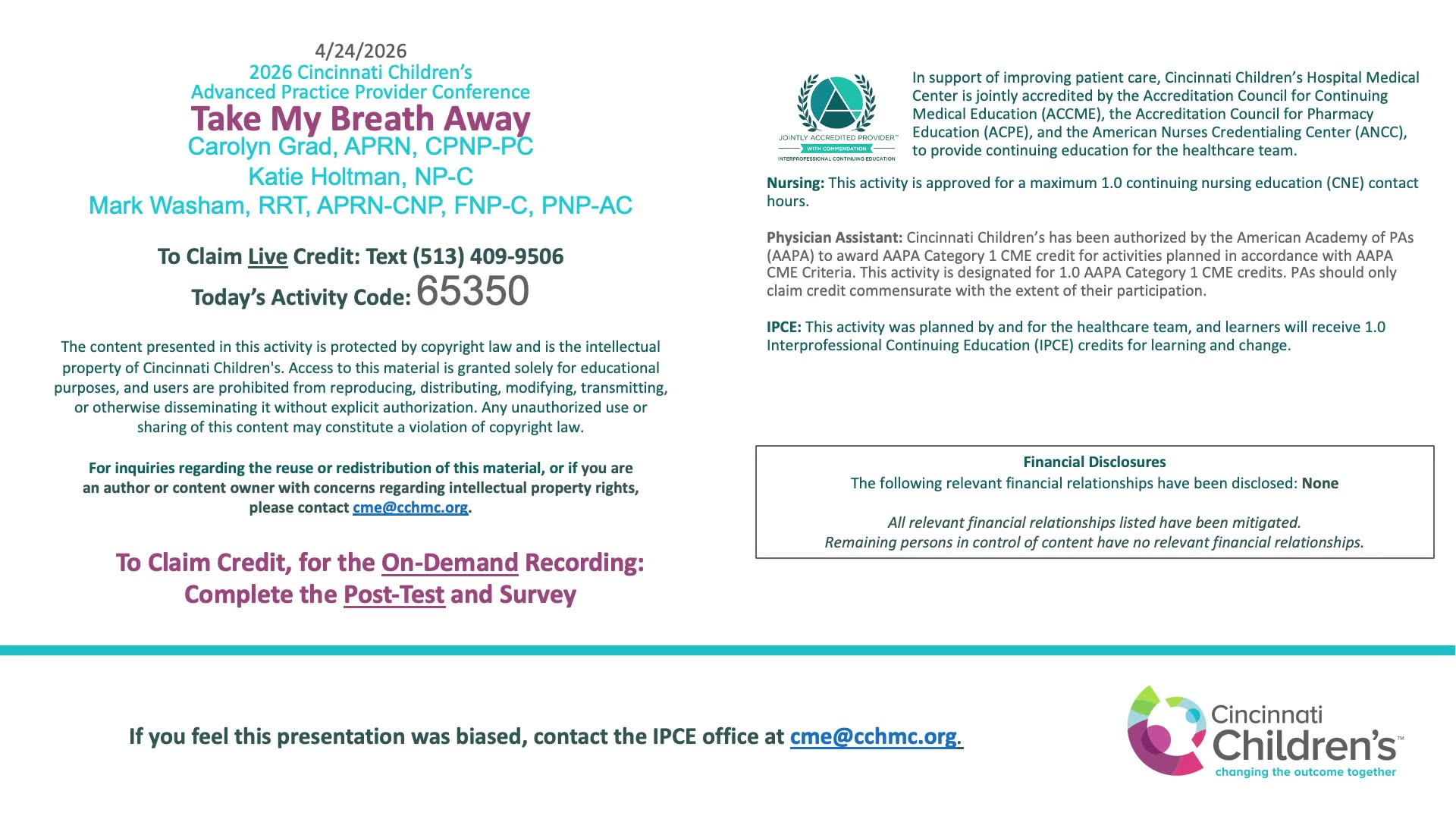
Take My Breath Away - Carolyn Grad, Mark Washam, & Katie Holtman - APP Conference 2026
58 min · Published May 2026
Video
Traumatic Brain Injuries - Allison Bailey, Susan Beiting, Zach Paff, & Caitlin Chicoine - APP Conference 2026
57 min · Published May 2026
Video
Ladd Medal Award Presentation Honoring Dr. Steven Rothenberg's Pioneering Minimally Invasive Pediatric Surgery
Dr. Steve Rothenberg · 33 min · Published May 2026
Video
PDA ligation by Dr. Steven Rothenberg
Dr. Steve Rothenberg · 6 min · Published Jun 2023
Video
Update Course Rewind: Pectus Excavatum 2021
Dr. Todd Ponsky · 11 min · Published Aug 2022
Podcast
Update Course Rewind: Magnet Therapy for Esophageal Atresia
10 min · Published Dec 2021
Video
Update Course Rewind: Thoracotomy vs VATS for Lung Metastases
Dr. Todd Ponsky · 9 min · Published Dec 2021
Video
Thoracoscopic TEF Repair, Is It Really Better Than Open? Update Course 2018
18 min · Published Aug 2018
Video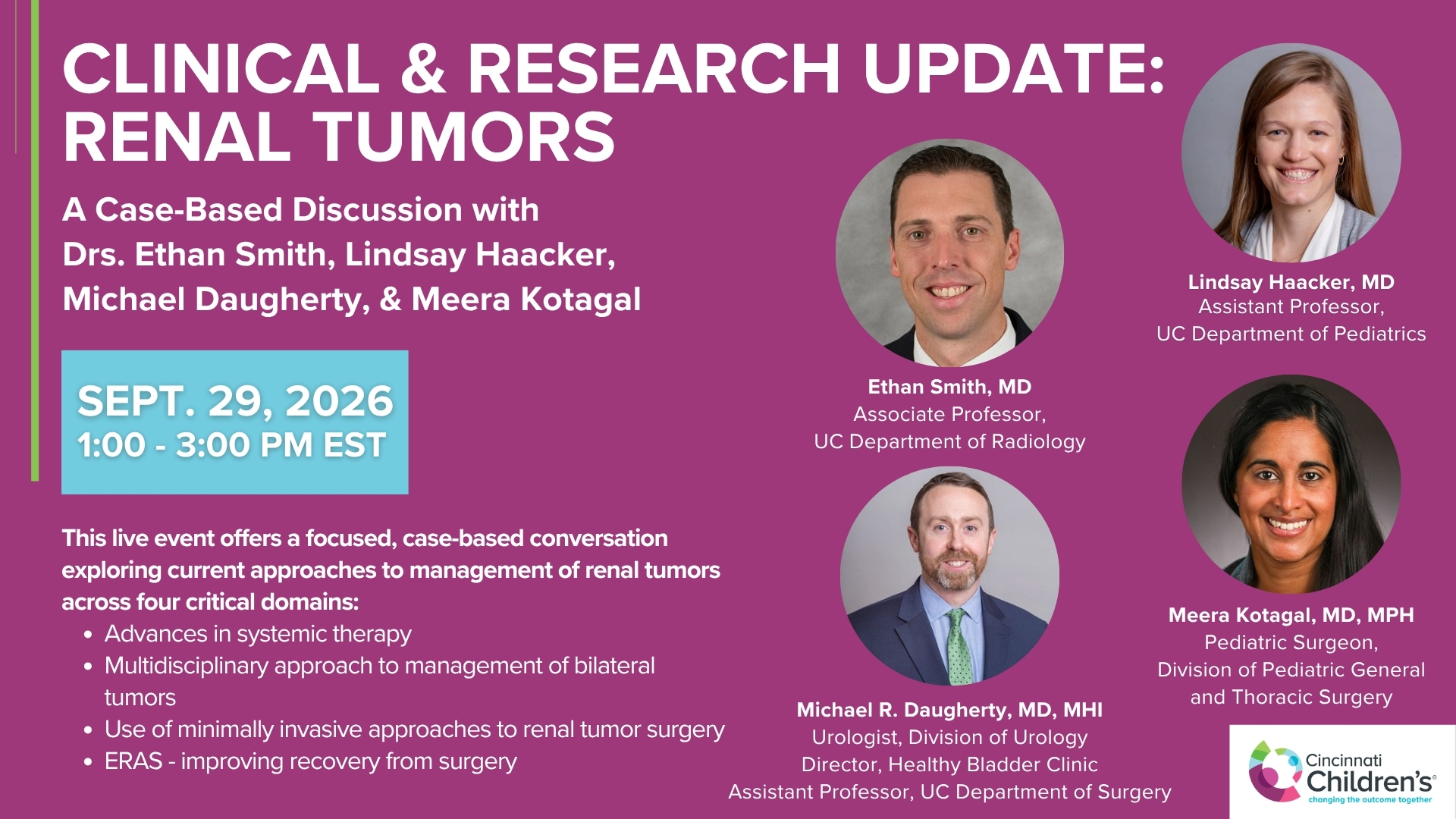
Clinical & Research Update: Renal Tumors with Drs. Ethan Smith, Lindsay Haacker, Michael Daugherty, and Meera Kotagal
71 min · Published Sep 2026
Video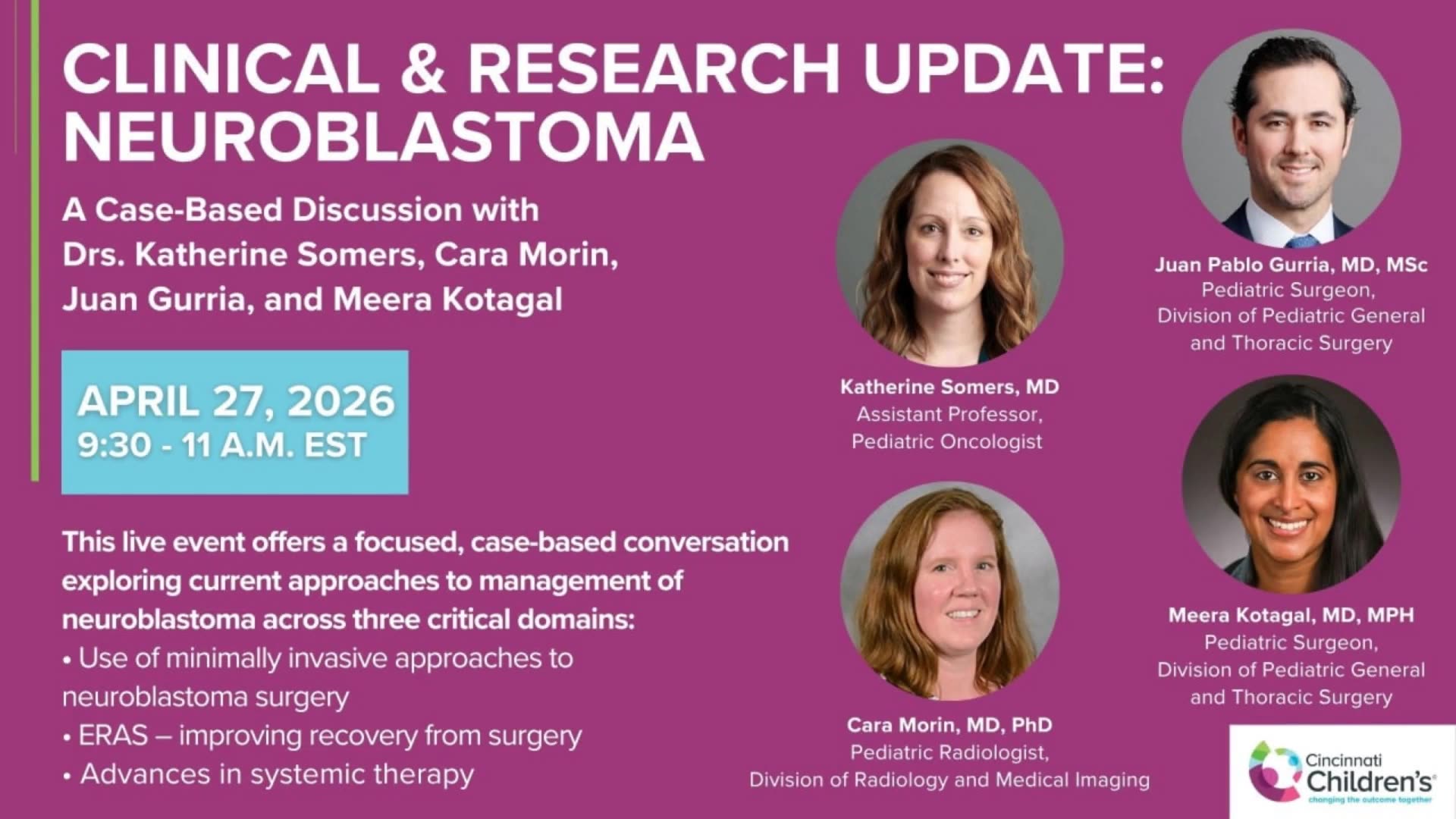
Clinical & Research Update: Neuroblastoma with Drs. Katherine Somers, Cara Morin, Juan Gurria, and Meera Kotagal
67 min · Published Sep 2026
Video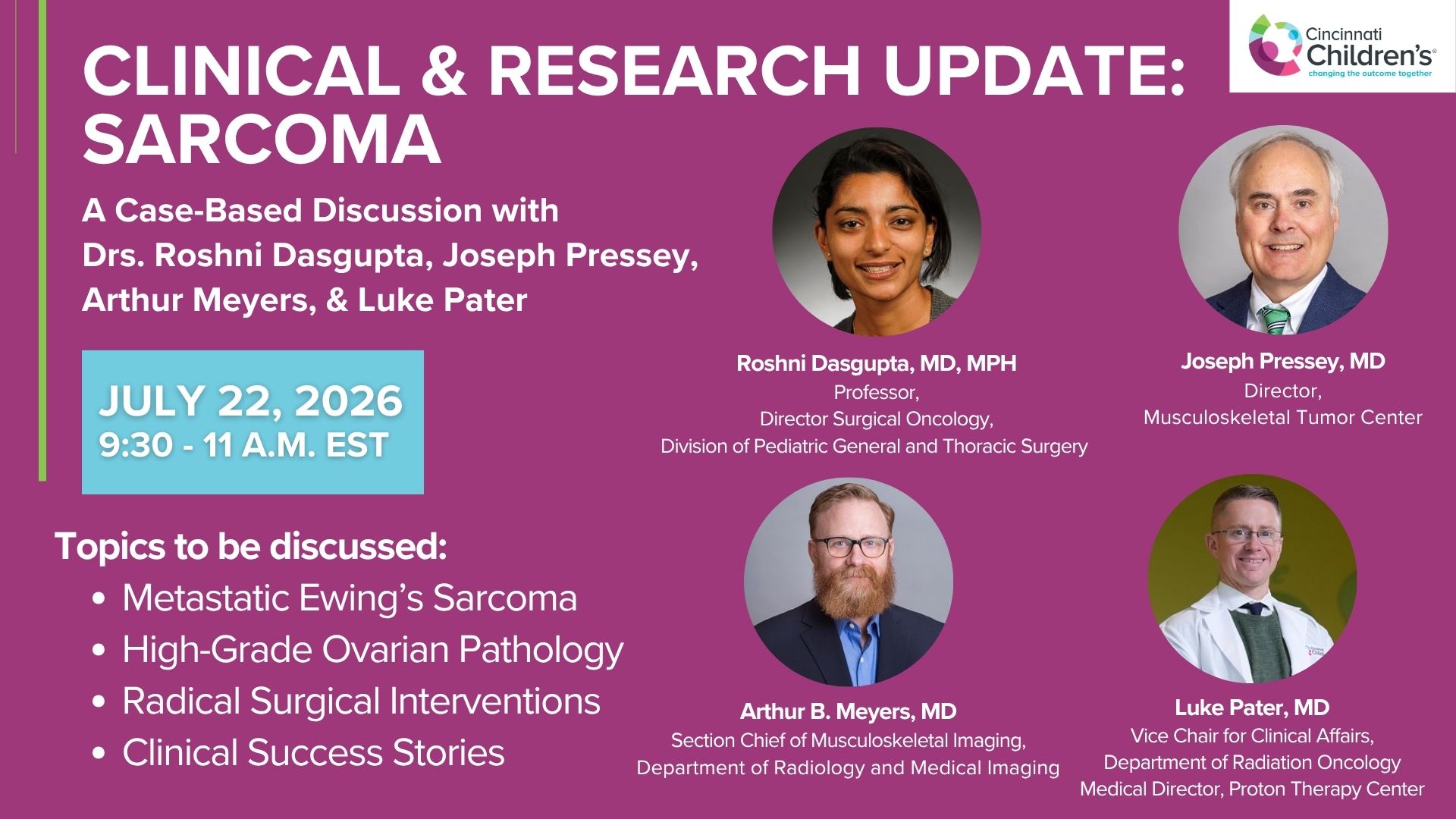
Clinical & Research Update: Sarcoma w/ Drs. Roshni Dasgupta, Joseph Pressey, Arthur Meyer, Luke Pater
66 min · Published Sep 2026
Video
2026 Laparoscopic Pediatric Hernia Repair
123 min · Published Jun 2026
Video
Beyond the Spectrum: Diagnosis, Myths & Management - Caitlin Couch & Leslie Lopez - APP Conference 2026
50 min · Published May 2026
Video
Dysautonomia: Navigating the Journey - Martha Willis - APP Conference 2026
55 min · Published May 2026
What the experts said
Healthcare professionals have approximately 18 months to adopt AI productivity tools before falling significantly behind peers who leverage these technologies.
Hospitals seeking AI advancement should pursue both top-down product acquisition and bottom-up workforce empowerment, with the latter potentially yielding greater productivity gains if employees increase efficiency by even 10%.
Vibe coding—using conversational AI to build custom applications without formal programming knowledge—enables non-technical users to create personalized productivity tools in minutes.
Retrieval-augmented generation (RAG) models restrict AI responses to uploaded documents only, preventing hallucinations by eliminating internet search and providing source citations.
Google is positioned to dominate AI development because it controls search infrastructure, manufactures its own chips (reducing Nvidia dependence), and offers advanced capabilities (Gemini) for free.
Claude AI provides more professionally appropriate writing for formal communications compared to ChatGPT, which excels at emotional intelligence and social interactions.
Opting out of model training in ChatGPT settings prevents user data from being shared with other users but does not guarantee OpenAI cannot access the information.
HIPAA-compliant AI use in healthcare requires Business Associate Agreements (BAAs) with vendors; institutional BAAs for platforms like Gemini cost approximately $50,000/month.
Effective AI prompting requires explicit, conversational instructions treating the model as a human colleague rather than relying on formal prompt engineering techniques.
ChatGPT context windows have limited memory—conversations exceeding 4-5 paragraphs lose earlier context, requiring branching strategies to maintain conversation coherence.
Using AI to polish academic writing for publication is controversial; some journals (Elsevier) prohibit AI-generated text, considering it plagiarism or inauthentic work.
The presenter's strategy for undetectable AI writing involves iterative editing across multiple models (ChatGPT, Claude) with instructions to introduce grammatical imperfections until both models classify output as human-written.
Descript enables video editing by modifying transcripts—cutting words from text automatically removes corresponding video segments, and AI can add new words in the speaker's voice.
Gamma currently produces the highest-quality AI-generated presentations with images, timelines, and editable layouts, surpassing ChatGPT's basic text-based outputs.
Notebook LM (Google) generates educational content including podcasts, flashcards, quizzes, and mind maps from uploaded documents, using significant computational resources yet remaining free.
Apple Shortcuts enable complex automation workflows on iOS devices, including home automation triggers (bathroom light monitoring) and hands-free ChatGPT voice mode access while driving.
Granola AI note-taking app addresses ADHD-related attention challenges by allowing users to ask 'What did I miss?' during meetings and receive context-aware summaries of recent discussion.
AI capabilities change weekly, requiring dedicated personnel (analogous to statisticians or Epic super users) to keep clinical teams updated on optimal tool selection and usage.
ChatGPT and similar models primarily source information from Reddit, Wikipedia, and Bing rather than Google, creating opportunities for strategic visibility optimization.
Open Evidence has become the fastest-adopted clinical technology in history, with 40% of clinicians worldwide using it for non-hallucinating, citation-backed clinical answers.