
From
Live Event Content
Traumatic Brain Injuries - Allison Bailey, Susan Beiting, Zach Paff, & Caitlin Chicoine - APP Conference 2026
With Dr. Alison Bailey & Dr. Zach Paff & Dr. Caitlin Chicoine · hosted by Dr. Susie Biding
Part of
Traumatic Brain Injury 4 items
Educational content from recorded physician discussions — not medical advice. Talk to your (or your child's) care team about your situation.
Podcast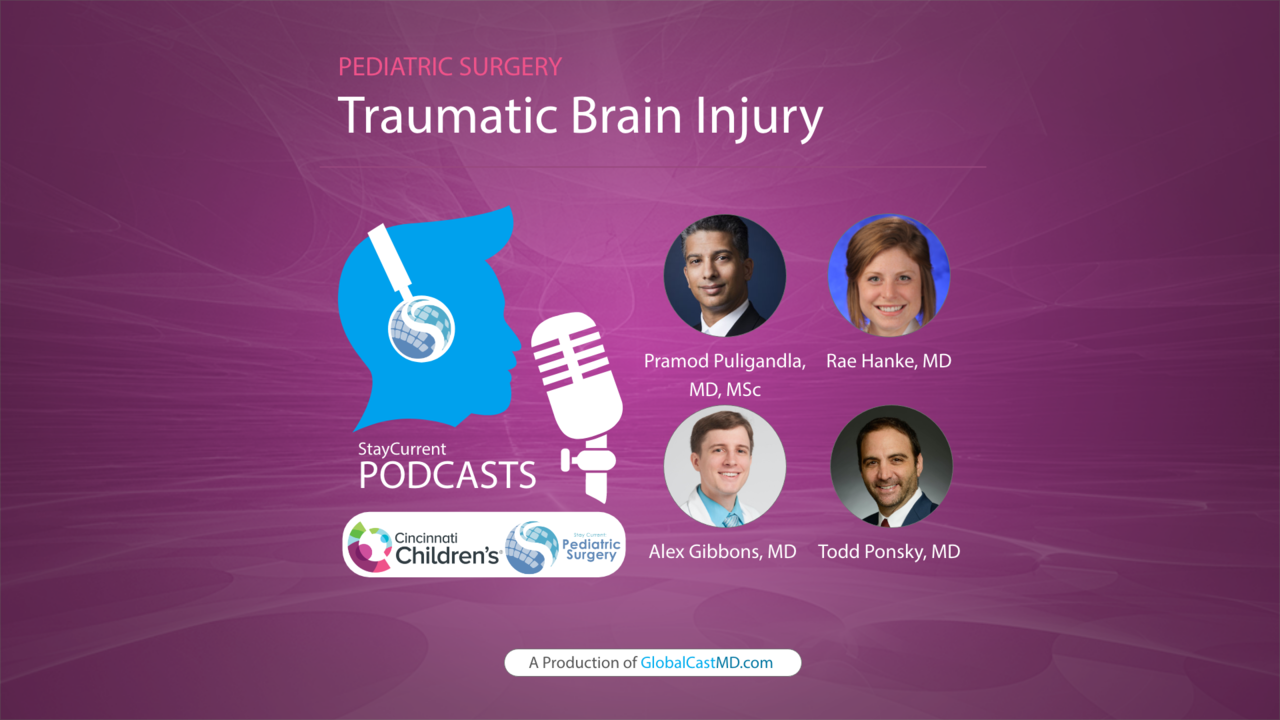
Traumatic Brain Injury
14 min · Published Nov 2019
Video
Article of Interest: Optimal Timing of Tracheostomy in Injured Adolescents
1 min · Published Aug 2022
Video
Pediatric Trauma Screening For Non-Accidental Trauma: Pediatric Trauma Series...
64 min · Published Jan 2018
Video
Evaluation of the Pediatric Abdomen-Who needs a CT for Blunt Abdominal...
34 min · Published Nov 2017
Video
Abdominal Evaluation: Pediatric Trauma Series 2017
85 min · Published Jan 2018
Podcast
Trauma
56 min · Published May 2017
Only a few other public items share this expert — go deeper there →
Video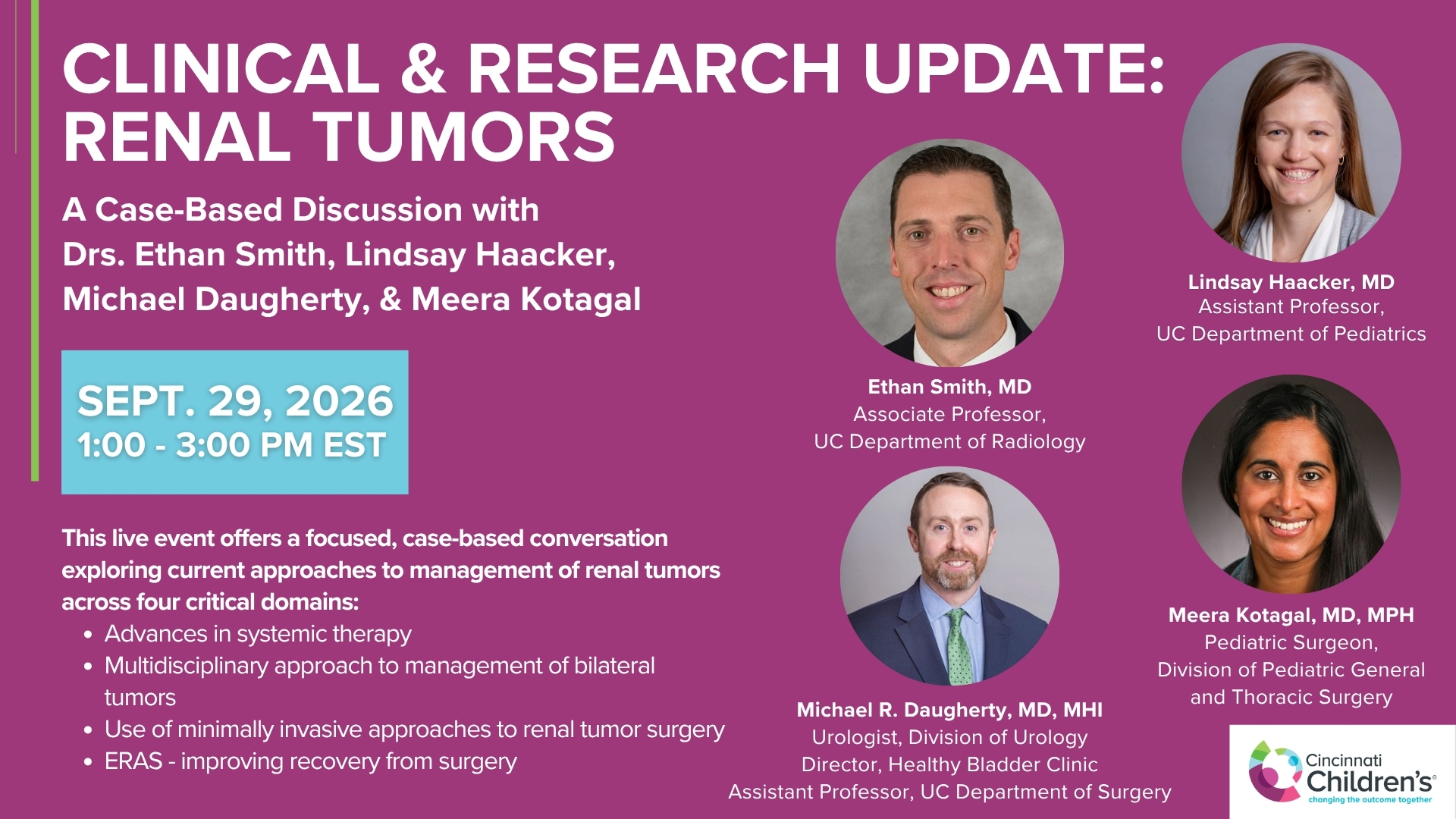
Clinical & Research Update: Renal Tumors with Drs. Ethan Smith, Lindsay Haacker, Michael Daugherty, and Meera Kotagal
71 min · Published Sep 2026
Video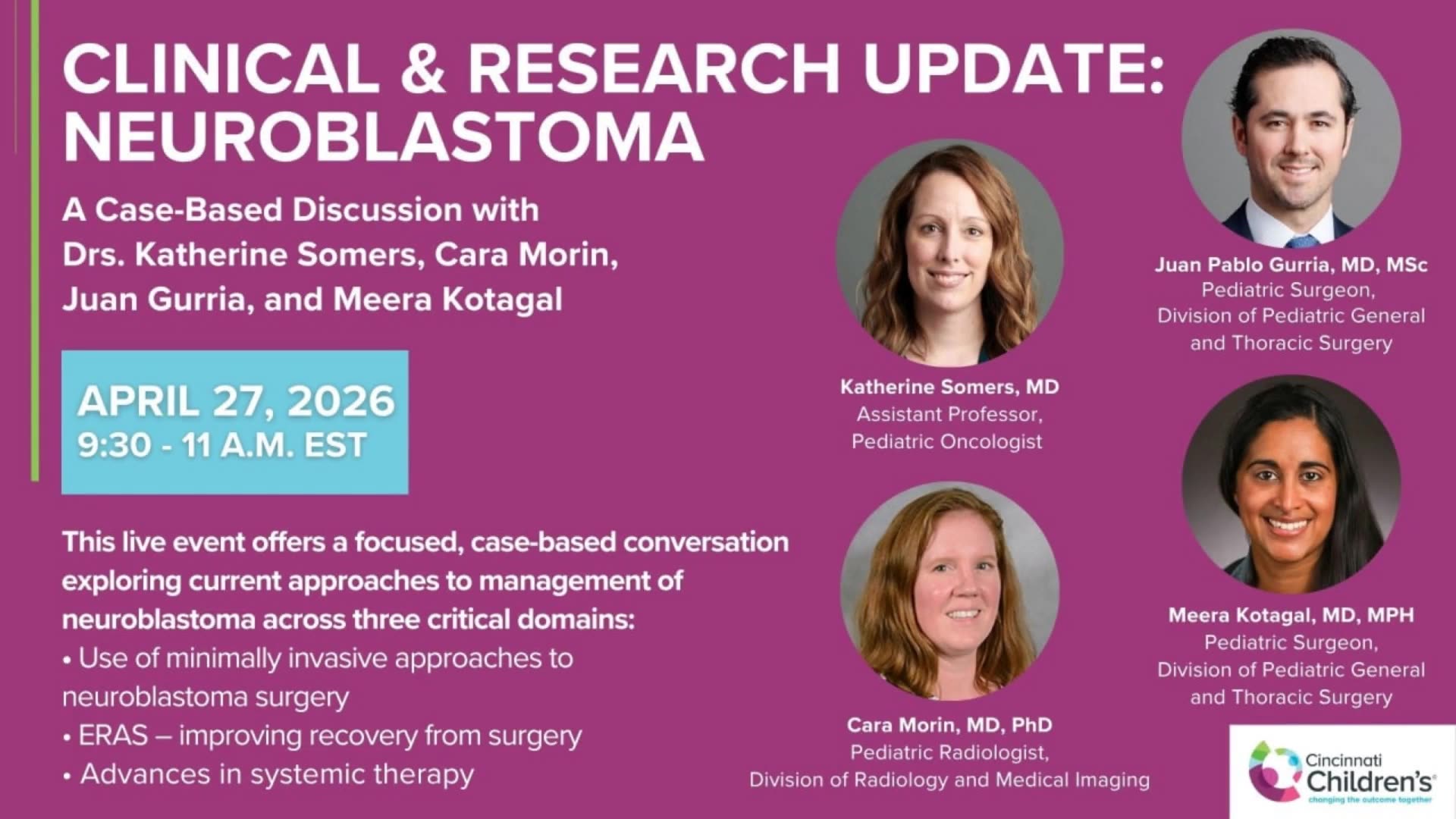
Clinical & Research Update: Neuroblastoma with Drs. Katherine Somers, Cara Morin, Juan Gurria, and Meera Kotagal
67 min · Published Sep 2026
Video
Clinical & Research Update: Sarcoma w/ Drs. Roshni Dasgupta, Joseph Pressey, Arthur Meyer, Luke Pater
66 min · Published Sep 2026
Video
2026 Laparoscopic Pediatric Hernia Repair
123 min · Published Jun 2026
Video
Beyond the Spectrum: Diagnosis, Myths & Management - Caitlin Couch & Leslie Lopez - APP Conference 2026
50 min · Published May 2026
Video
Dysautonomia: Navigating the Journey - Martha Willis - APP Conference 2026
55 min · Published May 2026
What the experts said
Traumatic brain injury (TBI) is a disruption of normal brain function caused by an external force, either a blow to the head or a penetrating injury that directly damages brain tissue.
Falls account for approximately 50% of pediatric TBIs in the United States, making them the most common mechanism.
Being struck in the head by an object accounts for about 28% of pediatric TBI cases.
Motor vehicle crashes are the leading cause of TBI-related death in children older than 5 years.
Homicide is the leading cause of TBI-related death in children ages 4 and younger.
The Glasgow Coma Scale (GCS) is a standardized assessment that objectively evaluates a patient's level of consciousness by examining eye-opening, verbal response, and motor response, producing a total score from 3 to 15.
Mild TBI corresponds to a GCS score of 13 to 15, moderate TBI to 9 to 12, and severe TBI to a score of 8 or less.
Patients with moderate TBI typically require neuroimaging and hospital admission for monitoring.
Patients with severe TBI often cannot protect their airway and require intensive care monitoring and neurosurgical evaluation.
The PECARN head CT rule is a validated tool designed to identify children at very low risk of clinically important brain injuries after minor blunt head trauma, helping to avoid unnecessary CT scans and radiation exposure.
For children younger than 2 and those 2 years or older, a CT scan is recommended if the child has altered mental status, a GCS less than 15, or signs of a skull fracture.
If no high-risk PECARN criteria are present, the rule guides weighing other factors such as loss of consciousness, vomiting, severe headache, or severe mechanism of injury to decide between observation or CT imaging.
Given a declining neurologic status and GCS below 8, the immediate priority is protecting the airway to prevent hypoxia and hypoventilation; there is a saying 'GCS less than 8, intubate.'
The Monro-Kelley doctrine states that the skull is a fixed rigid space containing brain, blood, and CSF; if any one of these increases, pressure rises.
The body can compensate for increased intracranial volume by pushing out CSF and reducing venous blood flow, but there are limitations to this compensation.
Tonsillar herniation, where the cerebral tonsils are pushed downward through the base of the skull, results in respiratory arrest and death.
Early signs of herniation include the Cushing's triad (hypertension and bradycardia) and posturing.
Emergency interventions for impending herniation include hyperventilation to lower CO₂, 100% oxygen, intubation if not already done, 3% saline, and opening an external ventricular drain (EVD) if present to drain CSF.
PICU goals for TBI patients include maintaining normal oxygen levels to prevent tissue hypoxia, normal PaCO₂ by titrating the ventilator, ICP less than 20 mmHg, and cerebral perfusion pressure (CPP) of 40 to 60 mmHg based on age.
Cerebral perfusion pressure (CPP) is calculated as mean arterial pressure (MAP) minus intracranial pressure (ICP).
CPP represents the driving pressure for cerebral blood flow, while ICP provides resistance to that driving pressure.
MAP is augmented by giving fluid, volume, and inotropes; ICP is reduced by giving sedation, paralytics, 3% saline, and ensuring the patient is positioned neutral and midline to avoid impeding venous return.
Immediate interventions for elevated ICP include ensuring the head is midline and administering a sedative.
Hyperosmolar therapy with 3% saline (approximately 3 times the sodium concentration of normal saline) is given as a 4 mL/kg bolus or continuous infusion, targeting serum osmolarity of 275 to 295 mOsm/L.
3% saline has benefits over mannitol including less diuretic effect, steadier ICP control, and better tolerance of higher osmolarities.
If osmolarity is driven too high (above 360 mOsm/L), complications include thrombosis and stroke.
Sodium is the most important contributor to serum osmolarity, calculated as 2 times the sodium plus BUN divided by 2.8 plus glucose divided by 18.
Hyperosmolar therapy works by creating an osmotic gradient that draws water out of brain cells into the extracellular space, shrinking the brain and decreasing ICP.
Sedation is the backbone of PICU management for TBI patients; it prevents ICP spikes by relaxing the patient, decreases metabolic demand and brain activity, reduces oxygen demand, and decreases cerebral blood flow.
Neuromuscular blockade prevents shivering during temperature control, stops posturing or storming, and reduces metabolic demand and oxygen consumption; it also allows better venous drainage by relaxing the patient.
CO₂ regulates cerebral blood flow: high CO₂ causes vasodilation and increased cerebral blood volume, raising ICP; low CO₂ causes vasoconstriction and decreased blood flow.
Target PaCO₂ is tightly controlled at 35 to 45 mmHg; brief hyperventilation can be used for impending herniation or very high ICP spikes, but prolonged hyperventilation risks tissue ischemia.
High positive end-expiratory pressure (PEEP) can impede venous drainage and raise ICP, so PEEP must be balanced to keep lungs open without excessive pressure.
Barbiturate coma (using pentobarbital) massively reduces metabolic demand and cerebral activity, decreasing cerebral blood flow and ICP; the brain is kept at rest while on continuous EEG monitoring.
Barbiturates have significant side effects including severe hypotension requiring inotropes, direct cardiac suppression, and immune suppression with prolonged use, increasing sepsis risk.
If medical management fails, decompressive craniectomy removes part of the skull bone, allowing the brain to expand outward and reducing ICP by manipulating the Monro-Kelley doctrine.
The trauma team organizes care conferences with the family, ICU team, rehab team, neurosurgery, neurology, therapists, and nurses to ensure shared understanding of injuries, management, and goals.
On the trauma step-down floor, focus shifts from stabilization to recovery and rehabilitation, including continuing therapy services (PT, OT, speech), normalizing medical care by transitioning to oral medications and regular diet, and providing family support.
To qualify for inpatient rehab, children must require at least 2 of the 3 primary therapy disciplines (PT, OT, speech) and tolerate at least 3 hours of therapy per day on at least 5 days per week.
To be ready for inpatient rehab, patients need to be fairly medically stable: afebrile for at least 24 hours, tolerating full enteral nutrition, pain controlled on oral medications, and having a stable plan for respiratory support.
Inpatient rehab is considered a separate hospital stay from an insurance standpoint and requires prior authorization.
The inpatient rehab team includes PMNR physicians, nursing, therapeutic recreation, music therapy, integrative care, child life, school team, psychology, nutrition, social work, and care manager.
An evaluation and planning meeting is held within a few days of admission, where the team reviews the patient's case and current status, then the family joins to discuss plans, answer questions, and set a tentative discharge date.
Disorder of consciousness (DOC) is an alteration in level of awareness of self and environment, divided into coma (unresponsive, no sleep-wake cycles, eyes closed), unresponsive wakefulness (unresponsive but with sleep-wake cycles and eyes open), and minimally conscious (inconsistent but clear responses to environment such as visual tracking or following commands).
Patients are considered to have emerged from disorder of consciousness when they demonstrate accurate yes/no responses and functional object use (e.g., using a comb correctly).
Patients with disorder of consciousness are appropriate candidates for inpatient rehab, though their engagement in therapies will look different.
Goals for patients with DOC include stimulating wakefulness by weaning sedating medications, optimizing nighttime sleep, providing daytime stimulation through therapeutic activities, and using dopaminergic medications.
The Coma Recovery Scale–Revised is used to monitor subtle changes in responsiveness as medications are adjusted and therapy progresses.
Paroxysmal sympathetic hyperactivity (PSH or 'storming') is a dysautonomia representing excessive sympathetic nervous system activity due to loss of normal inhibitory influences from the brain, causing non-noxious stimuli to be perceived as noxious.
PSH presents as spells of increased sympathetic activity: high heart rate, high blood pressure, high respiratory rate, increased temperature, and posturing.
PSH is a diagnosis of exclusion; other medical problems such as infection, pulmonary embolism, or appropriate pain response must be ruled out.
First-line treatment for PSH is environmental interventions (calm room, repositioning, changing soiled clothes); medications such as propranolol, clonidine, benzodiazepines, or gabapentin may be used as needed or scheduled, but many are sedating.
The Ranchos Los Amigos scale describes stages of cognitive recovery; level 4 (confused and agitated) is common and temporary, typically occurring before emergence from post-traumatic amnesia when patients are not yet forming new memories.
For agitation at Ranchos level 4, environmental interventions are preferred: avoiding overstimulation, turning down lights, limiting visitors, and minimizing tubes and lines when possible.
At Ranchos level 5, patients remain confused and no longer agitated but are not yet appropriate; they have impaired memory and may confabulate, which can be distressing to parents.
More than 50% of children with traumatic brain injuries develop novel psychiatric disorders such as ADHD or anxiety after their injury.
Common impairments after TBI include motor deficits (weakness, increased tone, impaired coordination and balance), sensory deficits (loss of smell, visual deficits, hearing loss), dysphagia, behavior issues, and cognitive/communication difficulties (aphasia, attention, memory, processing speed, executive functioning problems).
Crucial players in transition home include nurses (provide education), social work (connect to community resources, help with transportation and home modifications), and care manager (orders equipment and supplies, ensures smooth transition to outpatient therapy).
For complex patients, a 24-hour stay simulates being at home while still admitted to rehab: the family initiates all care, gives tube feeds, and asks for medications when due, with backup support from the team.
Patients typically complete neuropsychological testing while on rehab to understand cognitive function and inform their school plan; the school liaison communicates directly with the school about current needs and facilitates transition.