
From
Live Event Content
Take My Breath Away - Carolyn Grad, Mark Washam, & Katie Holtman - APP Conference 2026
With Dr. Carolyn Grad & Dr. Mark Washam & Dr. Katie Holtman
Part of
Obstructive Sleep Apnea 3 items
Educational content from recorded physician discussions — not medical advice. Talk to your (or your child's) care team about your situation.
Video
Evan Nadler, MD - 2024 Pediatric Bariatric Surgery Update Course
29 min · Published Feb 2024
Video
Postoperative Pediatric Pain Practice Post the Codeine Era: Peri-Operative...
61 min · Published Jul 2017
Video
Obesity: Advanced Practice Providers
36 min · Published Feb 2014
Video
Making the Assessment, Management and Treatment of Obesity Come Alive in Your...
46 min · Published Jul 2017
Podcast
Bariatric Surgery in the Pediatric Patient
49 min · Published Jan 2018
Video
Laura Glaganski, MD & Jagroop (Rupi) Parikh - 2024 Fetal Care Center Navigating Perinatal Care for Trisomy 13 & 18
24 min · Published Dec 2024
Only a few other public items share this expert — go deeper there →
Video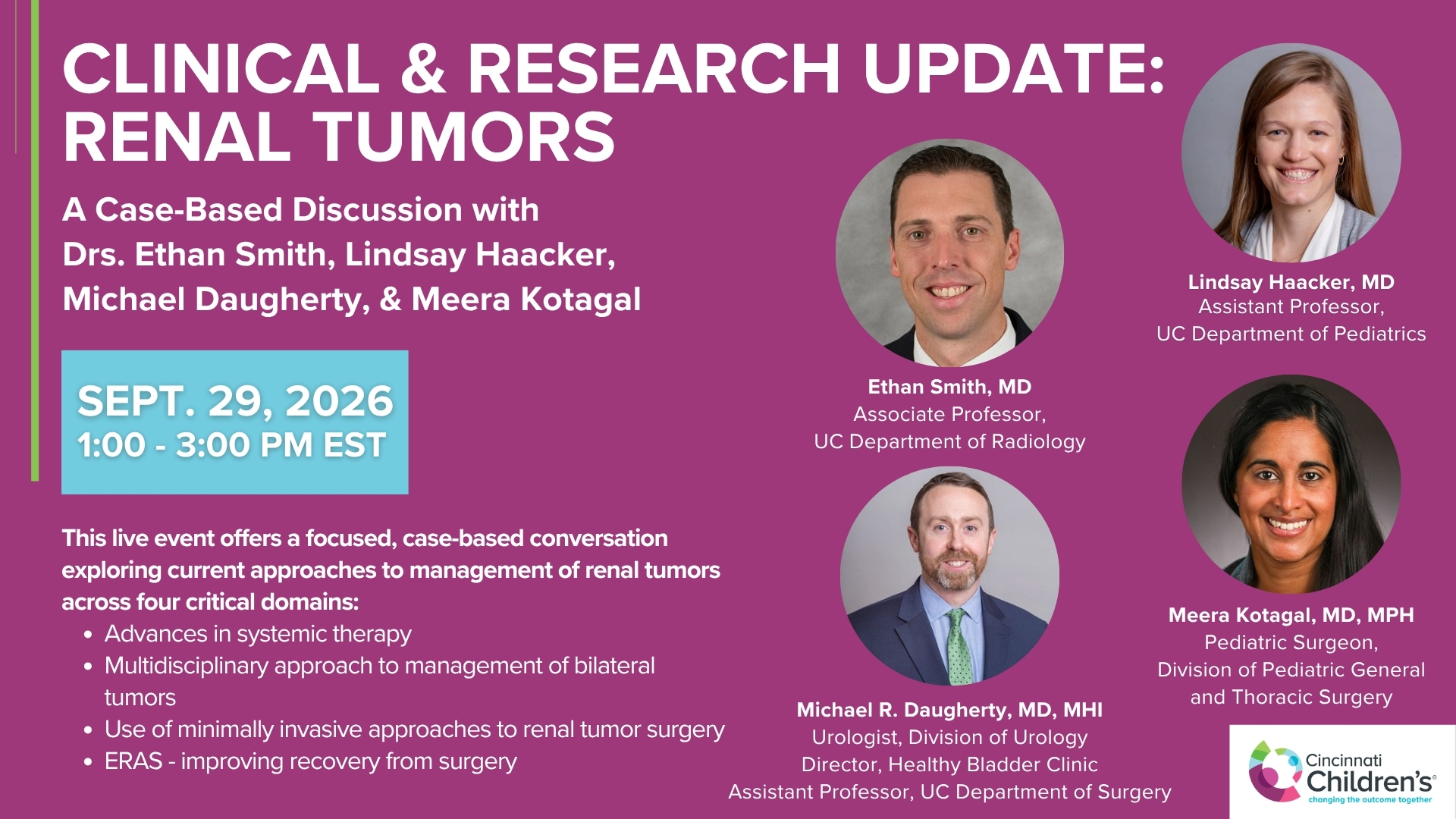
Clinical & Research Update: Renal Tumors with Drs. Ethan Smith, Lindsay Haacker, Michael Daugherty, and Meera Kotagal
71 min · Published Sep 2026
Video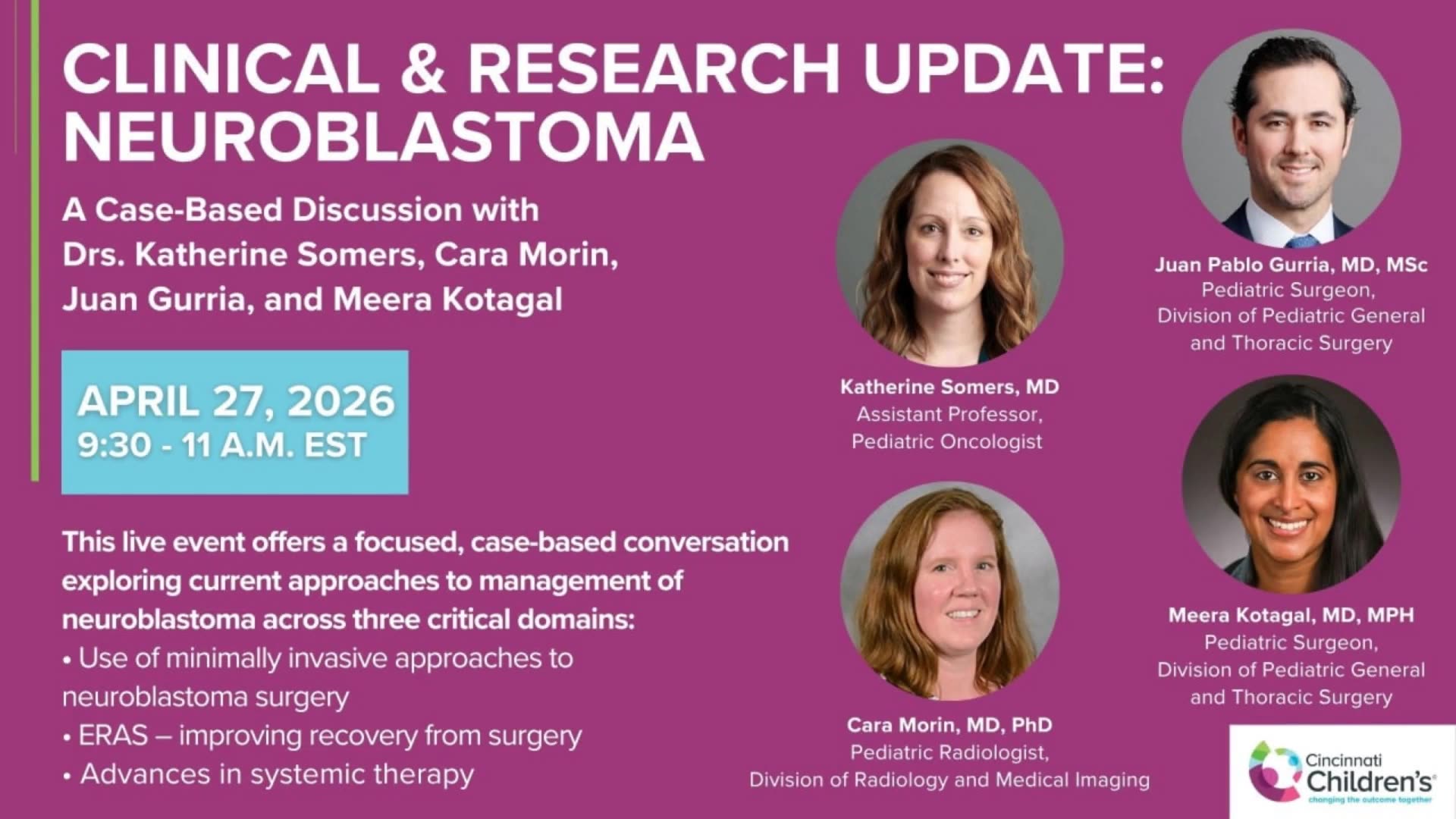
Clinical & Research Update: Neuroblastoma with Drs. Katherine Somers, Cara Morin, Juan Gurria, and Meera Kotagal
67 min · Published Sep 2026
Video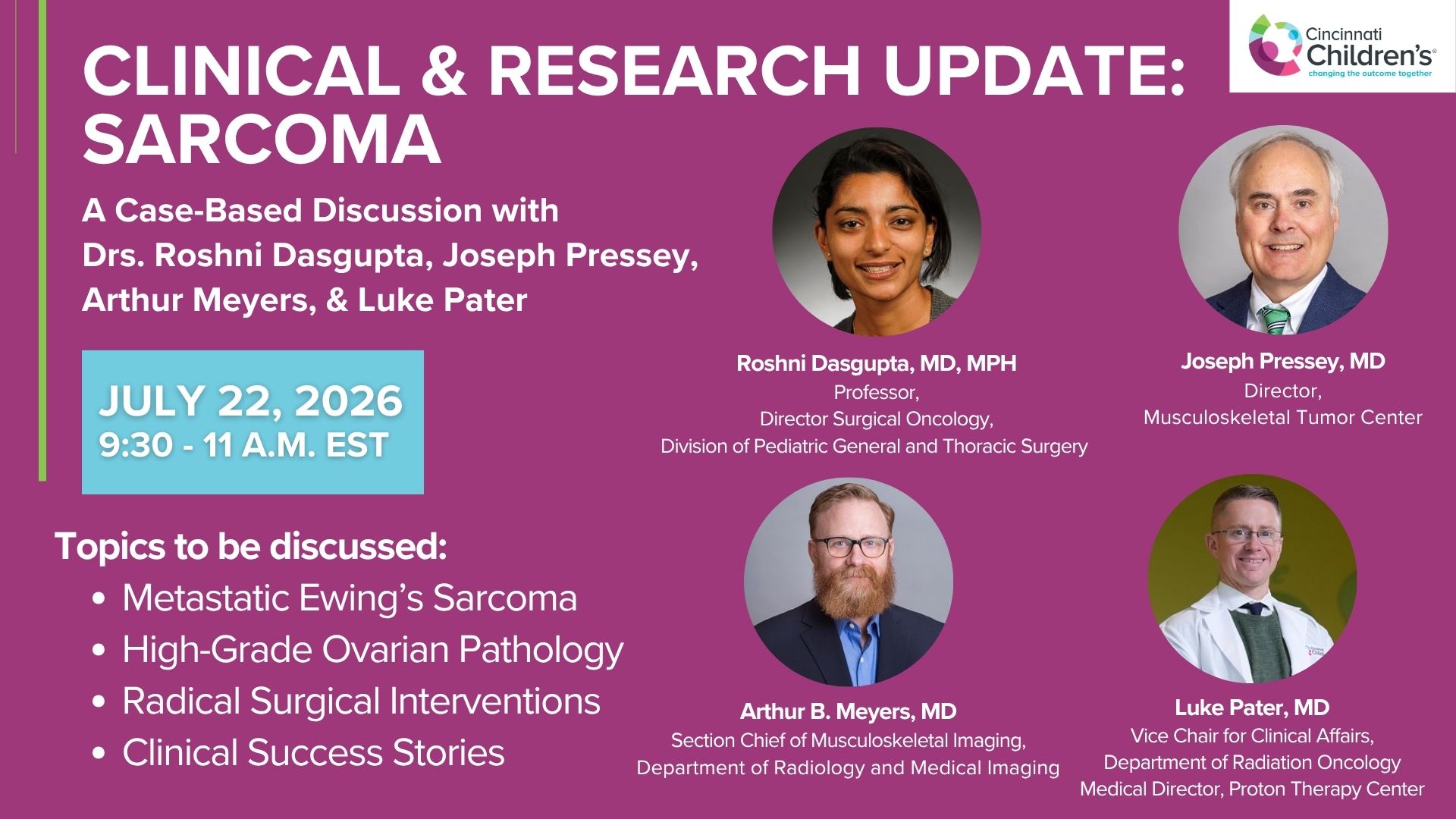
Clinical & Research Update: Sarcoma w/ Drs. Roshni Dasgupta, Joseph Pressey, Arthur Meyer, Luke Pater
66 min · Published Sep 2026
Video
2026 Laparoscopic Pediatric Hernia Repair
123 min · Published Jun 2026
Video
Beyond the Spectrum: Diagnosis, Myths & Management - Caitlin Couch & Leslie Lopez - APP Conference 2026
50 min · Published May 2026
Video
Dysautonomia: Navigating the Journey - Martha Willis - APP Conference 2026
55 min · Published May 2026
What the experts said
Obstructive sleep apnea accounts for over 95% of pediatric sleep apnea cases.
Central sleep apnea is characterized by decreased or absent respiratory drive rather than physical airway obstruction.
Untreated sleep apnea causes low-grade suffocation at the tissue and cellular level, preventing oxygen delivery to brain and body.
The brain wakes the patient to restore breathing during apneic events, resulting in fragmented sleep and insomnia.
Untreated OSA can cause cardiac enlargement and dysfunction because the heart works harder without adequate oxygen.
Sleep deprivation from OSA leads to insulin resistance, metabolic dysfunction, and poor dietary choices.
OSA commonly presents with school difficulties including attention problems, focus issues, and academic decline that may be mistaken for ADHD.
In-laboratory polysomnography is the gold standard for diagnosing pediatric sleep apnea as of today.
Home oximetry studies show oxygen fluctuation but cannot assess airflow, sleep state, or definitively diagnose OSA.
The American Academy of Sleep Medicine does not recommend home sleep apnea testing for children because pediatric sleep is more complex than adult sleep and changes over time.
Polycythemia on CBC can indicate the body is compensating for chronic hypoxia from untreated sleep apnea.
Brain conditions like Chiari malformations or brain injuries can cause central sleep apnea by affecting respiratory drive.
Polysomnography measures EEG, nasal airflow, jaw and facial muscle movement, chest wall motion, transcutaneous CO2, and includes audio and video recording.
The American Academy of Sleep Medicine, American Academy of Pediatrics, and American Thoracic Society all endorse in-laboratory polysomnography as the gold standard for diagnosing pediatric sleep apnea.
High-risk conditions for sleep apnea include Down syndrome, tonsillar hypertrophy, midface or mandibular hypoplasia, macroglossia, generalized muscular hypotonia, obesity syndromes like Prader-Willi, and craniofacial abnormalities including cleft palate.
Patients with burn injuries to the face who wear scar-management masks can develop abnormal facial growth leading to sleep apnea.
OSA prevalence is 9-12% in healthy-weight children but increases to nearly 50% in children with obesity.
Each unit increase in BMI carries a 1.9% increased risk for obstructive sleep apnea.
Children with obesity who do not have OSA may develop it as adults, making weight management counseling important.
Congenital central alveolar hypoventilation syndrome (Ondine's curse) is a rare form of central sleep apnea where patients do not generate respiratory effort during sleep.
OSA is diagnosed when there is greater than one obstructive event per hour of sleep, or obstructive hypoventilation with transcutaneous CO2 above 50 mmHg for 25% of sleep time, associated with snoring, paradoxical breathing, or flattened nasal airflow waveform.
OSA severity is graded by apnea-hypopnea index (AHI): mild 1-4 events/hour, moderate 5-9 events/hour, severe greater than 10 events/hour.
Treatment decisions consider both AHI severity and daytime functional impact; a patient with moderate AHI and severe daytime symptoms requires more aggressive treatment than someone with similar AHI but no symptoms.
For infants with AHI less than 10, oxygen therapy can blunt OSA impact by preventing desaturations, though it does not cure the obstruction.
Split-night sleep studies perform diagnostic assessment in the first half and therapeutic intervention (such as oxygen or CPAP titration) in the second half.
Infants on oxygen for OSA feed better because they are obligate nose breathers and can maintain oxygenation while feeding.
CPAP provides continuous positive airway pressure; BiPAP provides additional inspiratory pressure and is used for central apnea or severe OSA.
Intranasal fluticasone can be used for mild to moderate OSA to reduce nasal inflammation and improve airflow.
Tirzepatide (Zepbound) is FDA-approved for OSA in adults who cannot tolerate other therapies; approval for teens may be forthcoming.
Adenoid tissue is lymphoid tissue similar to tonsils, located at the back of the nose, present at birth but not significantly enlarged until 3-6 months of age.
Adenoids begin to involute around age 6-7 and are typically not visible on X-ray imaging by adulthood.
Adenoid hypertrophy causes obstruction at the junction of the nasal and oral airways and at the eustachian tube openings, leading to nasal congestion, postnasal drip, chronic otitis media, and chronic sinusitis.
In school-age children with chronic sinusitis, the first treatment step is addressing adenoid hypertrophy rather than sinus-directed therapy.
Adenoids act like a dirty sponge, trapping particles and seeding infection into the throat, nose, and middle ear.
Adenoid facies includes Dennie's lines (creases under the eyes) and allergic shiners (dark circles) caused by chronic nasal congestion leading to venous pooling and muscle twitching.
Adenoid tissue cannot be assessed on physical exam; evaluation requires nasopharyngeal X-ray or nasal endoscopy.
Adenoidectomy recovery is easier than tonsillectomy; patients typically eat or drink immediately post-op, return to school on post-op day one, and require only acetaminophen and ibuprofen for pain.
Post-adenoidectomy patients have foul breath for 1-2 weeks and may experience referred ear pain from eustachian tube swelling during healing.
Velopharyngeal insufficiency (excessive nasal airflow causing breathy voice or nasal regurgitation) is a rare adenoidectomy complication that usually resolves with speech therapy.
Tonsil size is graded 1-4, but symptom severity matters more than tonsil size; a patient with grade 2 tonsils and severe symptoms may need surgery more than a patient with grade 3 tonsils and minimal symptoms.
New-onset enuresis (bedwetting after a dry period) is more indicative of OSA than lifelong enuresis.
Tonsillectomy is indicated for sleep-disordered breathing when there is tonsillar hypertrophy, failure to thrive, or polysomnography-documented OSA, plus a daytime symptom reasonably expected to improve with surgery.
Post-tonsillectomy pain management requires scheduled acetaminophen and ibuprofen every 3 hours including overnight for the first 7-10 days minimum.
Children 6 and older receive additional breakthrough pain medication post-tonsillectomy; codeine is no longer used due to FDA black box warning.
Post-tonsillectomy hemorrhage occurs in 2-4% of patients, typically from dehydration causing premature scab detachment, and is a medical emergency requiring emergency department evaluation.
Aggressive hydration with ice cream, slushies, smoothies, popsicles, water, juice, and Gatorade for two weeks post-tonsillectomy reduces hemorrhage risk and pain.
Children with Down syndrome often have multi-level airway obstruction; adenotonsillectomy may improve but not cure their OSA.
Patients with cleft palate or craniofacial abnormalities have higher velopharyngeal insufficiency risk; superior half adenoidectomy (partial removal) increases airflow while reducing VPI risk.
Sleep studies are particularly challenging for neurodivergent children; when obvious physical obstruction and symptoms exist, surgery can proceed without polysomnography.
For neurodivergent patients undergoing adenotonsillectomy, families should decide whether overnight hospital observation or home recovery better suits their child's needs.
Adult CPAP compliance is approximately 53%, suggesting pediatric compliance (especially in neurodivergent children) would be even more challenging.
While awaiting sleep clinic appointments, interim management includes positioning (upright, side-lying), intranasal fluticasone, and home video documentation of sleep.
The American Academy of Sleep Medicine has a panel currently evaluating alternative methods to assess pediatric sleep apnea beyond in-laboratory polysomnography due to access, cost, and tolerance barriers.
The Michigan breathing score and pediatric sleep quality of life questionnaire are validated screening tools for pediatric OSA.
The Epworth Sleepiness Scale for Children and Adolescents (ESS-CHAD) assesses daytime sleepiness in age-appropriate scenarios.
Orthodontic or dental office airway scoring from cone-beam CT imaging lacks strong correlation with clinically significant OSA and should not trigger urgent referrals.
Adult studies show poorer surgical outcomes following bariatric surgery when OSA is untreated pre-operatively, likely due to reduced tissue oxygenation and cardiac stress.
A study showed sleep-trained providers viewing home videos of children sleeping had very high diagnostic accuracy compared to subsequent polysomnography results.