

From
Live Event Content
Dysautonomia: Navigating the Journey - Martha Willis - APP Conference 2026
With Dr. Martha Willis
Educational content from recorded physician discussions — not medical advice. Talk to your (or your child's) care team about your situation.
Video
Clinical & Research Update: Renal Tumors with Drs. Ethan Smith, Lindsay Haacker, Michael Daugherty, and Meera Kotagal
71 min · Published Sep 2026
Video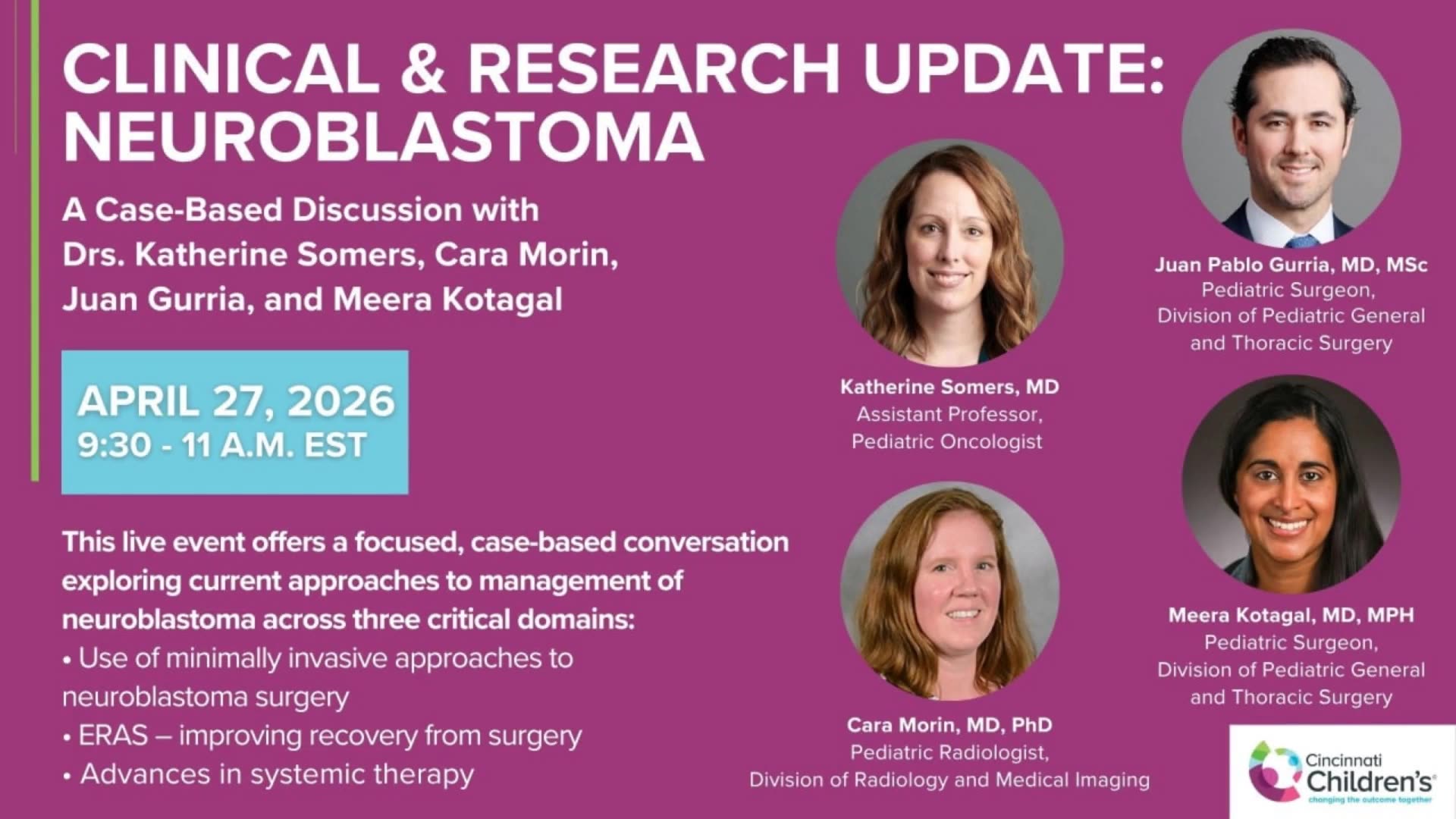
Clinical & Research Update: Neuroblastoma with Drs. Katherine Somers, Cara Morin, Juan Gurria, and Meera Kotagal
67 min · Published Sep 2026
Video
Clinical & Research Update: Sarcoma w/ Drs. Roshni Dasgupta, Joseph Pressey, Arthur Meyer, Luke Pater
66 min · Published Sep 2026
Video
2026 Laparoscopic Pediatric Hernia Repair
123 min · Published Jun 2026
Video
Beyond the Spectrum: Diagnosis, Myths & Management - Caitlin Couch & Leslie Lopez - APP Conference 2026
50 min · Published May 2026
Video
Everything You Ever Wanted to Know About G-tubes But Were Afraid to Ask - Betsy Gerrein - APP Conference 2026
30 min · Published May 2026
What the experts said
Less than 5%, probably 0.25% of syncope patients present with or are found to have an arrhythmia
The autonomic nervous system regulates body functions without conscious thought through three divisions: sympathetic, parasympathetic, and enteric systems
Dysautonomia affects approximately 5 million to 3 million individuals in the United States
Dysautonomia has a 4.5 to 1 female to male predominance
10 to 12% of dysautonomia patients have family members with similar symptoms
At least 33% of dysautonomia patients develop symptoms before they turn 18 years old
50% of dysautonomia patients are diagnosed in adolescence
Syncope represents 3% of all pediatric emergency visits
Up to 25% of children experience an episode of syncope by the age of 18
Quality of life for those with syncope and dysautonomia is similar to asthmatic, obese, and end-stage renal disease cohorts and much lower than healthy and diabetic patients
The disability level in dysautonomia closely matches congestive heart failure and COPD in adults
Approximately 83% of dysautonomia patients are diagnosed with anxiety disorder before being diagnosed with dysautonomia
The average time to diagnosis of dysautonomia is about 6 years
The most important part of diagnostic evaluation is a thorough and complete history
There was 96% sensitivity in identifying pediatric cardiac etiology with a positive history of exercise-induced syncope, positive family history, abnormal physical exam, and an abnormal EKG
93% of patients that present to the syncope clinic at Cincinnati Children's are diagnosed with neurocardiogenic syncope or dysautonomia
41.7% of patients diagnosed with neurocardiogenic syncope are diagnosed after a comprehensive history, physical, and orthostatic vital signs
54.8% of all syncope patients will be diagnosed with neurocardiogenic syncope after a graded exercise test, for a total of 96.5%
For neurocardiogenic pre-syncope or syncope diagnosis, an increase in heart rate of more than 40 beats per minute in adolescents and children, a fall in blood pressure of more than 20 millimeters of mercury, or greater than 20 beats per minute increase in heart rate with symptoms supports the diagnosis
For POTS diagnosis, patients must have an increased heart rate of greater than 40 beats per minute in children and adolescents within 10 minutes of standing or assuming an upright posture in the absence of orthostatic hypotension
POTS is defined as chronic symptoms of orthostatic intolerance for more than 6 months
Morning postural assessments will optimize diagnostic sensitivity for POTS
Up to 60% of children who have one syncopal event will have at least one additional episode
Research shows that 80 to 100 ounces of water daily is needed to increase blood volume, but the speaker asks patients to drink 100 to 120 ounces daily
The literature recommends 3 to 5 grams of dietary sodium daily for dysautonomia patients
Exercise has been proven to be more effective than beta blockers in dysautonomia patients
32% of syncope clinic patients met probable anxiety criteria on GAD-7 screening, leading to psychology referral
A December 2025 systematic review found that the proportion of patients with symptomatic benefit and improvement with aggressive hydration ranged from 67 to 100%
Fludrocortisone 0.02 mg every morning acts at the kidney level to hold on to sodium and fluid to increase blood volume
Midodrine recommendation is 10 mg 3 times a day, though compliance is challenging in teenagers
Midodrine tends to work better in patients that have Ehlers-Danlos syndrome
The recommendation for sleep in teens is 8.5 hours at night, with studies showing teens don't get tired until about 10:30 or 11 PM