
From
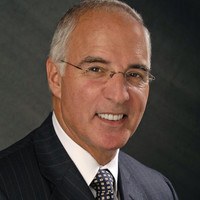
Dr. Jeffrey Ponsky
Jeffrey Ponsky: Portrait of a SAGES Pioneer
With Dr. Jeffrey Ponsky · hosted by Dr. Todd Ponsky
Educational content from recorded physician discussions — not medical advice. Talk to your (or your child's) care team about your situation.
Podcast
The invention of the PEG tube with Dr. Jeffrey Ponsky
Jeffrey Ponsky · 33 min · Published Jul 2026
Podcast
Update Course Rewind: Pediatric Biliary Stones - Preventing Gallstone Pancreatitis 2024
Jeffrey Ponsky · 3 min · Published Aug 2025
Video
ACS Icons in Surgery | Jeffrey L. Ponsky, MD, FACS
Jeffrey Ponsky · 20 min · Published Jul 2024
Video
SAGES Stories Episode 11 – Jeff Ponsky, MD
Jeffrey Ponsky · 61 min · Published Jun 2024
Video
From Idea to Ubiquity - the PEG Journey
Jeffrey Ponsky · Published Nov 2023
Podcast
Innovations in Surgery: PEG Tube
Jeffrey Ponsky · Published Aug 2023
What the experts said
Ponsky's mother-in-law purchased his first endoscope for $5,200 as a Christmas/Hanukkah gift after he was blocked from using the university gastroenterology department's equipment.
In 1979, Ponsky and Michael Gauderer performed the first percutaneous endoscopic gastrostomy (PEG) procedures in five brain-damaged infants who were scheduled for open gastrostomy, after observing transillumination of the abdominal wall during upper endoscopy.
The first PEG procedures in 1979 were performed without formal IRB review; consent was obtained by explaining to mothers that the team would attempt the endoscopic approach but would convert to open gastrostomy if unsuccessful.
The American Board of Surgery mandated around 1980 that surgical residents must have experience in endoscopy, but most programs rotated residents to gastroenterology services where they only observed rather than performed procedures.
SAGES was founded around 1980 by Jerry Marks and other surgeons including John Coller, Ken Ford, John Van Sant, and Jim Lynn because ASGE did not want surgical papers on their programs frequently and excluded surgeons from leadership roles.
Barbara Saltzman (later Barbara Bercy after marrying George Bercy) served as SAGES administrator from the early years and was critical to establishing the organization's culture and managing its growth.
During Ponsky's 18-month SAGES presidency (approximately 1989-1990), membership grew from 300 to 2000 members, driven by the introduction of laparoscopic cholecystectomy after Jacques Perrissat showed his video at a Louisville meeting in 1989.
SAGES developed a flat organizational structure unlike hierarchical traditional surgical societies, encouraging young surgeons to participate equally on committees and at social events regardless of seniority.
SAGES changed its name from Society of Gastrointestinal Endoscopic Surgeons to Society of Gastrointestinal and Endoscopic Surgeons in the last decade, making both endoscopy and general GI surgery equal parts of the organization's mission.
Current SAGES membership is close to 7,000 members.
Japanese surgeons, particularly through Choichi Segawa, Manabu Yamamoto, and others, were instrumental in teaching SAGES members advanced endoscopic techniques including POEM and endoscopic submucosal dissection.
Three of Ponsky's fellows became SAGES presidents: John Mellinger, Brian Duncan, and Jeff Marks.
Walter Pore, in his mid-80s, continues to hold NIH grants and remains relevant in research and lecturing, demonstrating that surgeons can maintain professional relevance well into advanced age.
George Bercy at age 96 continues to develop new surgical instruments and regularly contacts Ponsky to review new designs, including a smaller chip-camera choledochoscope and a VTO scope for cardiac surgeons to view valve anastomoses without loupes.
The video camera was essential to the laparoscopic revolution because it allowed the entire surgical team to see what the surgeon was doing, unlike earlier laparoscopy where only the surgeon looking through the eyepiece could see the operative field.
Eddie Joe Reddick and Doug Olson in Nashville, and Barry McKernan and Bill Saye in Marietta, Georgia (who did the first laparoscopic cholecystectomy in the United States) were the key early teachers of the procedure.
SAGES initially trained trainers (including John Hunter, Nat Soper, John Saker, George Bercy) in laparoscopic cholecystectomy before offering courses to the broader surgical community.
In the early laparoscopic era, instrument shortages were severe; surgeons needed personal connections to manufacturers to obtain equipment and often used gynecologic instruments adapted for general surgery.
In early laparoscopic common bile duct exploration, before mastering laparoscopic suturing, surgeons would twist the two suture ends together like a twist-tie and secure them with a clip rather than tying knots.
Ponsky was the first SAGES member appointed to the American Board of Surgery and later served as chairman of the board.