
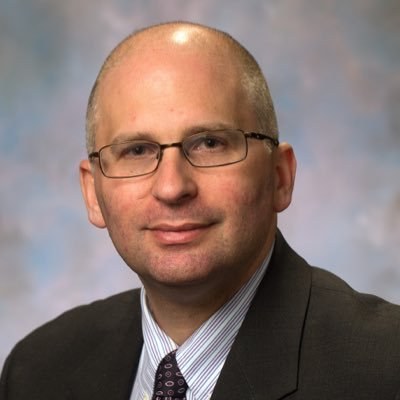
From
Dr. Marc Levitt
Episode 19 - Interview with Dr Marc Levitt, Chief of Colorectal & Pelvic Reconstruction, Children‘s
With Dr. Marc Levitt · hosted by Dr. Greg Ryan
Part of
Anorectal Malformation 101 items
Educational content from recorded physician discussions — not medical advice. Talk to your (or your child's) care team about your situation.
Podcast
Dr. Marc Levitt on building global pediatric colorectal surgery programs
Marc Levitt · 54 min · Published Oct 2021
Video
Problematic Anorectal Malformation Cases: Pediatric Colorectal Controversies...
13 min · Published Apr 2012
Podcast
Update Course Rewind: Pediatric Colorectal Consortium 2021
14 min · Published Apr 2022
Video
Malone appendicostomy in a Patient with Prior Abdominal Surgery via a prior abdominal incision
5 min · Published Oct 2022
Video
Colorectal Quiz: Episode 46 - Hirschsprung's Disease
Marc Levitt · 29 min · Published Apr 2025
Video
Colorectal Quiz: Episode 41 - Perineal Hypospadias
Marc Levitt · 17 min · Published Nov 2024
Video
Colorectal Quiz Ep. 50 -16th Annual European Pediatric Colorectal & Pelvic Reconstruction Conference
Marc Levitt · Published Mar 2026
Podcast
Colorectal Quiz: Episode 50 - 16th Annual European Pediatric Colorectal and Pelvic Reconstruction Conference, Stockholm, Sweden, October 2025 - What did we learn?
24 min · Published Mar 2026
Video
Colorectal Quiz Episode 33: Cloaca Exstrophy
Marc Levitt · 22 min · Published Sep 2025
Video
The Colorectal Quiz Episode 21: The History of Hirschsprung Disease
Marc Levitt · 15 min · Published Sep 2025
Video
Colorectal Quiz: Episode 49 – Collaborating for Kids: Colorectal & Pelvic Care (with Help from AI)
Marc Levitt · 40 min · Published Jul 2025
Podcast
Colorectal Quiz: Episode 49 - Collaborating for Kids: Colorectal & Pelvic Solutions (with a Little Help from AI)
Marc Levitt · 40 min · Published Jul 2025
What the experts said
The first dedicated colorectal center was launched at Cincinnati Children's Hospital in 2005, 16 years before this interview.
Training surgeons provides exponentially greater impact than treating individual patients because trained surgeons can help hundreds or thousands more patients in their own cities.
The bowel management program is a major advance in ARM care, involving focused nursing attention for 4-5 days with good long-term follow-up to achieve continence.
Integration of urology and bladder management has revolutionized ARM care; kidney transplant was previously not uncommon but is now exceedingly rare due to better urologic care.
Gynecologic collaboration has eliminated nervousness about menstruation problems at puberty because anatomy is now well understood through multidisciplinary care.
Transition care for ARM patients into adult services is the most deficient aspect of the field, lagging behind congenital heart disease and cystic fibrosis programs.
Only three surgeons worldwide are trained in both pediatric and adult colorectal surgery: Ali Gisher in Columbus Ohio, Erin Teeple in Wilmington Delaware, and Mark [last name not recalled] in Munich Germany.
Paris at Necker Children's Hospital has an exemplary transition model where teenagers meet pediatric and adult providers together, then subsequent visits occur at the adult facility.
At dedicated colorectal centers, at least half of the surgical work is reoperative surgery for patients with anatomic issues causing soiling problems.
ARM surgery differs fundamentally from typical surgery because it requires years of tinkering and medical management rather than immediate anatomic cure.
A complex colorectal operation takes about 4 hours, but delivering a good functional result requires 96 more hours of tinkering, almost all of which is nursing care.
Most families would agree they would rather change a colostomy bag than a diaper if the colostomy is properly constructed.
The delayed feedback problem in ARM surgery: if the anus is misaligned with sphincters at 6 months, the surgical error may not be discovered until potty training fails at age 4 years.
In typical US pediatric surgery training programs, fellows see approximately 12 ARM cases over two years of training.
The average practicing pediatric surgeon performs approximately one ARM case per year after completing training.
Pull-through surgery should be performed and colostomy closed in virtually all ARM patients; with proper bowel management and nursing care, patients can achieve continence mechanically.
Patients without innate sphincter anatomy can still be cleaned mechanically by emptying the colon once daily through bowel management programs.
Permanent colostomy may be more practical for rare patients who do not ambulate, but the vast majority can be clean with stool flowing through the normal anal route.
Many patients develop bowel control even when predicted they would never achieve it, with proper nursing care and medical regimen tinkering.
Approximately 25 countries currently have specialized colorectal centers, but there are over 110 countries in the world requiring such programs.
Family surveys identified the dilation process as the most stressful part of colorectal care for ARM patients.
A randomized controlled trial comparing standard dilation protocol versus no dilation found similar stricture rates of approximately 15% in both groups.
Strictures can be treated with a minor Heineke-Mikulicz anoplasty at the time of colostomy closure, making the downside of the no-dilation approach acceptable.
Based on the randomized trial, Levitt's centers no longer perform routine post-operative dilations, and families universally choose to avoid them when offered the choice.
Skin irritation and frequent stools after colostomy closure typically last about 2 weeks as the distal colon segment learns to absorb water and thicken stool.
The problem switches to constipation at approximately 3 weeks post-closure; surgeons who don't aggressively manage this allow colon dilation that makes later potty training harder.
Almost all ARM patients should be on laxatives about 3-4 weeks after colostomy closure to maintain stool flow and prevent colon dilation.
The goal by age 2-3 years is establishing a pattern of one to two well-formed stools per day using diet with bulk fiber and senna-based laxatives.
Stool softeners make ARM patients worse, not better, because loose stool prevents the rectal stretch sensation needed to develop bowel control in patients with surgically created anal canals.
ARM patients lack typical anal canal sensation and may have inadequate sphincters, making them dependent on rectal stretch from bulky stool to feel the urge to defecate.
Bowel management with enemas should be introduced when the child should be in normal underwear according to family circumstances, typically age 3-5 years, certainly by age 5.
Bowel management programs are nurse practitioner-led and begin with anatomic assessment, as any anatomic issues should be corrected first, though bowel management can proceed even with imperfect anatomy.
Bowel management involves mechanical colon emptying with saline plus additives that provoke stool emptying, with the goal of 24-hour cleanliness between flushes.
Initial bowel management programs last approximately 4-5 days with X-ray monitoring, but success must be measured at one year, not one week.
Published research showed bowel management success rates well over 80% at one year for ARM patients, with Hirschsprung's disease being the hardest group due to sphincter dysfunction.
Approximately 75% of ARM patients should develop their own voluntary bowel control based on good operation, good sacrum quality, and good spine quality.
Approximately 25% of ARM patients will not achieve voluntary bowel control even with perfect surgery due to inadequate sphincters or spinal issues and will require bowel management.
Levitt performs over 100 Malone appendicostomies per year laparoscopically as one-hour procedures with one-night hospital stays.
The Malone appendicostomy route through the umbilicus makes it easier for older children to administer enemas independently without parental help.
A full-fledged colorectal center requires an integrated psychologist who meets every patient proactively rather than being called only when problems arise.
Fecal incontinence is a physiologic problem, not a psychologic problem; many patients receiving extensive psychological help actually need anatomic re-operation and good bowel management first.
Greg Ryan went 52 years before meeting another ARM patient, illustrating the historical isolation that modern patient networks have eliminated.
Modern ARM care originated in Melbourne Australia with Dr. Kelly, who taught Dr. Stevens, who taught Dr. Pena, who revised and launched the PSARP operation in 1980.
Dr. Marc Levitt has cared for children from 50 states and 76 countries and performed more than 10,000 pediatric colorectal procedures.