

From
StayCurrentMD
FETO for Late-Diagnosed Severe Congenital Diaphragmatic Hernia (CDH) at Cincinnati Children's with Dr. Beth Rymeski
With Dr. Beth Rymeski · hosted by Dr. Jill Knepprath
Educational content from recorded physician discussions — not medical advice. Talk to your (or your child's) care team about your situation.
Video
Update Course Rewind: When & How to Operate CDH Patients on ECMO 2024
4 min · Published Aug 2025
Video
What is Congenital Diaphragmatic Hernia (CDH)? An ERNICA animation for parents and families
3 min · Published Dec 2023
Podcast
Case-Based Journal Review: Congenital Diaphragmatic Hernia 2023
19 min · Published Oct 2023
Video
Tracheomalacia and tracheomegaly in infants and children with congenital diaphragmatic hernia managed with and without fetoscopic endoluminal tracheal occlusion (FETO): a multicentre, retrospective cohort study
59 s · Published Oct 2024
Video
Giussepe Cala, PhD candidate - Best of the Best in Pediatric Surgery 2024
Dr. Todd Ponsky · 7 min · Published Feb 2024
Video
Congenital Diaphragmatic Hernias (CDH): Improving Outcomes with Advanced Imaging & Nutrition
5 min · Published May 2026
Video
Severe Congenital Diaphragmatic Hernia (CDH) Case: FETO Management & Unexpected Findings with Dr. Beth Rymeski
3 min · Published Sep 2026
Video
Fetoscopic Endoluminal Tracheal Occlusion (FETO) Procedure: Step-by-Step Guide with Dr. Beth Rymeski
4 min · Published Sep 2026
Video
Inside a FETO Procedure: Fetoscopic Balloon Tracheal Occlusion with Dr. Beth Rymeski
4 min · Published Jul 2026
Video
Update Course 2022 - UPDATES IN GASTROSCHISIS FEEDING PROTOCOLS - Jason Fraser, Beth Rymeski, and Steven Lee
21 min · Published Sep 2022
Podcast
Update Course Rewind: 2020 Colorectal Part 2
11 min · Published Mar 2021
Video
Intestinal Atresia Types Explained: Grossfeld Classification for Pediatric Surgery
1 min · Published Sep 2026
Video
Derivation and validation of the Pediatric Community-Acquired Pneumonia Severity (PedCAPS) score: A prospective cohort study
50 s · Published Sep 2026
Video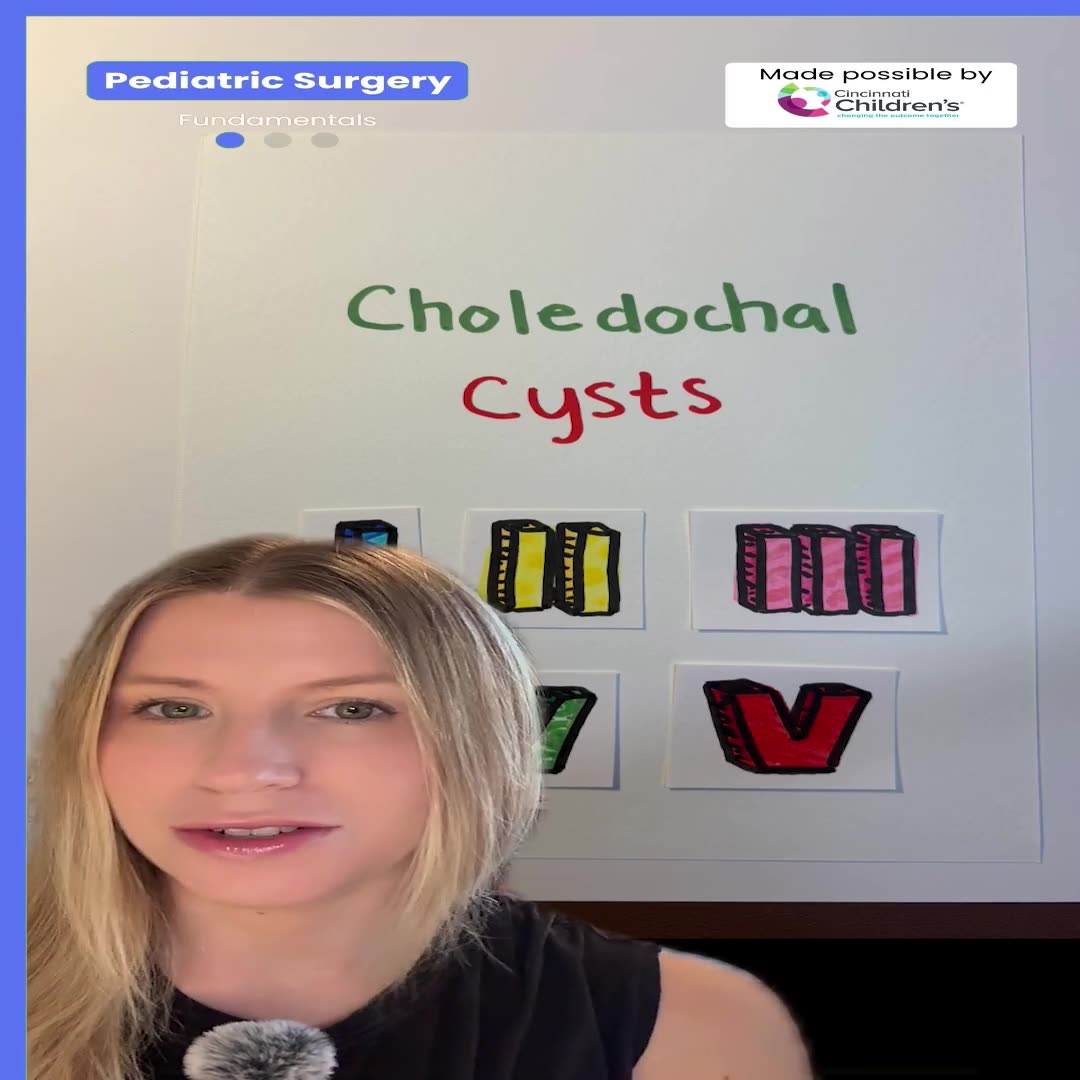
Choledochal Cyst Types Explained: Pediatric Surgery Fundamentals
1 min · Published Sep 2026
Video
Automated control of inspired oxygen in mechanically ventilated trauma and acute care surgery patients: A randomized controlled trial
48 s · Published Sep 2026
Video
Esophageal Atresia & Tracheoesophageal Fistula (EA/TEF) Types Explained for Pediatric Surgery
2 min · Published Sep 2026
Video
Effect of Timing of Secondary Alveolar Bone Grafting on Maxillary Incisor Development in Patients With Cleft Lip and Palate
42 s · Published Sep 2026
What the experts said
When the left lobe of the liver is touching the apex of the left chest in left-sided CDH, the entire hemi-liver has herniated into that side of the chest.
The cutoff for severe CDH O/E (observed to expected lung to head ratio) on ultrasound is 25%.
In this case, there was a 42% increase in lung volume between balloon placement and removal (left lung volume increased from 1 mL to 23 mL).
For a C-section delivery less than a week after FETO balloon removal, intubation on support and surfactant administration were performed.
Initial respiratory management included Vyvent (APRV setting), then oscillator, with low dose fentanyl to support blood pressure, eventually returning to Vyvent vent settings.
Extubation at 26 days old is pretty good for a severe CDH.
Discharge at day of life 94 (about three months old) is pretty good for severe CDH.
Tracheal dilation is a very common finding in babies who had tracheal occlusion because the trachea was stretched out during the course of the pregnancy.
Tracheal dilation after FETO is not felt to be clinically impactful in the long run based on follow-up data from kids in Europe.
FETO (fetoscopic endotracheal occlusion) uses a fetoscope to insert a balloon into the fetal trachea to temporarily block it, trapping fluid in the lungs to allow expansion and growth.
Liver herniation is especially harmful for fetal lung development because the liver is a large and mobile organ, unlike the bowels.
Balloon removal after FETO is typically done by week 34.