

From
Live Event Content
Clinical & Research Update: Sarcoma w/ Drs. Roshni Dasgupta, Joseph Pressey, Arthur Meyer, Luke Pater
With Dr. Arthur Meyer & Dr. Joseph Pressey & Dr. Roshni Dasgupta & Dr. Luke Pater · hosted by Dr. Jill Knebrath
Educational content from recorded physician discussions — not medical advice. Talk to your (or your child's) care team about your situation.
Video
Dr. Chiara Oreglio - Best of the Best in Pediatric Surgery 2025
Dr. Todd Ponsky · 9 min · Published Mar 2025
Video
Tricks - Thoracoscopic-Assisted Partial Rib Resection - Jack Langer
9 min · Published Nov 2018
Video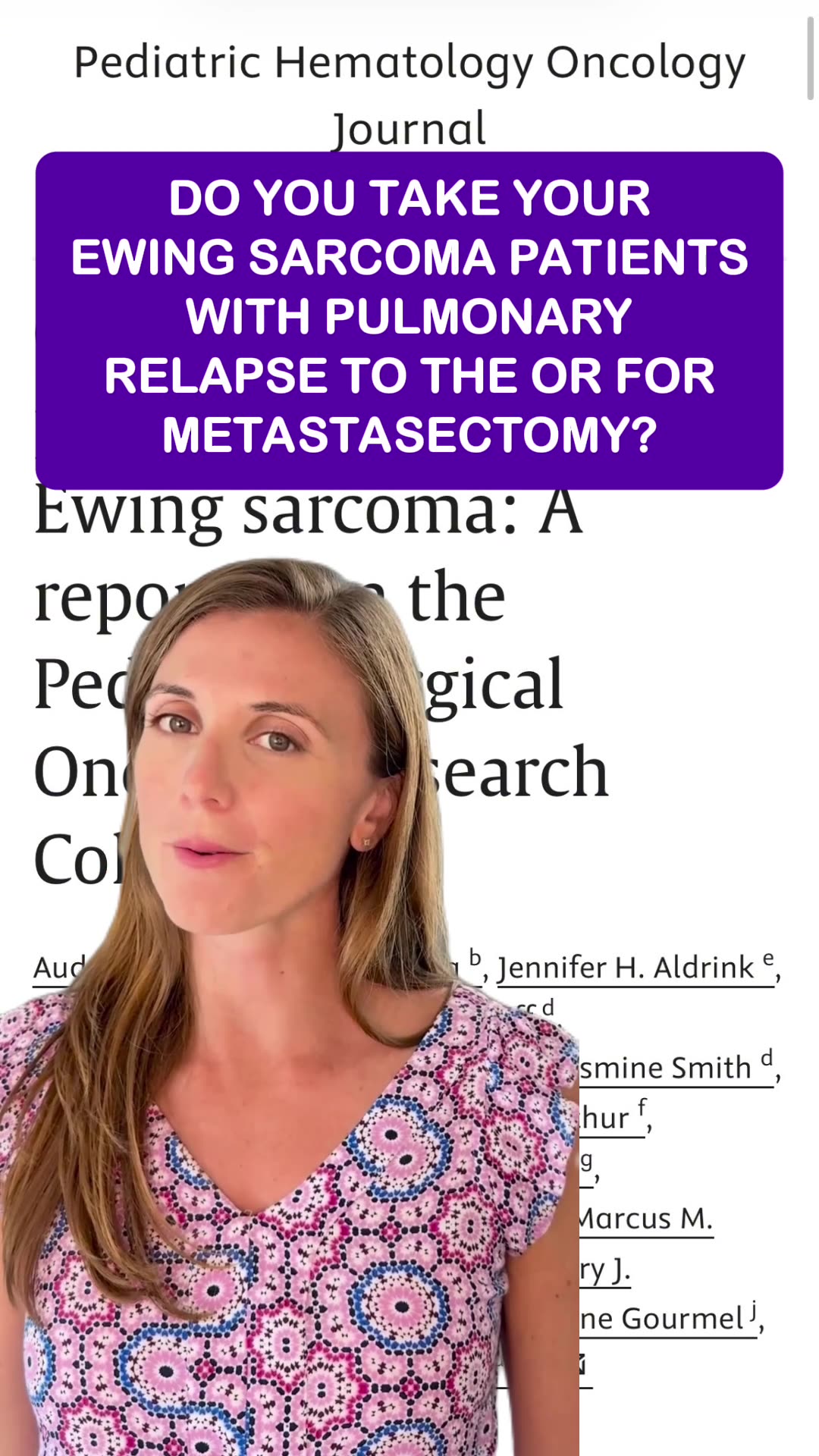
Current management of pulmonary relapse in Ewing sarcoma: A report from the Pediatric Surgical Oncology Research Collaborative
1 min · Published Dec 2025
Video
Image Guided Surgery Video Series, Episode 5 - 3D Printed Models in Orthopedics
CCHMC Pediatric Surgery · Published Feb 2023
Video
Update Course Rewind: Lipiodol for Lung Metastases 2024
Published Jan 2025
Video
Thoracoscopic-Assisted Partial Rib Resection: Pediatric Surgery Difficult...
8 min · Published Jul 2017
Video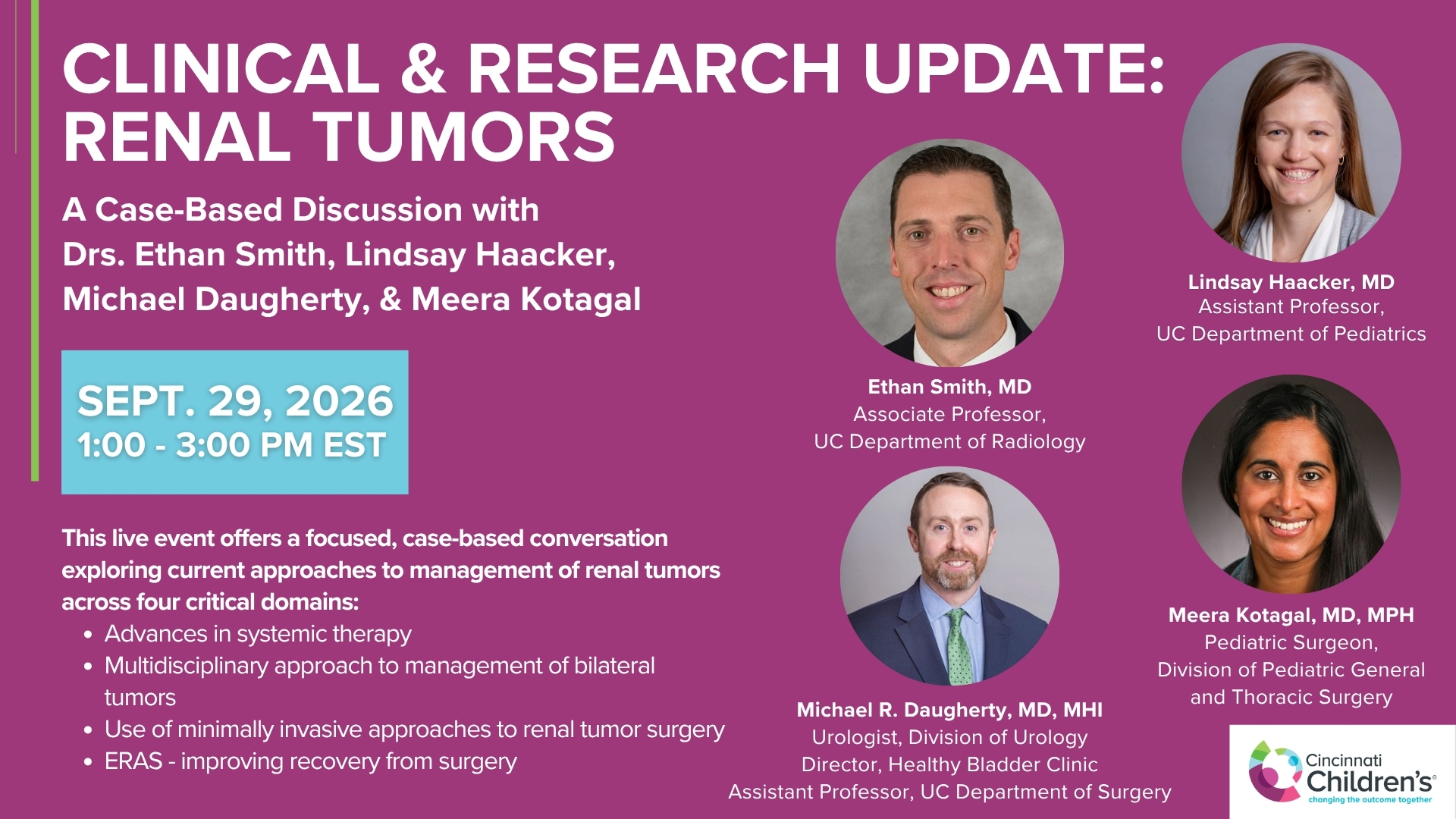
Clinical & Research Update: Renal Tumors with Drs. Ethan Smith, Lindsay Haacker, Michael Daugherty, and Meera Kotagal
71 min · Published Sep 2026
Video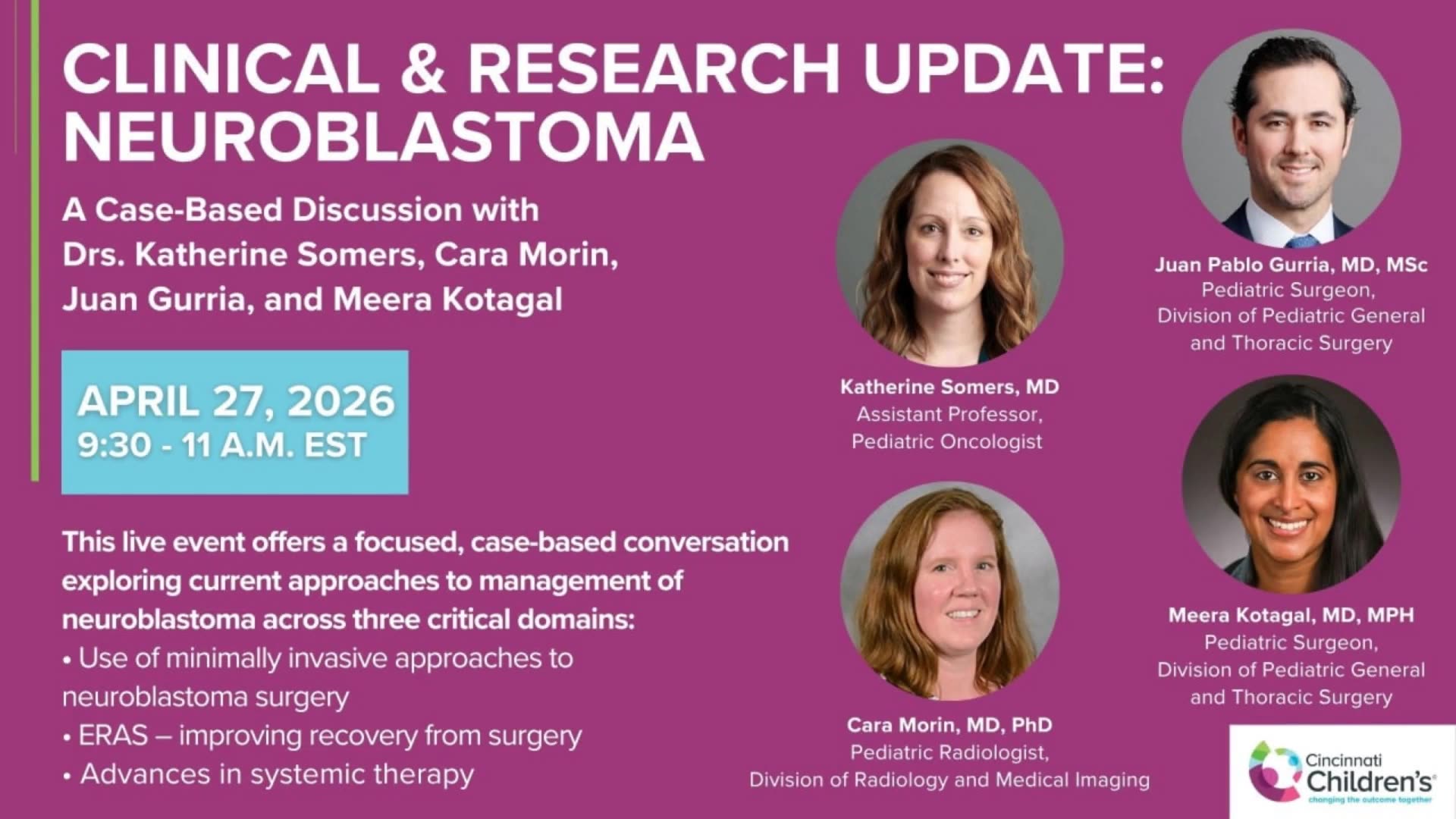
Clinical & Research Update: Neuroblastoma with Drs. Katherine Somers, Cara Morin, Juan Gurria, and Meera Kotagal
67 min · Published Sep 2026
Video
Update Course Rewind 2025: Nerve Monitoring in Pediatric Thyroid Surgery
6 min · Published Jul 2026
Video
Journal of Pediatric Surgery Article Review: June 2023, AAP Issue
Todd Ponsky · 13 min · Published Jul 2026
Video
Pediatric Surgical Oncology Research Collaborative (PSORC): Studying Rare Pediatric Tumors
56 s · Published May 2026
Video
Pooling Patients to Study Rare Pediatric Tumors: An Introduction to PSORC
56 s · Published May 2026
Only a few other public items share this expert — go deeper there →
Video
2026 Laparoscopic Pediatric Hernia Repair
123 min · Published Jun 2026
Video
Beyond the Spectrum: Diagnosis, Myths & Management - Caitlin Couch & Leslie Lopez - APP Conference 2026
50 min · Published May 2026
Video
Dysautonomia: Navigating the Journey - Martha Willis - APP Conference 2026
55 min · Published May 2026
Video
Everything You Ever Wanted to Know About G-tubes But Were Afraid to Ask - Betsy Gerrein - APP Conference 2026
30 min · Published May 2026
Video
Take My Breath Away - Carolyn Grad, Mark Washam, & Katie Holtman - APP Conference 2026
58 min · Published May 2026
Video
Central Lines...WHAT? - Richelle Guinigundo - APP Conference 2026
26 min · Published May 2026
What the experts said
Compressed-interval VDC/IE chemotherapy given every 2 weeks is now well proven to be of benefit over 3-week schedule for Ewing sarcoma
For chest wall sarcomas, the old adage of needing a rib above and a rib below for margins is not the case anymore; the goal is just to get negative margins if possible
When tumor is adherent to diaphragm or pericardium, you should not dissect these structures off the tumor because you don't know where the margin is; instead take a portion of the adherent structure with the tumor
Titanium rib reconstruction systems may need revision as the child grows, particularly during puberty with significant growth spurts
For Ewing sarcoma radiotherapy, treatment typically involves two phases: disease presentation volume and then more specific targeting of gross disease or positive margins
Protons are preferred over photons for focused boost volumes because they reduce low-dose exposure to non-target tissue beyond the target, though in lungs the benefit is compromised due to low-density tissue causing scatter
Small cell carcinoma of the ovary hypercalcemic type (SCCOHT) was originally described around 1980 in young adult women presenting with ovarian tumors with nondescript morphology, often associated with hypercalcemia
SCCOHT tumors are actually malignant rhabdoid tumors; some have postulated they should be called malignant rhabdoid tumor of the ovary
In 2014, three labs simultaneously identified SMARCA4 mutation (usually single nucleotide variant) as the underlying genetic defect in SCCOHT
SMARCA4 encodes BRG1 and its loss unifies all SCCOHT tumors; like Ewing sarcoma, these tumors have very low tumor mutational burden with SMARCA4 usually the only mutation found
Many SCCOHT patients enter the OR without this diagnosis in the differential; they are usually thought to be germ cell tumors, resulting in incomplete initial surgery
SCCOHT is a chemo-sensitive tumor but only transiently so; it is very important to start intensive systemic chemotherapy quickly rather than sending patients back for immediate second-look operation
The VPCBAE regimen (vinorelbine, cisplatin, cyclophosphamide, bleomycin, doxorubicin, etoposide) with all six agents given every 21-day cycle is very intensive toxic therapy requiring meticulous supportive care
Four cycles of VPCBAE induction chemotherapy are given prior to second-look operation for SCCOHT; patients with measurable disease after initial surgery often respond well even by RECIST criteria
The 12-month-old SCCOHT patient is the youngest ever described with this tumor; the average age for diagnosis is 24 years
MRIs and PET scans are not great for detecting peritoneal disease and very small nodules (1mm); second-look surgery is necessary to identify disease that imaging cannot detect
For SCCOHT second-look surgery, laparoscopy is used initially to understand extent of disease and determine size of laparotomy incision needed; the operation is never done with laparoscopy alone
Complete cytoreduction for SCCOHT includes removing all visible disease, with particular attention to peritoneal reflection in pouch of Douglas and surface of rectum where tumor can hide after spill
HIPEC in pediatric patients requires a multidisciplinary team experienced in this procedure; it is not the same as adult HIPEC
HIPEC protocol includes preoperative hyperhydration (1-2x maintenance fluids), warming abdomen to 42°C, cisplatin given in 2/3 dose initially and 1/3 at 45 minutes, continuous shaking for 90-minute dwell time, sodium thiosulfate infusion at 30 minutes to scavenge cisplatin, and 4-5L washout
Post-HIPEC patients receive 24 hours of hyperhydration in ICU; main counseled toxicities are ileus and kidney function issues, though the Cincinnati protocol has not seen significant renal toxicity
SCCOHT patients can resume next cycle of chemotherapy 4-7 days postoperatively after HIPEC once bowel function recovers
Maintaining interval compression as dense as possible (7-8 days to resume chemotherapy post-HIPEC) is very important to continue killing residual tumor cells
SCCOHT treatment uses 6 cycles of VPCBAE (usually 4 induction, 2 adjuvant); some stage 1 patients or those with considerable toxicity (especially renal) have stopped after 5 cycles to get to transplant in good health
Cincinnati uses busulfan-thiotepa conditioning for autologous stem cell transplant in SCCOHT, which is more toxic than the carboplatin-based regimen used by the French consortium but complements VPCBAE better with heavy alkylator exposure
Approximately 43% of SCCOHT patients carry germline SMARCA4 mutations; in Cincinnati's last 20 patients, 8 had germline SMARCA4 (40%)
For SCCOHT patients with germline SMARCA4, contralateral salpingo-oophorectomy should be performed at second-look operation because it would be nearly impossible to treat a metachronous SCCOHT tumor a second time with intensive therapy
Germline SMARCA4 mutations have been found in older SCCOHT patients in their late 30s with no prior personal or family history of cancer; all patients should be tested regardless of family history
Hysterectomy should be considered for germline SMARCA4 carriers due to risk of SMARCA4-deficient uterine sarcoma, which peaks around age 50 (later than SCCOHT which peaks at 23-24 years)
Two patients who survived SCCOHT developed metachronous SCCOHT tumors in the contralateral ovary and subsequently died, demonstrating this is a real risk not worth taking
Penetrance of germline SMARCA4 is estimated at 62% based on UK Biobank study comparing males vs females over age 40, assuming the deficit of females was explained by SCCOHT deaths
Cincinnati's methodology estimates SMARCA4 penetrance closer to 20% studying family members of SCCOHT patients; even at 20% this is considered considerable risk for otherwise healthy female carriers
About 20% of SCCOHT patients have de novo SMARCA4 mutations with neither parent carrying the mutation
Major long-term toxicity from SCCOHT treatment is ototoxicity requiring hearing aids; otherwise patients grow and develop well
Whole abdomen radiation for SCCOHT was used historically but is excessively toxic in patients who receive autologous stem cell transplant and HIPEC; Cincinnati has walked away from this approach
Whole abdomen radiation could still be considered for SCCOHT patients who do not get HIPEC or autologous bone marrow transplant
Protons are ideal for SCCOHT lymph node radiation to minimize bowel, liver, kidney exposure and in similar scenarios to minimize dose to uterus, ovaries, pancreas, and spleen (low-dose pancreatic/splenic exposure is problematic long-term for metabolic syndrome and immune function)
Cincinnati's SCCOHT series of 20 consecutive patients (2018-2024) with median follow-up of 58 months shows 60% overall survival, about 20 percentage points higher than the French study published in 2020
For rhabdomyosarcoma, surgery should only be attempted if negative margins are achievable; if only debulking is possible, local control should be done with radiation only
The goal of delayed primary excision (DPE) for rhabdomyosarcoma is to achieve at least R1 disease (microscopic residual only)
Scapular disarticulation provides excellent access for high chest wall tumors, allowing the chest to be opened like a book
For tumors near subclavian vessels and brachial plexus, a neck incision (similar to first rib operation for thoracic outlet syndrome) allows isolation of these structures from above before thoracotomy
For high chest wall defects covered by scapula, bony reconstruction is not needed; Gore-Tex mesh with trapezius flap rotation provides adequate coverage
After delayed primary excision for presenting R3/group 3 rhabdomyosarcoma, radiotherapy is typically recommended
In the rhabdomyosarcoma case with germline TP53 mutation, radiation was deferred due to the mutation combined with excellent chemotherapy response and complete surgical resection, despite this being non-standard for group 3 disease
Radiation-induced sarcomas in Li-Fraumeni patients are typically more aggressive and less chemosensitive than primary sarcomas
The incidence of secondary malignancy from radiation is assumed to be higher the younger the patient, both because of more years to develop it and an inherent increased risk with young age
Radiation decisions in young children involve nuanced discussions of toxicities including pulmonary function, cardiac exposure, wound healing, and chest wall development, individualized case by case
The risk of hereditary predisposition among all sarcoma patients may be as high as 15%
Cincinnati now performs universal germline testing for all newly diagnosed solid tumor patients and many benign tumors like desmoid tumors (with FAP testing)