

Educational content from recorded physician discussions — not medical advice. Talk to your (or your child's) care team about your situation.
Video
Repeat Enema for Intussusception: Update Course 2016
3 min · Published Aug 2016
Video
Discharge after Reduction of Intussusception Is Safe and Effective
Published Feb 2019
Podcast
Update Course Rewind: 2020 Colorectal Part 2
11 min · Published Mar 2021
Video
Intussusception
Published Mar 2020
Podcast
Case-Based Journal Review- Intussusception in 2022
20 min · Published Feb 2022
Video
Journal of Pediatric Surgery Article Review: The Disruption Score
Todd Ponsky · 12 min · Published Jul 2026
Video
Clinical & Research Update: Renal Tumors with Drs. Ethan Smith, Lindsay Haacker, Michael Daugherty, and Meera Kotagal
71 min · Published Sep 2026
Video
Neuroblastoma with Dr. Meera Kotagal
14 min · Published Sep 2024
Video
Update Course Rewind: 2023 Top Ten Key Takeaways
16 min · Published Jun 2024
Podcast
Inguinal Hernias: Diagnosis and Management
16 min · Published Apr 2021
Video
7th Annual Pediatric Surgery Update Course 2019 - FULL SHOW
285 min · Published Jul 2020
Video
Suspected Hirschsprung's-associated enterocolitis (HAEC) Treatment Guideline...
CCHMC Pediatric Surgery · Published Jul 2019
Video
Intestinal Atresia Types Explained: Grossfeld Classification for Pediatric Surgery
1 min · Published Sep 2026
Video
Derivation and validation of the Pediatric Community-Acquired Pneumonia Severity (PedCAPS) score: A prospective cohort study
50 s · Published Sep 2026
Video
FETO for Late-Diagnosed Severe Congenital Diaphragmatic Hernia (CDH) at Cincinnati Children's with Dr. Beth Rymeski
4 min · Published Sep 2026
Video
Severe Congenital Diaphragmatic Hernia (CDH) Case: FETO Management & Unexpected Findings with Dr. Beth Rymeski
3 min · Published Sep 2026
Video
Fetoscopic Endoluminal Tracheal Occlusion (FETO) Procedure: Step-by-Step Guide with Dr. Beth Rymeski
4 min · Published Sep 2026
Video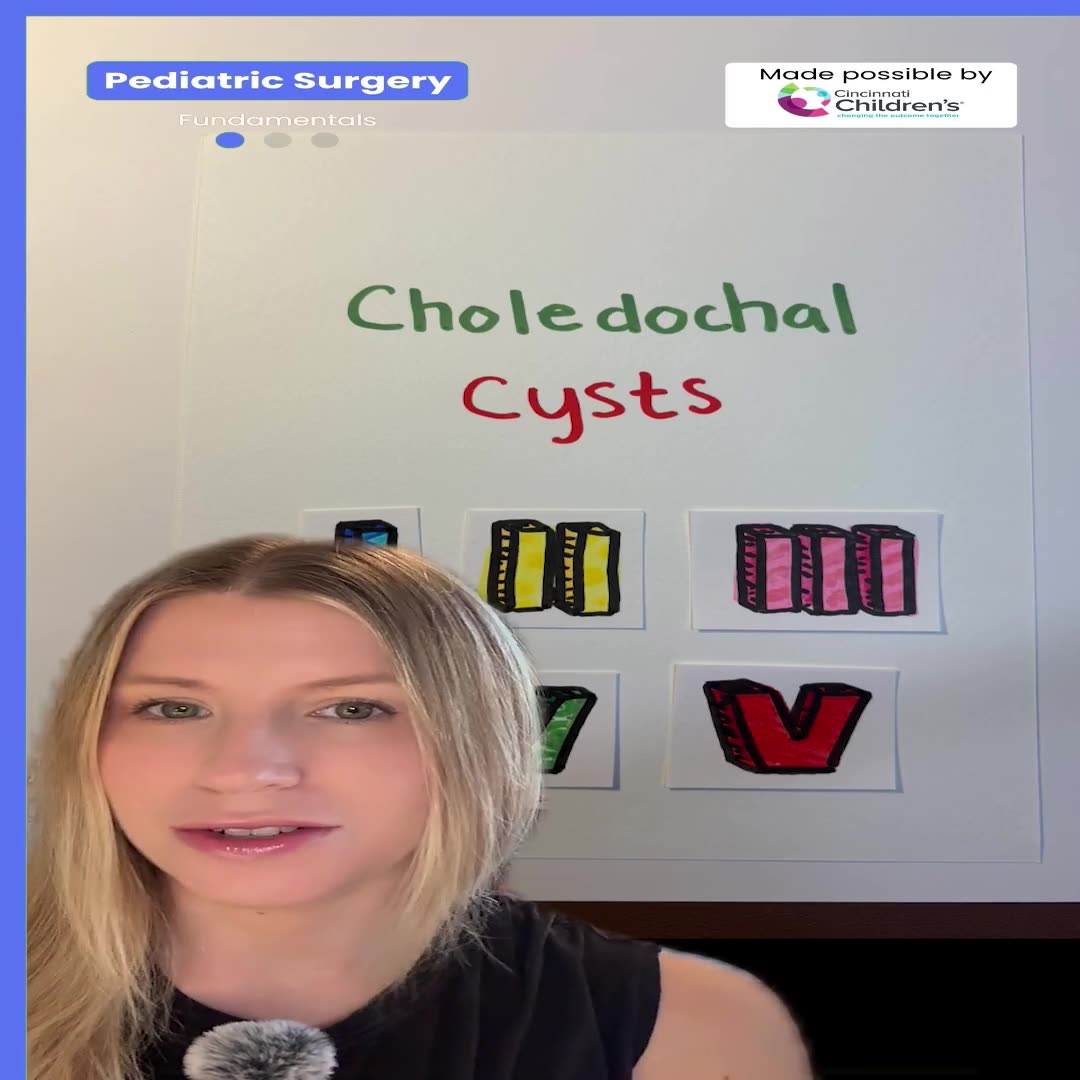
Choledochal Cyst Types Explained: Pediatric Surgery Fundamentals
1 min · Published Sep 2026
What the experts said
The guideline is for evaluation and management of patients who present to the ER with a history suggestive of intussusception.
Indications for urgent surgery consult include acute abdomen, abnormal vital signs, ill-appearing patient, or other concerns from ED providers.
Once evaluated by a surgeon, a decision is made whether the patient needs emergent OR; if stable and not needing urgent intervention, the next step is ultrasound.
If ultrasound is positive for intussusception, a surgical consult is called if not previously obtained.
Patients with positive ultrasound undergo air enema, and surgeons must be aware of the patient prior to the enema.
In-person surgical evaluation can occur before or after the air enema if the patient is clinically stable.
If air enema successfully reduces the intussusception, patients are observed in the ED for four hours, then have a PO trial and can be discharged if clinically well.
If the first air enema attempt fails to reduce the intussusception, the enema can be repeated every hour for up to three times with monitoring in between, as long as the intussusceptum continues to reduce, there is no free air, and the patient remains clinically stable.
A fellow or attending surgeon should be notified if the patient is undergoing more than one air enema.
If the intussusceptum cannot be completely reduced after three air enema attempts, the patient goes to the OR for manual reduction.
This guideline may not apply to all patients.