

Educational content from recorded physician discussions — not medical advice. Talk to your (or your child's) care team about your situation.
Video
Acute Cholecystitis
Todd Ponsky · 32 min · Published Jul 2026
Video
Update Course Rewind 2025: Updates in NEC Management
11 min · Published Jul 2026
Video
Journal of Pediatric Surgery Article Review: September 2021
Todd Ponsky · 11 min · Published Jul 2026
Video
22. HerniaTalk LIVE Q&A: Pediatric Hernias
Todd Ponsky · 59 min · Published Jul 2026
Video
Todd Ponsky: What is new in Pediatric Surgery? Teaser
Todd Ponsky · 65 min · Published Jul 2026
Video
Journal of Pediatric Surgery Article Review: The Disruption Score
Todd Ponsky · 12 min · Published Jul 2026
Video
Intestinal Atresia Types Explained: Grossfeld Classification for Pediatric Surgery
1 min · Published Sep 2026
Video
Derivation and validation of the Pediatric Community-Acquired Pneumonia Severity (PedCAPS) score: A prospective cohort study
50 s · Published Sep 2026
Video
FETO for Late-Diagnosed Severe Congenital Diaphragmatic Hernia (CDH) at Cincinnati Children's with Dr. Beth Rymeski
4 min · Published Sep 2026
Video
Severe Congenital Diaphragmatic Hernia (CDH) Case: FETO Management & Unexpected Findings with Dr. Beth Rymeski
3 min · Published Sep 2026
Video
Fetoscopic Endoluminal Tracheal Occlusion (FETO) Procedure: Step-by-Step Guide with Dr. Beth Rymeski
4 min · Published Sep 2026
Video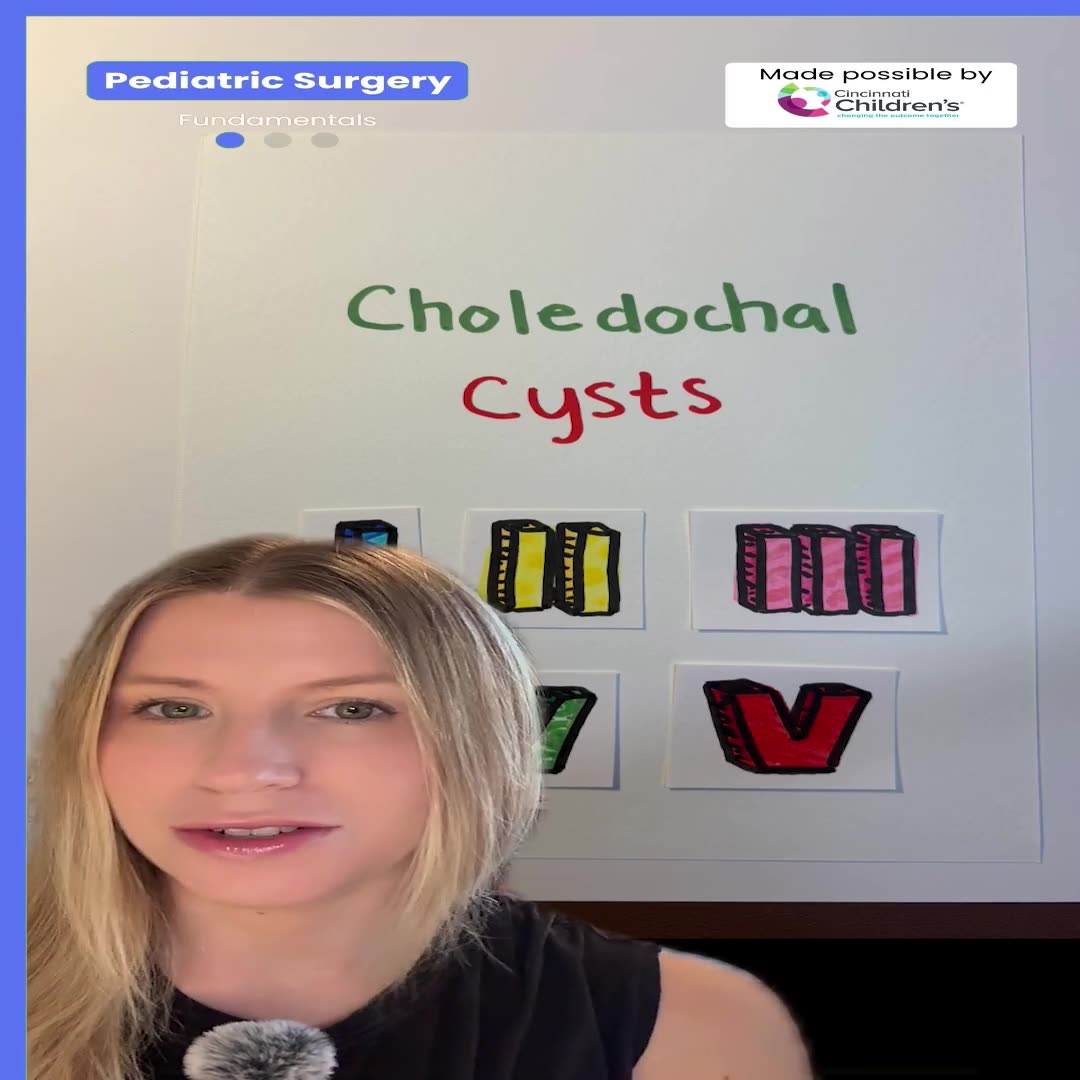
Choledochal Cyst Types Explained: Pediatric Surgery Fundamentals
1 min · Published Sep 2026
What the experts said
Single-visit surgery decreases the amount of time families take off work to come to clinic and makes surgeon time more efficient.
The study combined enhanced recovery protocols after colorectal and upper GI surgery with opioid reduction.
The study was a follow-up to a previous enhanced recovery protocol study, but this time examined how ERPs affected the amount of opioids prescribed at discharge rather than just length of stay.
There was no component of the ERP protocol that specifically addressed discharge opiates.
There was a significant reduction in the amount of opioids prescribed for patients in the ERP pathways despite no specific discharge opioid protocol component.
The thyroidectomy study used the PHIS database and was retrospective.
For total thyroidectomies, there is a statistically significant difference in outcomes between high-volume and low-volume surgeons and hospitals.
Pediatric surgeons had better outcomes with fewer complications overall compared to pediatric ENTs for thyroidectomy.
Pediatric surgeons had better outcomes than pediatric ENTs specifically for Graves disease and cancer thyroidectomy cases.
The single-visit surgery study was conducted by Cunningham and Shaw out of Texas Children's Hospital.
Single-visit surgery involves seeing a patient in clinic and operating on them the same day, then sending them home.
Previous studies showed that families loved single-visit surgery.
The Texas Children's study examined whether single-visit surgery is financially beneficial.
Over approximately a year and a half, the single-visit surgery program achieved 100% reimbursement for procedures and 92% reimbursement for clinic visits.
A concern about single-visit surgery was that insurance may not approve it, potentially making it not financially beneficial for families despite increased convenience.
In single-visit surgery, patients come in the morning, are seen by the surgeon, and are pre-scheduled to have an operation in the afternoon assuming findings are as expected.