

From
StayCurrentMD
Should we be checking gastric residuals in premature infants?
With Dr. Arun Thanain
Educational content from recorded physician discussions — not medical advice. Talk to your (or your child's) care team about your situation.
Video
Association of Exclusive Breast Milk Intake and Outcomes in Infants With Uncomplicated Gastroschisis: A National Cohort Study
56 s · Published Aug 2024
Video
Update Course Rewind: Laparotomy Over PPD 2022
Published Jul 2023
Podcast
Journal of Pediatric Surgery Article Review: October 2023
12 min · Published Apr 2024
Video
Availability, utilization, and barriers to bowel ultrasound for necrotizing enterocolitis...
55 s · Published Jul 2026
Video
Routine contrast enema prior to stoma reversal seems only required following treatment for necrotizing enterocolitis: An evaluation of the diagnostic accuracy of the contrast enema
56 s · Published Apr 2023
Video
Manejo expectante o ibuprofeno temprano para el tratamiento del conducto arterioso persistente
Published Aug 2023
Only a few other public items share this expert — go deeper there →
Video
Intestinal Atresia Types Explained: Grossfeld Classification for Pediatric Surgery
1 min · Published Sep 2026
Video
Derivation and validation of the Pediatric Community-Acquired Pneumonia Severity (PedCAPS) score: A prospective cohort study
50 s · Published Sep 2026
Video
FETO for Late-Diagnosed Severe Congenital Diaphragmatic Hernia (CDH) at Cincinnati Children's with Dr. Beth Rymeski
4 min · Published Sep 2026
Video
Severe Congenital Diaphragmatic Hernia (CDH) Case: FETO Management & Unexpected Findings with Dr. Beth Rymeski
3 min · Published Sep 2026
Video
Fetoscopic Endoluminal Tracheal Occlusion (FETO) Procedure: Step-by-Step Guide with Dr. Beth Rymeski
4 min · Published Sep 2026
Video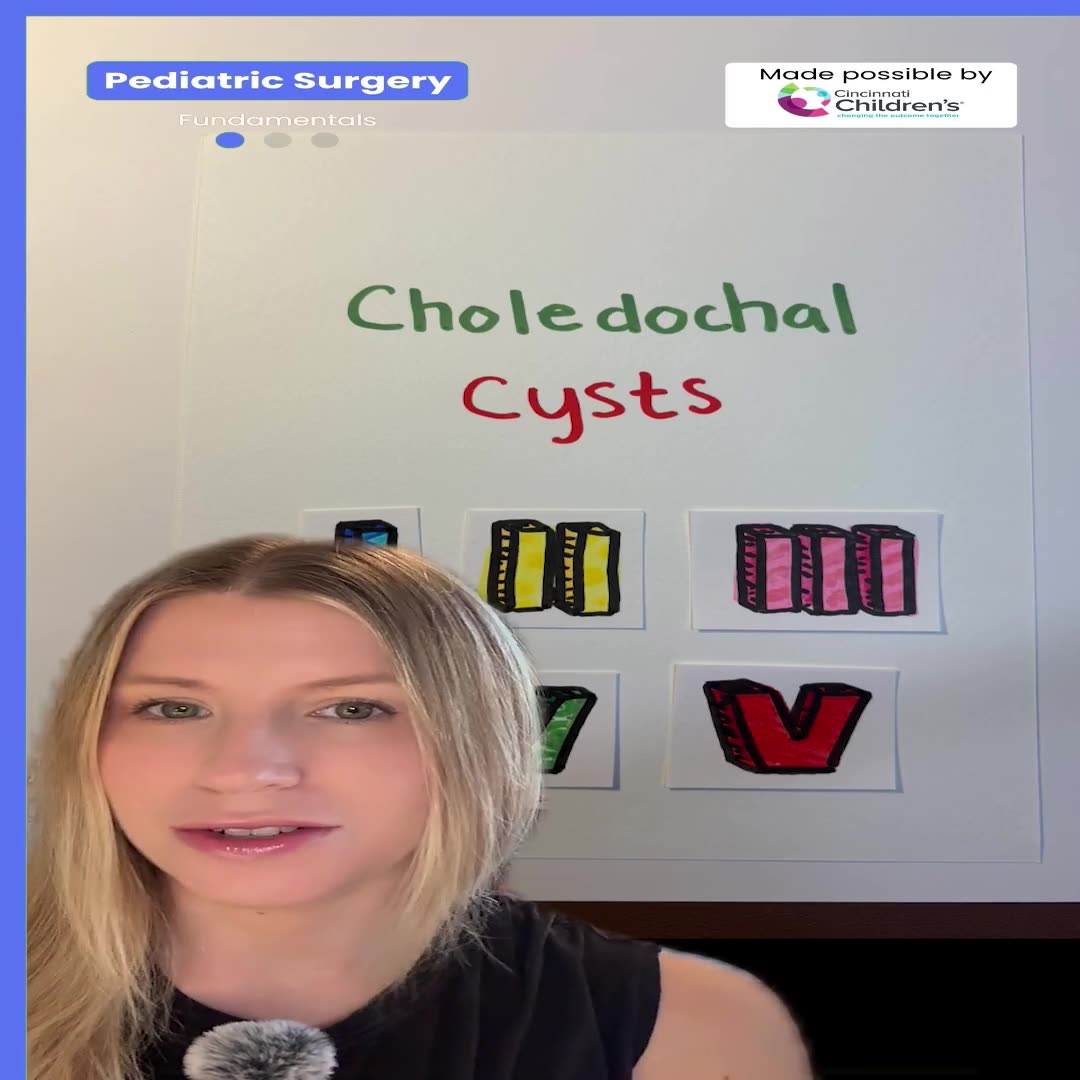
Choledochal Cyst Types Explained: Pediatric Surgery Fundamentals
1 min · Published Sep 2026
What the experts said
Evaluating gastric residuals has been standard of care in most NICUs probably for decades
There doesn't really seem to be much supporting evidence in the literature for checking gastric residuals
High gastric residuals were presumed to be a risk for aspiration or ventilator associated pneumonia
Gastric residuals were thought to be an early sign of necrotizing enterocolitis
The Parker et al. study was a prospective randomized control trial in a level 4 NICU with about 140 patients
Half the group continued to check gastric residuals right before each feeding and the other group stopped checking them
Babies were followed for 6 weeks to determine how quickly they increased feeding on a daily and weekly basis
The group in which they didn't check gastric residuals advanced feeds much quicker
The no-check group got to full feeds quicker, usually by 5 weeks
The no-check group got discharged from the NICU about 8 days earlier on average
There was no difference in odds of developing necrotizing enterocolitis or ventilator associated pneumonia between the two groups
The study excluded babies that had any GI conditions or cardiac disease or were post-op
Study subjects were very low birth weight infants who might be on the ventilator or have respiratory issues but were otherwise fine