
From
Live Event Content
Thromboelastography (TEG) - APSA Practice Gaps 2019
Educational content from recorded physician discussions — not medical advice. Talk to your (or your child's) care team about your situation.
Video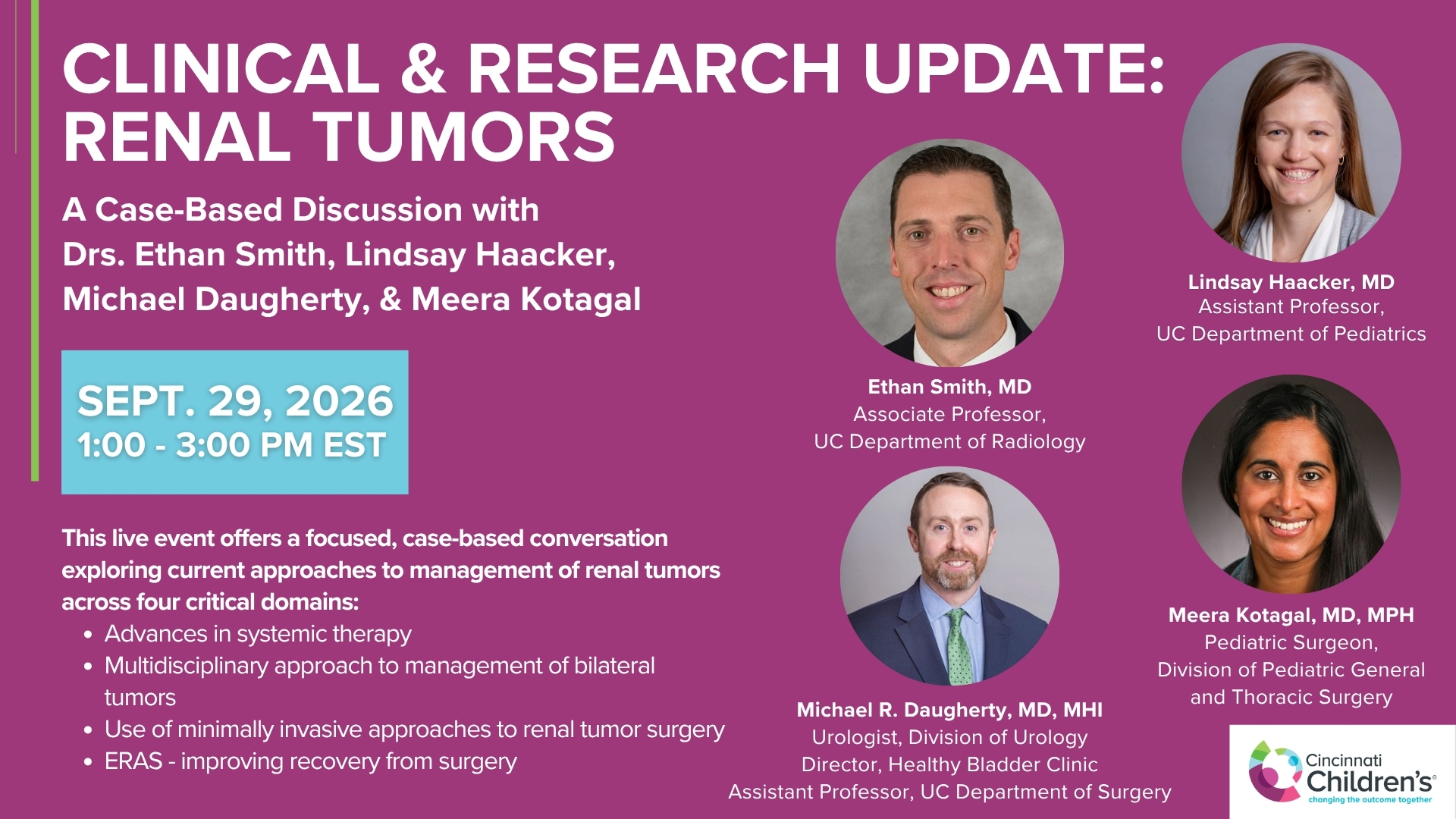
Clinical & Research Update: Renal Tumors with Drs. Ethan Smith, Lindsay Haacker, Michael Daugherty, and Meera Kotagal
71 min · Published Sep 2026
Video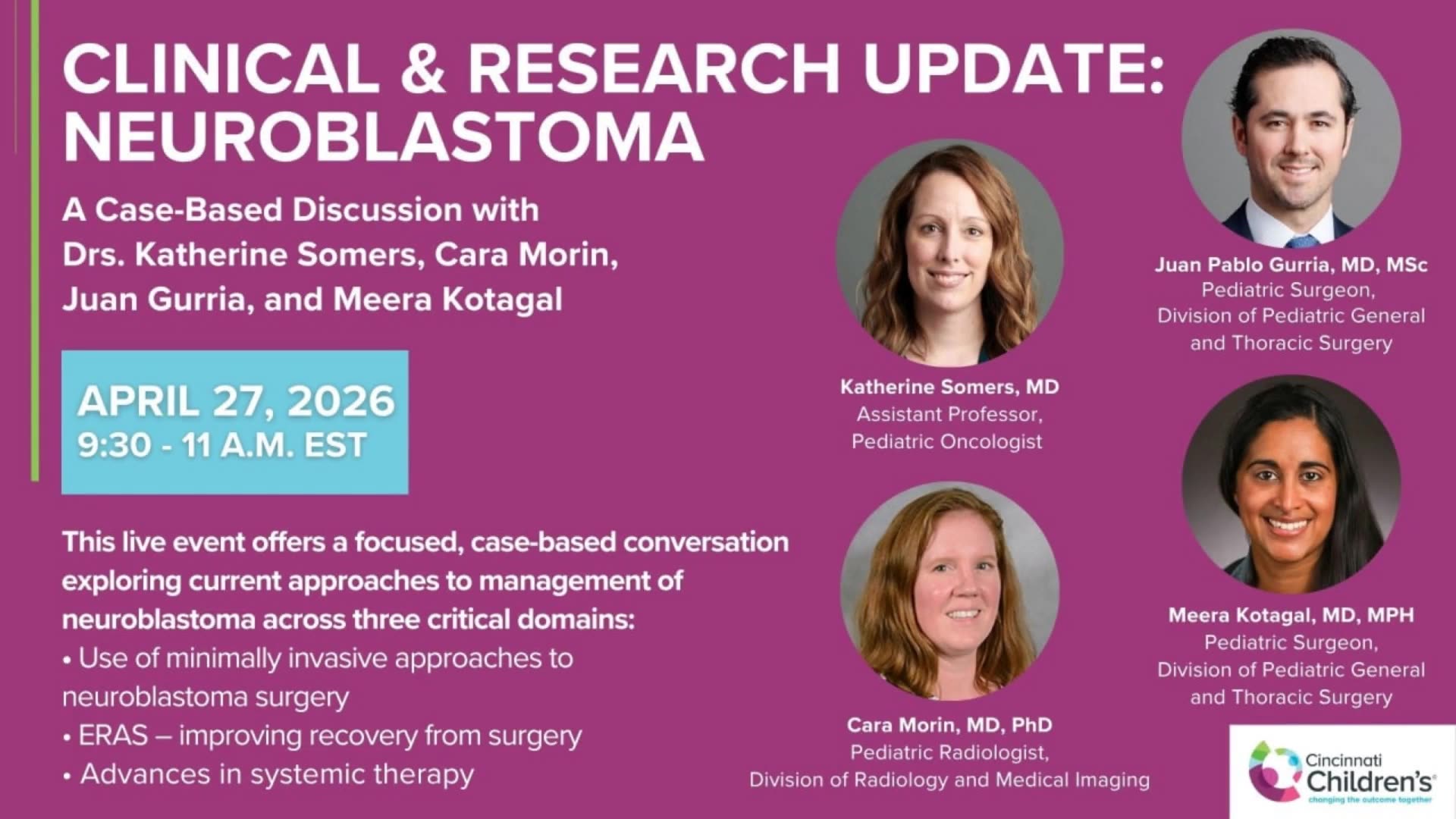
Clinical & Research Update: Neuroblastoma with Drs. Katherine Somers, Cara Morin, Juan Gurria, and Meera Kotagal
67 min · Published Sep 2026
Video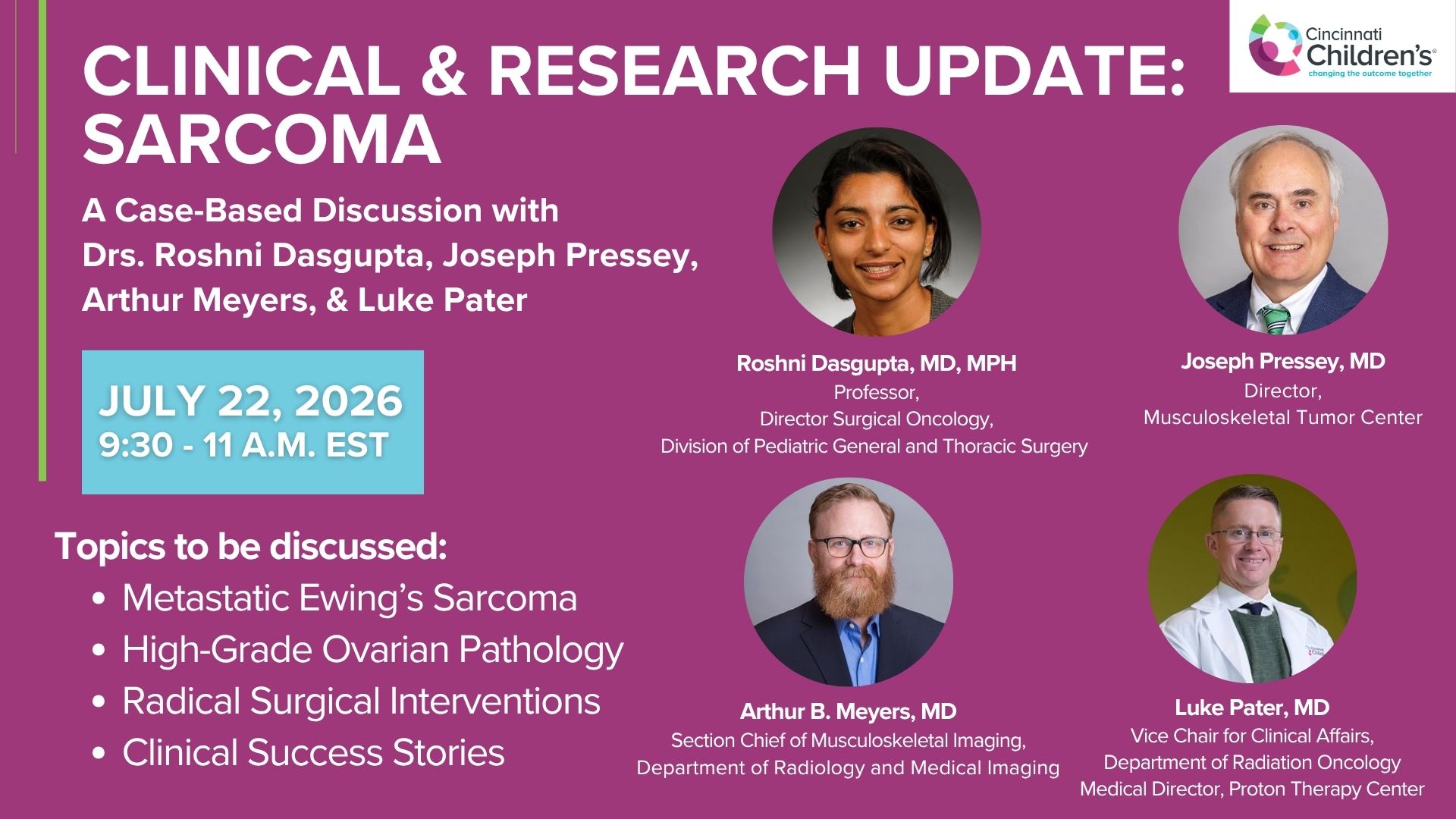
Clinical & Research Update: Sarcoma w/ Drs. Roshni Dasgupta, Joseph Pressey, Arthur Meyer, Luke Pater
66 min · Published Sep 2026
Video
2026 Laparoscopic Pediatric Hernia Repair
123 min · Published Jun 2026
Video
Beyond the Spectrum: Diagnosis, Myths & Management - Caitlin Couch & Leslie Lopez - APP Conference 2026
50 min · Published May 2026
Video
Dysautonomia: Navigating the Journey - Martha Willis - APP Conference 2026
55 min · Published May 2026
What the experts said
TEG and ROTEM are basically the same test, differing only in how the machine forms the clot.
TEG is a point of care test that can be performed in the operating room or emergency department without sending to the laboratory.
R time measures the time for clot to start forming and depends upon coagulation factors; prolonged R time indicates need for fresh frozen plasma.
K time measures time until clot reaches fixed strength and depends upon fibrinogen; abnormal K time indicates need for cryoprecipitate.
Alpha angle measures speed of fibrin accumulation and is dependent upon fibrinogen; cryoprecipitate can be used for abnormalities.
Maximum amplitude is the highest vertical amplitude of TEG representing maximum clot strength and depends upon platelet number and function.
For adequate platelet numbers with abnormal maximum amplitude, DDAVP can be given to help with platelet function or platelets can be transfused.
L30 measures percentage of clot lysis 30 minutes after maximum amplitude and relates to excess fibrinolysis; abnormalities indicate need for tranexamic acid or aminocaproic acid.
TEG has been commonly used in cardiac surgery and liver transplant surgery.
One institution uses TEG as part of trauma workup and in the operating room for patients with significant coagulopathy, allowing more directed rather than one-to-one transfusion.
Standard (non-rapid) TEG can take up to three hours to come back.
Rapid TEG turnaround time is about 30 minutes to an hour.
With rapid TEG, three of four key pieces of information can be obtained within 10 minutes; only L30 requires the full 30 minutes.
The CRASH-2 study demonstrated that tranexamic acid has significant benefit in life-threatening hemorrhage after trauma in adults.
Head injury is a major contraindication to tranexamic acid use.
Activated clotting time (ACT) is easier and quicker than TEG for ECMO monitoring.
Medical technology adoption rate has decreased from 10 years (for first laparoscopic Nissen) to less than a year now due to digital dissemination.
Infrastructure is the primary barrier to TEG implementation.