

From
Live Event Content
Trauma Committee Solid Organ Injury Protocol - APSA Practice Gaps 2019
With Dr. Lee
Part of
Blunt Liver Injury 3 items
Educational content from recorded physician discussions — not medical advice. Talk to your (or your child's) care team about your situation.
Only a few other public items share this diagnosis — go deeper there →
Video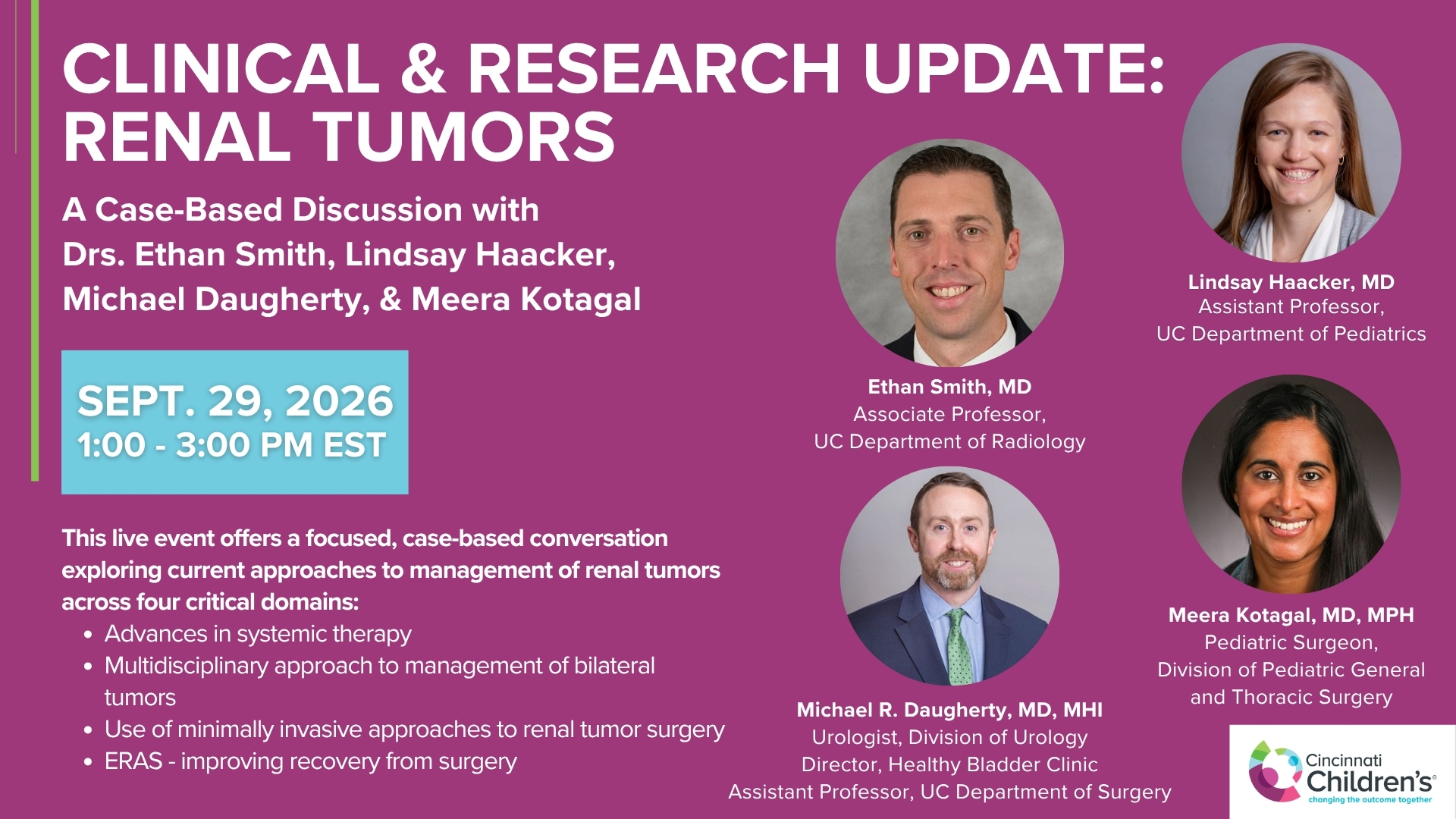
Clinical & Research Update: Renal Tumors with Drs. Ethan Smith, Lindsay Haacker, Michael Daugherty, and Meera Kotagal
71 min · Published Sep 2026
Video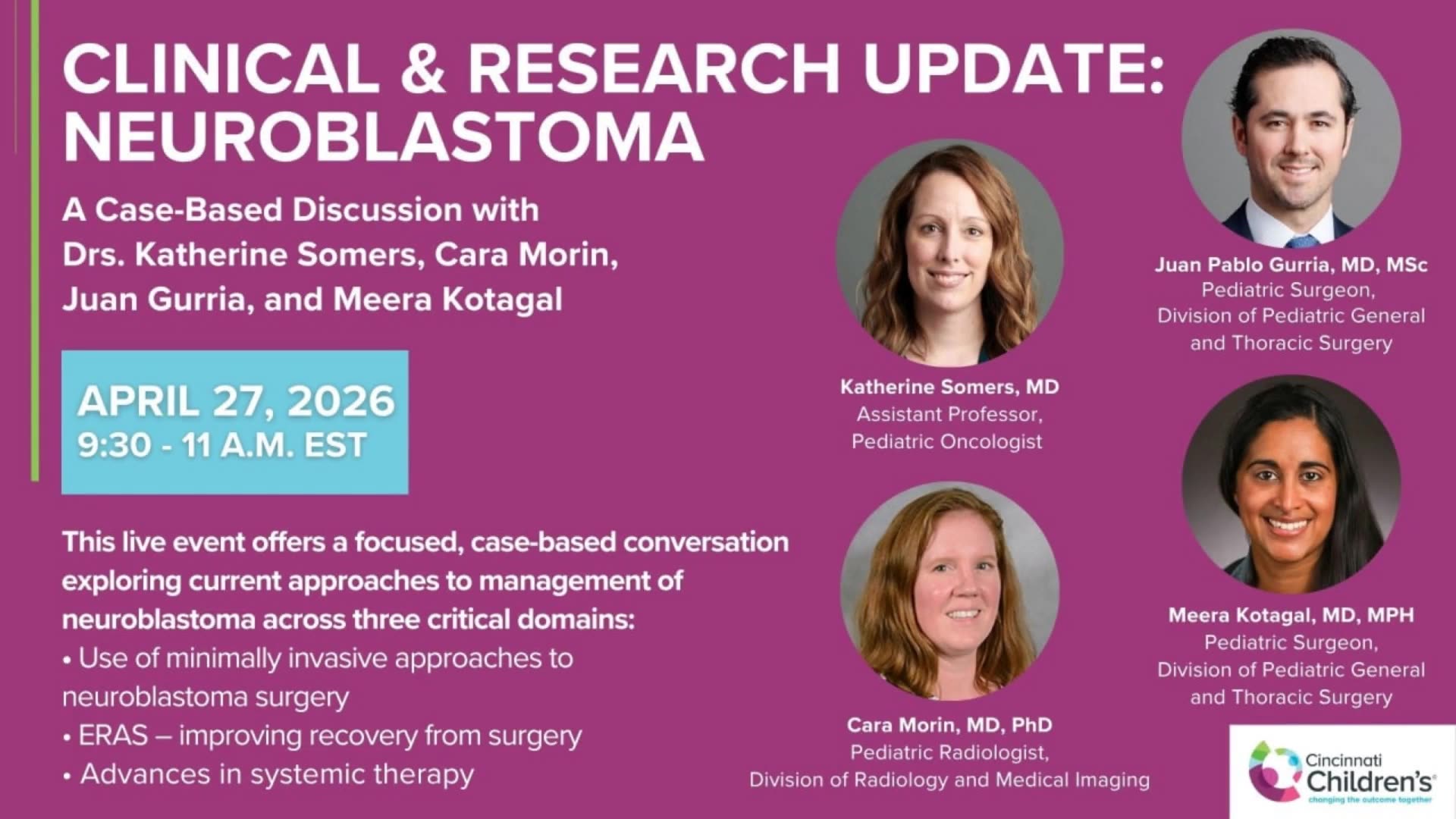
Clinical & Research Update: Neuroblastoma with Drs. Katherine Somers, Cara Morin, Juan Gurria, and Meera Kotagal
67 min · Published Sep 2026
Video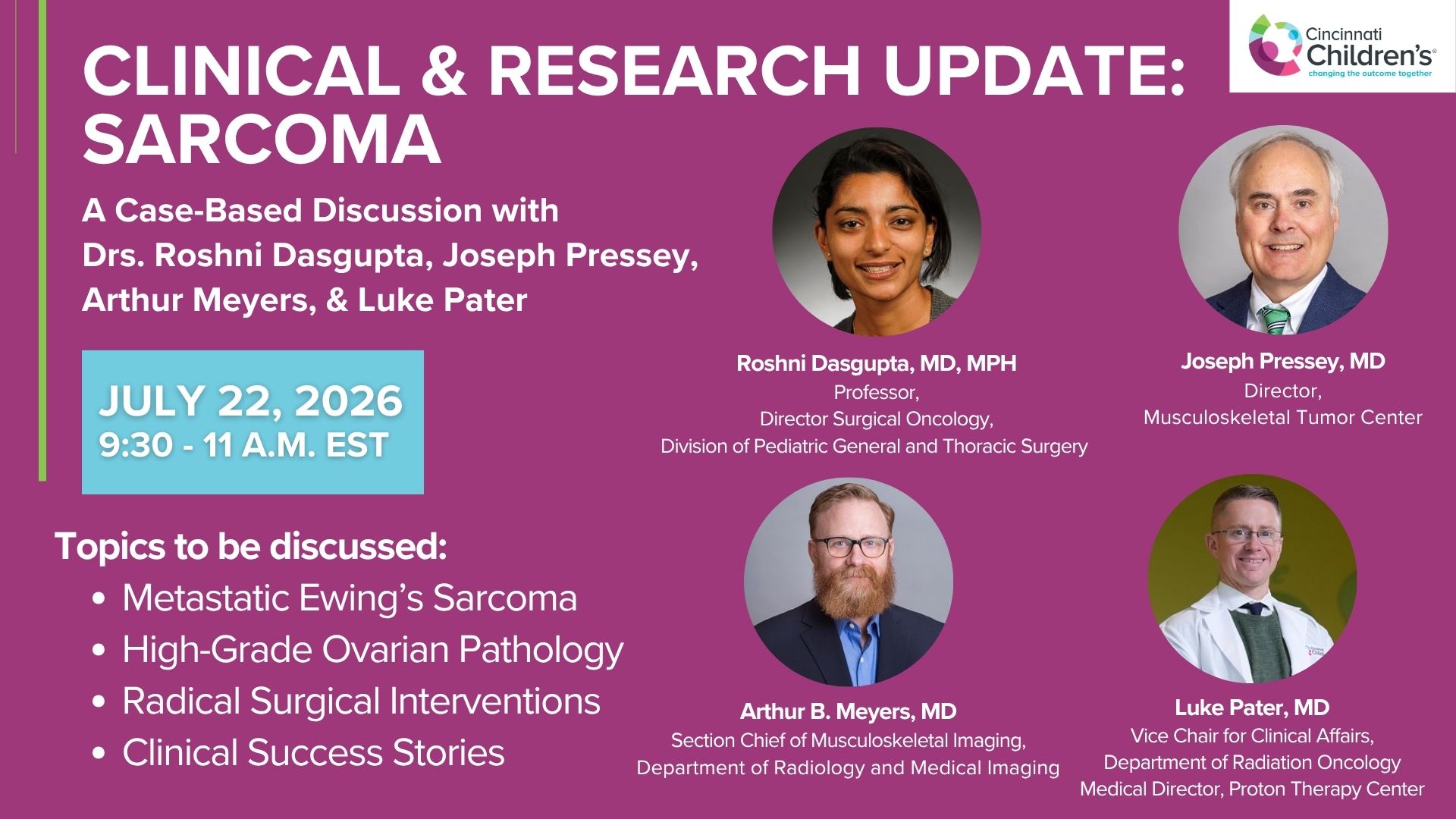
Clinical & Research Update: Sarcoma w/ Drs. Roshni Dasgupta, Joseph Pressey, Arthur Meyer, Luke Pater
66 min · Published Sep 2026
Video
2026 Laparoscopic Pediatric Hernia Repair
123 min · Published Jun 2026
Video
Beyond the Spectrum: Diagnosis, Myths & Management - Caitlin Couch & Leslie Lopez - APP Conference 2026
50 min · Published May 2026
Video
Dysautonomia: Navigating the Journey - Martha Willis - APP Conference 2026
55 min · Published May 2026
What the experts said
Management is not based on the grade of injury, as shown multiple times in prospective studies.
After the first 20 ml per kilo normal saline bolus, if the patient still requires additional fluids, give blood rather than another fluid bolus.
The blood transfusion dose is 10 ml per kilo.
The original APSA guidelines did not address in-house bed rest or activity restrictions.
Patients admitted to the ward do not need any activity restrictions and can go to the bathroom and walk around.
Contrast blush on CT does not require intervention unless there is evidence of bleeding.
Physical exam (capillary refill, heart rate) is probably a better indicator of hemodynamic status than hemoglobin monitoring.
In splenic injuries, if the patient has stopped bleeding (responded to normal saline bolus), advancing to a regular diet is advocated.
By the time a patient with significant injury and contrast blush gets to the floor (a four to six hour process), if the patient is stable, starting a regular diet is not unreasonable.
The risk of actually going to the operating room for splenic trauma is very low.
If a patient has a bad hemoperitoneum and ileus, they probably will not eat even if a regular diet is ordered.
ATOMIC is a group of level one pediatric trauma centers (Arkansas, Texas, Oklahoma, Memphis, Arizona, Akron, Kansas City, and others) that came together in 2010 to prospectively study vital trauma questions.
ATOMIC initially developed guidelines for management of isolated blunt liver and splenic injuries, then prospectively studied them, leading to publications that redefined the guidelines adopted by APSA.
There is not great evidence in the pediatric literature for 1:1:1 massive transfusion protocol, with mixed results.
Massive transfusion protocol should be considered when the patient is still bleeding and unstable.
The updated APSA blunt liver and splenic injury guidelines were presented at the APSA annual meeting and developed by the APSA Trauma Committee and the ATOMIC group.
Management should be based on the patient's hemodynamic status (whether the patient is bleeding or has recently bled, or is stable) rather than injury grade.
A modified shock index for pediatrics (heart rate over systolic blood pressure, interpreted by age) can be used to determine if a patient may still be bleeding.
Patients who respond to normal saline bolus and remain hemodynamically stable need only to be observed and do not require ICU admission.
Patients admitted to the ward need another hemoglobin check in six hours, can have a regular diet, and have no activity restrictions.
Transfusion is indicated only if patients are unstable or have hemoglobin less than seven, or if there are signs of ongoing bleeding.
Angioembolization in stable patients does not need to be done even with contrast blush, particularly in patients with splenic injuries, as these have been shown not to continue to bleed.
Angioembolization should be performed if there is evidence of ongoing bleeding.
Based on the ATOMIC protocol, operative intervention is indicated when patients require more than 40 ml per kilogram of packed red blood cells.
Contact sports including football can be resumed within weeks after splenic injury, regardless of grade.