

From
StayCurrentMD
Journal of Pediatric Surgery Article Review: March 2022
With Dr. Mikko Pekarinen & Dr. Gerek Selchuk Kılıç & Dr. Michael Rollins · hosted by Dr. Brittany Levy & Dr. Em Tombash
Educational content from recorded physician discussions — not medical advice. Talk to your (or your child's) care team about your situation.
Podcast
Journal Club: Appendicitis in 2021
15 min · Published Aug 2021
Video
Unanticipated consequences of COVID-19 pandemic policies on pediatric acute appendicitis surgery
Published Jul 2023
Video
Quick Literature Updates Ep 24
4 min · Published Nov 2025
Podcast
Journal of Pediatric Surgery Article Review: Q1 (Jan-Mar) 2024
13 min · Published Jun 2024
Only a few other public items share this expert — go deeper there →
Video
Intestinal Atresia Types Explained: Grossfeld Classification for Pediatric Surgery
1 min · Published Sep 2026
Video
Derivation and validation of the Pediatric Community-Acquired Pneumonia Severity (PedCAPS) score: A prospective cohort study
50 s · Published Sep 2026
Video
FETO for Late-Diagnosed Severe Congenital Diaphragmatic Hernia (CDH) at Cincinnati Children's with Dr. Beth Rymeski
4 min · Published Sep 2026
Video
Severe Congenital Diaphragmatic Hernia (CDH) Case: FETO Management & Unexpected Findings with Dr. Beth Rymeski
3 min · Published Sep 2026
Video
Fetoscopic Endoluminal Tracheal Occlusion (FETO) Procedure: Step-by-Step Guide with Dr. Beth Rymeski
4 min · Published Sep 2026
Video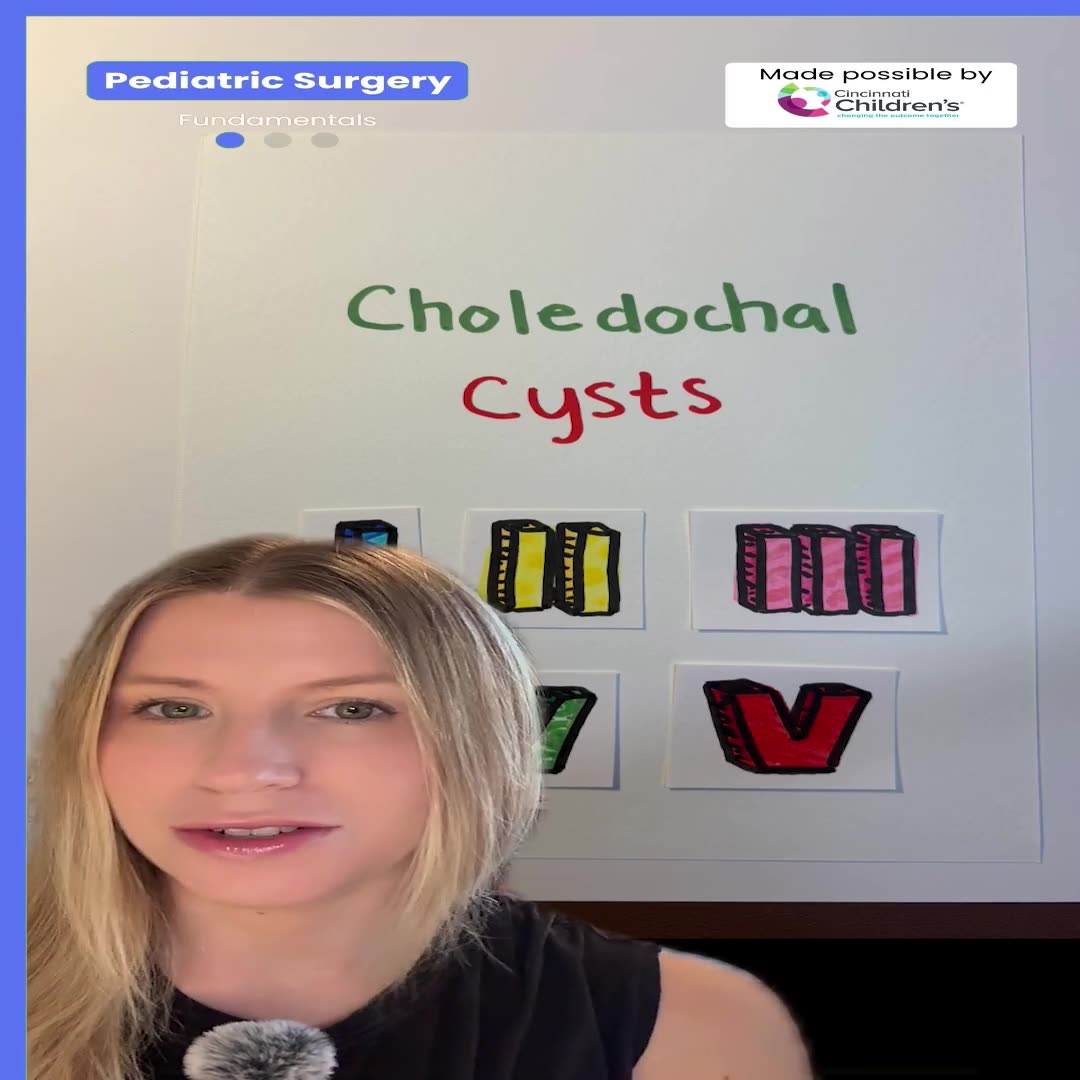
Choledochal Cyst Types Explained: Pediatric Surgery Fundamentals
1 min · Published Sep 2026
What the experts said
The meta-analysis findings specifically apply to complicated appendicitis, not non-complicated appendicitis.
Non-complicated appendicitis is already treated by antibiotics in some centers.
Dr. Kılıç's team tried balloon dilatation first for every patient with congenital esophageal stenosis, then moved to surgery according to balloon dilatation results.
Surgery for congenital esophageal stenosis was indicated in cases of recurring lung infections, growth retardation, and when patients were not healthy enough for the dilatation program.
Dr. Pekarinen would be willing to try up to five dilatations before considering operative treatment for congenital esophageal stenosis based on the Turkish study findings.
The Utah team changed their post-operative protocol because many patients displayed clinical signs they were ready to initiate diet immediately after appendicostomy surgery, whereas historically diet was not initiated until the day after surgery.
Dr. Pekarinen's current protocol for appendicostomy is similar to the Utah team's historical protocol, and based on the study, further reduction in hospital stay seems achievable.
The meta-analysis included four randomized controlled trials and 36 case control trials comparing laparoscopic and open appendectomy for complicated appendicitis.
Laparoscopic appendectomy is associated with shorter length of stay, lower rate of surgical site infection, and lower overall complication rate compared to open appendectomy.
Rates of intra-abdominal abscess, post-operative fever, pneumonia and ileus are similar between laparoscopic and open appendectomy groups.
Open appendectomy has shorter operative time compared to laparoscopic appendectomy.
In Turkey, surgeons prefer open appendectomies in nearly half of children, especially those with lower BMIs.
The Turkish study included 19 patients with congenital esophageal stenosis, successfully treating 14 with a median of five dilatations.
Two patients with congenital esophageal stenosis had residual symptoms and three were operated on later.
The most common form of esophageal stenosis is iatrogenic, caused by anastomosis that closes tight and requires dilation.
Dilatation of esophageal stenosis carries a risk of rupture, which could be catastrophic.
Current management of congenital esophageal stenosis depends on whether there is a cartilaginous or membranous component: if cartilaginous, resect rather than dilate; if membranous, dilate.
Out of 19 patients who underwent esophageal balloon dilatations, 16 were successful, three required operation, and overall 17 patients were symptom-free after 48 months of follow-up.
The University of Utah study showed reduction in hospital stay from three days to one day after implementation of expedited post-operative protocol for appendicostomy.
The expedited protocol did not increase complications or unplanned hospital visits after appendicostomy.