

From
Live Event Content
PAPS - Rapamycin Induces Autophagy And Apoptosis In Kaposiform Hemangioendothelioma Primary Cells In Vitro - Zuopeng Wang
With Dr. Zuopeng Wang & Dr. Yamataka
Educational content from recorded physician discussions — not medical advice. Talk to your (or your child's) care team about your situation.
Video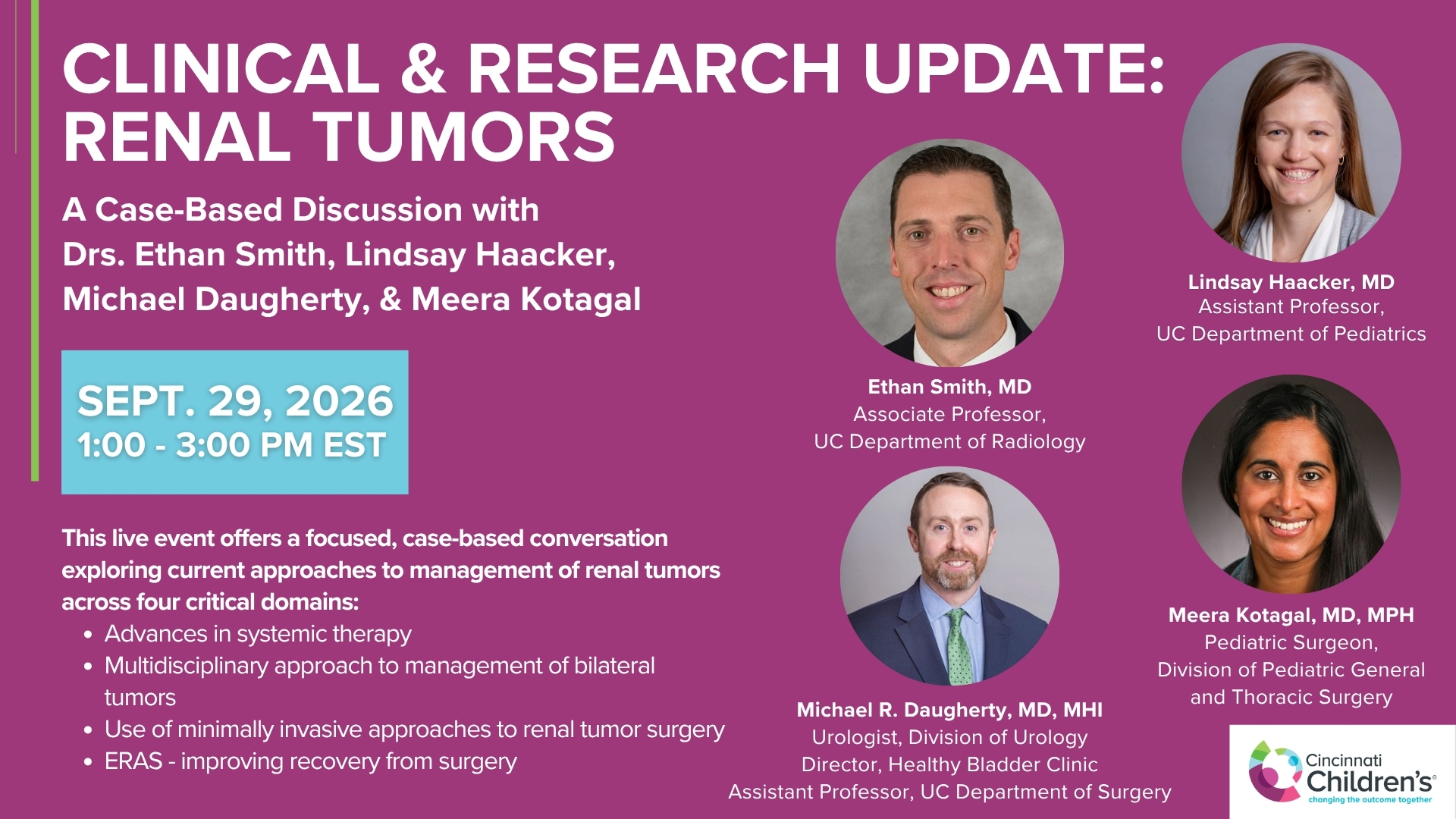
Clinical & Research Update: Renal Tumors with Drs. Ethan Smith, Lindsay Haacker, Michael Daugherty, and Meera Kotagal
71 min · Published Sep 2026
Video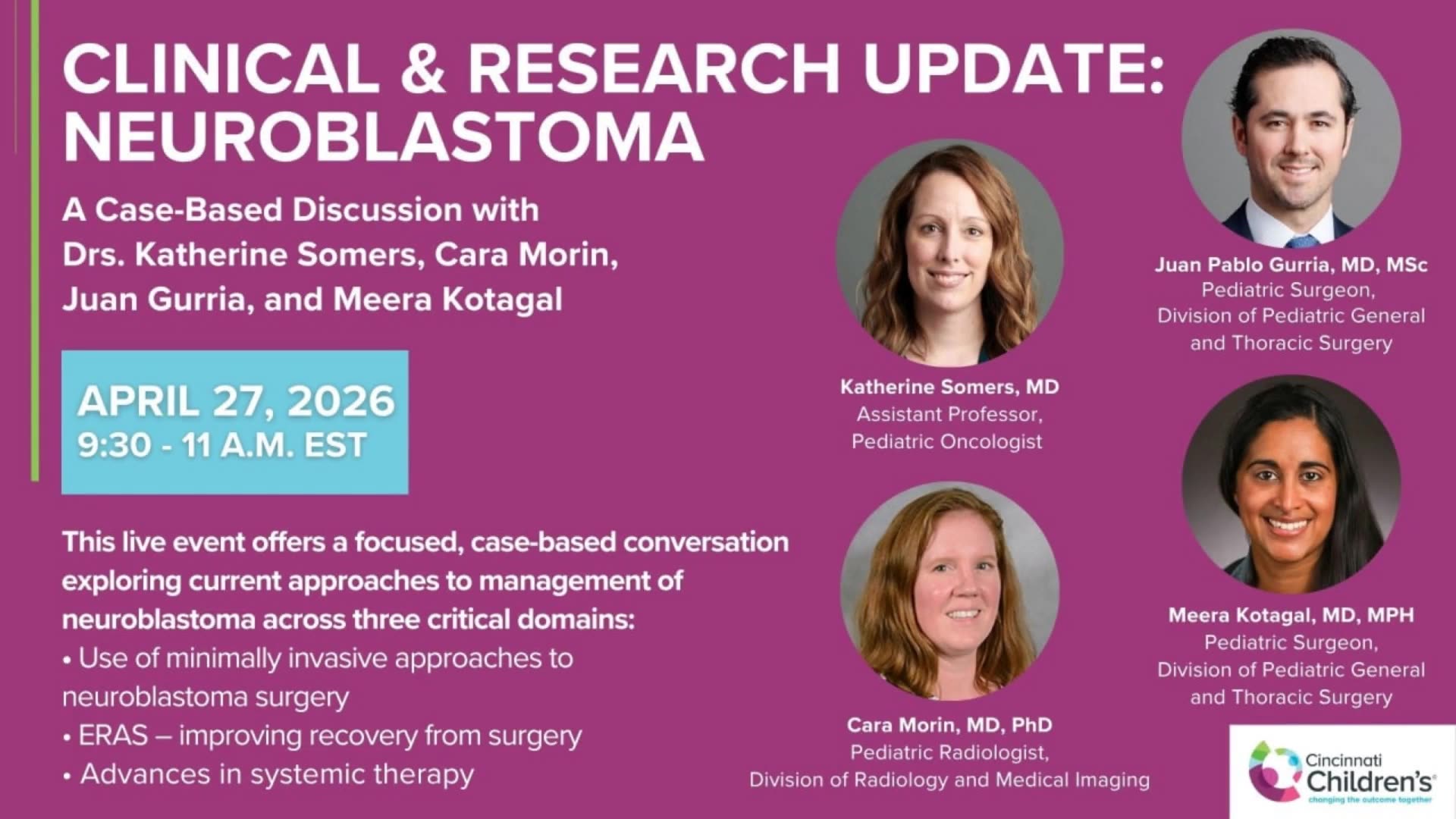
Clinical & Research Update: Neuroblastoma with Drs. Katherine Somers, Cara Morin, Juan Gurria, and Meera Kotagal
67 min · Published Sep 2026
Video
Clinical & Research Update: Sarcoma w/ Drs. Roshni Dasgupta, Joseph Pressey, Arthur Meyer, Luke Pater
66 min · Published Sep 2026
Video
2026 Laparoscopic Pediatric Hernia Repair
123 min · Published Jun 2026
Video
Beyond the Spectrum: Diagnosis, Myths & Management - Caitlin Couch & Leslie Lopez - APP Conference 2026
50 min · Published May 2026
Video
Dysautonomia: Navigating the Journey - Martha Willis - APP Conference 2026
55 min · Published May 2026
What the experts said
KHE is a rare and distinct vascular tumor affecting children with life-threatening Kasabach-Merritt phenomenon (KMP).
The lack of KHE cell lines causes trouble to carry out mechanism studies.
KHE primary cells were cultured from a one-month-old male infant diagnosed with KHE with KMP, confirmed by histopathology.
Primary cells were selected by magnetic bead with CD34.
The patient was diagnosed with KHE by H&E staining, positive for CD31, CD34, LYVE1, D2-40 and PROX1.
The KHE primary cells are spindle-shaped.
Immunofluorescence staining showed that the primary cells were positive for CD31 and LYVE1, but negative for D2-40.
Cell viabilities were significantly inhibited in the rapamycin group.
Rapamycin induced G0 and G1 phase arrest resulting in high level of apoptosis.
The ratio of LC3-II to LC3-I increased in rapamycin group, symbolizing the occurrence of autophagy.
The level of phosphorylation of mTOR pathway proteins are significantly suppressed in rapamycin group.
Immunofluorescence of LC3 indicated that rapamycin induced autophagy of KHE primary cells.
Similar effects (apoptosis induction) were observed in neuroblastoma cells treated with rapamycin.
Rapamycin may be a drug that will be used in the future for tumor therapy.
The team currently uses rapamycin to treat KHE and is focusing on KHE therapy.
Clinical trials are being planned for rapamycin alone and rapamycin with other drugs to treat KHE.
Combined drugs (rapamycin and steroids) may work better than single drugs for treating KHE.
The team has tried rapamycin in a few patients before starting a clinical trial.
Rapamycin inhibits the mTOR pathway and has been reported to be safe and efficient in treating KHE with KMP.
Rapamycin inhibited KHE primary cells proliferation, induced G0 and G1 phase arrest, apoptosis, and autophagy.
The team has tried rapamycin in some stage 4 tumor patients combined with chemotherapy, but cannot determine which treatment had the dominant effect.