

From
StayCurrentMD
PAPS - Optimizing skin antisepsis for neonatal surgery - Sophie Carr
With Dr. Sophie Carr & Dr. Rebecca Rentea
Educational content from recorded physician discussions — not medical advice. Talk to your (or your child's) care team about your situation.
Video
El cuidado perioperatorio estandarizado reduce las infecciones del sitio quirúrgico en niños
Published Apr 2023
Video
Standardized perioperative care reduces colorectal surgical site infection in children
1 min · Published Apr 2023
Video
Improve Wound Misclassification with Focused Education
Published Mar 2019
Video
MediByte - Intraoperative temperatures impact on postoperative infections
Published May 2020
Video
Update Course Rewind: Effects of Mechanical Bowel Prep on SSIs 2022
Published Jun 2023
Video
The Role of Diversion During Ileal Pouch Anal Anastomosis (IPAA) Creation in Pediatric Ulcerative Colitis - JPS
Published Feb 2024
Video
Intestinal Atresia Types Explained: Grossfeld Classification for Pediatric Surgery
1 min · Published Sep 2026
Video
Derivation and validation of the Pediatric Community-Acquired Pneumonia Severity (PedCAPS) score: A prospective cohort study
50 s · Published Sep 2026
Video
FETO for Late-Diagnosed Severe Congenital Diaphragmatic Hernia (CDH) at Cincinnati Children's with Dr. Beth Rymeski
4 min · Published Sep 2026
Video
Severe Congenital Diaphragmatic Hernia (CDH) Case: FETO Management & Unexpected Findings with Dr. Beth Rymeski
3 min · Published Sep 2026
Video
Fetoscopic Endoluminal Tracheal Occlusion (FETO) Procedure: Step-by-Step Guide with Dr. Beth Rymeski
4 min · Published Sep 2026
Video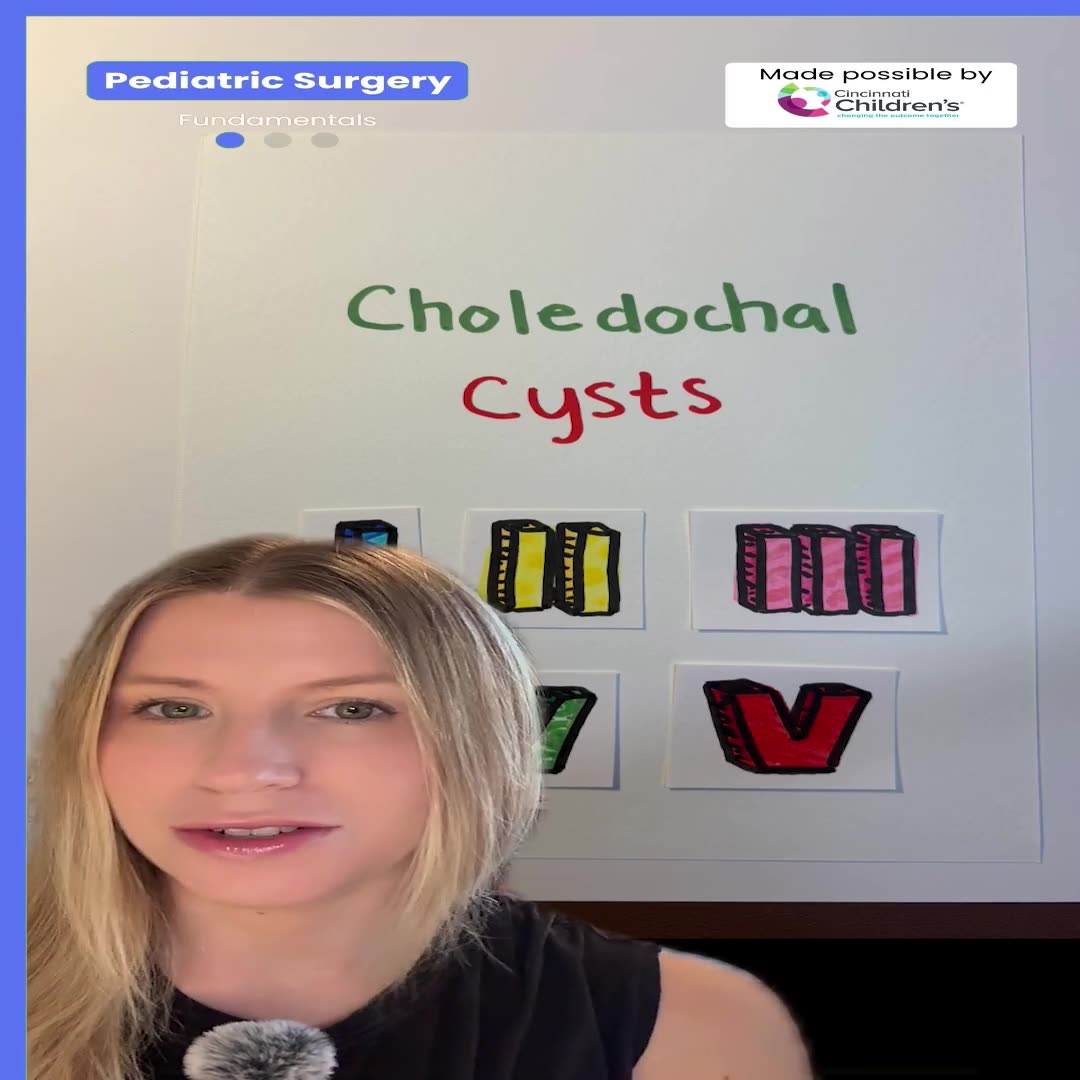
Choledochal Cyst Types Explained: Pediatric Surgery Fundamentals
1 min · Published Sep 2026
What the experts said
Surgical site infections are a costly, yet modifiable source of morbidity, particularly within the neonatal population.
Equivalent data does not yet exist for the neonatal surgical population comparing CHG-IPA to povidone iodine.
The protocol inclusion was limited to general surgery patients with 34 weeks post conceptual age and 1500 grams as the lower age and weight limits.
Either 2% or 0.5% CHG solution was used based on age cutoffs.
Skin integrity was assessed using a validated tool called the neonatal skin condition score.
Implementation of the protocol occurred in February 2020.
A total of 50 patients were included, none of which experienced adverse skin prep outcomes.
8% of patients in the CHG cohort developed SSIs within the 30-day post-op period compared to 14% in the matched retrospective povidone cohort.
A comparison of SSI rates between the CHG versus PI cohort revealed no significant difference.
The majority of cases were class two clean contaminated cases, which is more in keeping with the literature in terms of adult SSI reduction in use of CHG antisepsis.
The protocol was largely modeled off the McGill protocol used in Quebec, Canada, which used a lower age cutoff of 28 weeks gestational age with a lower weight cutoff of 1000 grams.
The project was conducted in conjunction with initiatives including optimizing antibiotic prophylaxis, using adherent draping, and for class two clean contaminated cases, using a clean closure bundle including changing gloves prior to closure.
The decrease in SSI was not statistically significant.
The protocol applied to all general surgery cases that did not have any open exposed mucosa and in which the patient was not allergic to CHG or IPA.
A growing body of evidence in adults suggests that chlorhexidine gluconate and isopropyl alcohol provide superior protection against SSIs than povidone iodine.
CHG antisepsis is commonly used for invasive non-surgical procedures in NICUs and for prevention of newborn nosocomial infections in developing countries.
Current product labeling discourages CHG IPA antisepsis in infants under two months of age due to limited safety data and concerns around adverse effects, particularly skin injuries.
The primary adverse concern is skin reactions with less than 28 weeks gestational age being the primary population affected by those in the literature.