
From
Live Event Content
Update Course 2022 - APSA PDC UPDATES - Mary Edwards, Paul Jeziorczak, Craig Lillehei, and Charles Snyder,
With Dr. Craig Lillehei & Dr. Paul Yzotrak · hosted by Dr. Todd Ponsky
Educational content from recorded physician discussions — not medical advice. Talk to your (or your child's) care team about your situation.
Video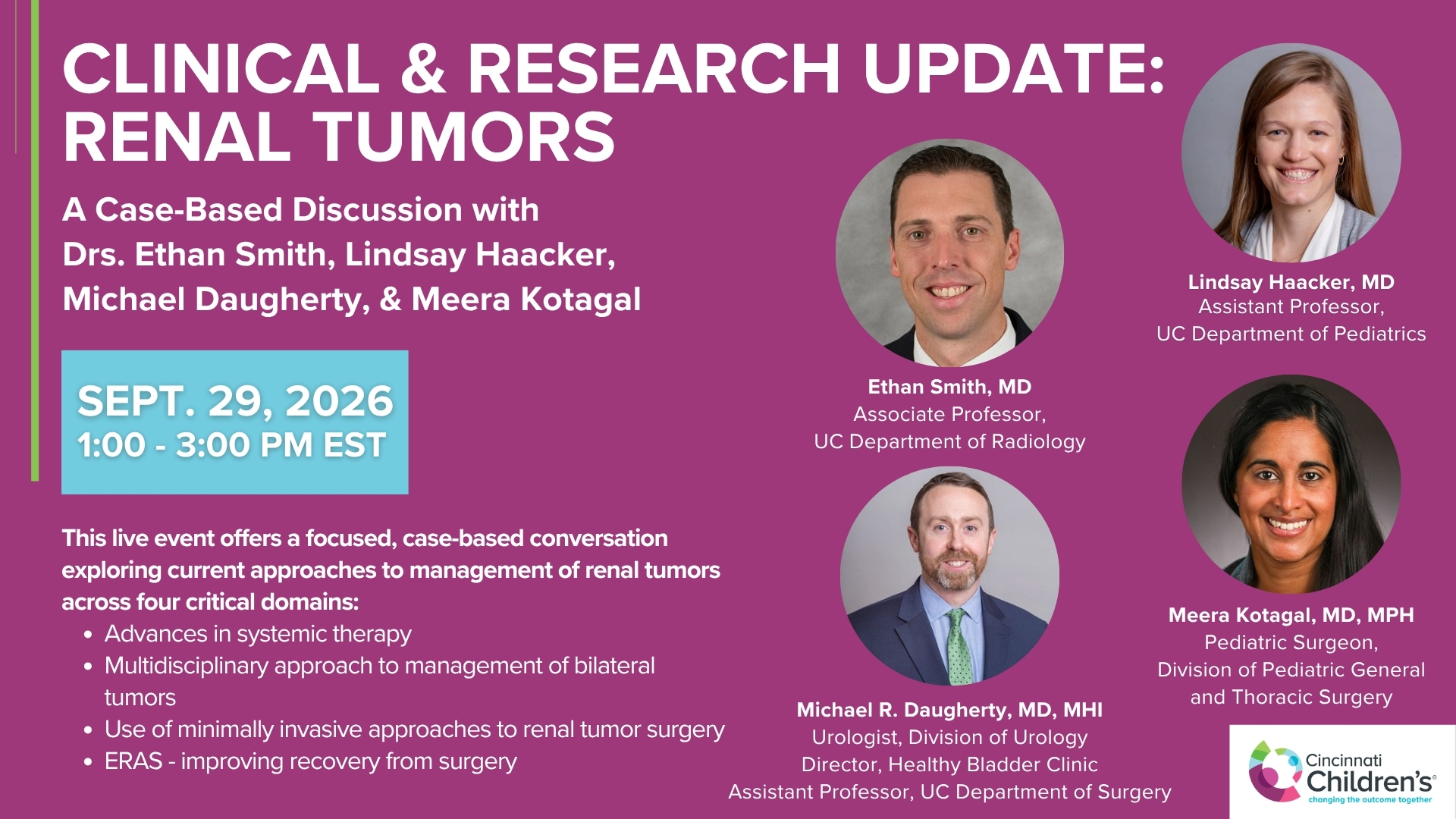
Clinical & Research Update: Renal Tumors with Drs. Ethan Smith, Lindsay Haacker, Michael Daugherty, and Meera Kotagal
71 min · Published Sep 2026
Video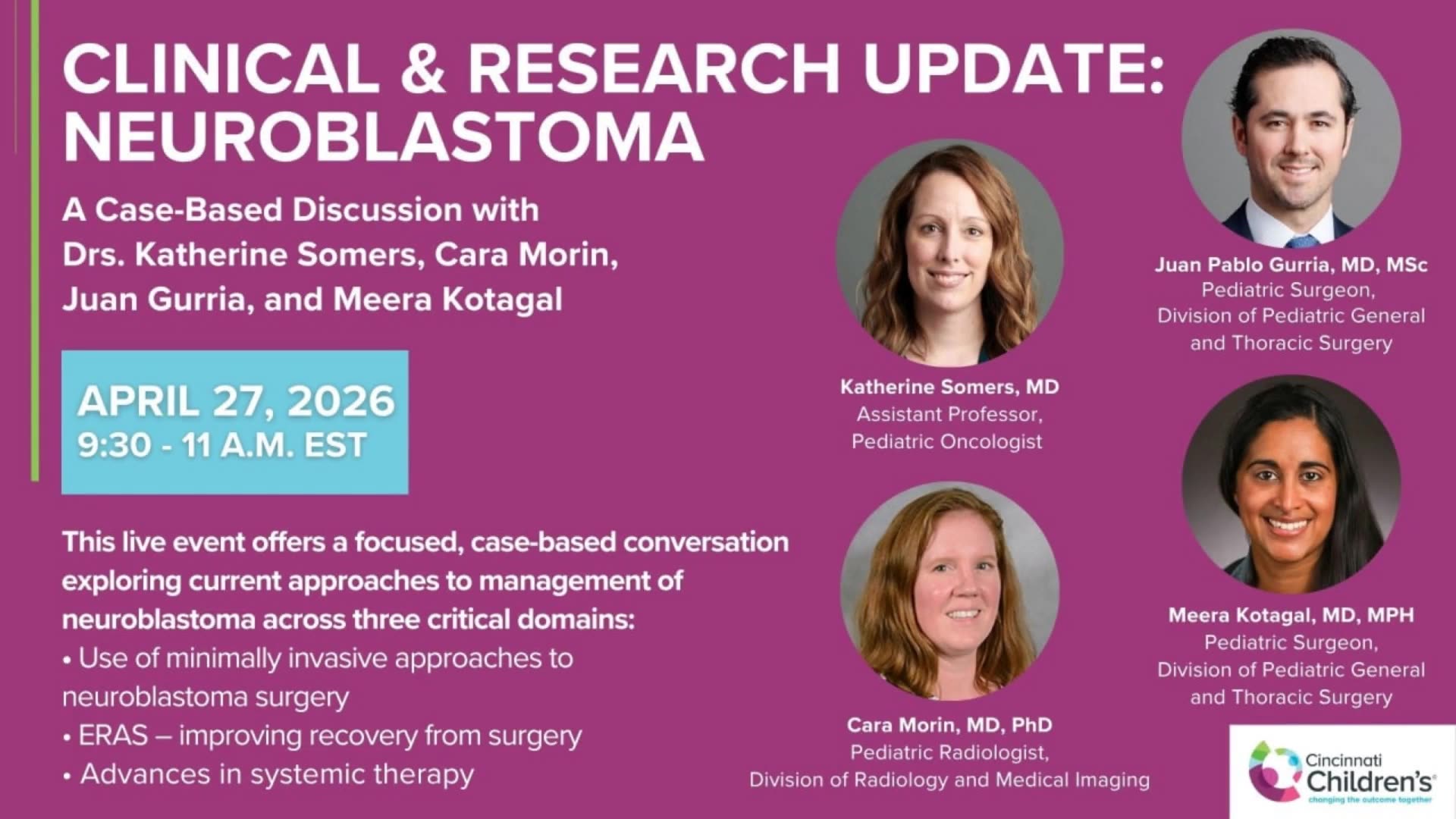
Clinical & Research Update: Neuroblastoma with Drs. Katherine Somers, Cara Morin, Juan Gurria, and Meera Kotagal
67 min · Published Sep 2026
Video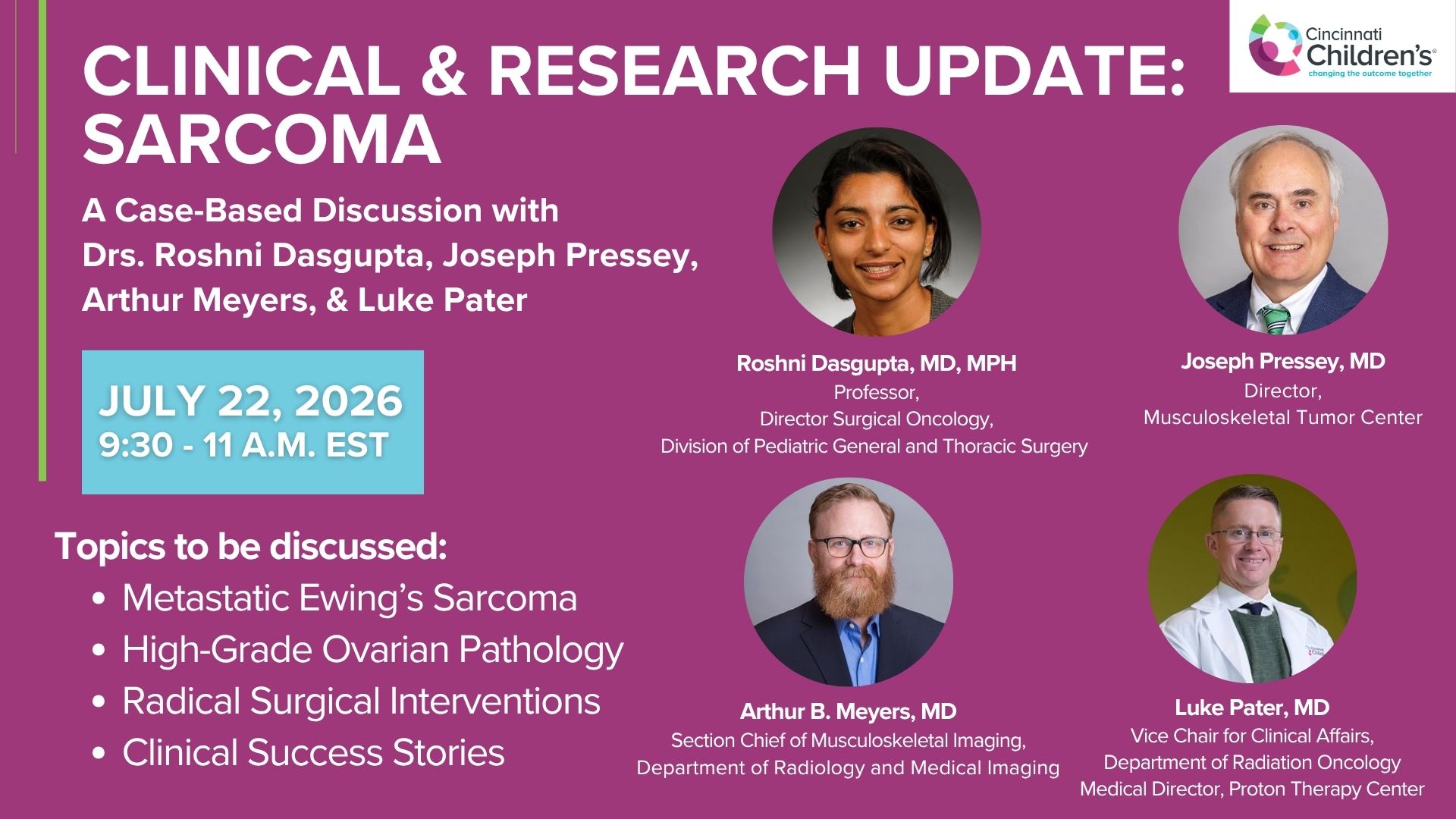
Clinical & Research Update: Sarcoma w/ Drs. Roshni Dasgupta, Joseph Pressey, Arthur Meyer, Luke Pater
66 min · Published Sep 2026
Video
Update Course Rewind 2025: Nerve Monitoring in Pediatric Thyroid Surgery
6 min · Published Jul 2026
Video
Journal of Pediatric Surgery Article Review: June 2023, AAP Issue
Todd Ponsky · 13 min · Published Jul 2026
Video
Pediatric Surgical Oncology Research Collaborative (PSORC): Studying Rare Pediatric Tumors
56 s · Published May 2026
Video
2026 Laparoscopic Pediatric Hernia Repair
123 min · Published Jun 2026
Video
Beyond the Spectrum: Diagnosis, Myths & Management - Caitlin Couch & Leslie Lopez - APP Conference 2026
50 min · Published May 2026
Video
Dysautonomia: Navigating the Journey - Martha Willis - APP Conference 2026
55 min · Published May 2026
Video
Everything You Ever Wanted to Know About G-tubes But Were Afraid to Ask - Betsy Gerrein - APP Conference 2026
30 min · Published May 2026
Video
Take My Breath Away - Carolyn Grad, Mark Washam, & Katie Holtman - APP Conference 2026
58 min · Published May 2026
Video
Central Lines...WHAT? - Richelle Guinigundo - APP Conference 2026
26 min · Published May 2026
What the experts said
Microaggressions are verbal, nonverbal, environmental slights, snubs, invalidations, or insults that send hostile, derogatory, or negative messages to individuals based solely on their marginalized group membership
Microaggressions have a cumulative impact causing isolation and self-doubt despite being termed 'micro'
Bystanders who do not speak up compound the harm of microaggressions even if they address the issue later
Prematurity and premature rupture of membranes are significant complications of FETO
NPO guidelines for children are based on very poor evidence and vary considerably between institutions
Pulmonary aspiration is very scary but very rare, usually occurring in emergency surgeries in high-risk children rather than elective procedures
Prolonged NPO periods generate ketone bodies, cause hypoglycemia, and make children irritable preoperatively
In C-arm fluoroscopy, the x-ray source is conventionally placed below the table with the image intensifier above
Placing radiation shields on top of the patient does nothing to protect them because radiation comes from below the table
If a shield is in the fluoroscopy field, automatic brightness control increases x-ray energy to compensate, increasing patient exposure
Collimation focuses the x-ray beam to a specific area, increasing detail and clarity while decreasing total patient dose and room exposure
Pulse mode fluoroscopy is feasible for most pediatric surgery applications and does not require the temporal resolution of continuous fluoroscopy
Using magnification setting on fluoroscopy significantly increases radiation dose to both patient and room
The strongest data for preventing surgical site infection is appropriate timing of preoperative intravenous antibiotics
For NEC survival in the first 24-48 hours, it is unclear whether there is a survival advantage or disadvantage for drain versus laparotomy
In the TOTAL trial for severe CDH, FETO significantly improved survival
In the TOTAL trial for moderate CDH, FETO showed some improvement in survival but did not approach statistical significance
The TOTAL trial was conducted over an 11-year period at multiple centers with variable CDH management protocols
Studies suggest clear liquids containing carbohydrates empty the stomach very quickly regardless of age
British and Irish consensus recommends one hour NPO for clear liquids, four hours for breast milk, six hours for solid foods in children under 17
ASA currently recommends two hours for clear liquids, four hours for breast milk, six hours for non-human milk and light meals, eight hours for heavy meals
European Society of Anesthesia recommends one hour for clear liquids, three hours for breast milk, four hours for formula, six hours for everything else
In a study of 521 primary lung lesions from 11 children's hospitals, none of the prenatally diagnosed lesions were malignant
Approximately 10% of postnatally diagnosed lung lesions were malignant in the Midwest consortium study
About half of malignant lung lesions were associated with DICER1 mutation
No malignant lung lesion had a systemic feeding vessel in the consortium study
CT scan sensitivity and specificity for detecting pleuropulmonary blastoma was poor, with poor inter-rater reliability among nine radiologists
In a series of approximately 600 patients with prenatal lung lesion diagnosis, the chance of pleuropulmonary blastoma is close to zero
In the IMPACT study, piperacillin-tazobactam had significantly lower postoperative abscess rate, ER visit rate, and postoperative CT scan rate compared to ceftriaxone-metronidazole for perforated appendicitis
A NSQIP study by Sean Rangel of 654 patients showed opposite results, suggesting ceftriaxone-metronidazole were preferred over piperacillin-tazobactam
The IMPACT study was multi-institutional but 75% of patients were at one institution and 25% at another
Mechanical bowel preparation has no effect on surgical site infection rates
Some data suggests mechanical bowel preparation actually increases surgical site infections
The NEST trial used approximately one kilogram as the cutoff weight for laparotomy
The NEST trial showed neurodevelopmental outcomes are improved with laparotomy compared to peritoneal drainage for NEC