

From
Live Event Content
Best of the Best Gen Surg - Therapeutic Effect of Oridonin against Inflammatory Bowel Disease Involves Inhibition of Intestinal Fibrosis via NF-kB and p38STAT1 Pathways - Dr. Mao
With Dr. Diana Mao
Educational content from recorded physician discussions — not medical advice. Talk to your (or your child's) care team about your situation.
Video
Enhanced Recovery After Surgery (ERAS) Program: Update Course 2016
44 min · Published Jul 2017
Podcast
Intestinal Rehabilitation, Episode 1: What is intestinal rehabilitation?
14 min · Published Dec 2021
Video
Best of the Best Gen Surg - Limited Health Literacy is Associated with Reduced Adherence to ERP Components. - Dr. Shao
9 min · Published Sep 2022
Video
Persistent Abdominal Pain - Median Arcuate Ligament Syndrome: Update Course 2014
22 min · Published Nov 2018
Video
PDC 2020 Practice Gaps
83 min · Published Sep 2020
Video
Endoscopy and Surgery
Jeffrey Ponsky · 11 min · Published Mar 2021
Only a few other public items share this expert — go deeper there →
Video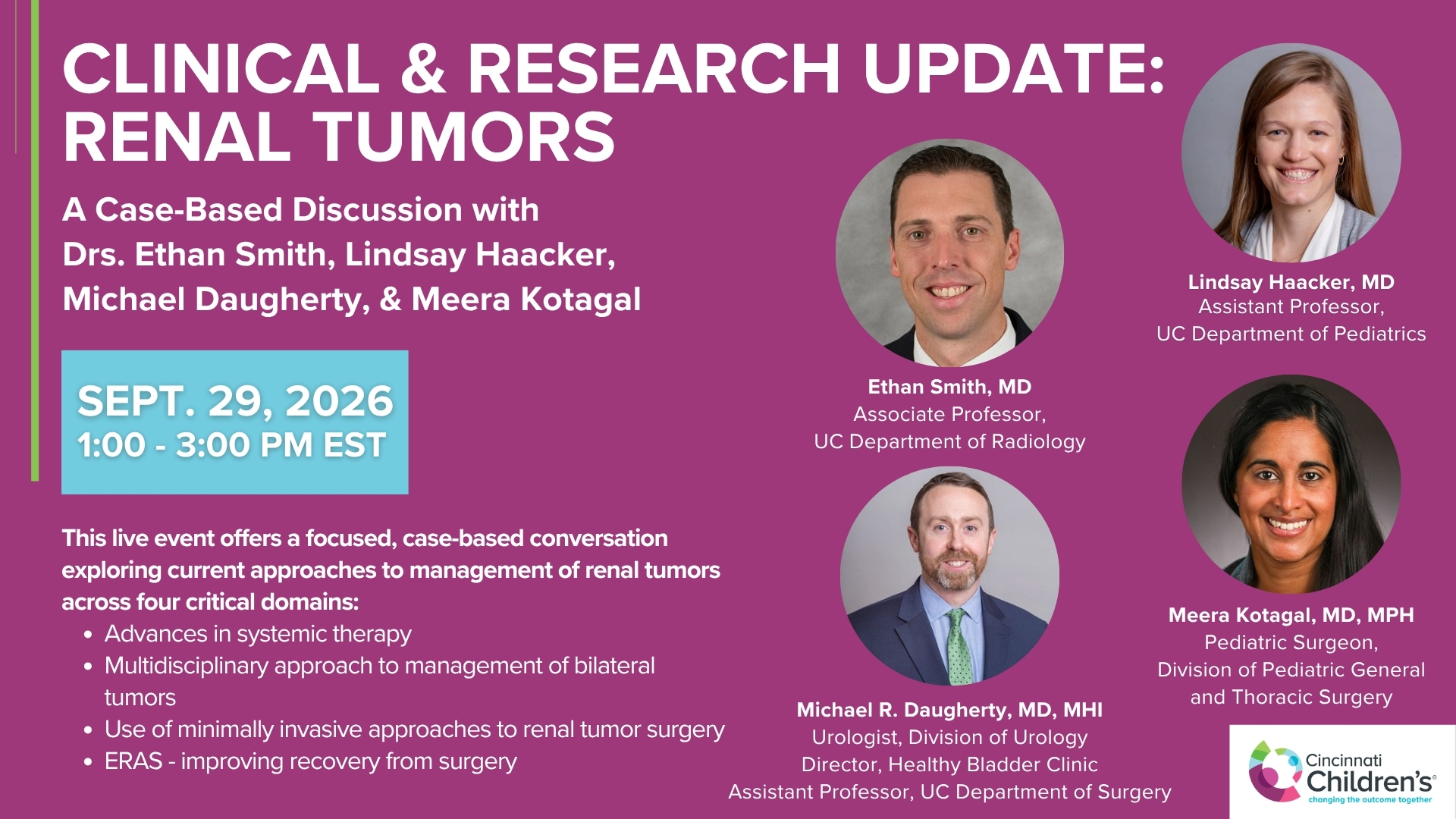
Clinical & Research Update: Renal Tumors with Drs. Ethan Smith, Lindsay Haacker, Michael Daugherty, and Meera Kotagal
71 min · Published Sep 2026
Video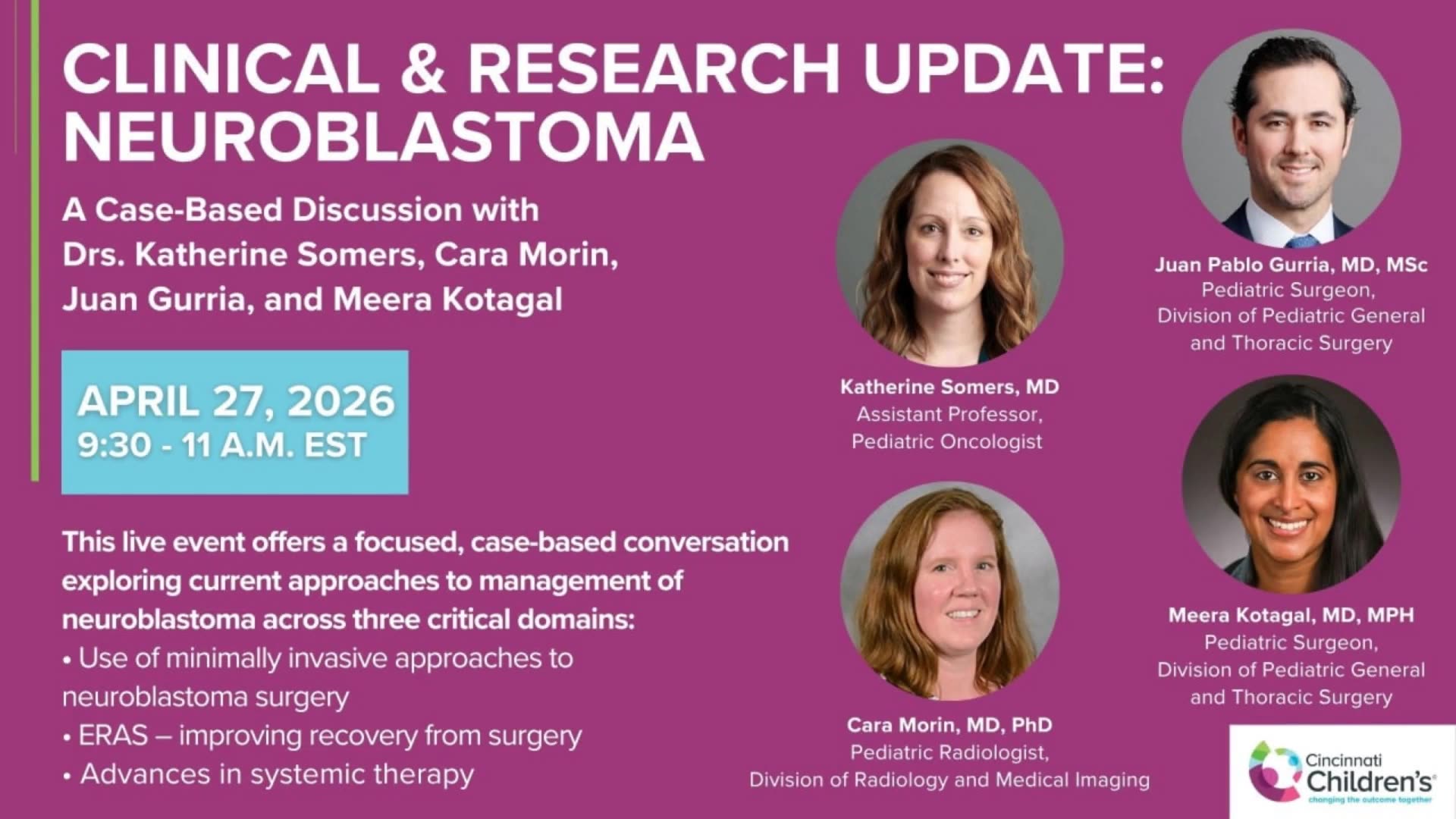
Clinical & Research Update: Neuroblastoma with Drs. Katherine Somers, Cara Morin, Juan Gurria, and Meera Kotagal
67 min · Published Sep 2026
Video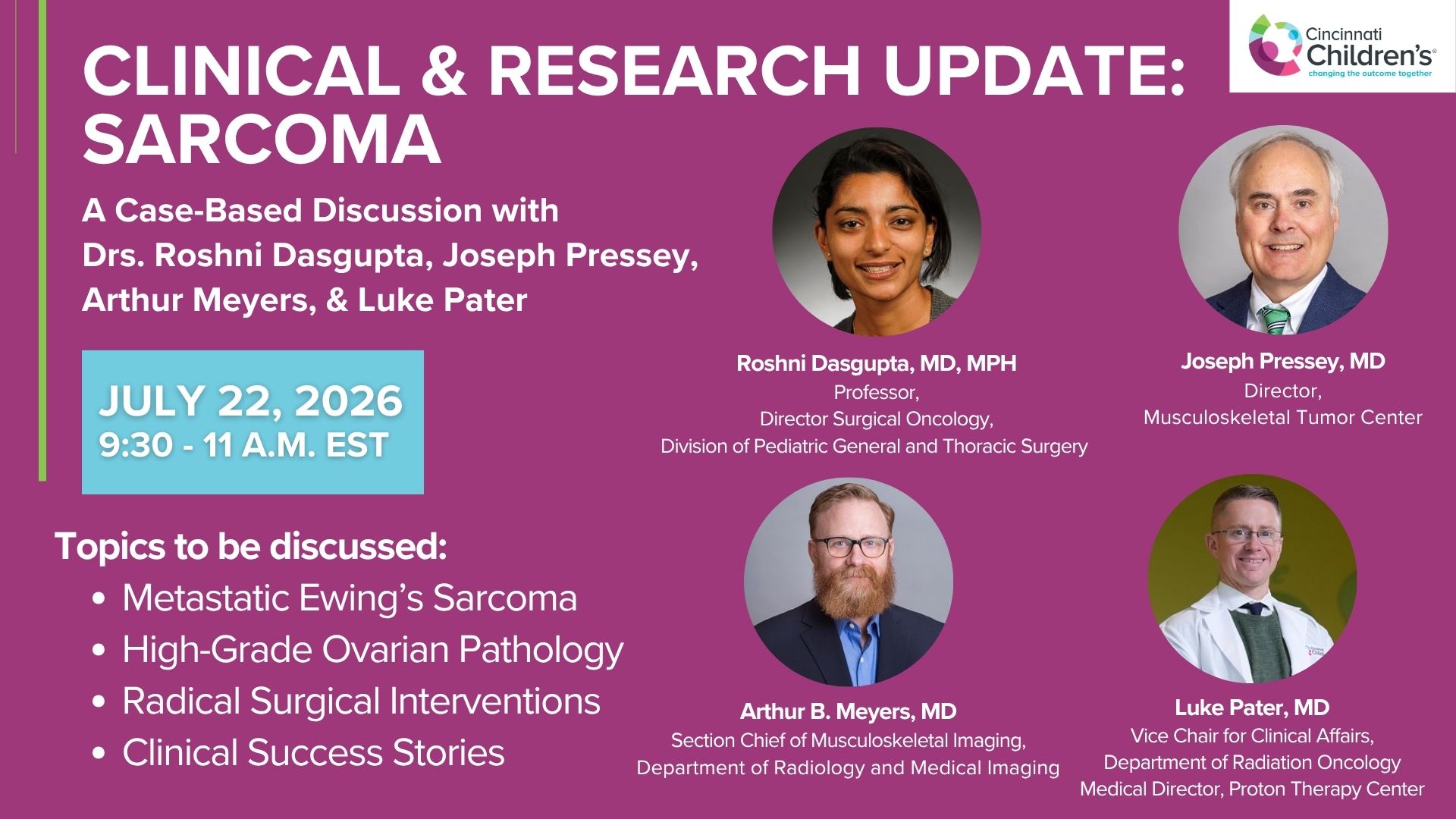
Clinical & Research Update: Sarcoma w/ Drs. Roshni Dasgupta, Joseph Pressey, Arthur Meyer, Luke Pater
66 min · Published Sep 2026
Video
2026 Laparoscopic Pediatric Hernia Repair
123 min · Published Jun 2026
Video
Beyond the Spectrum: Diagnosis, Myths & Management - Caitlin Couch & Leslie Lopez - APP Conference 2026
50 min · Published May 2026
Video
Dysautonomia: Navigating the Journey - Martha Willis - APP Conference 2026
55 min · Published May 2026
What the experts said
Inflammatory bowel disease affects approximately 3 million adults in the United States.
Annual medical expenses for a patient with IBD is estimated to be $15,000.
The value of work-related opportunity lost due to IBD has been reported to be up to $5.5 billion.
Intestinal fibrosis affects 30-50% of Crohn's disease patients.
Intestinal fibrosis is seen with ulcerative colitis at a rate of 5%.
The fibrosis process can lead to complications that present clinically in the form of strictures, obstruction, and fistulas.
Epithelial mesenchymal transition (EMT) is defined by the loss of adherences, tight junctions, and cytoskeleton proteins that are normally found in epithelial cells, with loss of epithelial markers such as E-cadherin and ZO-1.
During EMT, cells gain extracellular matrix and fibroblast morphology as well as migratory capacity, with increased expression of fibroblast markers such as α-SMA and fibronectin.
Oridonin is a diterpenoid derived from the plant species Rhabdosa rubiscens.
Rhabdosa rubiscens has been used for hundreds of years in eastern medicine to treat common ailments such as cough, abdominal pain, and muscle aches.
Research has demonstrated that oridonin has antioxidant, anti-tumor, and anti-inflammatory effects on various tissues, thought to be due to inhibition of multiple signaling pathways including NF-κB and P38.
In studies with in vitro experiments and animal models, oridonin has resulted in slower IBD disease progression and decreased levels of inflammatory cytokines and cells.
Oridonin inhibited LPS-induced increases in α-SMA, a marker of EMT and fibrosis.
Oridonin inhibited LPS-induced increases in fibronectin, another marker of EMT and fibrosis.
Pre-treatment with oridonin attenuated LPS-induced decreases in ZO-1 levels and restored ZO-1 expression.
NF-κB is a key pro-inflammatory pathway that regulates α-SMA.
Oridonin inhibited the activation of NF-κB by preventing the nuclear translocation of NF-κB p65.
Oridonin inhibited the phosphorylation of IKK-α/β and I-κB-α, and prevented total I-κB-α degradation.
The P38 inhibitor SB 203580 dose-dependently attenuated LPS-induced α-SMA expression.
Oridonin inhibits LPS-induced STAT1 activity, which is a downstream factor of P38.
Oridonin inhibits EMT-related fibrosis via inhibition of the NF-κB and P38/STAT1 pathways.
Oridonin is derived from China and used in eastern medicine, having been utilized for hundreds of years for common ailments.
After breaking down the Rhabdosa rubiscens plant, researchers found that the most active compound was oridonin.