

From
Live Event Content
Best of the Best Gen Surg - Development of postoperative local tumors and distant metastases in diet, genetics and microbiome-dependent in a mouse model of colorectal cancer recurrence - Dr. Morgan
With Dr. Ryan Morgan
Educational content from recorded physician discussions — not medical advice. Talk to your (or your child's) care team about your situation.
More about this diagnosis
Colorectal cancerVideo
Validation of an anorectal malformation trainer - Can a high-fidelity model simulate real life?
1 min · Published Jun 2026
Video
Complications and Long-Term Outcomes of Patients With Cloacal Malformation After Bowel Neovagina...
1 min · Published Jun 2026
Video
Safety and utility of long-acting steroid injection for management of post-operative stricture...
1 min · Published Jun 2026
Video
Association Between Social Determinants of Health and Choice of Urinary Reconstruction in Children
1 min · Published Jun 2026
Video
The Perineal Body Preserving PSARP (PPP)
11 min · Published Jun 2026
Video
Update Course Rewind 2025: Hirschsprung + ARM: Rare but Real
1 min · Published May 2026
Video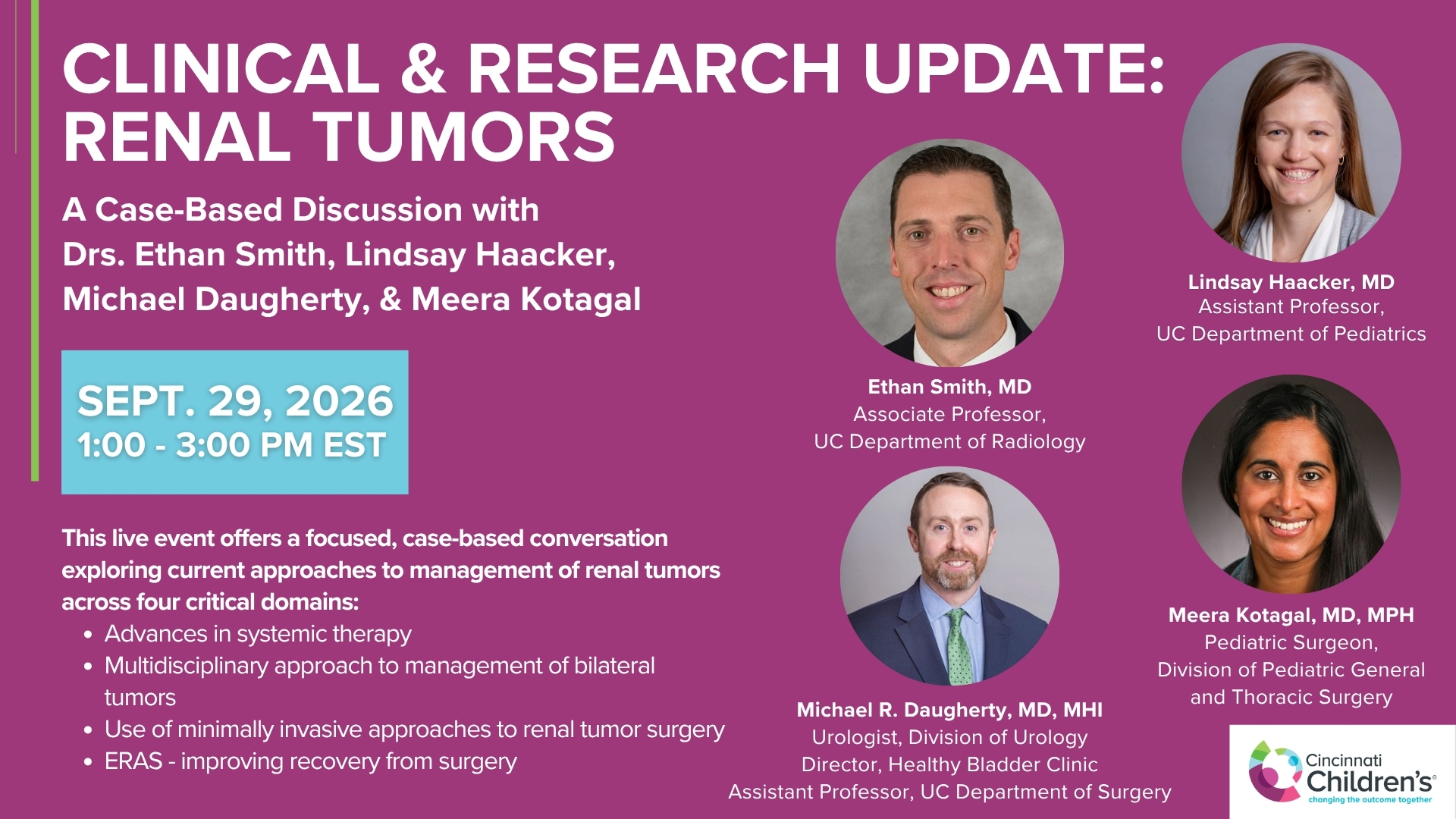
Clinical & Research Update: Renal Tumors with Drs. Ethan Smith, Lindsay Haacker, Michael Daugherty, and Meera Kotagal
71 min · Published Sep 2026
Video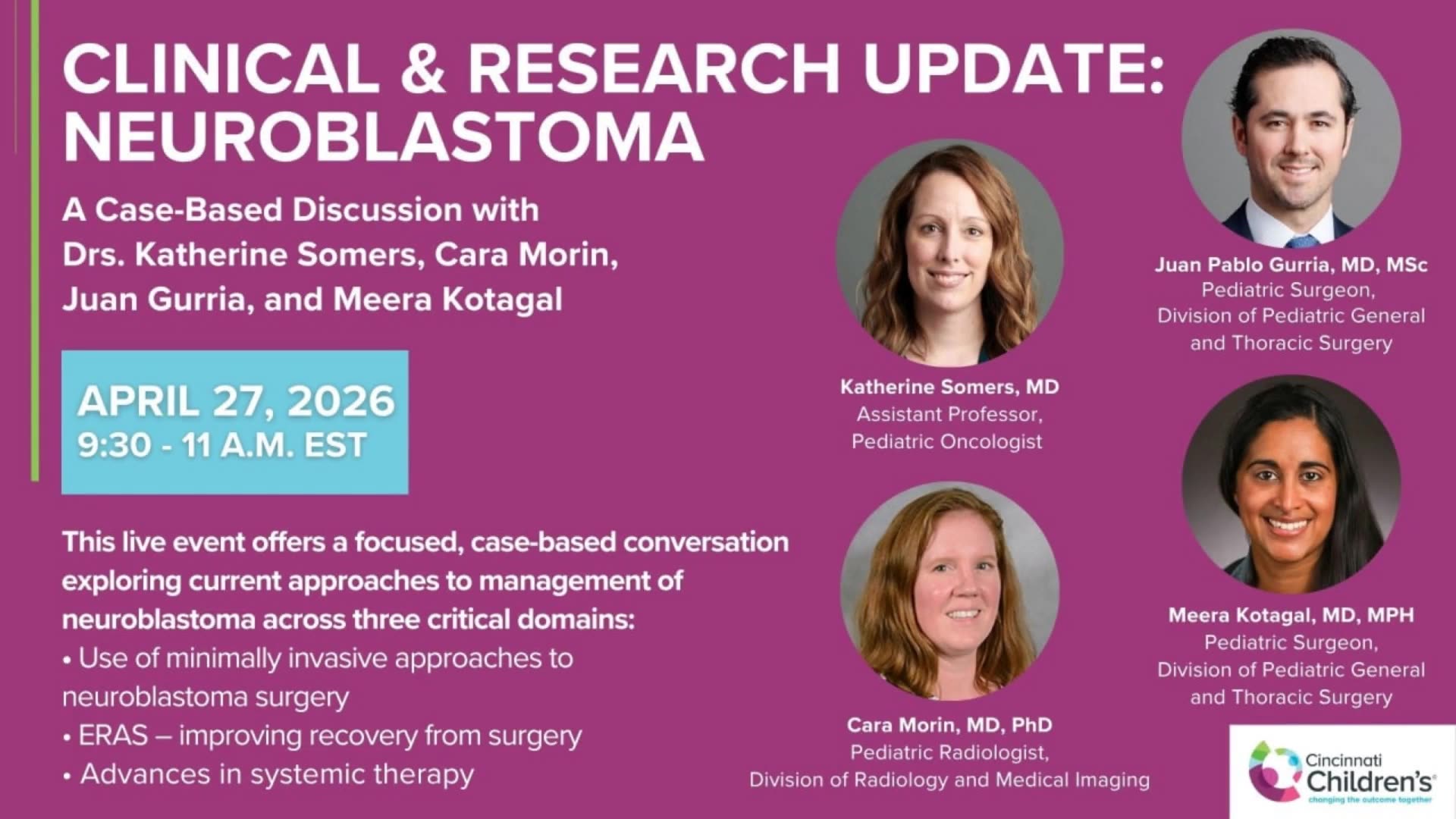
Clinical & Research Update: Neuroblastoma with Drs. Katherine Somers, Cara Morin, Juan Gurria, and Meera Kotagal
67 min · Published Sep 2026
Video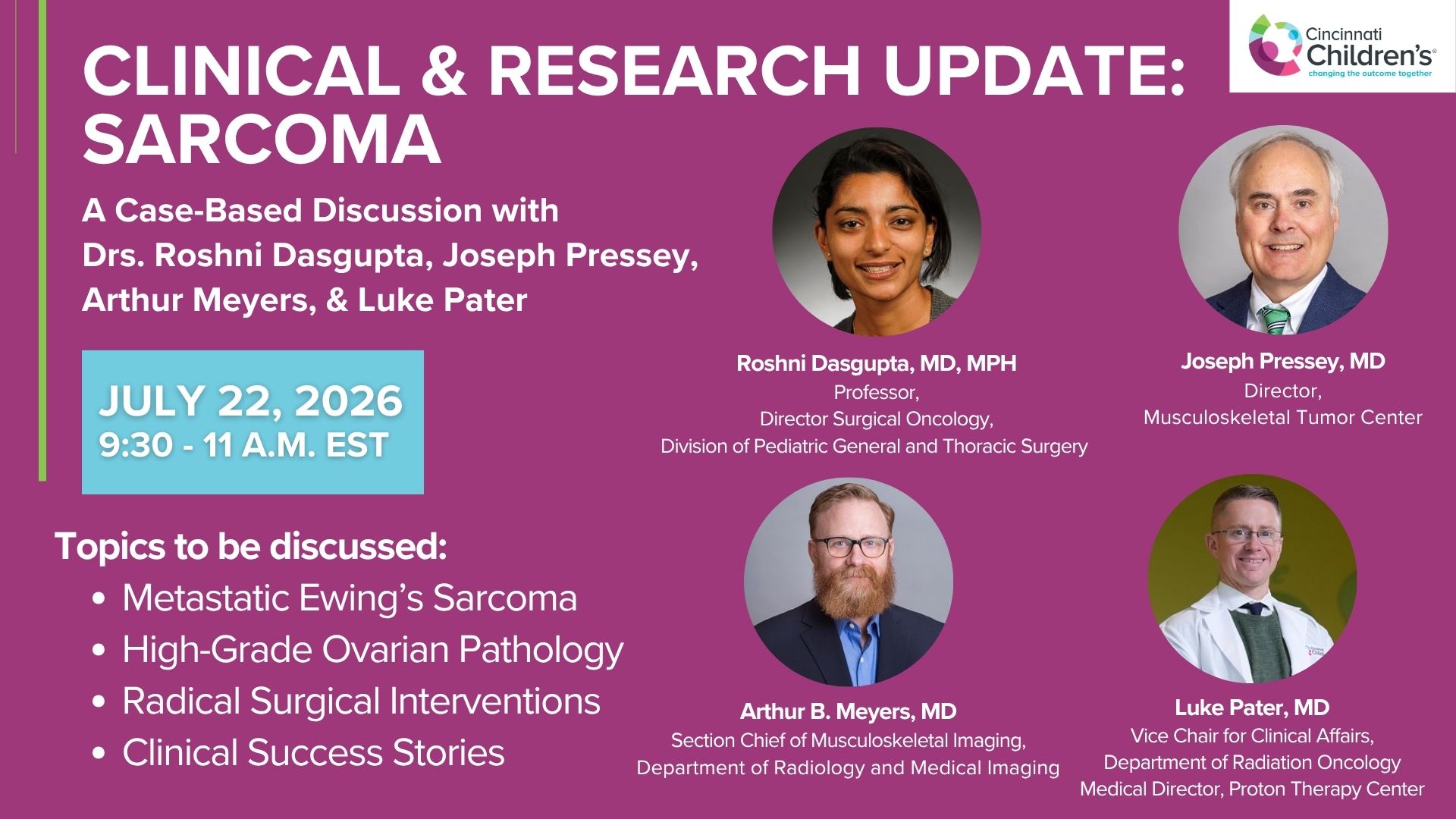
Clinical & Research Update: Sarcoma w/ Drs. Roshni Dasgupta, Joseph Pressey, Arthur Meyer, Luke Pater
66 min · Published Sep 2026
Video
2026 Laparoscopic Pediatric Hernia Repair
123 min · Published Jun 2026
Video
Beyond the Spectrum: Diagnosis, Myths & Management - Caitlin Couch & Leslie Lopez - APP Conference 2026
50 min · Published May 2026
Video
Dysautonomia: Navigating the Journey - Martha Willis - APP Conference 2026
55 min · Published May 2026
What the experts said
Colorectal cancer is a leading cause of cancer deaths, particularly in cases of recurrence.
When the primary colorectal tumor is resected, exfoliated cells remain behind within the lumen of the bowel and interact with the anastomotic microenvironment.
Multiple factors can influence the anastomotic environment, including diet, the microbiome, and the tumor genetic background.
A high-fat diet and its impact on the microbiome would alter the anastomotic environment and change the metastatic potential of cells.
AKPT mice showed significantly higher rate of tumor formation with a high-fat diet compared to mice given a chow diet by 56 days.
KPN mice showed no significant difference in tumor formation based on diet, with an opposite trend towards higher rates in the chow diet.
AKPT mice given a high-fat diet had significantly decreased survival compared to those on a chow diet.
KPN mice did not show any similar survival trend, suggesting that response to diet was at least in part based on the organoid genetic background.
In germ-free mice, the high-fat diet-associated microbiome significantly increased the rate of postoperative tumor development (40% vs 10-12% in control and chow FMT groups).
Two-week diet reversal period was insufficient; mice in the reversal group continued to have poor survival and high tumor rates similar to the high-fat diet group.
Six-week diet reversal resulted in significantly increased survival and tumor rate similar to chow-fed mice, suggesting the response to diet and its reversal was time dependent.
High-fat diet mice showed derangement of microbiome with overabundance of Alobaum and bloom of pathogenic bacteria such as Proteus, E. coli, and Shigella on postoperative day 7.
The diet reversal group microbiome composition closely mirrored the chow group both in baseline composition and in response to surgery.
Preoperative diet manipulation reduces tumor formation, suggesting a clinically relevant role for diet rehabilitation in colorectal cancer treatment.
Preliminary in vitro data shows AKPT cells have more proliferative response to secondary bile acids (like deoxycholic acid) compared to KPN cells.
Secondary bile acids and deoxycholic acid metabolites are exclusively bacterially produced.
Traditional paradigms suggest recurrences are due to either incomplete resection or occult metastases left behind at the time of surgery.
Exfoliated cancer cells in the lumen of the bowel may be a source of recurrence.
In the 1980s, UMLB showed that exfoliated cancer cells are present and viable at the time of surgery.
Experimental cells could cross a watertight anastomosis in a mouse model.
Rectal washout decreases rates of local recurrence after rectal cancer resection.
AKPT and KPN organoid cell lines demonstrate a wide range of metastatic potential in animal models.
The no-touch isolation technique of Turnbull was important in demonstrating the need to avoid handling the tumor.
Combined mechanical and antibiotic bowel preparation preoperatively decreases rates of colorectal cancer recurrence.