

From
Live Event Content
BOB Ped Surg 2023 - Lieke Josephine Van Heurn, EUPSA - Presentation
With Dr. Lieke van de Hurk
Part of
Pediatric Oncology 692 items
Educational content from recorded physician discussions — not medical advice. Talk to your (or your child's) care team about your situation.
More about this diagnosis
Sacrococcygeal teratomaVideo
Sacrococcygeal Teratomas in Currarino Syndrome: A Multicenter Review of Tumor Characteristics, Surgical Outcomes, and Recurrence
56 s · Published Nov 2025
Video
Fetal Surgical Intervention for Myelomeningocele: Fetal Surgery 2012
165 min · Published Jul 2015
Video
ERNICA Research Collaboration Webinar on Quality of Life
61 min · Published Nov 2023
Video
Open Fetal Surgery & EXIT Procedure with Dr. Jose Peiro
CCHMC Pediatric Surgery · 10 min · Published Oct 2024
Video
Fecal Incontinence Bowel Management: Pediatric Bowel Management 2013
Dr. Todd Ponsky · 85 min · Published May 2013
Video
Open Fetal Surgery Overview: Fetal Surgery 2012
37 min · Published Jul 2015
Video
Clinical & Research Update: Renal Tumors with Drs. Ethan Smith, Lindsay Haacker, Michael Daugherty, and Meera Kotagal
71 min · Published Sep 2026
Video
Clinical & Research Update: Neuroblastoma with Drs. Katherine Somers, Cara Morin, Juan Gurria, and Meera Kotagal
67 min · Published Sep 2026
Video
Clinical & Research Update: Sarcoma w/ Drs. Roshni Dasgupta, Joseph Pressey, Arthur Meyer, Luke Pater
66 min · Published Sep 2026
Video
Update Course Rewind 2025: Nerve Monitoring in Pediatric Thyroid Surgery
6 min · Published Jul 2026
Video
Journal of Pediatric Surgery Article Review: June 2023, AAP Issue
Todd Ponsky · 13 min · Published Jul 2026
Video
Pediatric Surgical Oncology Research Collaborative (PSORC): Studying Rare Pediatric Tumors
56 s · Published May 2026
Only a few other public items share this expert — go deeper there →
Video
2026 Laparoscopic Pediatric Hernia Repair
123 min · Published Jun 2026
Video
Beyond the Spectrum: Diagnosis, Myths & Management - Caitlin Couch & Leslie Lopez - APP Conference 2026
50 min · Published May 2026
Video
Dysautonomia: Navigating the Journey - Martha Willis - APP Conference 2026
55 min · Published May 2026
Video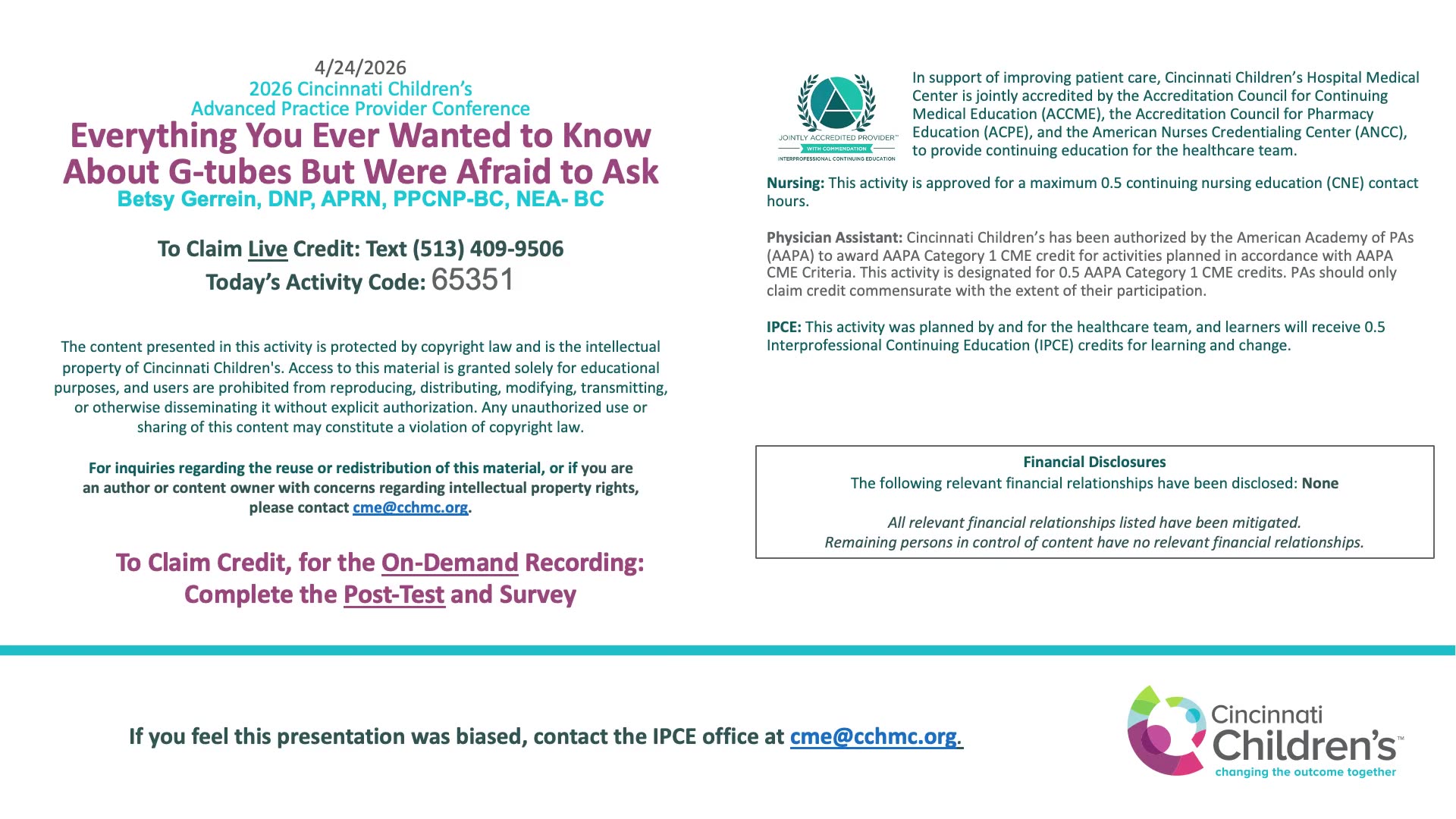
Everything You Ever Wanted to Know About G-tubes But Were Afraid to Ask - Betsy Gerrein - APP Conference 2026
30 min · Published May 2026
Video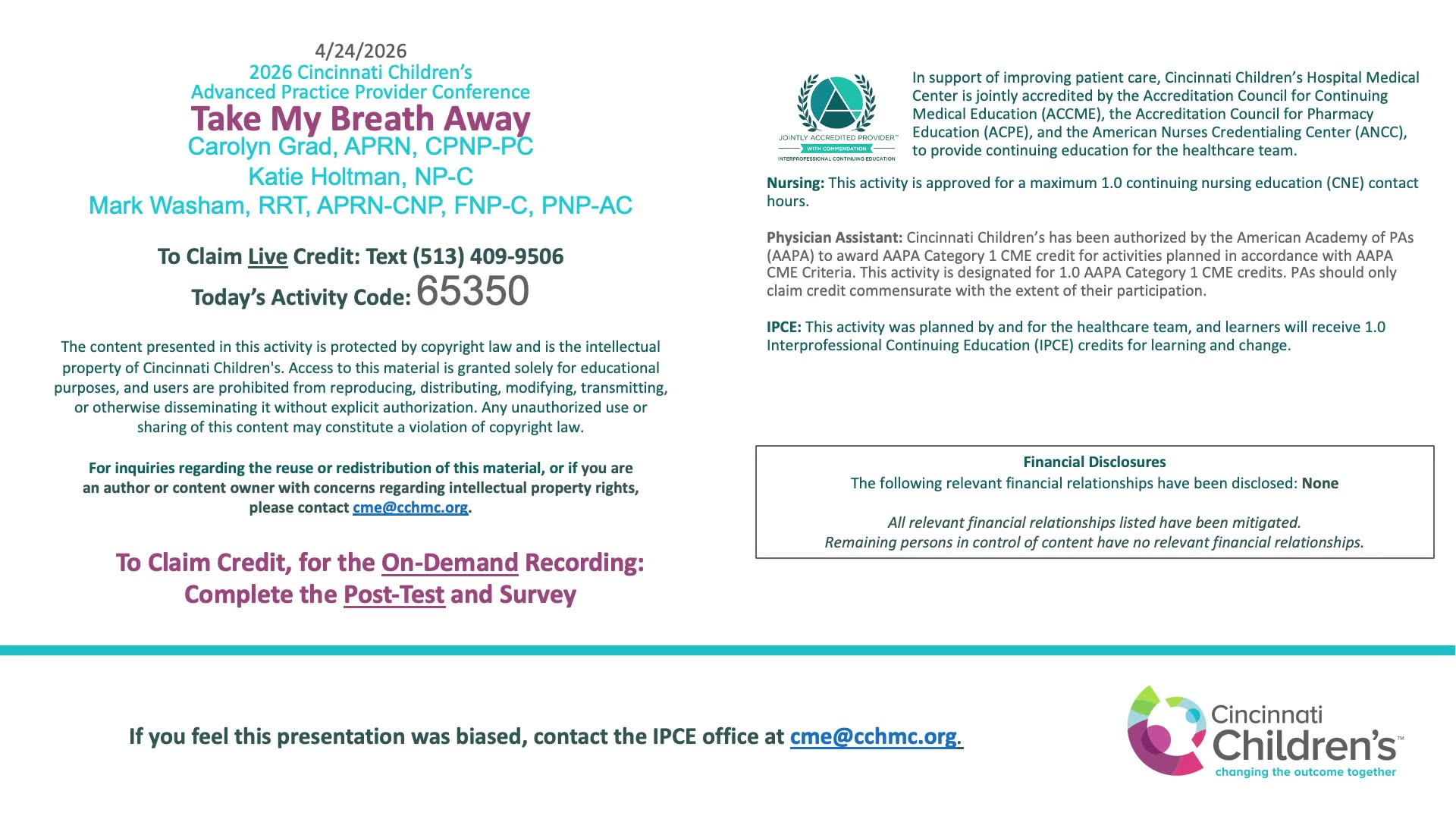
Take My Breath Away - Carolyn Grad, Mark Washam, & Katie Holtman - APP Conference 2026
58 min · Published May 2026
Video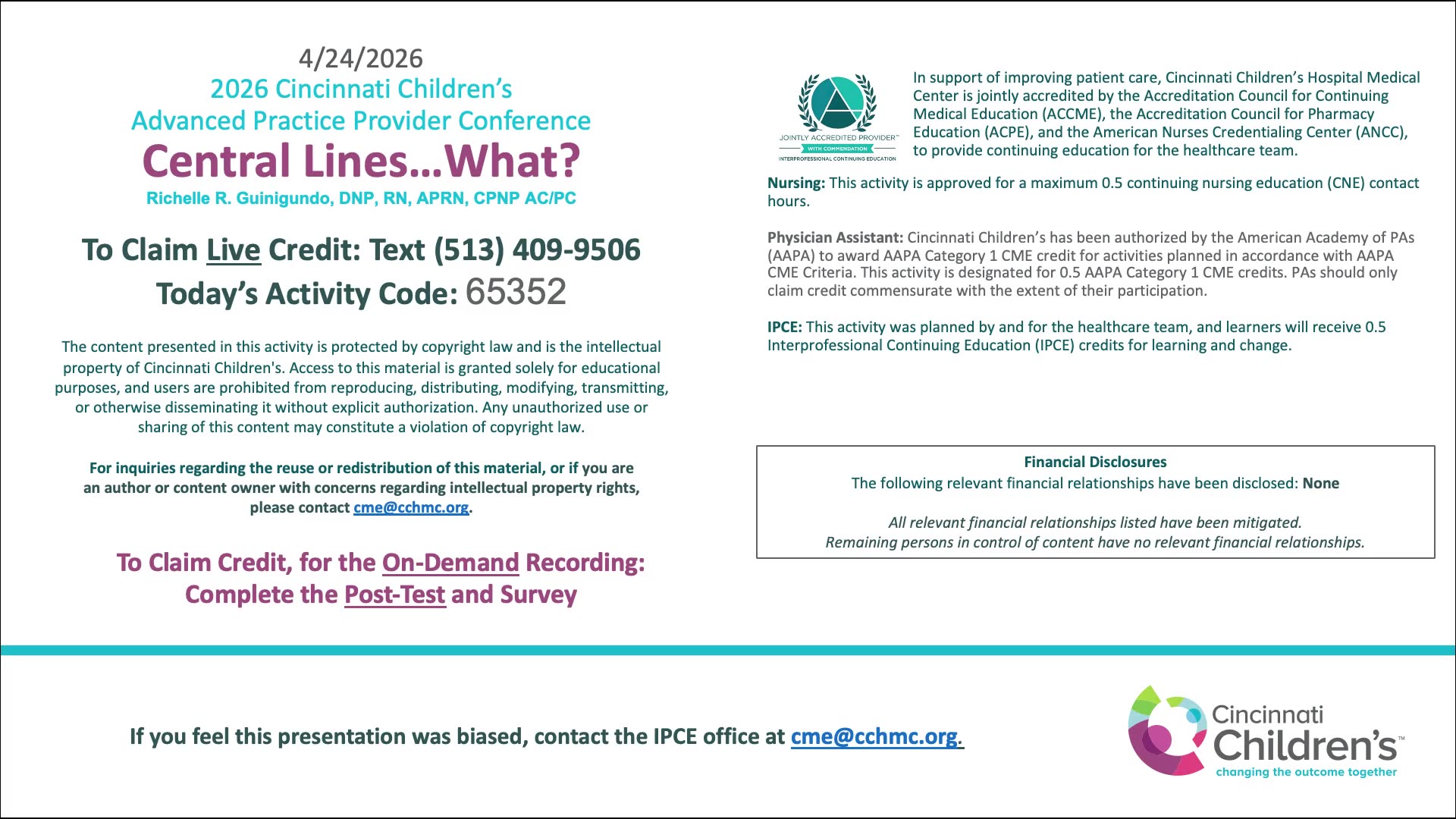
Central Lines...WHAT? - Richelle Guinigundo - APP Conference 2026
26 min · Published May 2026
What the experts said
Sacrococcygeal teratoma is the most common germ cell tumor in neonates with an estimated incidence of one per 14,000 to 35,000 live births.
The likelihood of malignant transformation increases with age, with malignancy rates up to 70% if SCCT is diagnosed at the age of one year.
More than 150 centers from 65 countries participated in the SCCT study.
Data was collected for patients treated for SCCT between 1980 and 2020.
Data of patients where SCCT was associated with Currarino syndrome was not analyzed because it is unknown whether SCCT associated with Currarino has the same risk of malignant transformation as SCCT.
All participating centers included 3,614 patients with SCCT, with 205 patients with Currarino syndrome excluded, leaving 3,409 SCCT patients included in analysis.
During the first six years of life, the probability of malignant transformation increases strongly, and after six years of age, the probability remains stable at 60%.
After six years of age, almost no malignancies have been found.
Malignancy-free survival stabilized at the age of five years with a malignancy-free survival rate of 81%.
Late malignancies up to 15 years of age have been found.
Most recurrences were found four years after initial resection, with probability of recurrence-free survival at 85% four years after initial resection.
Incidental late recurrences up to 20 years after primary resection have been found in this study.
Altman type 2 and 3 were significant risk factors for recurrent SCCT in multivariate analysis.
Malignant histology of the primary tumor increases the risk of recurrent SCCT with an odds ratio of 4.7.
Income country was not a risk factor for recurrent SCCT.