

From
Live Event Content
BOB Ped Surg 2023 - Dr. Maria Velayos, IBEROAMERICANA - Presentation
With Dr. Maria Velallos
Educational content from recorded physician discussions — not medical advice. Talk to your (or your child's) care team about your situation.
Video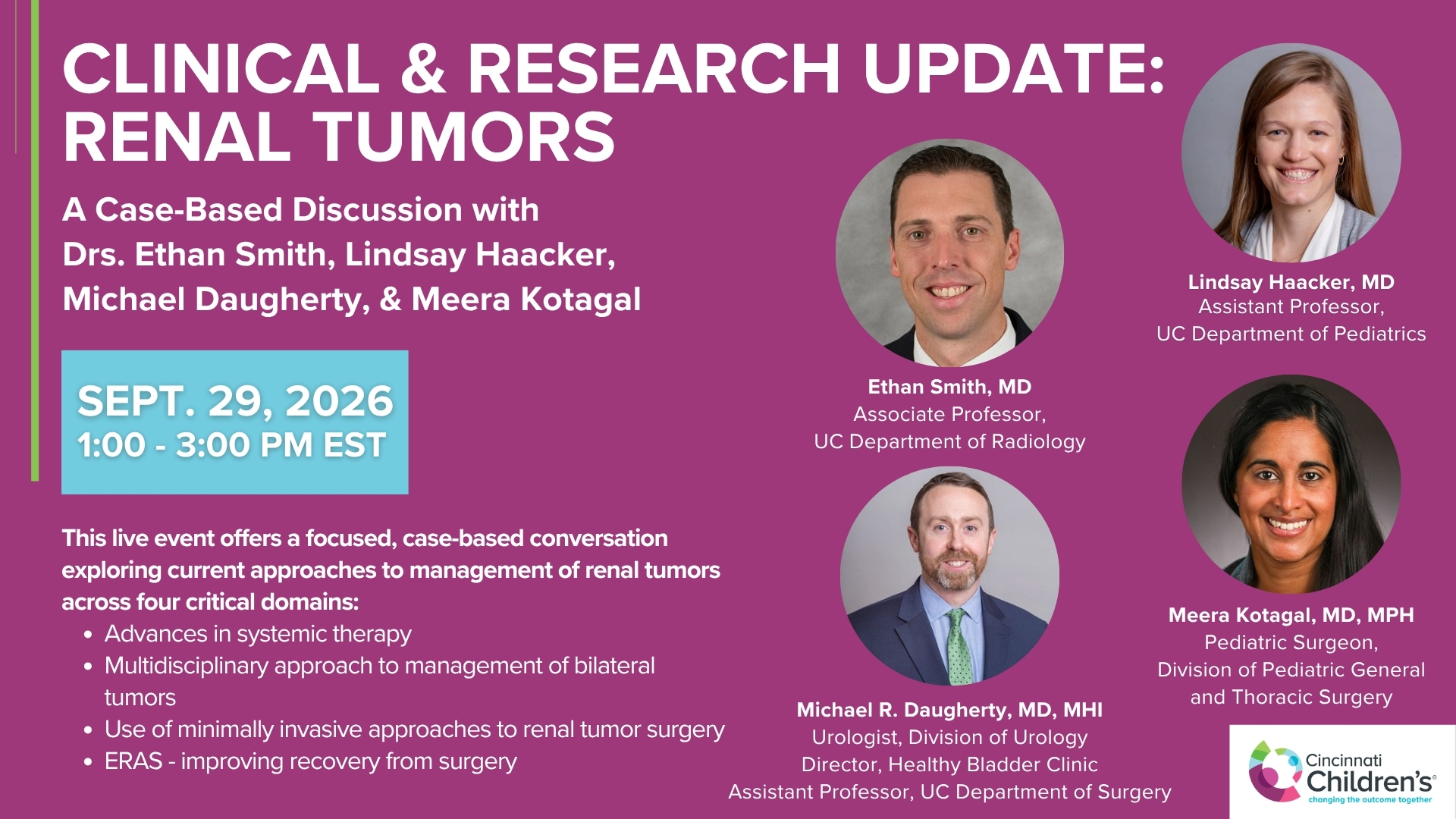
Clinical & Research Update: Renal Tumors with Drs. Ethan Smith, Lindsay Haacker, Michael Daugherty, and Meera Kotagal
71 min · Published Sep 2026
Video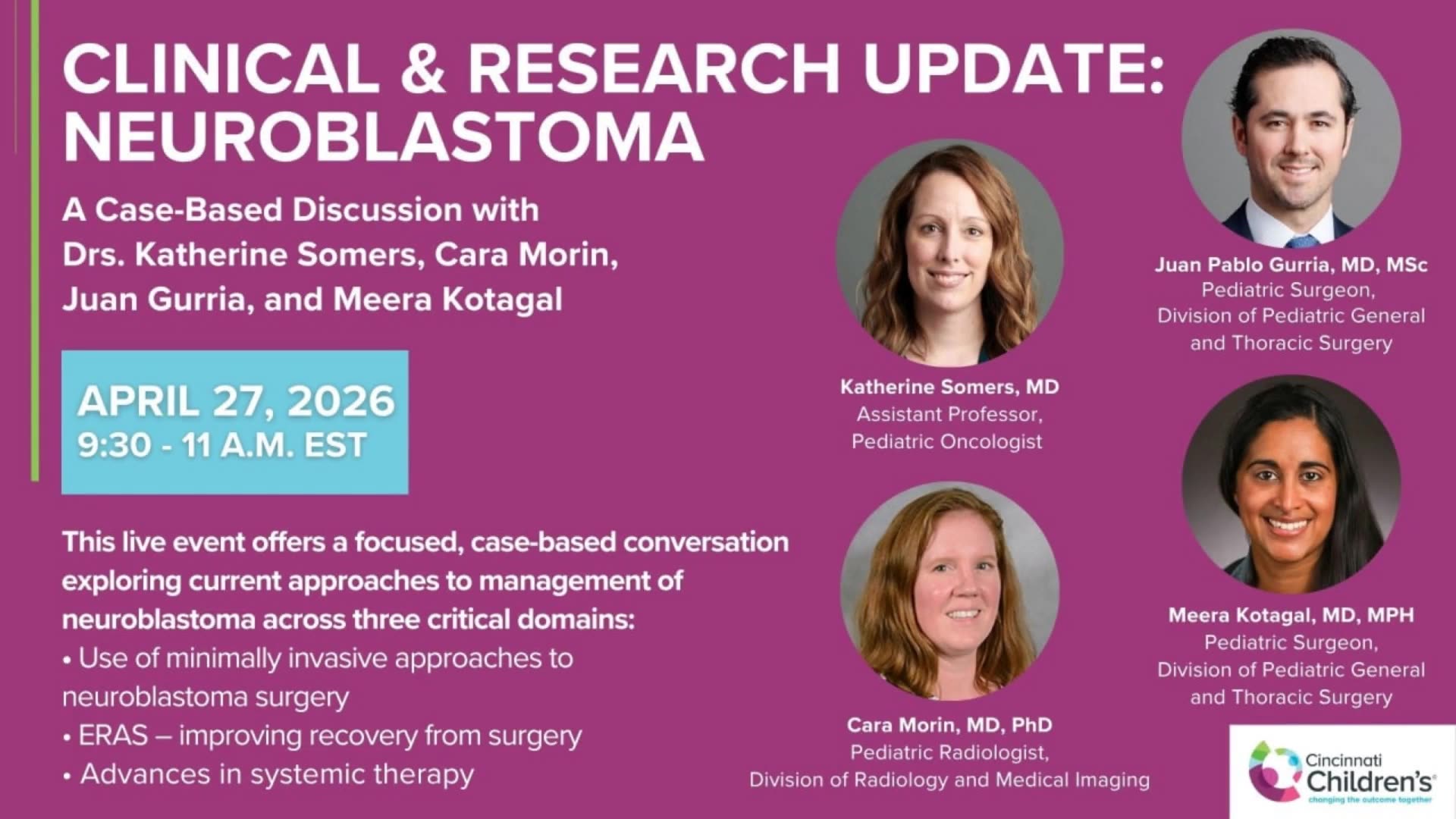
Clinical & Research Update: Neuroblastoma with Drs. Katherine Somers, Cara Morin, Juan Gurria, and Meera Kotagal
67 min · Published Sep 2026
Video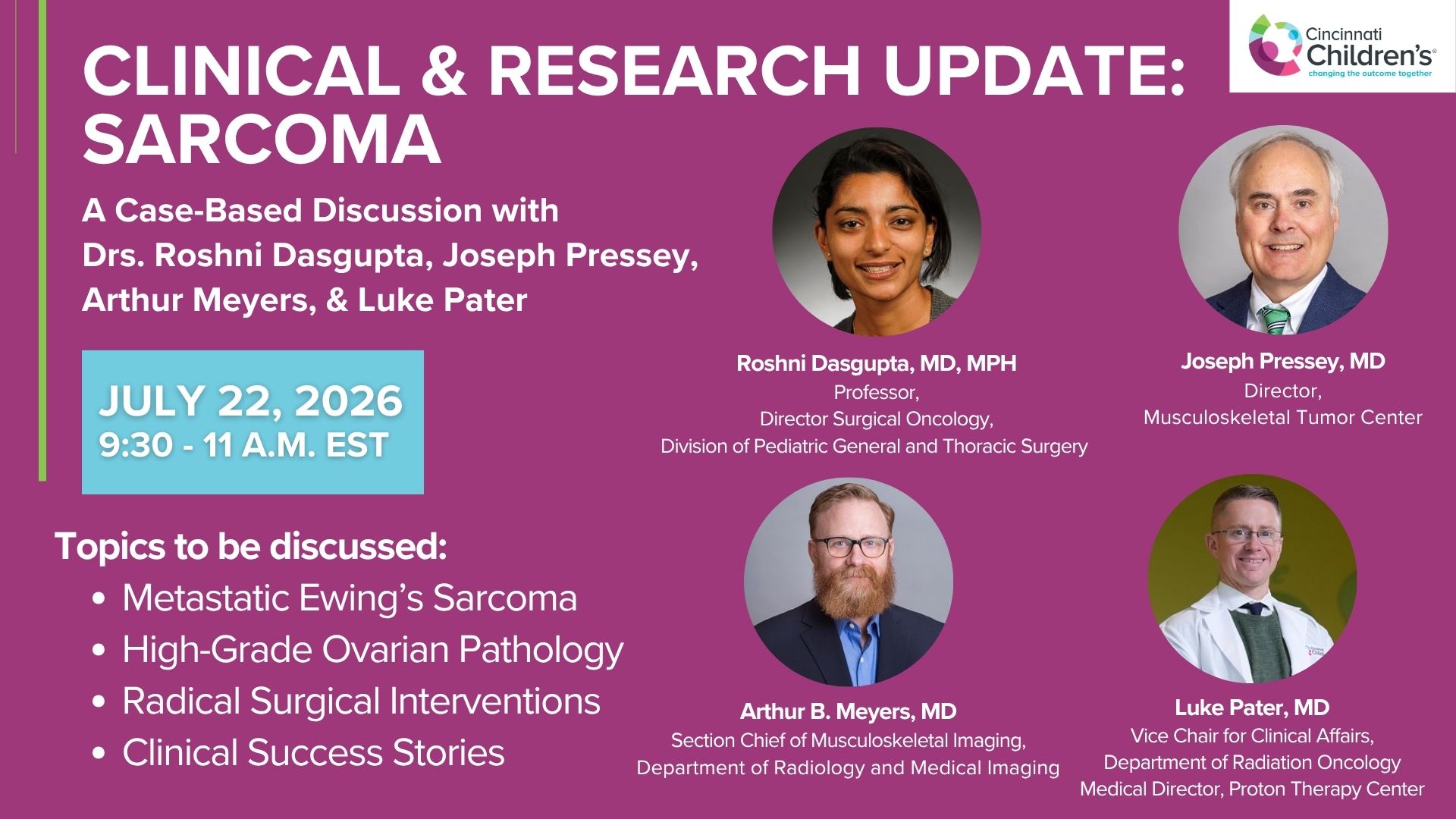
Clinical & Research Update: Sarcoma w/ Drs. Roshni Dasgupta, Joseph Pressey, Arthur Meyer, Luke Pater
66 min · Published Sep 2026
Video
2026 Laparoscopic Pediatric Hernia Repair
123 min · Published Jun 2026
Video
Beyond the Spectrum: Diagnosis, Myths & Management - Caitlin Couch & Leslie Lopez - APP Conference 2026
50 min · Published May 2026
Video
Dysautonomia: Navigating the Journey - Martha Willis - APP Conference 2026
55 min · Published May 2026
What the experts said
The preparation of surgical specialists is complicated by changes in learning models, distribution of cases, new technologies, and residency structure.
Experimental models are a tool for acquisition of technical skills such as sensitivity, precision, and common surgical movements.
A major problem in experimental surgical training is the lack of standardization.
The experimentation program consists of an initial theoretical part and three practical levels: basic mode with non-living material, transition mode with rat arteries, and experimentation mode with live rats.
The experimental model was carried out in December 2021 in an experimental laboratory room with microscope and microsurgical material.
Six rats were used, 60% male, with mean weight of 400 grams.
Four basic procedures were selected: tail vein cannulation, tubularization, aortic anastomosis, and caval anastomosis.
Surgical time and functional outcome were measured for all procedures.
A total of nine training sessions were carried out.
100% of tail cannulations were successful.
100% of tubularization anastomoses were successful.
89% of aortic anastomoses were successful.
66% of caval anastomoses were successful.
Caval anastomosis was the most difficult procedure.
Operative times shortened from the seventh session onwards for most procedures.
Caval anastomosis times remained similar across all nine sessions, indicating it was the most difficult procedure to achieve proficiency and improve times.
The proposed training model showed that the procedures were adequate for training progression.
Creation and continued development of training protocols on experimental animals will improve microsurgical technique.
Microsurgical training will benefit from standard programs to optimize outcomes.