

From
StayCurrentMD
Update Course Rewind: Perineal Body Sparing PSARP 2023
With Dr. Steven Lee · hosted by Dr. Em Gootee
Educational content from recorded physician discussions — not medical advice. Talk to your (or your child's) care team about your situation.
Only a few other public items share this diagnosis — go deeper there →
Video
Update Course Rewind: When & How to Operate CDH Patients on ECMO 2024 Part 2
4 min · Published Aug 2025
Video
Update Course Rewind: When & How to Operate CDH Patients on ECMO 2024
4 min · Published Aug 2025
Video
Update Course Rewind: Gastroschisis Feeding protocols 2022
CCHMC Pediatric Surgery · Published Feb 2023
Video
Update Course Rewind: Pectus Excavatum 2021
Dr. Todd Ponsky · 11 min · Published Aug 2022
Podcast
Update Course Rewind: Pilonidal Disease 2019
13 min · Published Apr 2021
Video
Intestinal Atresia Types Explained: Grossfeld Classification for Pediatric Surgery
1 min · Published Sep 2026
Video
Derivation and validation of the Pediatric Community-Acquired Pneumonia Severity (PedCAPS) score: A prospective cohort study
50 s · Published Sep 2026
Video
FETO for Late-Diagnosed Severe Congenital Diaphragmatic Hernia (CDH) at Cincinnati Children's with Dr. Beth Rymeski
4 min · Published Sep 2026
Video
Severe Congenital Diaphragmatic Hernia (CDH) Case: FETO Management & Unexpected Findings with Dr. Beth Rymeski
3 min · Published Sep 2026
Video
Fetoscopic Endoluminal Tracheal Occlusion (FETO) Procedure: Step-by-Step Guide with Dr. Beth Rymeski
4 min · Published Sep 2026
Video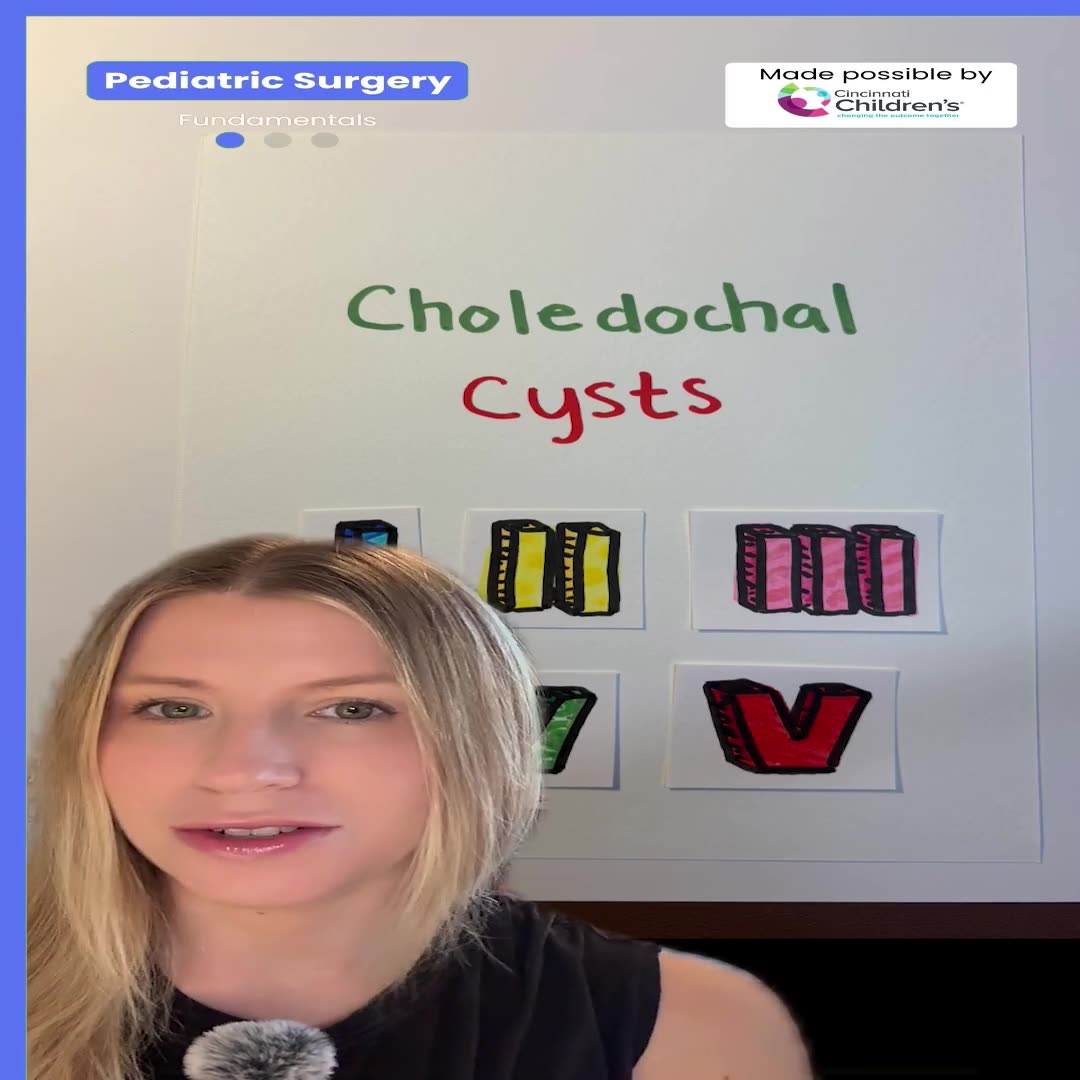
Choledochal Cyst Types Explained: Pediatric Surgery Fundamentals
1 min · Published Sep 2026
What the experts said
Two variations of perineal body sparing PSARP have been published in the last 6 months, one from Boston and one from Washington DC.
The Boston technique involves a slight posterior sagittal extension of the incision.
These techniques aim to spare the perineal body and preserve long-term gynecologic function for female patients.
The perineal body is important for sexual function and obstetric outcomes in the future.
The Washington DC technique uses an incision just through the sphincter alone, preserving the perineal body skin in its entirety.
For patients undergoing dilations who are not diverted, the perineal body seeing stool right away is a setup for post-operative infection.
One study has 6 patients and the other has 4 patients.
The techniques are similar but slightly different.
Perineal body sparing techniques can reduce post-operative infection risks in patients undergoing dilations.