

From
Live Event Content
Thomas Inge, MD - 2024 Pediatric Bariatric Surgery Update Course
With Dr. Thomas Inge
Educational content from recorded physician discussions — not medical advice. Talk to your (or your child's) care team about your situation.
Video
Adolescent Bariatric Surgery: Pediatric Obesity 2017
32 min · Published Feb 2018
Video
Obesity: Advanced Practice Providers
36 min · Published Feb 2014
Video
Pharmacology: Pediatric Obesity 2017
45 min · Published Feb 2018
Video
AAP Policy for Adolescent Bariatric Surgery: Pediatric Obesity 2017
27 min · Published Feb 2018
Video
The Right Tool for the Job: Child & Adolescent Obesity 2015
42 min · Published Jul 2017
Video
Rapid Fire and Conclusion: Pediatric Obesity 2017
23 min · Published Feb 2018
Video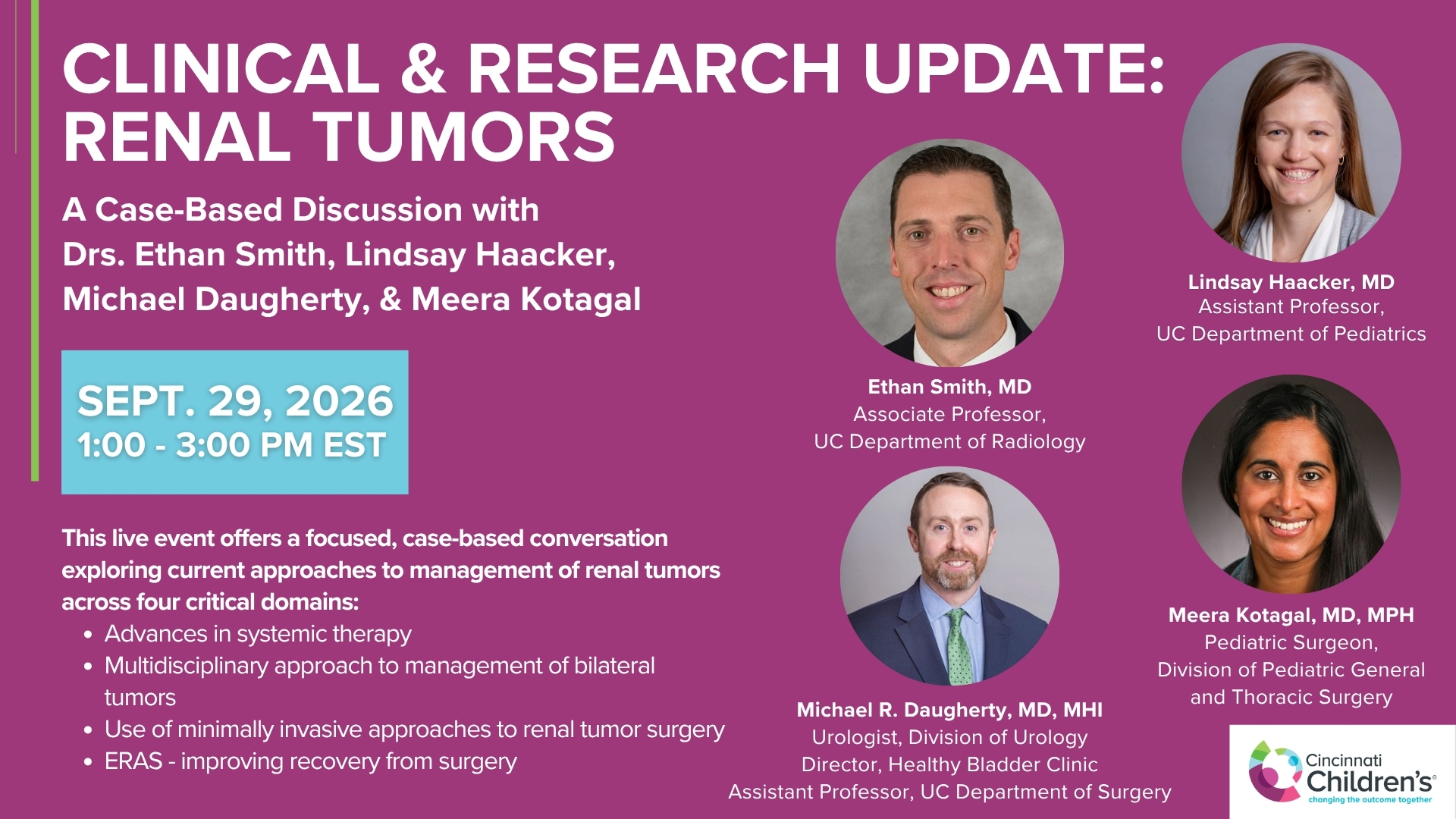
Clinical & Research Update: Renal Tumors with Drs. Ethan Smith, Lindsay Haacker, Michael Daugherty, and Meera Kotagal
71 min · Published Sep 2026
Video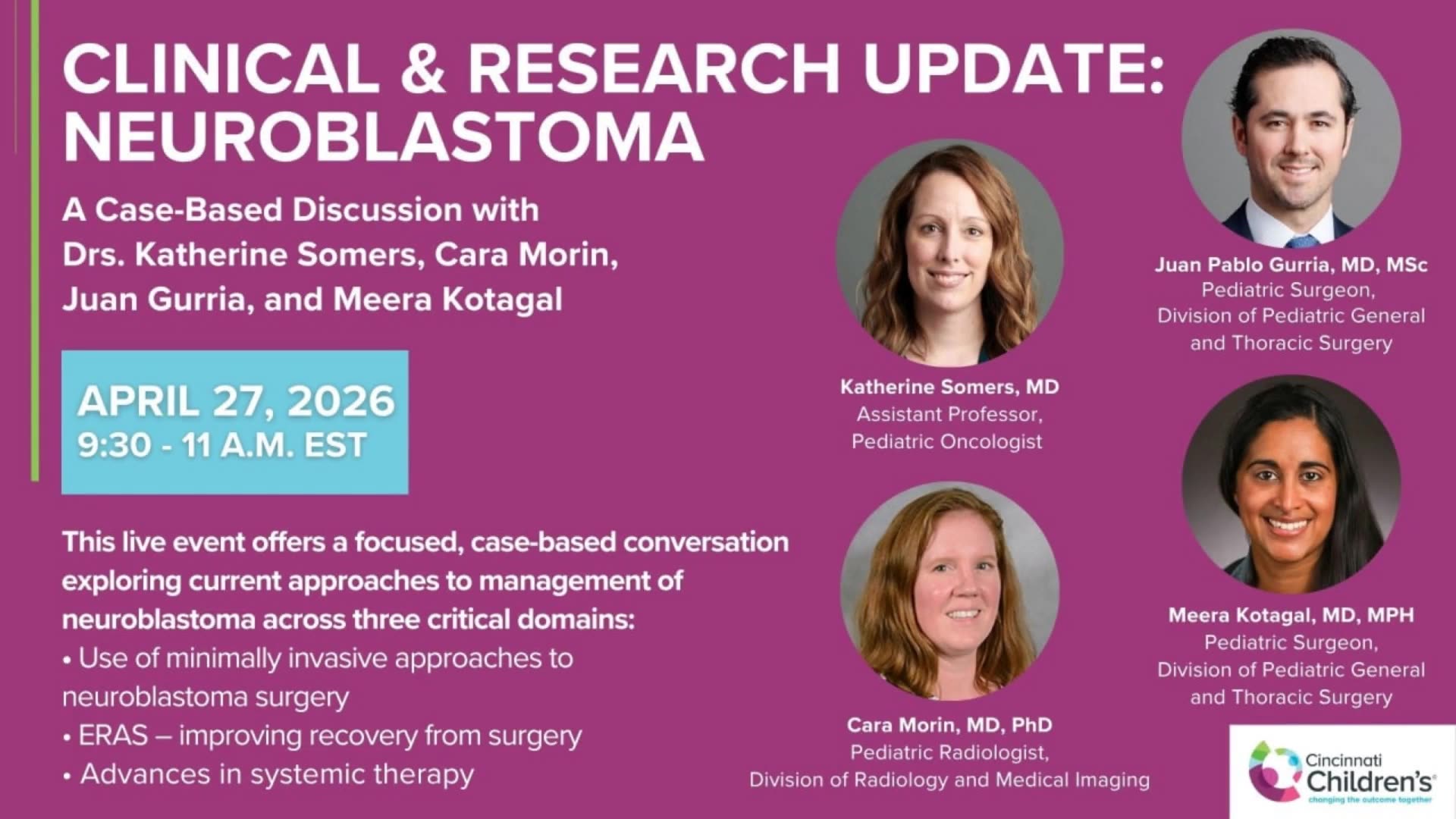
Clinical & Research Update: Neuroblastoma with Drs. Katherine Somers, Cara Morin, Juan Gurria, and Meera Kotagal
67 min · Published Sep 2026
Video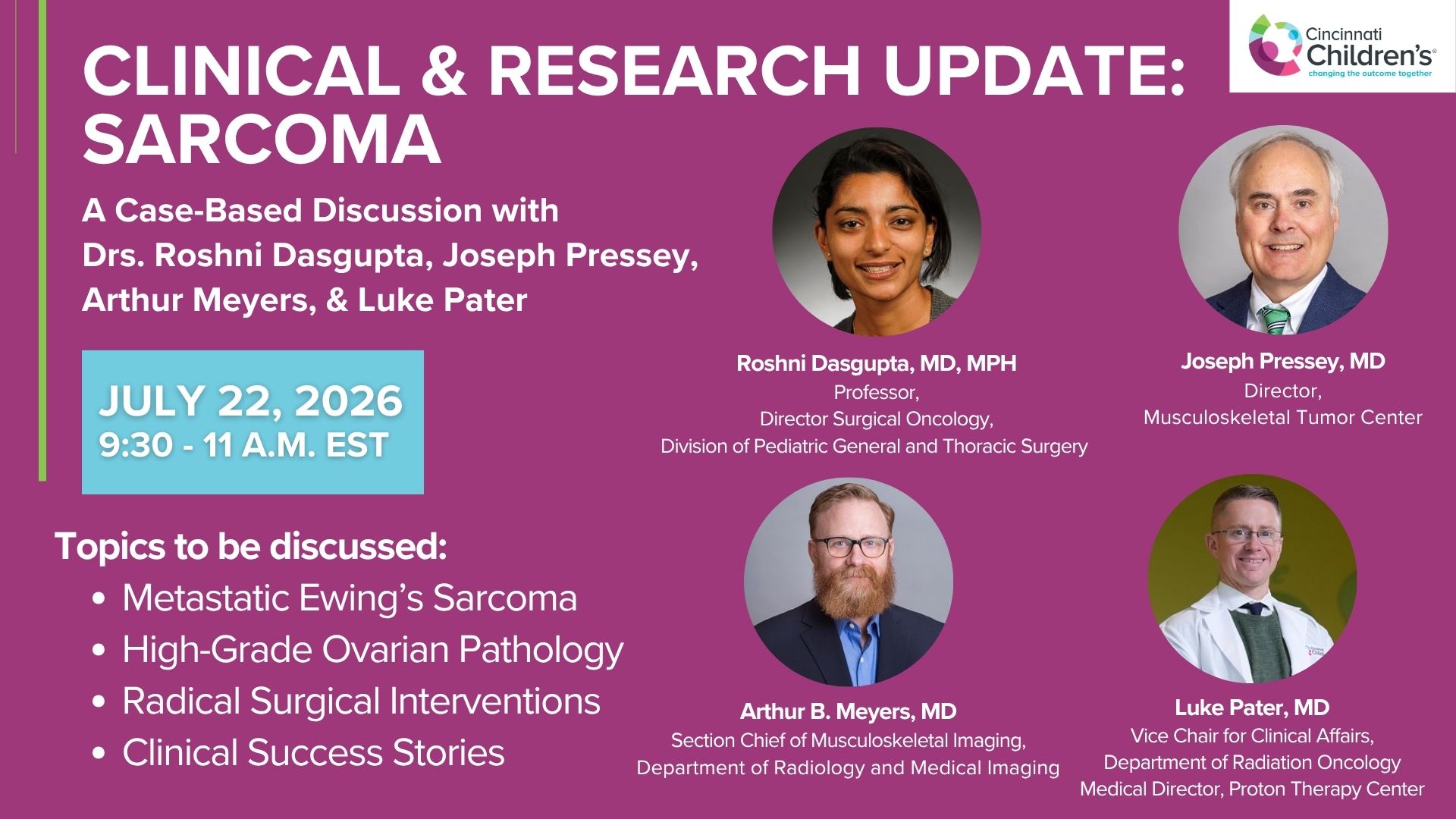
Clinical & Research Update: Sarcoma w/ Drs. Roshni Dasgupta, Joseph Pressey, Arthur Meyer, Luke Pater
66 min · Published Sep 2026
Video
2026 Laparoscopic Pediatric Hernia Repair
123 min · Published Jun 2026
Video
Beyond the Spectrum: Diagnosis, Myths & Management - Caitlin Couch & Leslie Lopez - APP Conference 2026
50 min · Published May 2026
Video
Dysautonomia: Navigating the Journey - Martha Willis - APP Conference 2026
55 min · Published May 2026
What the experts said
In the Children's Hospital Association database from 2010 to 2022, sleeve gastrectomy has become the dominant procedure and very few bypasses are being done in 2022.
Teen-LABS is a multi-institutional longitudinal study of 242 adolescent bariatric surgery subjects with assessment preoperatively and at time points postoperatively, now in its 17th year of NIH funding with 85% retention (219 of 242 still active).
Teen-LABS recruited approximately 160 gastric bypasses and 100 sleeve gastrectomies.
Weight loss after gastric bypass is equivalent in teenagers and adults at approximately 26-29% at 5 years.
At 5 years post-gastric bypass, 86% of teenagers achieved diabetes remission compared to 53% of adults.
At 5 years post-gastric bypass, 68% of teenagers achieved hypertension remission compared to 41% of adults.
Meta-analysis of multiple pediatric bariatric cohorts (AMOS from Sweden, FBS-5 from Cincinnati, studies from Saudi Arabia and Miami) with follow-up of 5-14 years shows hypertension remission rates of 58-100%, type 2 diabetes remission rates of 72-100%, and reversal of dyslipidemia, renal dysfunction, and liver dysfunction.
In Teen-LABS, percent BMI change shows nadir at 1 year of approximately 33% reduction, with very gentle increase over time to 21% average reduction at 10 years, but with significant heterogeneity.
Latent class modeling of Teen-LABS 10-year weight outcomes identifies distinct groups: approximately 11% with weight gain, approximately 20% with 44% weight loss, and groups in between.
By 8 years post-surgery in Teen-LABS, a minority of patients have not had experience with alcohol, and most have had some experience.
The cumulative incidence of alcohol-related problems by 8.5 years post-surgery approaches half of patients in both sleeve and bypass groups.
The pharmacokinetics of alcohol are much faster (hitting the system more rapidly) after gastric bypass and probably sleeve gastrectomy as well.
Fourteen deaths occurred in the Teen-LABS cohort, with the first death at 3.3 years post-surgery and others occurring at 7, 10, and 14 years post-surgery.
A number of the Teen-LABS deaths were associated with multi-substance use, though this data is not yet published.
When compared to previously published normative data, Teen-LABS patients adopt alcohol use later and at lower frequency than normal-weight controls.
For sleeve gastrectomy, an anatomy-based approach (avoiding leaving a pouch at the top and avoiding a dumbbell-shaped stomach) is recommended to prevent reflux.
Micronutrient supplementation after bariatric surgery should be taken like medicines, not like supplements, and this should be emphasized preoperatively and postoperatively.
Preliminary comparison to an 81-patient cohort of severely obese teenagers who did not undergo surgery (recruited by Meg Zeller in Cincinnati) suggests that 10-year mortality may be a signal of severe obesity in teenage years rather than surgery itself.