

From
Live Event Content
Kasra Khalaj, MSc, PhD - Best of the Best in Pediatric Surgery 2024
With Dr. Kasra Khalaj
Educational content from recorded physician discussions — not medical advice. Talk to your (or your child's) care team about your situation.
Video
Inside a FETO Procedure: Fetoscopic Balloon Tracheal Occlusion with Dr. Beth Rymeski
4 min · Published Jul 2026
Video
Fetoscopic Endoluminal Tracheal Occlusion (FETO) Procedure: Step-by-Step Guide with Dr. Beth Rymeski
4 min · Published Sep 2026
Video
Best of the Best in Pediatric Surgery Winner Announcement
8 min · Published Apr 2022
Video
BOB in Ped Surg 2023 - EUPSA Winner - Dr. Rebeca Figueira
Published Feb 2023
Video
Severe Congenital Diaphragmatic Hernia (CDH) Case: FETO Management & Unexpected Findings with Dr. Beth Rymeski
3 min · Published Sep 2026
Video
What is Congenital Diaphragmatic Hernia (CDH)? An ERNICA animation for parents and families
3 min · Published Dec 2023
Video
CAPS - Administration of amniotic fluid stem cell extracellular vesicles regenerates the lung epithelium in fetal rats with CDH at translationally relevant developmental stages - Kasra Khalaj
7 min · Published May 2022
Video
EUPSA - MicroRNAs in amniotic fluid stem cellextracellular vesicles modulate lung development in experimental congenital diaphragmatic hernia - Kasra Khalaj
10 min · Published May 2022
Video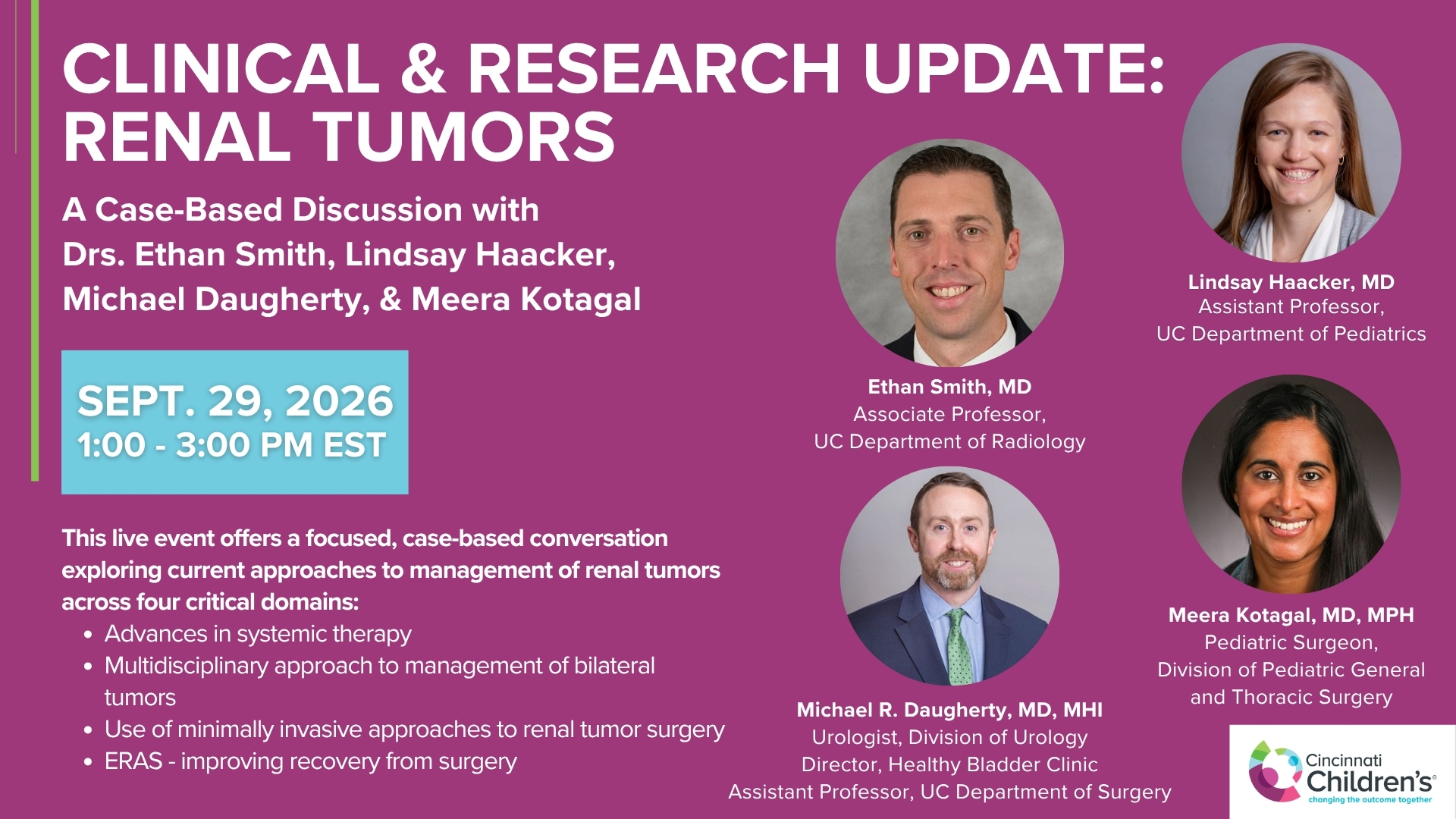
Clinical & Research Update: Renal Tumors with Drs. Ethan Smith, Lindsay Haacker, Michael Daugherty, and Meera Kotagal
71 min · Published Sep 2026
Video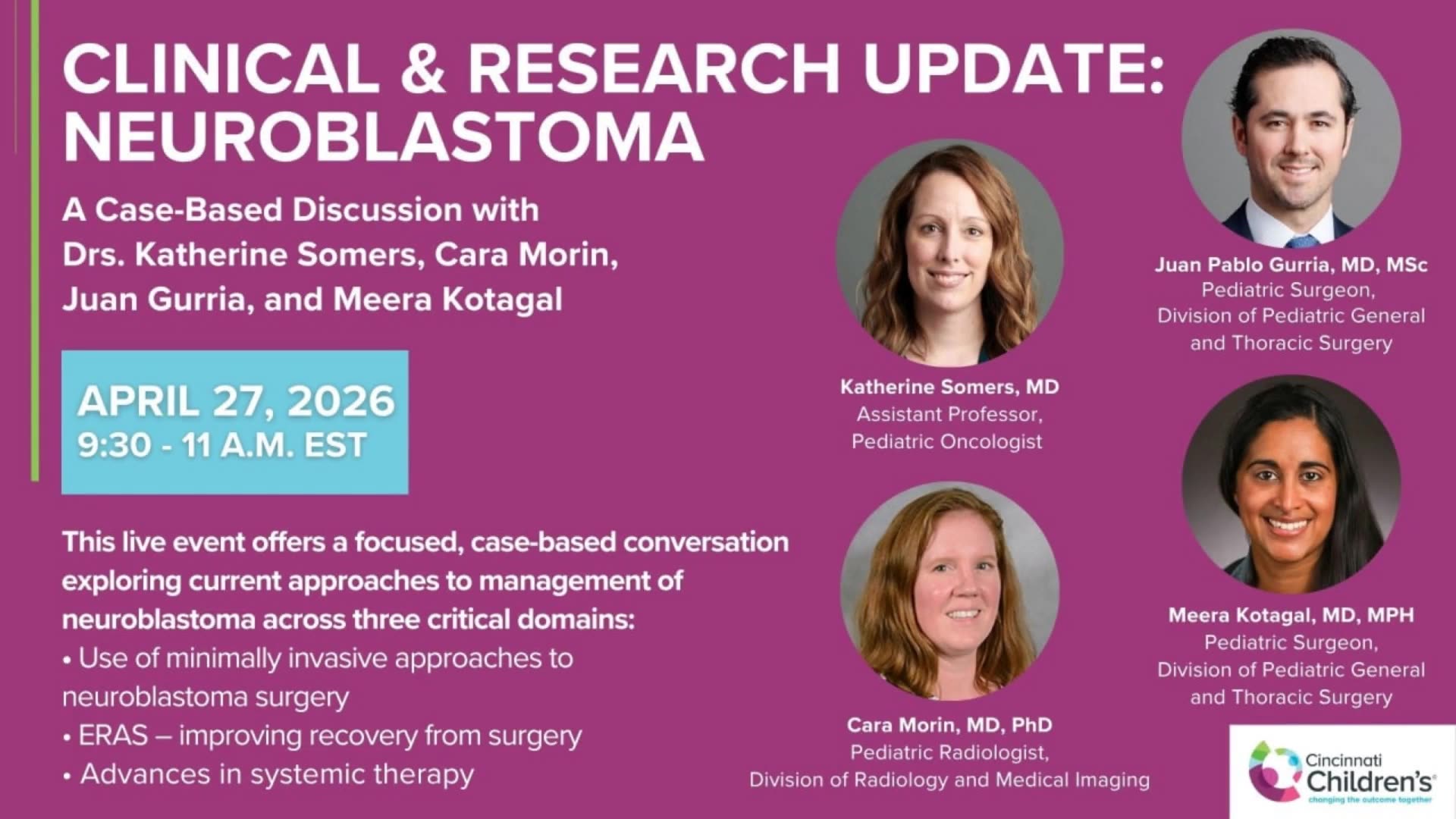
Clinical & Research Update: Neuroblastoma with Drs. Katherine Somers, Cara Morin, Juan Gurria, and Meera Kotagal
67 min · Published Sep 2026
Video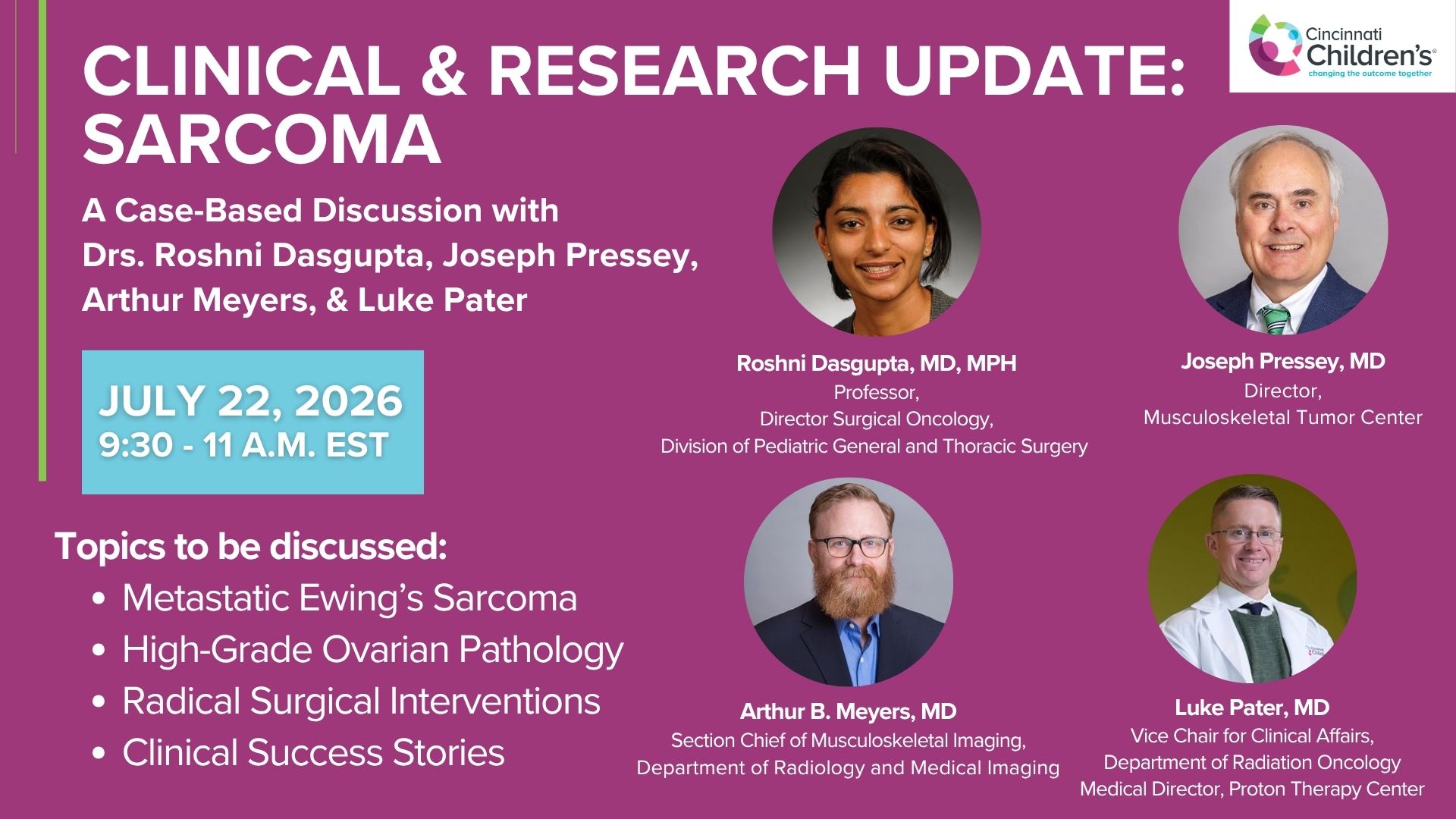
Clinical & Research Update: Sarcoma w/ Drs. Roshni Dasgupta, Joseph Pressey, Arthur Meyer, Luke Pater
66 min · Published Sep 2026
Video
2026 Laparoscopic Pediatric Hernia Repair
123 min · Published Jun 2026
Video
Beyond the Spectrum: Diagnosis, Myths & Management - Caitlin Couch & Leslie Lopez - APP Conference 2026
50 min · Published May 2026
Video
Dysautonomia: Navigating the Journey - Martha Willis - APP Conference 2026
55 min · Published May 2026
What the experts said
Lungs of babies with pulmonary hypoplasia secondary to congenital diaphragmatic hernia have an impaired triad of factors: impaired fetal lung growth, maturation, and vascularization.
Prenatal therapies administered to treat pulmonary hypoplasia have not been able to fully rescue lung development.
Extracellular vesicles are particles responsible for paracrine signaling.
RAC1 is a Rho GTPase that modulates lung branching morphogenesis.
RAC1 expression is down-regulated in CDH autopsy specimens compared to age-matched controls.
Fetal lungs treated with RAC1 inhibitor display histological features resembling those of pulmonary hypoplasia.
Human AFSCEVs restore airspace density with decreased parenchyma in hypoplastic fetal lungs.
Human AFSCEVs restore branching morphogenesis marker FGF10 in hypoplastic fetal lungs.
Human AFSCEVs restore key markers responsible for fetal lung maturation: surfactant protein C and podoplanin.
Human AFSCEV-treated explants had reduced medial wall thickness and restored vascular density.
A unique epithelial cell cluster termed 'stressed AT1/AT2' had high representation in hypoplastic lungs and was down-regulated after AFSCEV administration.
The stressed AT1/AT2 cluster had up-regulated signaling pathways involved in cellular stress, death, and inflammation.
A cluster termed 'developing AT1/AT2 cells' had the highest proportion in hypoplastic lungs treated with AFSCEVs and showed high TGF-beta and VEGF signaling.
Human AFSCEV administration reduces the number of myofibroblasts in hypoplastic fetal lungs.
Human AFSCEV administration restores vascular endothelial cluster nuclei numbers back to control levels.
The restored vascular endothelial cluster had increased VEGF signaling, which is a primary pathway involved in angiogenesis.
This is the first study to describe that human AFSCEV administration promotes the triad of fetal lung growth, maturation, and vascularization in fetal hypoplastic lungs.
Investigators have tested various routes of AFSCEV administration including intratracheal and maternal IV in animal models.
Intra-amniotic injection has shown promising results for AFSCEV administration.
In the lamb CDH model, AFSCEVs are being administered in combination with fetal endoscopic tracheal occlusion (FETO).