

From
StayCurrentMD
Hepatoblastoma: Update Course 2014
Educational content from recorded physician discussions — not medical advice. Talk to your (or your child's) care team about your situation.
Video
Update Course 2023 - Updates in the use of ICG
19 min · Published Aug 2023
Video
Quality of Life Outcomes for Patients Who Underwent Conventional Resection and Liver Transplantation for Locally Advanced Hepatoblastoma
1 min · Published Jan 2026
Video
Hepatoblastoma with Dr. Greg Tiao
CCHMC Pediatric Surgery · Published Mar 2022
Video
Aggressive Pursuit of No Evidence of Disease Status in Hepatoblastoma Improves Survival
Published Jun 2023
Podcast
Liver transplant with Dr. Jonathan Merola
14 min · Published Jul 2024
Podcast
Hepatoblastoma
54 min · Published Nov 2017
Video
Clinical & Research Update: Renal Tumors with Drs. Ethan Smith, Lindsay Haacker, Michael Daugherty, and Meera Kotagal
71 min · Published Sep 2026
Video
Clinical & Research Update: Neuroblastoma with Drs. Katherine Somers, Cara Morin, Juan Gurria, and Meera Kotagal
67 min · Published Sep 2026
Video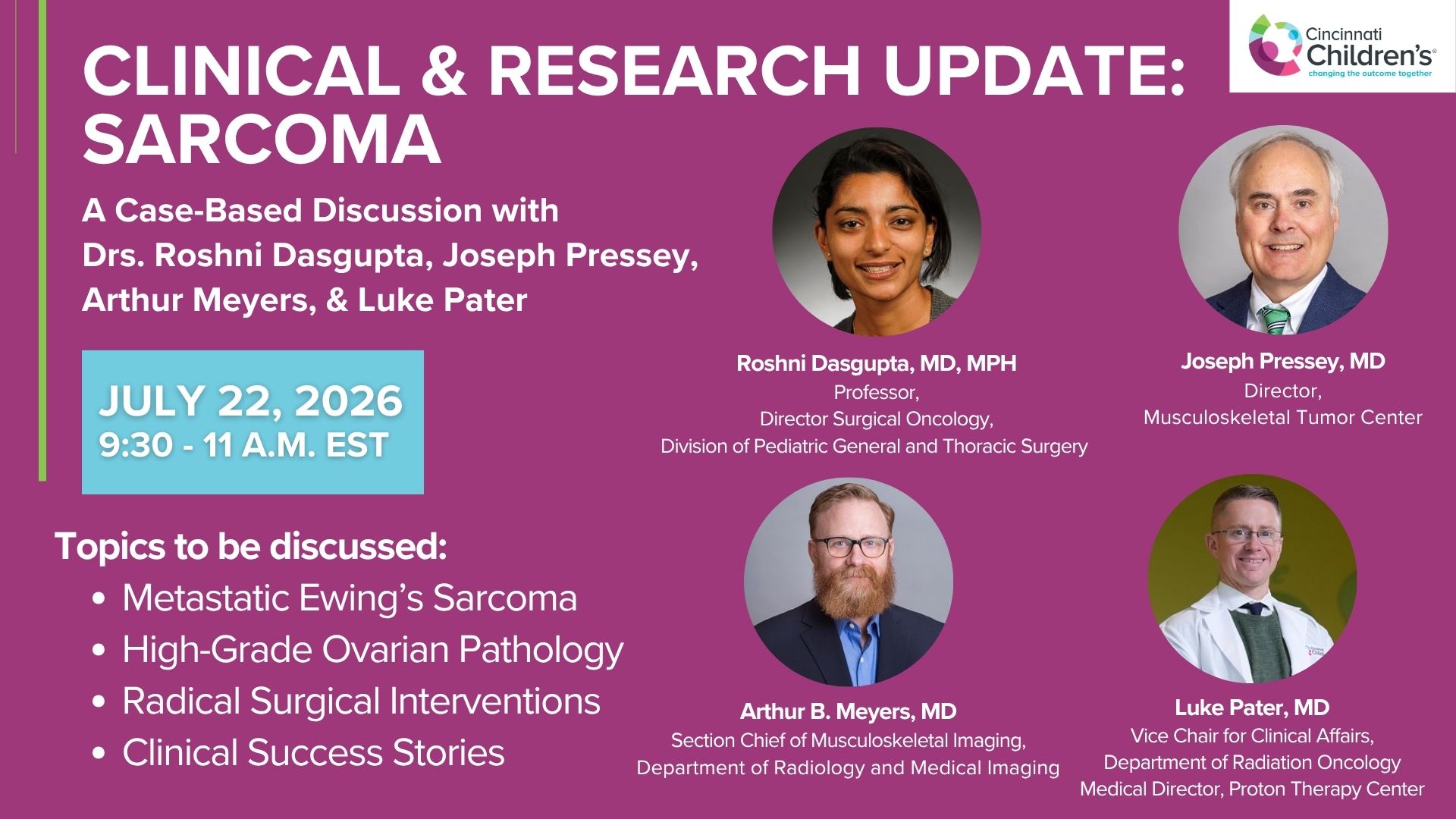
Clinical & Research Update: Sarcoma w/ Drs. Roshni Dasgupta, Joseph Pressey, Arthur Meyer, Luke Pater
66 min · Published Sep 2026
Video
Update Course Rewind 2025: Nerve Monitoring in Pediatric Thyroid Surgery
6 min · Published Jul 2026
Video
Journal of Pediatric Surgery Article Review: June 2023, AAP Issue
Todd Ponsky · 13 min · Published Jul 2026
Video
Pediatric Surgical Oncology Research Collaborative (PSORC): Studying Rare Pediatric Tumors
56 s · Published May 2026
Video
Intestinal Atresia Types Explained: Grossfeld Classification for Pediatric Surgery
1 min · Published Sep 2026
Video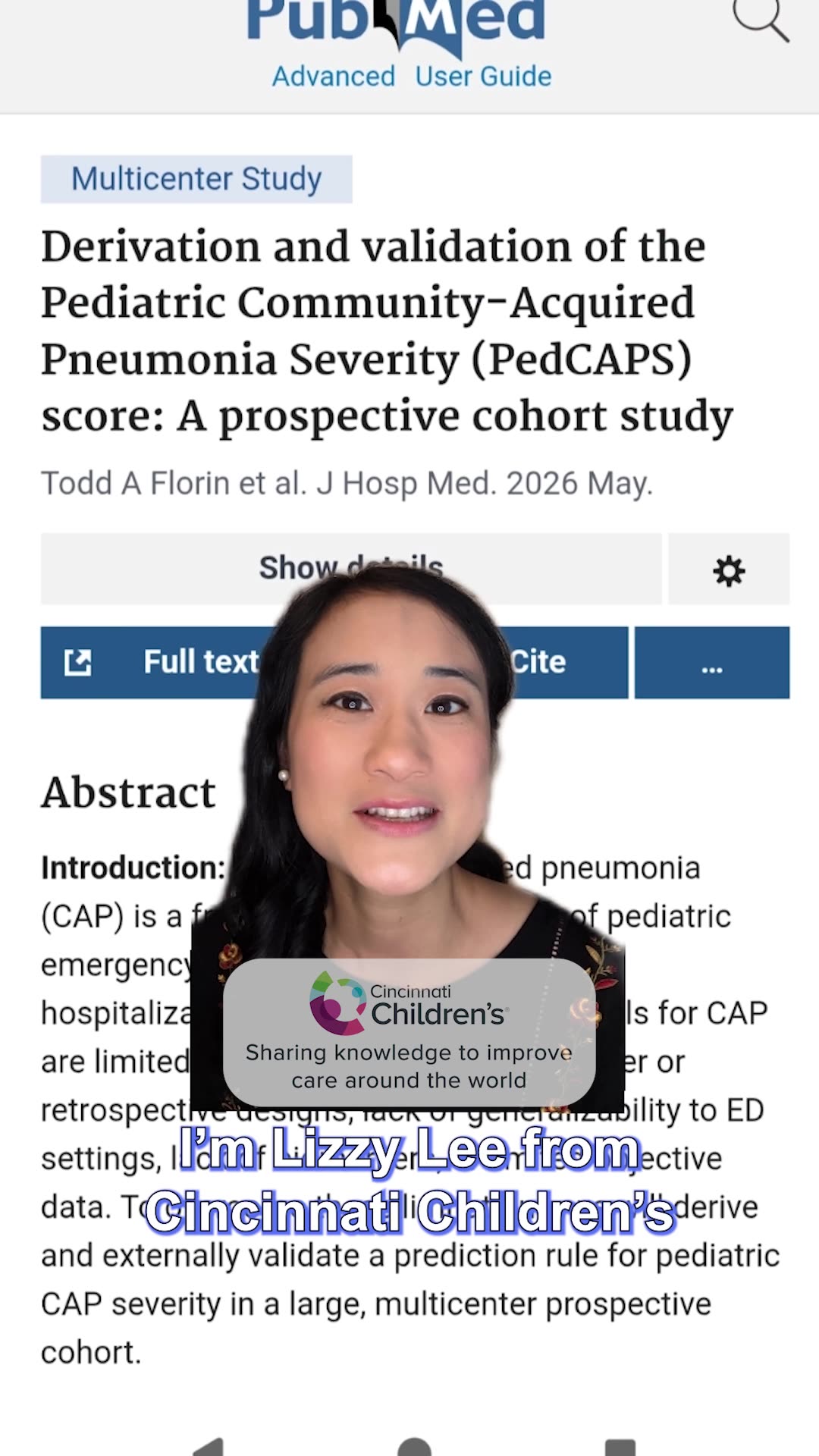
Derivation and validation of the Pediatric Community-Acquired Pneumonia Severity (PedCAPS) score: A prospective cohort study
50 s · Published Sep 2026
Video
FETO for Late-Diagnosed Severe Congenital Diaphragmatic Hernia (CDH) at Cincinnati Children's with Dr. Beth Rymeski
4 min · Published Sep 2026
Video
Severe Congenital Diaphragmatic Hernia (CDH) Case: FETO Management & Unexpected Findings with Dr. Beth Rymeski
3 min · Published Sep 2026
Video
Fetoscopic Endoluminal Tracheal Occlusion (FETO) Procedure: Step-by-Step Guide with Dr. Beth Rymeski
4 min · Published Sep 2026
Video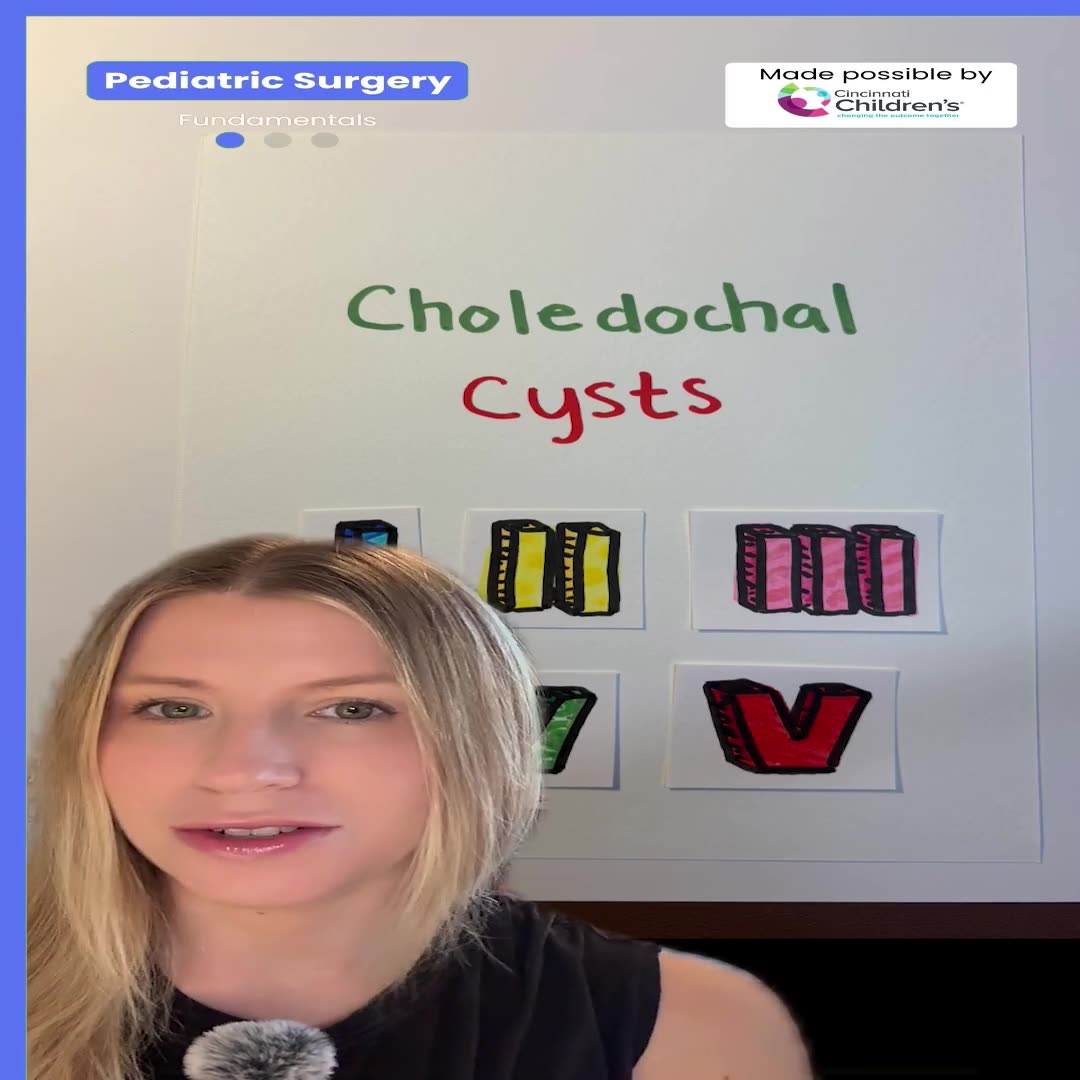
Choledochal Cyst Types Explained: Pediatric Surgery Fundamentals
1 min · Published Sep 2026
What the experts said
PRETEXT staging stands for pretreatment extent of disease and is based on segmental liver anatomy prior to chemotherapy
PRETEXT staging has a tendency to overstage because it is based purely on imaging and bulky tumors make it hard to assess true vascular invasion versus mass effect
POSTTEXT refers to extensive disease after neoadjuvant chemotherapy has been given
Key staging annotations include involvement of the retrohepatic cava or hepatic veins and the portal vein bifurcation
COG recommendations state that PRETEXT stage 2 tumors with no vascular involvement and achievable 1 cm margin can be resected upfront without neoadjuvant chemotherapy
COG feels that PRETEXT stage 1 and 2 tumors do not necessarily need referral to centers with liver resection expertise if the local surgeon feels competent
Most tumor shrinkage from chemotherapy occurs within the first two cycles
Current recommendations are that after two cycles of chemotherapy, if the tumor has not shrunk to a resectable point, the patient should be evaluated for transplant
As hepatoblastoma tumors shrink with chemotherapy, they do not shrink away from the vascular supply, so chemotherapy does not improve vascular margins
The goal surgical margin for hepatoblastoma resection is 1 cm
Survival in patients undergoing extended or heroic resections (tumor liver explants with back table resection and reimplant, portal vein reconstructions, hepatic vein reconstructions) is not as good as transplant survival
There has been a move away from heroic resections for hepatoblastoma
Patients who undergo failed resection followed by rescue transplant have worse survival than patients who undergo planned transplant upfront
Patients should be referred to a transplant center early even if they may not ultimately need transplant, to have pre-transplant evaluation completed and be plugged into the system
Primary transplant patients with hepatoblastoma do surprisingly well despite immunosuppression against rejection in the setting of cancer
For non-transplant center surgeons, criteria for proceeding with resection include feeling 95% confident of success and ability to perform an anatomic resection with good margin
Disease close to hepatic veins, disease extending across the liver, or involvement of the portal vein should prompt referral to a transplant center
The truth about resectability is determined at the time of operation despite all available imaging
In Europe, all liver tumors receive chemotherapy upfront before surgery because it results in smaller, easier-to-resect tumors
Core needle biopsy for hepatoblastoma typically requires about 10 passes through an area that includes normal parenchyma and tumor
There are two camps regarding pulmonary metastasis treatment: one advocates resecting metastases upfront before hepatectomy, the other suggests waiting until after hepatectomy because liver regeneration growth factors may stimulate previously unrecognized lung sites
There is no good data on either side of the pulmonary metastasis timing debate, with both approaches limited to a handful of patients
Papers on stage IV hepatoblastoma with lung metastases are limited to cohorts of less than 20 patients, making it hard to draw good conclusions
There may be reporting bias in transplant outcomes because successes are reported but not all failures