

From
StayCurrentMD
Ovarian Tissue Transplantation: Pediatric Oncofertility 2017
Part of
Pediatric Oncology 692 items
Educational content from recorded physician discussions — not medical advice. Talk to your (or your child's) care team about your situation.
Video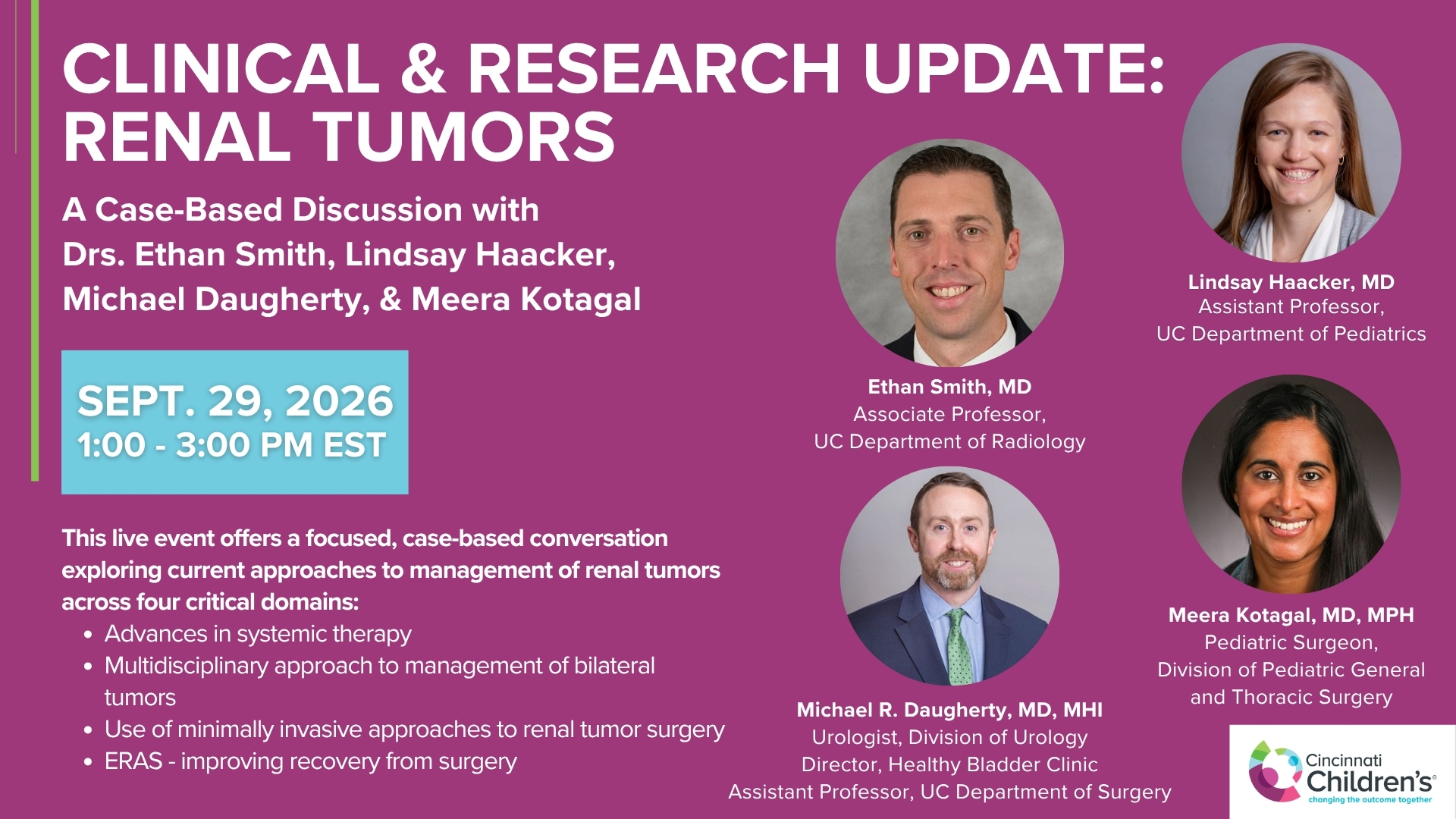
Clinical & Research Update: Renal Tumors with Drs. Ethan Smith, Lindsay Haacker, Michael Daugherty, and Meera Kotagal
71 min · Published Sep 2026
Video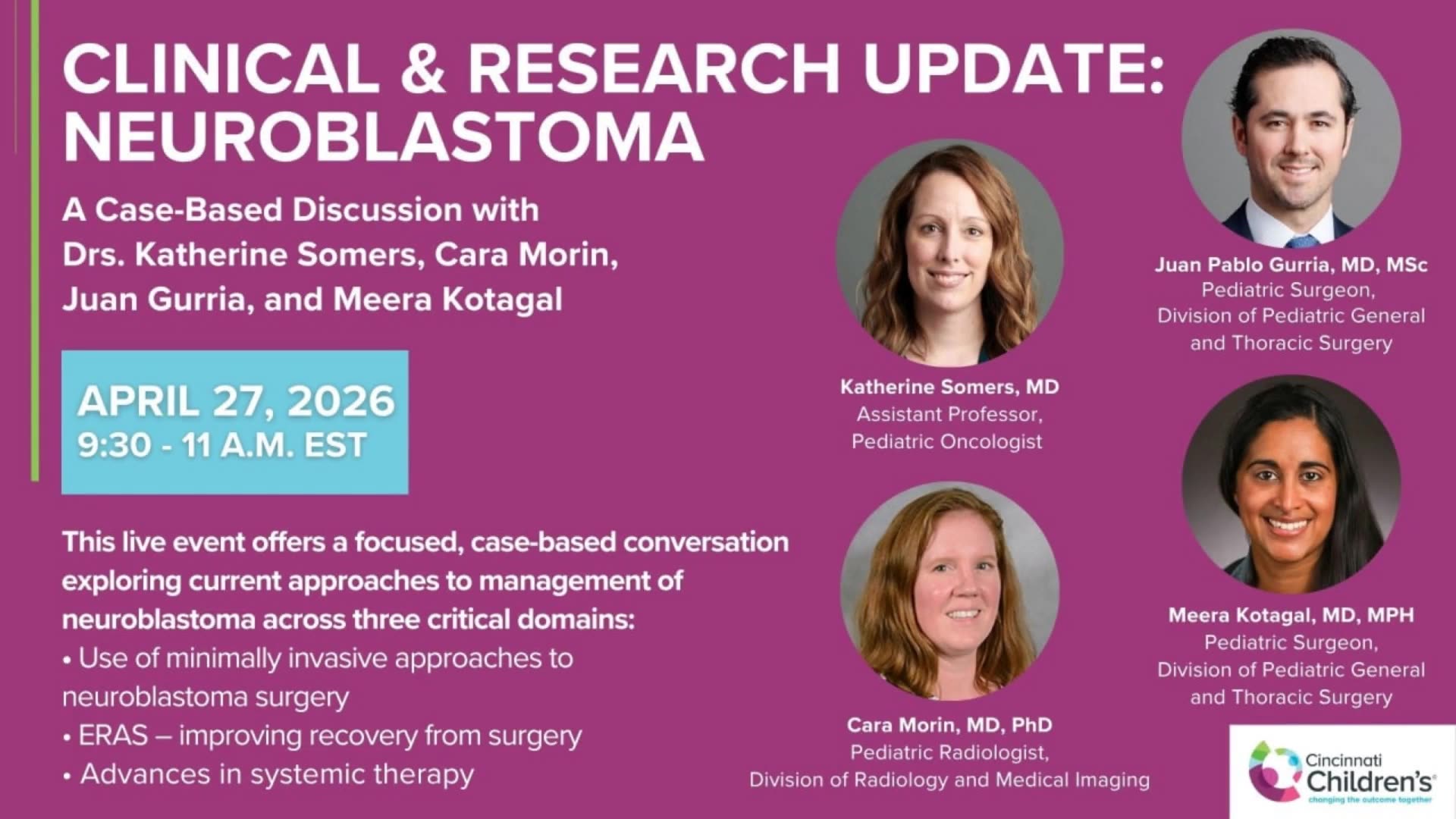
Clinical & Research Update: Neuroblastoma with Drs. Katherine Somers, Cara Morin, Juan Gurria, and Meera Kotagal
67 min · Published Sep 2026
Video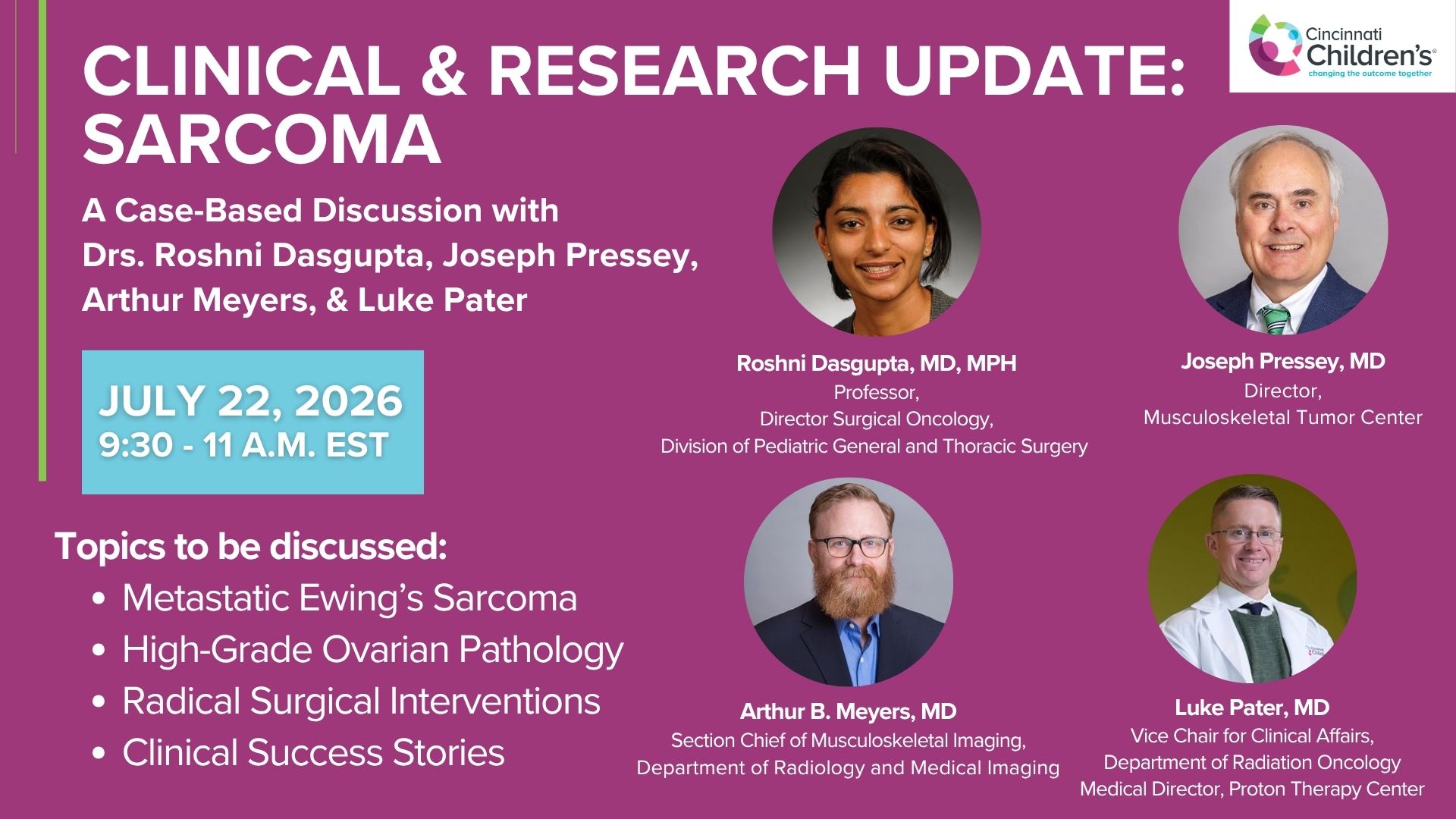
Clinical & Research Update: Sarcoma w/ Drs. Roshni Dasgupta, Joseph Pressey, Arthur Meyer, Luke Pater
66 min · Published Sep 2026
Video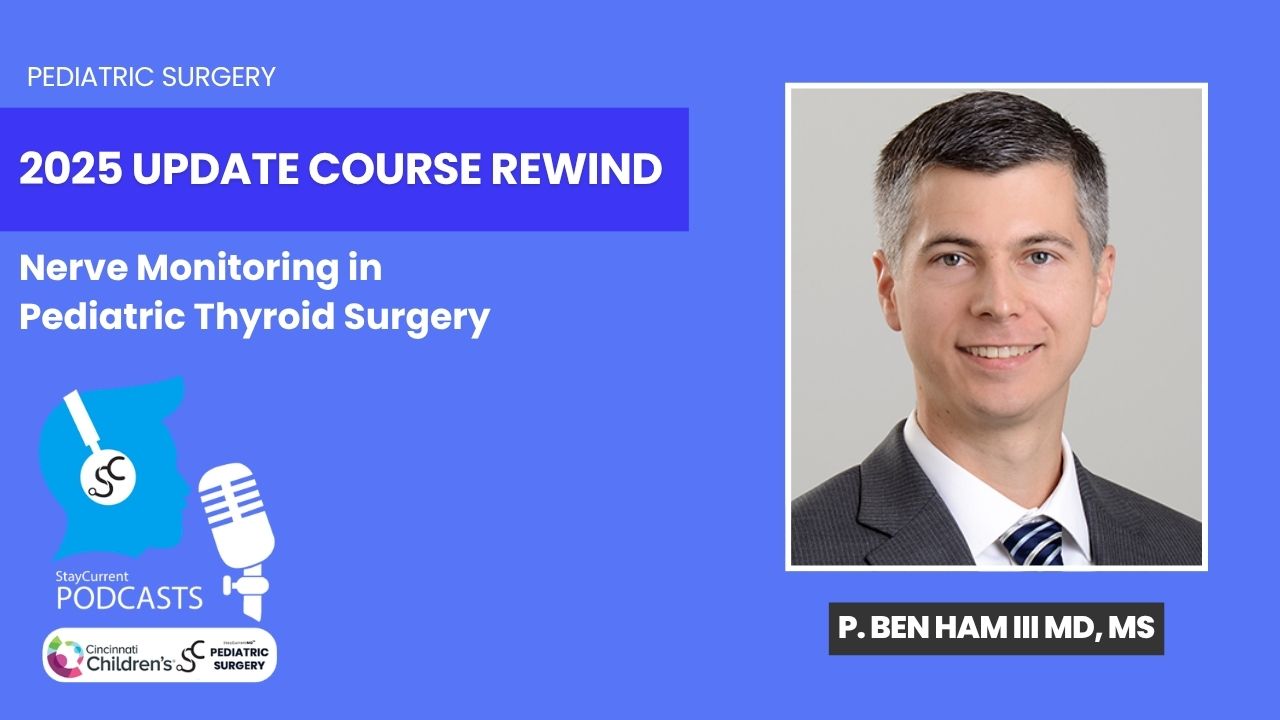
Update Course Rewind 2025: Nerve Monitoring in Pediatric Thyroid Surgery
6 min · Published Jul 2026
Video
Journal of Pediatric Surgery Article Review: June 2023, AAP Issue
Todd Ponsky · 13 min · Published Jul 2026
Video
Pediatric Surgical Oncology Research Collaborative (PSORC): Studying Rare Pediatric Tumors
56 s · Published May 2026
Video
Intestinal Atresia Types Explained: Grossfeld Classification for Pediatric Surgery
1 min · Published Sep 2026
Video
Derivation and validation of the Pediatric Community-Acquired Pneumonia Severity (PedCAPS) score: A prospective cohort study
50 s · Published Sep 2026
Video
FETO for Late-Diagnosed Severe Congenital Diaphragmatic Hernia (CDH) at Cincinnati Children's with Dr. Beth Rymeski
4 min · Published Sep 2026
Video
Severe Congenital Diaphragmatic Hernia (CDH) Case: FETO Management & Unexpected Findings with Dr. Beth Rymeski
3 min · Published Sep 2026
Video
Fetoscopic Endoluminal Tracheal Occlusion (FETO) Procedure: Step-by-Step Guide with Dr. Beth Rymeski
4 min · Published Sep 2026
Video
Choledochal Cyst Types Explained: Pediatric Surgery Fundamentals
1 min · Published Sep 2026
What the experts said
Successful pregnancies from ovarian tissue transplantation were initially reported in 2004 or 2005
Significant experience with ovarian tissue transplantation comes from Belgium, Denmark, Israel, and Germany
Ovarian tissue can be transplanted on or into a remaining ovary, or in a pocket of the pelvic peritoneum, most commonly in the ovarian fossa
Peritoneal pocket placement allows natural conception with good communication between the fallopian tube and transplanted ovarian tissue
FertiPROTECT network was founded in 2006 and has more than 100 participating centers with centralized cryobanks
FertiPROTECT reported 95 transplantations in 74 women through June 2015
In FertiPROTECT subgroup 5 (POI patients with 6 months amenorrhea), 62.5% had active tissue one year after transplant, 27.5% achieved pregnancy, and 22.5% had deliveries
All pregnancies in the POI subgroup were spontaneous without IVF
For peritoneal pocket placement specifically, 68% had active tissue one year after transplant, 28% became pregnant, and 23% achieved delivery
Interseed (cellulose barrier) has been used in the GYN community for many years in the area of the ovaries and fallopian tubes to decrease adhesions and has not been a fertility concern
Different cryoprotectants are used at different sites, including DMSO and glucose
The Brussels group typically had an upper age limit of 35 years for transplant
In the Brussels cohort, 15% of patients who underwent cryopreservation were pre-pubertal
Follow-up time in the Brussels study was about 7.5 years plus or minus 3.5 years when questionnaires were sent
Patients who were younger at the time of cryopreservation were more likely to respond to the questionnaire than older patients
9.9% overall of patients who had OTC died from their disease since the procedure, with higher rates in younger patients
24 of 545 patients (4.4%) returned for transplantation, of whom 21 were transplanted and 3 were declined due to leukemia diagnosis
7 of 21 transplanted patients conceived after transplantation, representing a 33% delivery rate
Reported pregnancy rates across published papers range from about 25% to 35% in best case scenarios
BMT (bone marrow transplant) is a high risk population for ovarian tissue transplantation
96% of patients in the Brussels study did not report any complications from the procedure
96% of patients were satisfied with the ovarian tissue cryopreservation procedure
Of 3 dissatisfied patients, one could not understand the procedure fully, one found it unnecessary after spontaneous conception, and one was declined transplant due to leukemia risk
The highest risk of premature ovarian insufficiency outside of oophorectomy is associated with bone marrow transplant
Techniques to assess tissue for malignancy before transplant include histology on frozen specimens, immunochemistry, molecular biology techniques, and xenograft models using immunocompetent mice
Factors influencing graft longevity include patient age at cryopreservation, baseline ovarian reserve, graft site, degree of ischemia at transplantation, freezing and thawing techniques, and patient medical history
Belgian group data from 2015 showed FSH fell significantly over the first several months after transplant, with some grafts functioning for several years
Some experts think peritoneal pocket placement may provide better blood supply and functionality compared to ovarian placement
Some reports suggest removing transplanted tissue immediately after successful pregnancy to minimize malignancy risk