

From
Live Event Content
2024 Fetal Care Center Frontiers in Fetal Neurology Day 1 - Dr. Sonika Agarwal
With Dr. Sonika Agarwal
Educational content from recorded physician discussions — not medical advice. Talk to your (or your child's) care team about your situation.
Video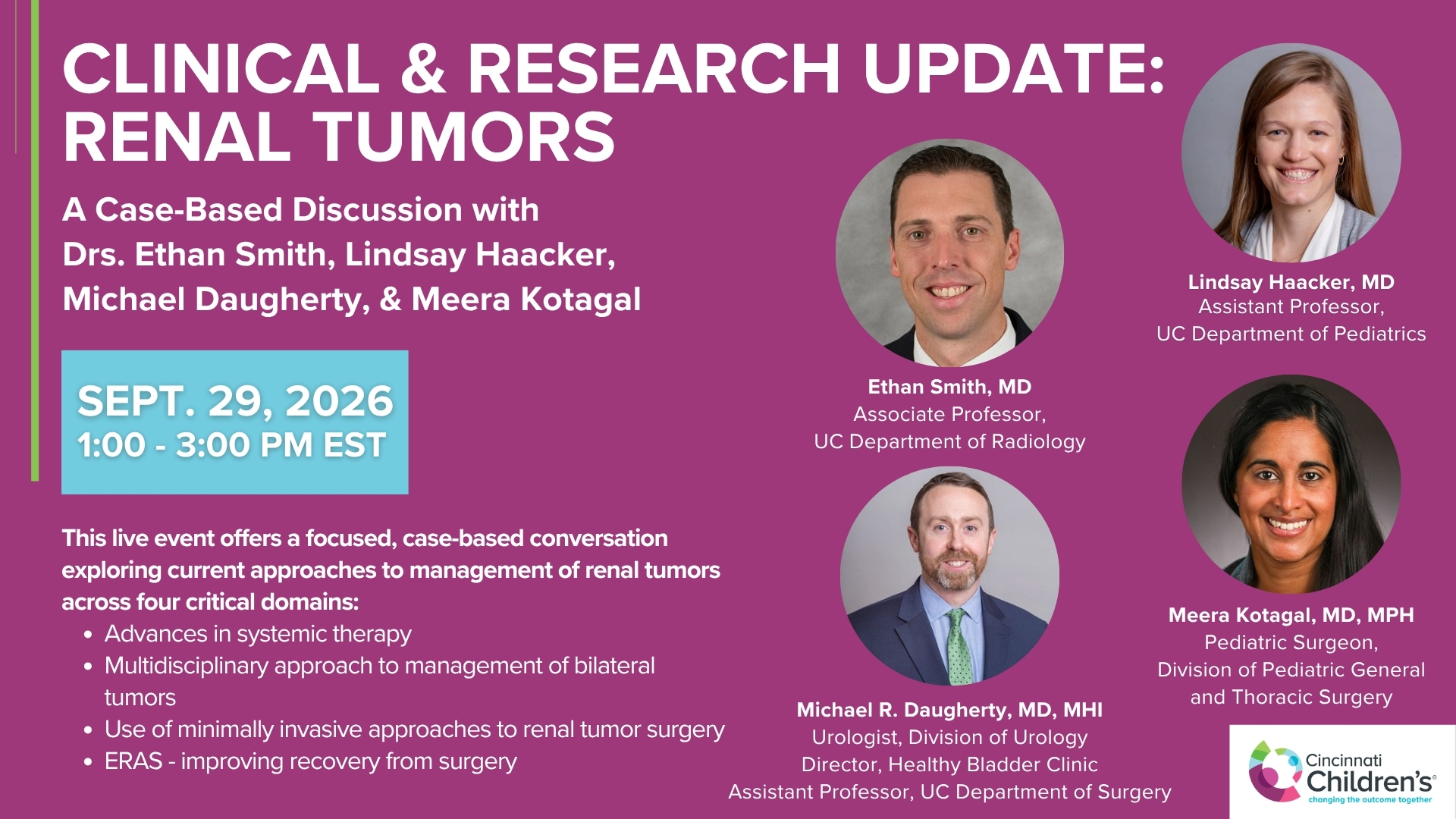
Clinical & Research Update: Renal Tumors with Drs. Ethan Smith, Lindsay Haacker, Michael Daugherty, and Meera Kotagal
71 min · Published Sep 2026
Video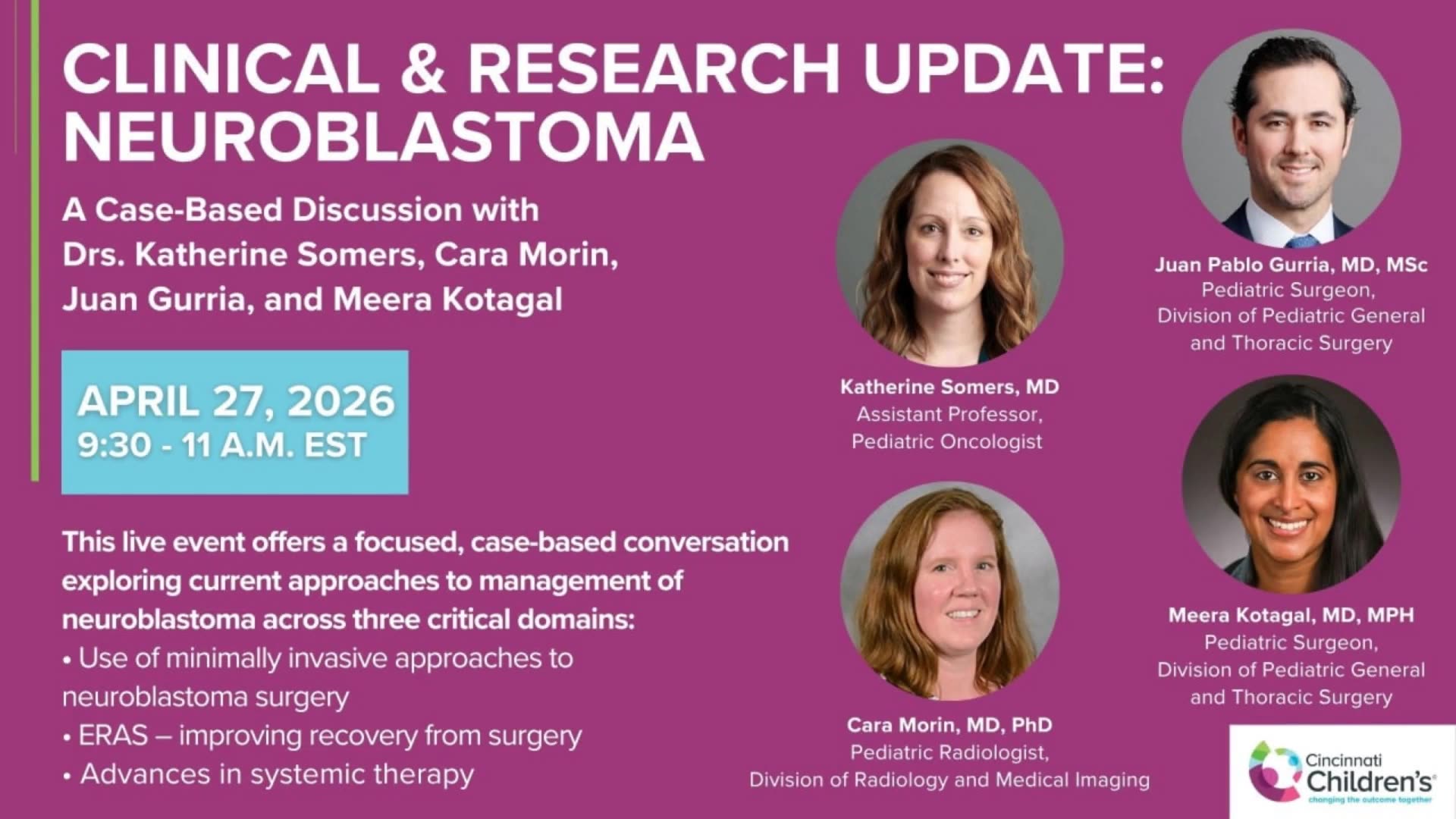
Clinical & Research Update: Neuroblastoma with Drs. Katherine Somers, Cara Morin, Juan Gurria, and Meera Kotagal
67 min · Published Sep 2026
Video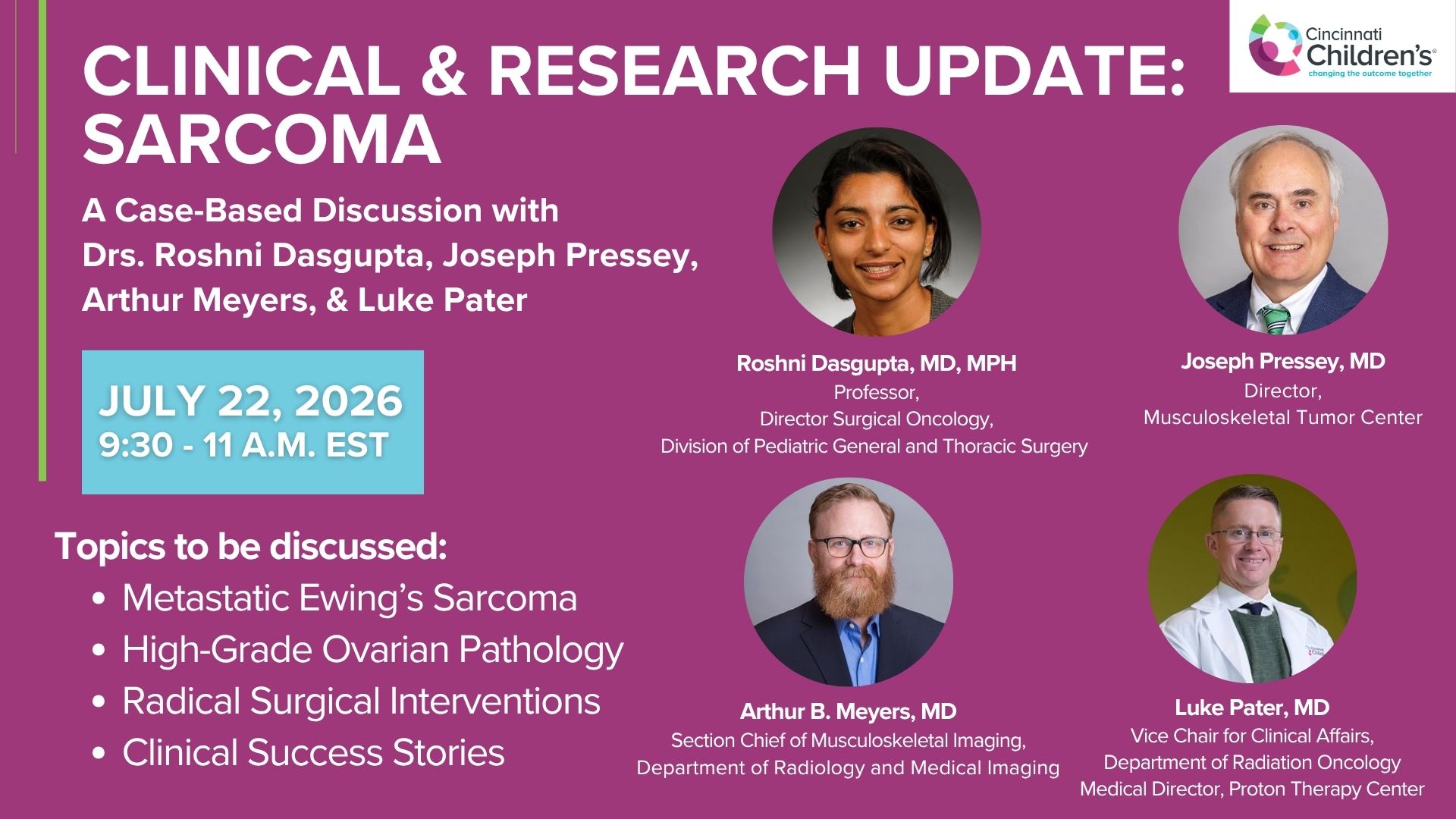
Clinical & Research Update: Sarcoma w/ Drs. Roshni Dasgupta, Joseph Pressey, Arthur Meyer, Luke Pater
66 min · Published Sep 2026
Video
2026 Laparoscopic Pediatric Hernia Repair
123 min · Published Jun 2026
Video
Beyond the Spectrum: Diagnosis, Myths & Management - Caitlin Couch & Leslie Lopez - APP Conference 2026
50 min · Published May 2026
Video
Dysautonomia: Navigating the Journey - Martha Willis - APP Conference 2026
55 min · Published May 2026
What the experts said
The Pappe grading system developed for preterm GMH is applied to fetal MRI: Grade 1 is subependymal hemorrhage, Grade 2 is blood in ventricles, Grade 3 is blood occupying >50% of lateral ventricle or associated with ventriculomegaly, Grade 4 is periventricular hemorrhagic infarction.
Often there is no etiology identified for germinal matrix hemorrhage in the fetus, particularly when it's low-grade hemorrhage.
Commonly identified risk factors for fetal GMH include complications of twin pregnancy, congenital anomalies, and intrauterine growth restriction.
Wide anterior horn width and rounded appearance of frontal horns on fetal MRI are strongly predictive of post-hemorrhagic hydrocephalus, based on knowledge from the preterm population.
Uncommon risk factors for fetal GMH include congenital infection, maternal trauma, and coagulopathy.
Dilated temporal horns on fetal MRI, while not specific for CMV, are often highly suggestive of congenital CMV infection.
Maternal serology is not 100% sensitive for recent CMV infection, emphasizing the importance of postnatal testing unless definitively excluded by amniocentesis.
COL4A1 and COL4A2 encode the alpha-1 and alpha-2 chains of type IV collagen, which form a heterotrimer to stabilize basement membranes of blood vessels expressed throughout the body with particular enrichment in brain, eyes, and kidneys.
COL4A1 can be associated with a broad spectrum of cerebrovascular disease including hemorrhage of a range of severity at any stage of the life cycle, small vessel vascular disease, and aneurysms.
COL4A1-related conditions show variable penetrance and variable expressivity.
In the UCSF study of fetal intraparenchymal hemorrhage restricted to confirmed cases, an etiology was found in the majority of cases, in contrast to other studies in the literature that often didn't identify an etiology.
In the UCSF fetal IPH cohort, the most common etiology was twin-twin transfusion syndrome (whether complicated by co-twin demise, treated with laser ablation, or both).
25% of fetal IPH cases in the UCSF cohort were due to a variety of maternal and fetal complications and comorbidities, including 2 cases of congenital infection and 1 case of fetal-neonatal alloimmune thrombocytopenia.
18% of fetal IPH cases in the UCSF cohort were due to variants in COL4A1 or COL4A2.
11% of fetal IPH cases in the UCSF cohort were due to in utero transfusion for severe fetal anemia.
25% of fetal IPH cases in the UCSF cohort had no known etiology, but half of those had no etiologic testing and the other half had some degree of etiologic testing.
The yield of genetic testing in fetal IPH cases where it was obtained was 39%.
In COL4A1/2-related fetal IPH, all hemorrhages were focal supratentorial involving the frontal lobe, with deep gray nuclei being the next most commonly affected structure.
The most distinct feature of COL4A1/2-related fetal IPH was hemorrhagic porencephaly.
In twin-twin transfusion syndrome cases of fetal IPH, there tended to be bilateral multifocal hemorrhages, often with IVH.
All intrauterine transfusion cases in the UCSF fetal IPH cohort had infratentorial hemorrhage, whether in isolation or in association with supratentorial hemorrhage, which was a distinct pattern in this group.
In the maternal-fetal complication and comorbidity group of fetal IPH, there tended to be diffuse hemorrhage and diffuse injury, often with IVH.
Congenital amegakaryocytic thrombocytopenia due to homozygous variants in the MPL gene is an autosomal recessive condition that results in successive failure of all bone marrow cell lines, often presenting with severe thrombocytopenia at birth.
Over one-third of the UCSF fetal IPH cohort terminated the pregnancy.
There was a strong relationship between the maximal diameter of the hemorrhage and the ratio of the hemorrhage to the biparietal diameter and an outcome of termination in the UCSF fetal IPH cohort.
Less than 10% of the UCSF fetal IPH cohort experienced in utero fetal demise.
Half of the UCSF fetal IPH cohort was live-born, of whom 25% delivered at a preterm gestation.
About half of the live-born fetal IPH cohort had a postnatal MRI, and about half of those patients had new findings, emphasizing the importance of repeat postnatal MRI.
Among 13 children with longer-term outcomes in the UCSF fetal IPH cohort, the vast majority developed cerebral palsy.
The extent and severity of injury on fetal MRI was predictive of the topology and severity of cerebral palsy in children from the UCSF fetal IPH cohort.
None of the patients with unilateral injury in the UCSF fetal IPH cohort had a non-ambulatory outcome.
Comparing UCSF fetal IPH outcomes to Mary Dunbar's meta-analysis on fetal IVH, epilepsy was much more common after IPH and motor disability was also more common after IPH.
VP shunt rates of 60% after PVHI and 40% after GMH/IVH are much higher than rates seen in the preterm population, suggesting ascertainment bias in the literature based on progressive ventriculomegaly, so the true rates of hydrocephalus after fetal hemorrhage are likely lower.