

From
Live Event Content
2024 Fetal Care Center Frontiers in Fetal Neurology Day 1 - Dr. DonnaMaria Cortezzo
With Dr. Donna Maria Cortezzo
Educational content from recorded physician discussions — not medical advice. Talk to your (or your child's) care team about your situation.
Video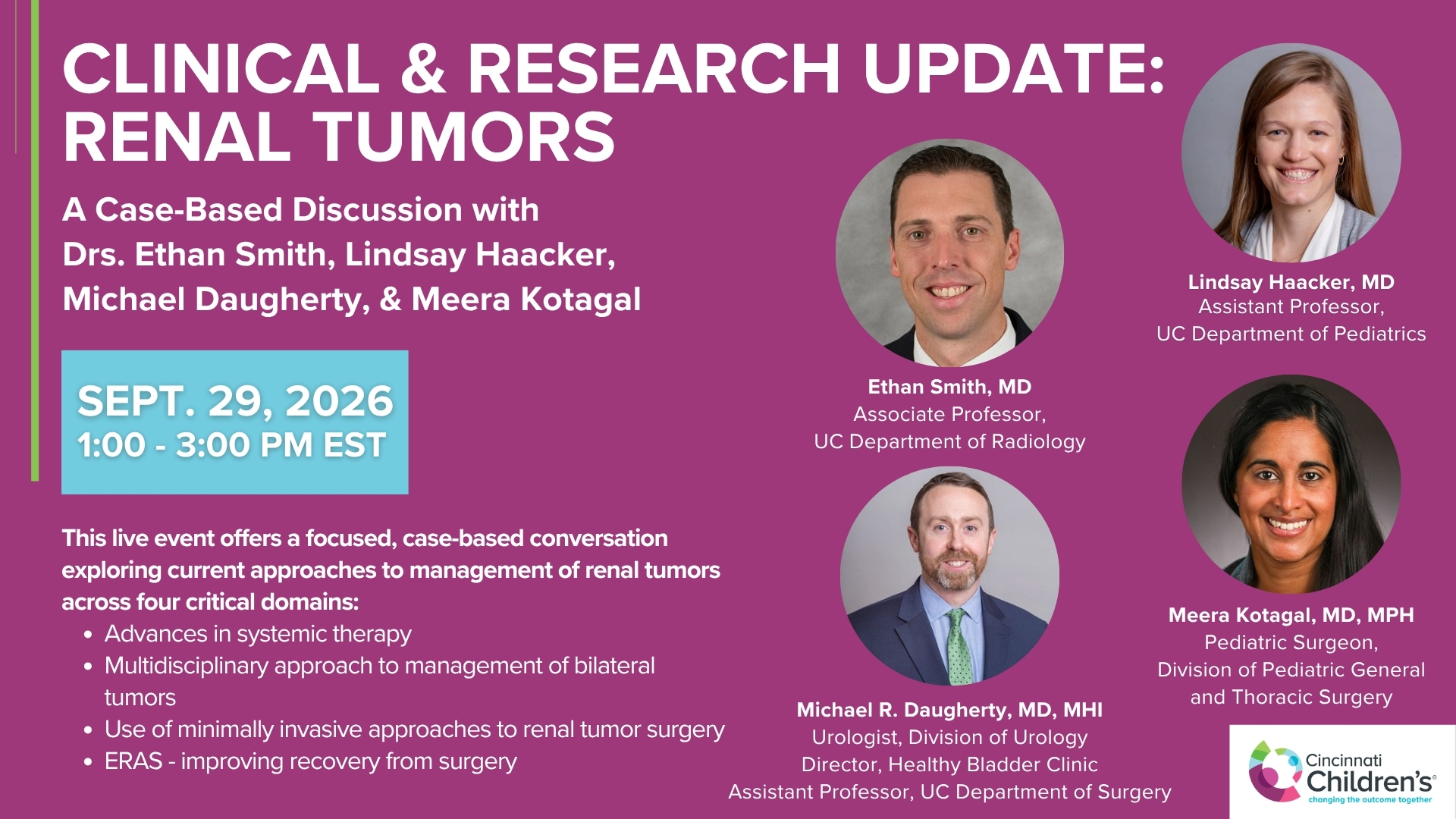
Clinical & Research Update: Renal Tumors with Drs. Ethan Smith, Lindsay Haacker, Michael Daugherty, and Meera Kotagal
71 min · Published Sep 2026
Video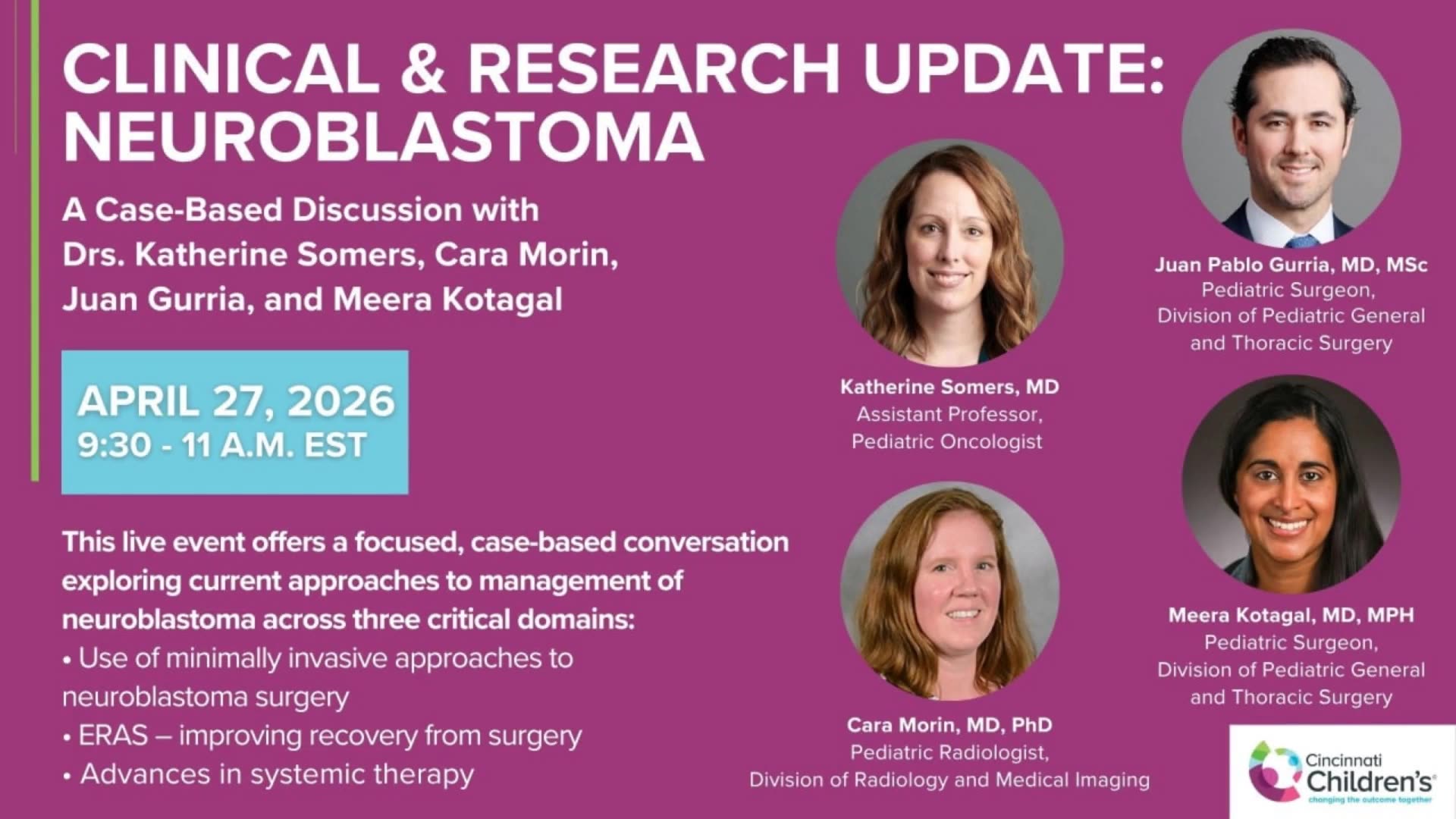
Clinical & Research Update: Neuroblastoma with Drs. Katherine Somers, Cara Morin, Juan Gurria, and Meera Kotagal
67 min · Published Sep 2026
Video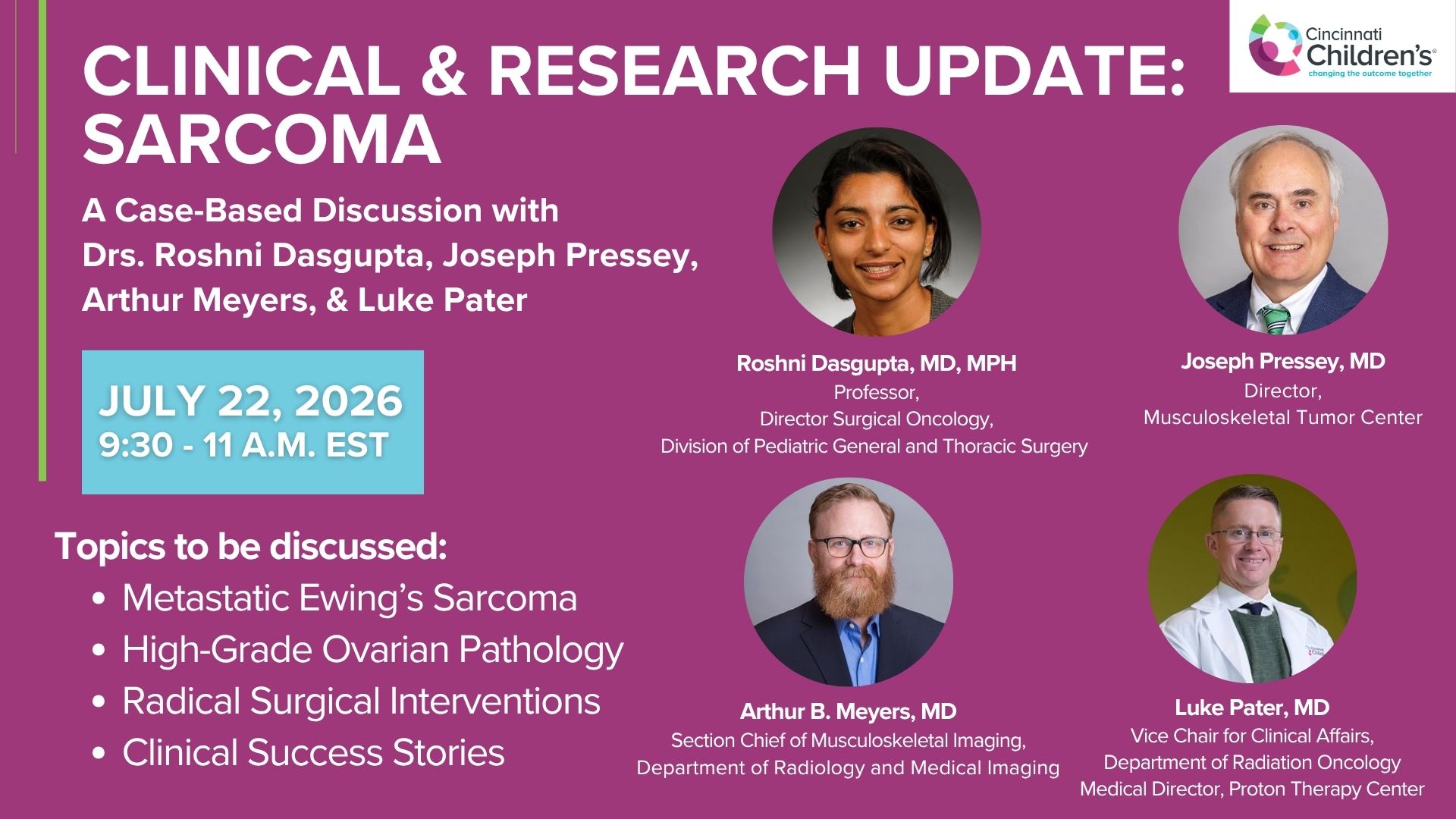
Clinical & Research Update: Sarcoma w/ Drs. Roshni Dasgupta, Joseph Pressey, Arthur Meyer, Luke Pater
66 min · Published Sep 2026
Video
2026 Laparoscopic Pediatric Hernia Repair
123 min · Published Jun 2026
Video
Beyond the Spectrum: Diagnosis, Myths & Management - Caitlin Couch & Leslie Lopez - APP Conference 2026
50 min · Published May 2026
Video
Dysautonomia: Navigating the Journey - Martha Willis - APP Conference 2026
55 min · Published May 2026
What the experts said
Neonatal perinatal palliative care has grown out of the field of hospice and palliative medicine with the goal of caring for and supporting families with a concerning life-limiting or life-threatening fetal or neonatal diagnosis.
When a life-limiting or life-threatening fetal diagnosis is made, the pregnancy and birth narrative has been broken for that family.
Palliative care is continued irrespective of the disease trajectory, treatment options chosen by the family, or the transition and care settings.
Each year in the United States, there are over 1 million fetal deaths, 26,000 stillbirths, and 19,000 neonatal deaths.
100,000 individuals have a pregnancy complicated by a fetus with severe abnormalities or a complex diagnosis, and 20-40% of them continue the pregnancy.
Providers who care for pregnant individuals or neonates will be tasked with caring for a patient with a concerning, life-limiting, life-threatening, or complex chronic diagnosis multiple times throughout their career.
Advances in prenatal screening and diagnostic technologies have allowed for the earlier and more frequent identification of complex fetal diagnoses.
Many fetal anomalies are not identified until the 18 to 22 week anatomy scan, and about 25% are not identified until the third trimester.
Families continuing pregnancy after a complex fetal diagnosis often describe a duality in their parental experience—preparing to welcome a new life while simultaneously grieving the loss of the baby they were expecting.
After fetal anomaly diagnosis, families often have a limited window to gather information and make decisions about abortion, fetal interventions when appropriate, or the care path that best aligns with their views.
The goal of counseling a family is not simply to deliver information or direct decisions and care, but to engage in a dialogue that promotes autonomy and informed decision making.
Shared decision-making is a partnership to understand how, in the context of a family's specific situation and goals or values, the medical information is important.
Factors that influence care decisions include personal attributes (age, medical history, gestation at diagnosis, context of pregnancy, past medical experiences, socioeconomic status), personal views (religious beliefs, cultural values, tolerance of uncertainty, views of quality of life), the information itself and how it's conveyed, and structural influences including access to options.
Provider prognostication contributes significantly to parental decisions and goals of care.
Prognosticating before birth is challenging because there is usually a spectrum of outcomes, but providers tend to use terms such as 'lethal' and perpetrate the diagnosis as grim instead of articulating the spectrum.
Families want to know the spectrum of possible outcomes and how different types of care paths can impact them, as hearing the range allows them to understand what might be possible and to prepare.
Quality of life is a very personal determination and provider views should not impact how information is conveyed; instead, providers should understand what a family views as an acceptable quality of life and discuss the likelihood of their child achieving that.
If families are told their baby will die immediately but read about babies living, or if they opt for interventions and the prognosis is very different than they were told, they can become confused and angry, which can damage the therapeutic relationship and leave them feeling guilty.
A perinatal palliative care birth plan is a document created to communicate the family's wishes with the multidisciplinary medical team, expanding beyond logistics of delivery to include value-driven requests for care.
Birth planning gives families a sense of control during a challenging time, an opportunity to honor their child's life, and a rare opportunity to actively parent and advocate for the care they desire.
Important components of a birth plan include information for the care team, wishes for labor and delivery, wishes for the medical care of the baby, wishes for memory making and support, and plans for if the baby survives or dies.
The palliative care team provides continual support, consistency, and counseling throughout all phases of care, allowing for seamless transitions and a unique opportunity to walk the journey with the family.
Often, even after delivery, families need more information to determine the most appropriate care path for their baby.
When it comes to a fetus or baby, parents may not have thought about quality of life or advanced care planning for themselves, let alone their baby.