

From
Live Event Content
2024 Fetal Care Center Frontiers in Fetal Neurology Day 2 - Hour 1 Q&A
Educational content from recorded physician discussions — not medical advice. Talk to your (or your child's) care team about your situation.
Video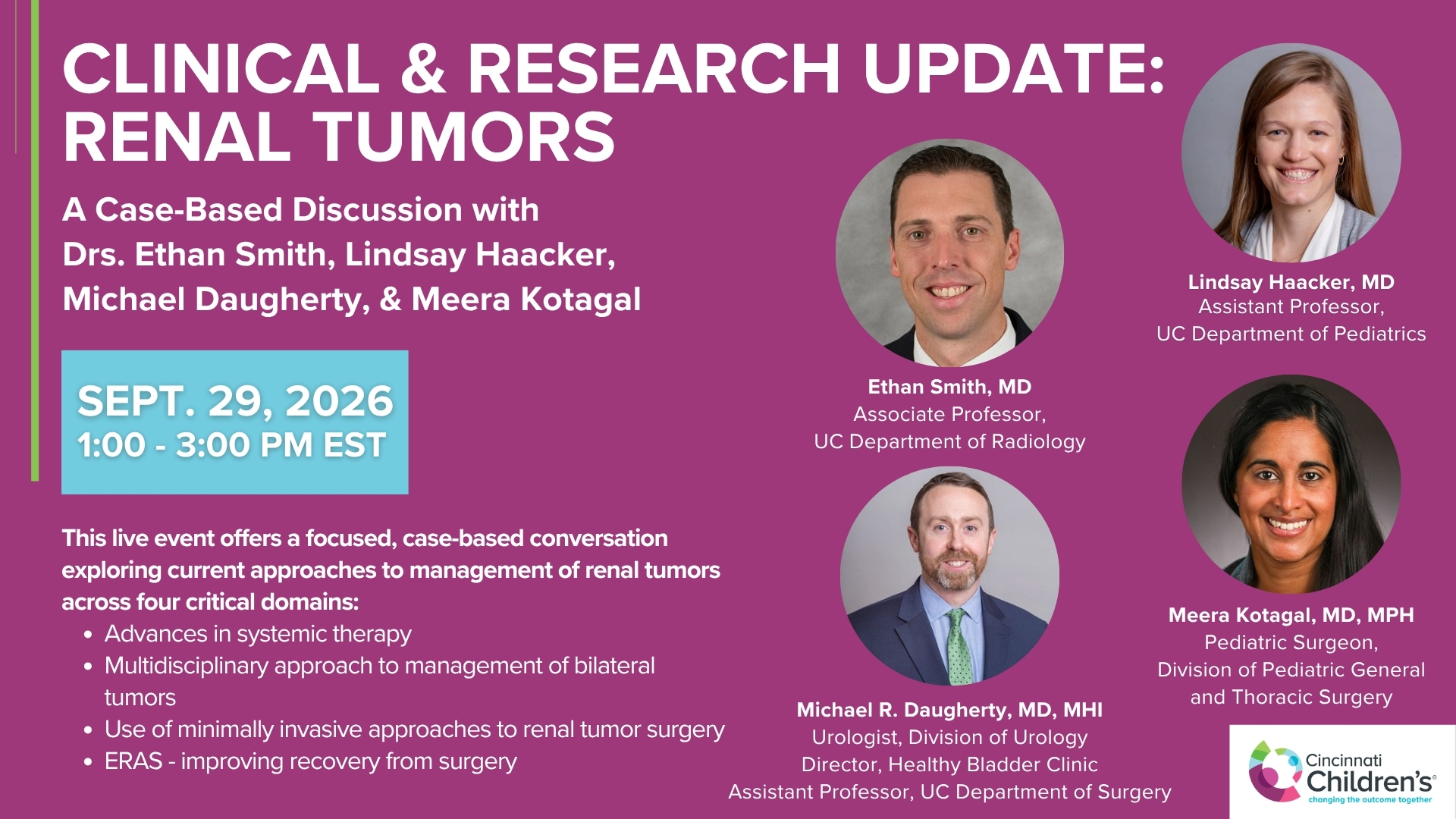
Clinical & Research Update: Renal Tumors with Drs. Ethan Smith, Lindsay Haacker, Michael Daugherty, and Meera Kotagal
71 min · Published Sep 2026
Video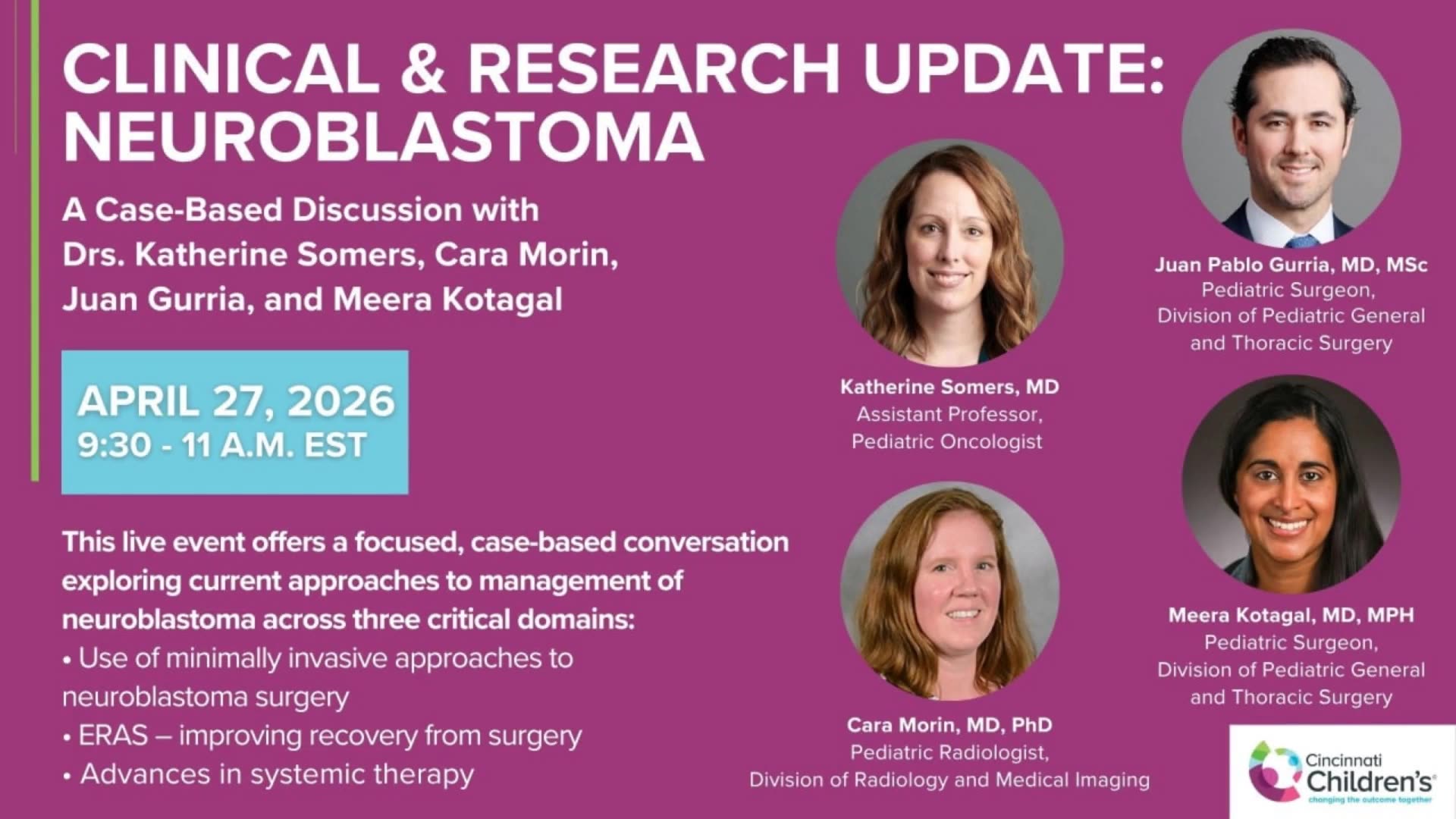
Clinical & Research Update: Neuroblastoma with Drs. Katherine Somers, Cara Morin, Juan Gurria, and Meera Kotagal
67 min · Published Sep 2026
Video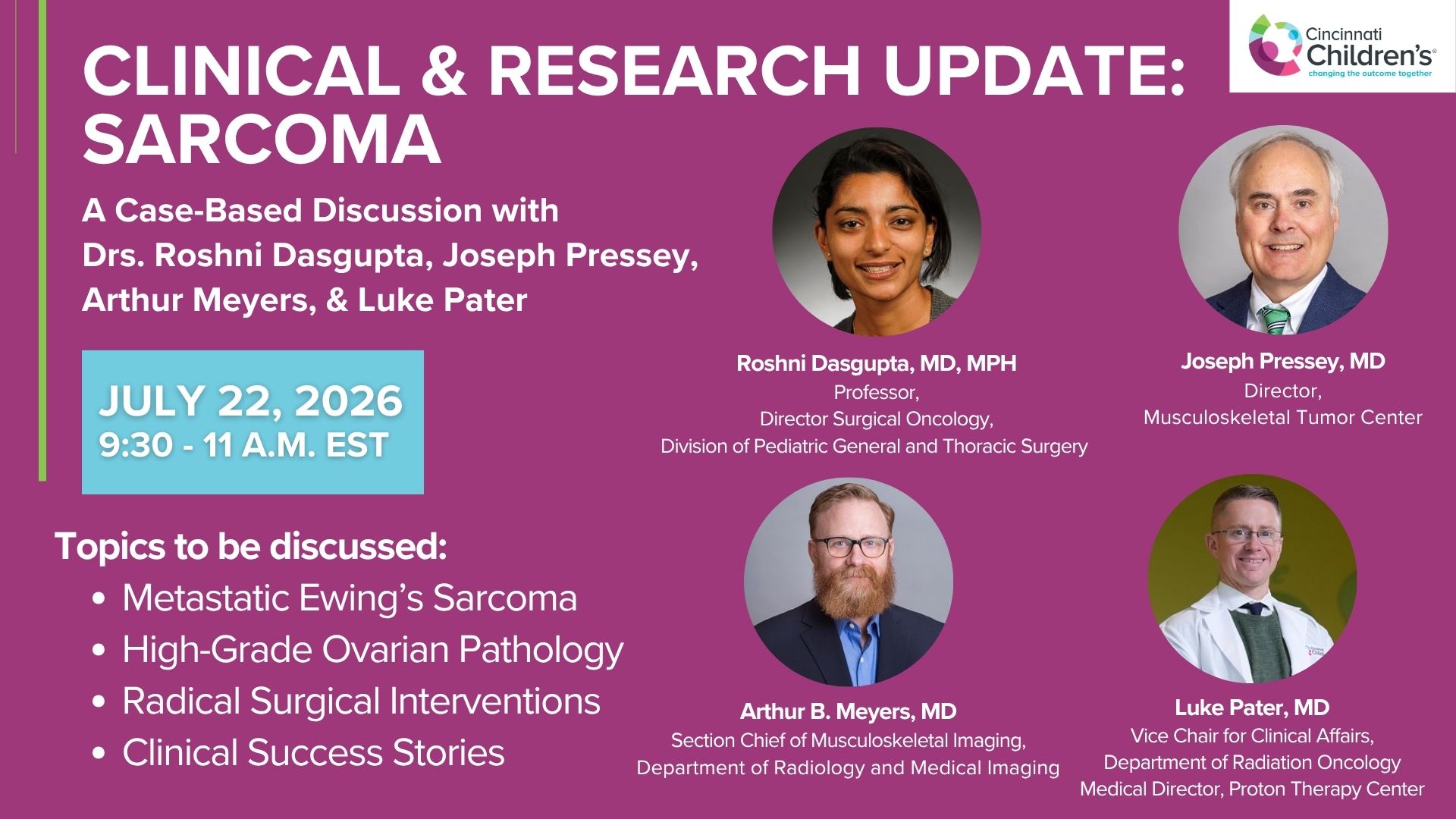
Clinical & Research Update: Sarcoma w/ Drs. Roshni Dasgupta, Joseph Pressey, Arthur Meyer, Luke Pater
66 min · Published Sep 2026
Video
2026 Laparoscopic Pediatric Hernia Repair
123 min · Published Jun 2026
Video
Beyond the Spectrum: Diagnosis, Myths & Management - Caitlin Couch & Leslie Lopez - APP Conference 2026
50 min · Published May 2026
Video
Dysautonomia: Navigating the Journey - Martha Willis - APP Conference 2026
55 min · Published May 2026
What the experts said
Fetal MRIs at 27 and 32 weeks in the twin case showed no specific findings consistent with tuberous sclerosis.
The more severely affected twin had an MRI at 2 months of age showing one small cortical dysplasia.
Both twins have had normal EEGs up to the time of discussion.
Cardiac rhabdomyomas will regress and shrink on their own without treatment.
Treatment duration for TSC rhabdomyomas is individualized based on tumor regression and family preference, with no fixed endpoint.
mTOR inhibitors are viewed as targeted therapy for the entire TSC disease, not just cardiac lesions.
Current clinical trials use pharmacokinetic teams rather than physicians to determine dosing based on the infant's individual pharmacokinetics.
Historically, it took two months to reach therapeutic mTOR inhibitor range in infants; with early level monitoring, therapeutic range can be achieved within two weeks of life.
Fetal dosing is complicated by rapid maternal blood volume changes at 26-32 weeks gestation.
mTOR inhibitors are known to increase triglycerides, but untangling pregnancy-related from drug-related elevation may not be possible without a placebo group.
Subependymal nodules and tubers can be reliably identified on fetal MRI and confirm TSC diagnosis.
Cardiac rhabdomyomas are not required for enrollment in TSC treatment studies; risk of TSC or clinical diagnosis with brain MRI is sufficient.
One case report describes a congenital subependymal giant cell astrocytoma (SEGA) found on prenatal ultrasound that was treated with an mTOR inhibitor and showed size reduction.
Maternal side effects of prenatal mTOR inhibitor treatment appear minimal.
Early genetic testing can confirm TSC diagnosis prenatally.
The heart TSC protocol follows patients from the prenatal period through 5 years of age, including echocardiograms and developmental assessments.
Postnatal TSC treatment trials follow children until 2 years of age.
Elevated triglycerides in the third trimester are not uncommon in pregnancy in general.