

From
StayCurrentMD
Update Course Rewind: Lipiodol for Lung Metastases 2024
With Dr. Gloria Gonzalez · hosted by Dr. M Godoy
Educational content from recorded physician discussions — not medical advice. Talk to your (or your child's) care team about your situation.
More about this diagnosis
Lung metastasisVideo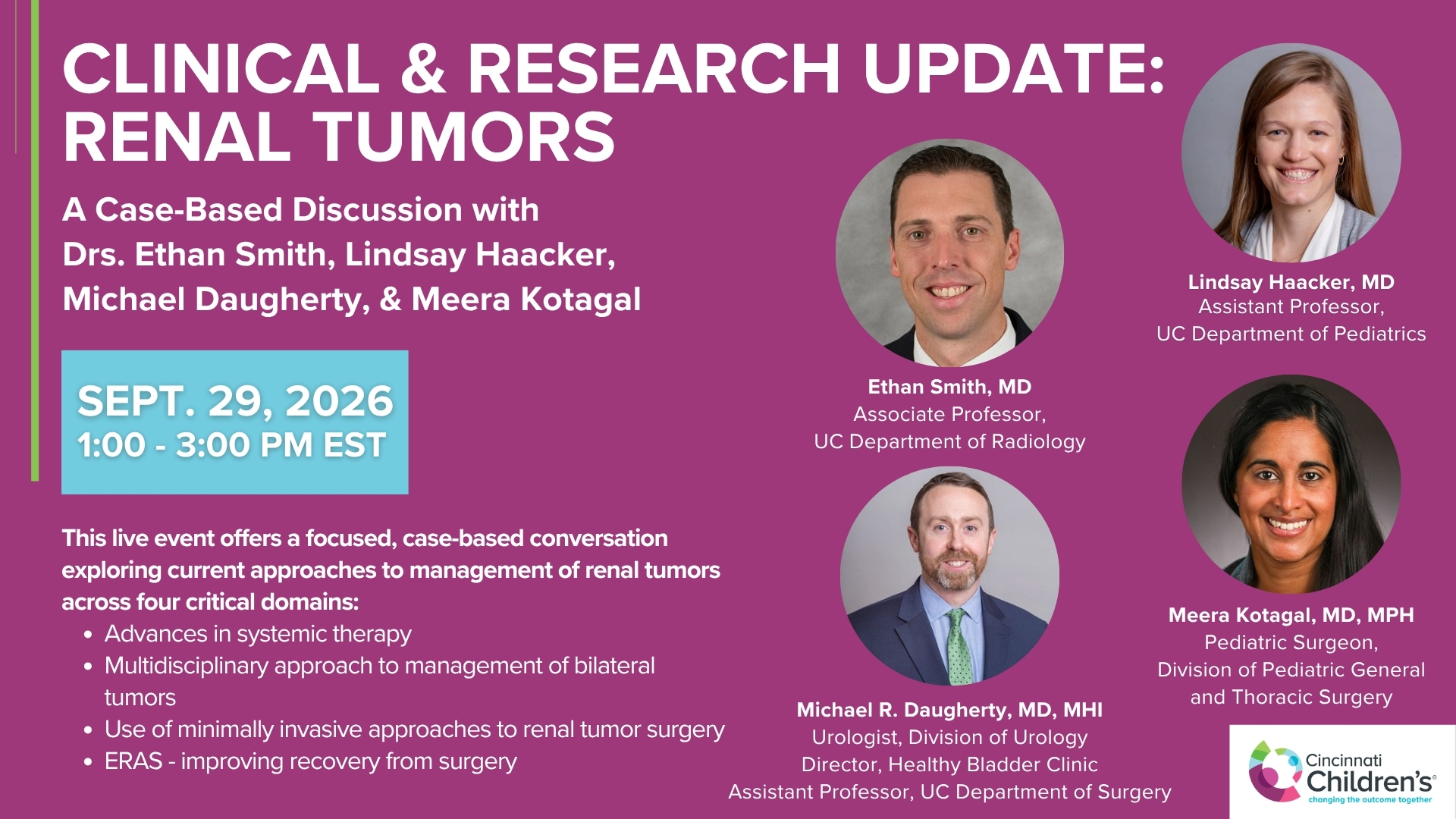
Clinical & Research Update: Renal Tumors with Drs. Ethan Smith, Lindsay Haacker, Michael Daugherty, and Meera Kotagal
71 min · Published Sep 2026
Video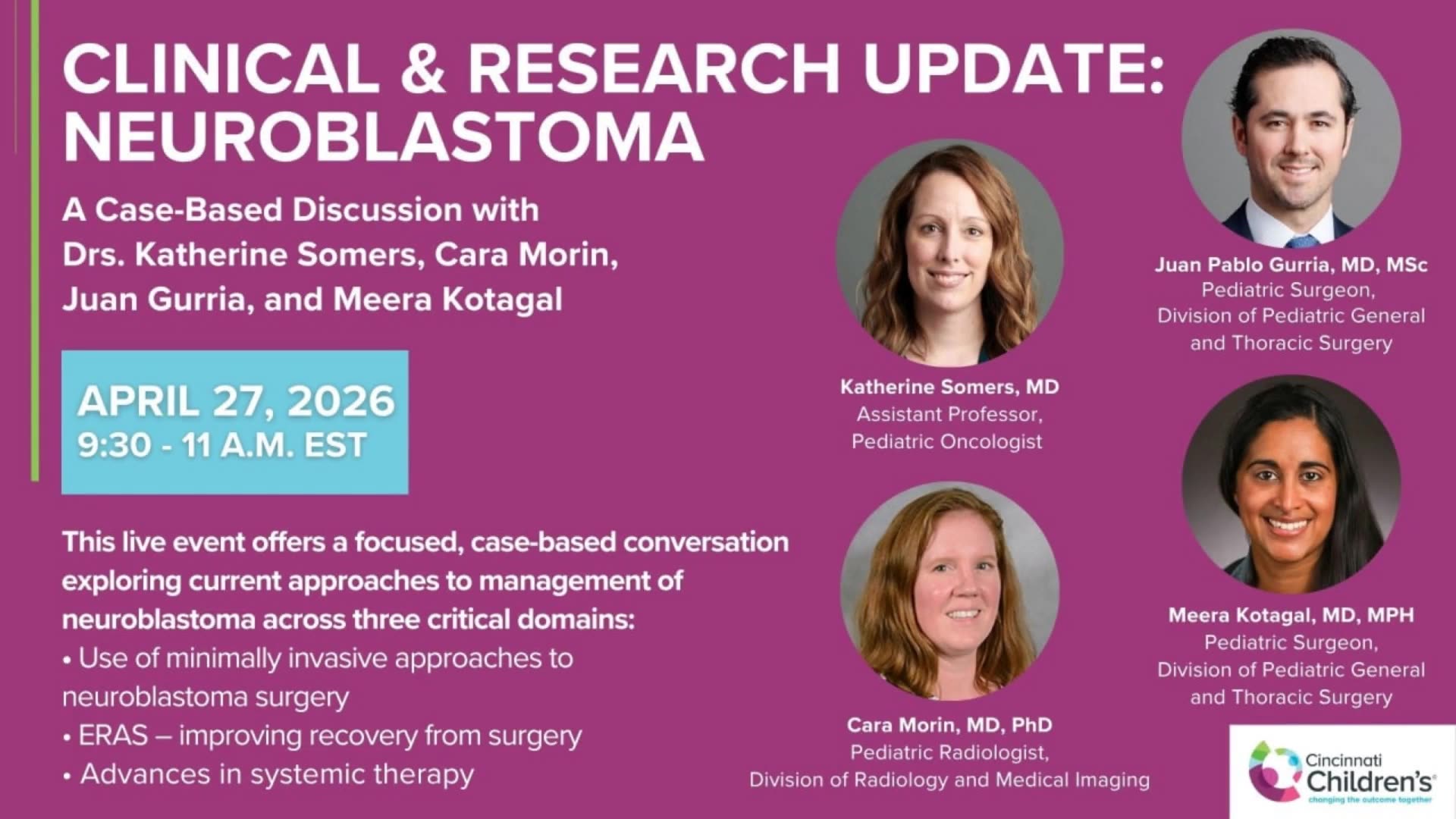
Clinical & Research Update: Neuroblastoma with Drs. Katherine Somers, Cara Morin, Juan Gurria, and Meera Kotagal
67 min · Published Sep 2026
Video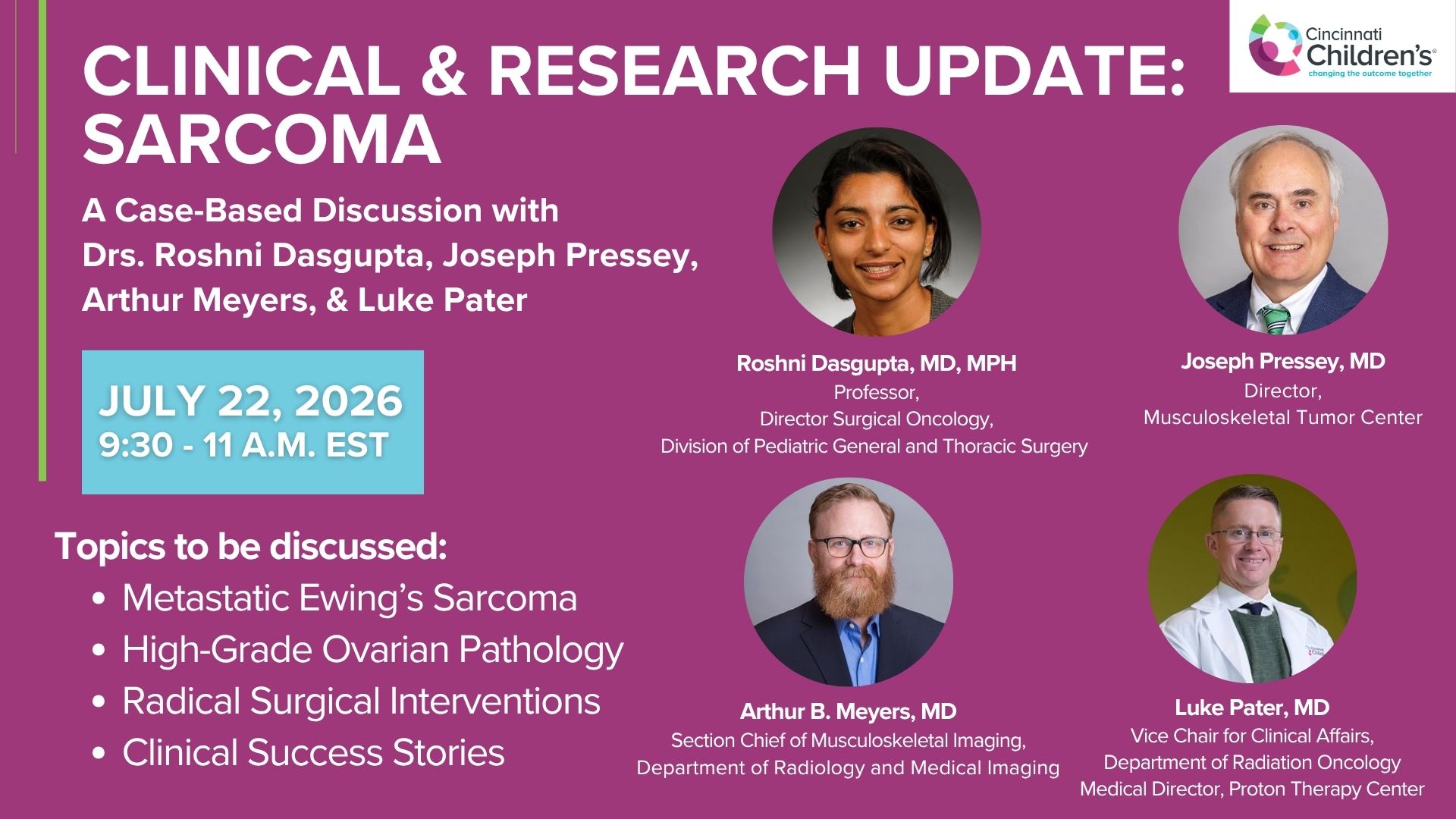
Clinical & Research Update: Sarcoma w/ Drs. Roshni Dasgupta, Joseph Pressey, Arthur Meyer, Luke Pater
66 min · Published Sep 2026
Video
Update Course Rewind 2025: Nerve Monitoring in Pediatric Thyroid Surgery
6 min · Published Jul 2026
Video
Journal of Pediatric Surgery Article Review: June 2023, AAP Issue
Todd Ponsky · 13 min · Published Jul 2026
Video
Pediatric Surgical Oncology Research Collaborative (PSORC): Studying Rare Pediatric Tumors
56 s · Published May 2026
Video
Intestinal Atresia Types Explained: Grossfeld Classification for Pediatric Surgery
1 min · Published Sep 2026
Video
Derivation and validation of the Pediatric Community-Acquired Pneumonia Severity (PedCAPS) score: A prospective cohort study
50 s · Published Sep 2026
Video
FETO for Late-Diagnosed Severe Congenital Diaphragmatic Hernia (CDH) at Cincinnati Children's with Dr. Beth Rymeski
4 min · Published Sep 2026
Video
Severe Congenital Diaphragmatic Hernia (CDH) Case: FETO Management & Unexpected Findings with Dr. Beth Rymeski
3 min · Published Sep 2026
Video
Fetoscopic Endoluminal Tracheal Occlusion (FETO) Procedure: Step-by-Step Guide with Dr. Beth Rymeski
4 min · Published Sep 2026
Video
Choledochal Cyst Types Explained: Pediatric Surgery Fundamentals
1 min · Published Sep 2026
What the experts said
Up to 50% of pediatric oncology patients have lung metastasis during their disease
Surgery can improve survival in patients with lung metastases
Complete resection of all nodules is necessary for optimal outcomes
Minimally invasive surgery is feasible for patients with one or two nodules
The conversion rate due to failure to localize subdural nodules during thoracoscopy is 47%
Conversion rate is much higher without double lung ventilation
CT guidance during thoracoscopy exposes the patient to radiation continuously
Ultrasound is difficult for localizing very small nodules
Calcified lesions in osteosarcoma are difficult to visualize with ultrasound
Hook wire dislodgement rate is reported as 2.4 to 22%
Hook wire dislodgement rate is higher when patients must travel from CT scan to OR under anesthesia
Methylene blue often spreads throughout the chest rather than remaining localized to nodules
ICG cannot be used for nodules deeper than 2 centimeters
Lipiodol marking is performed under CT guidance by interventional radiologists
Lipiodol remains in place for up to 3 months after injection
Surgery can be performed up to one week after Lipiodol marking
Intraoperative C-arm fluoroscopy is used to localize Lipiodol-marked nodules
Complete resection is verified by radioscopy and palpation of the resected specimen
Dr. Gonzalez used Lipiodol in 33 patients with three or four nodules per patient
The technique was used across multiple histologies including osteosarcoma, Ewing sarcoma, Wilms tumor, and infectious disease
Lipiodol marking achieved 100% sensitivity in localizing 50 nodules
Lipiodol is being adapted from adult procedures to pediatric practice