

From
Live Event Content
Dan Swarr, MD - 2024 Fetal Care Center Navigating Perinatal Care for Trisomy 13 & 18
With Dr. Daniel Swarr · hosted by Dr. Em Gootee
Educational content from recorded physician discussions — not medical advice. Talk to your (or your child's) care team about your situation.
Video
Natasha Henner, MD - 2024 Fetal Care Center Navigating Perinatal Care for Trisomy 13 & 18
33 min · Published Dec 2024
Video
Introduction - 2024 Fetal Care Center Navigating Perinatal Care for Trisomy 13 & 18
2 min · Published Dec 2024
Video
John Carey, MD - 2024 Fetal Care Center Navigating Perinatal Care for Trisomy 13 & 18
31 min · Published Dec 2024
Video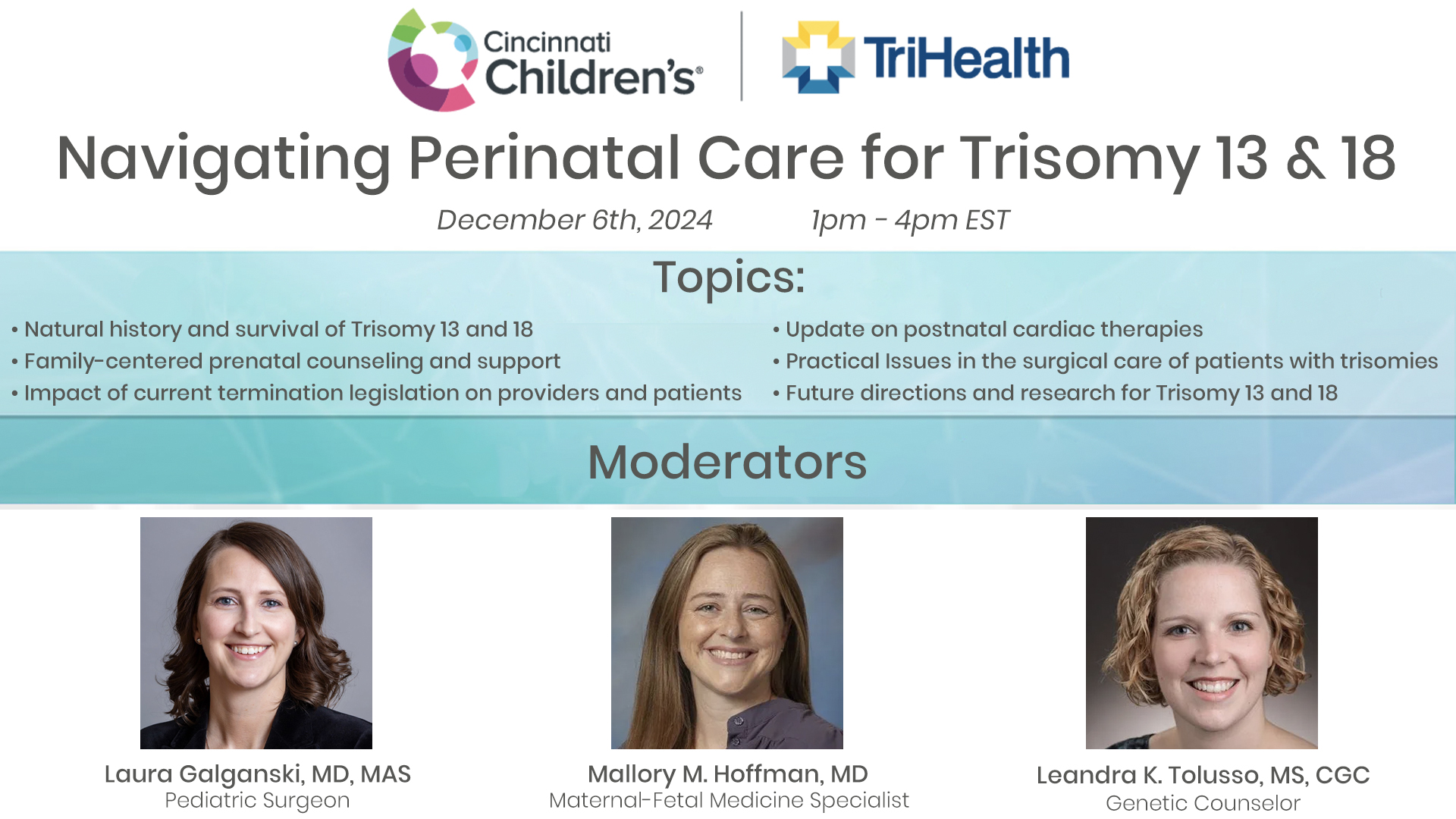
Mallory Hoffman, MD - 2024 Fetal Care Center Navigating Perinatal Care for Trisomy 13 & 18
29 min · Published Dec 2024
Video
Laura Glaganski, MD & Jagroop (Rupi) Parikh - 2024 Fetal Care Center Navigating Perinatal Care for Trisomy 13 & 18
24 min · Published Dec 2024
Video
James Cnota, MD - 2024 Fetal Care Center Navigating Perinatal Care for Trisomy 13 & 18
31 min · Published Dec 2024
Only a few other public items share this expert — go deeper there →
Video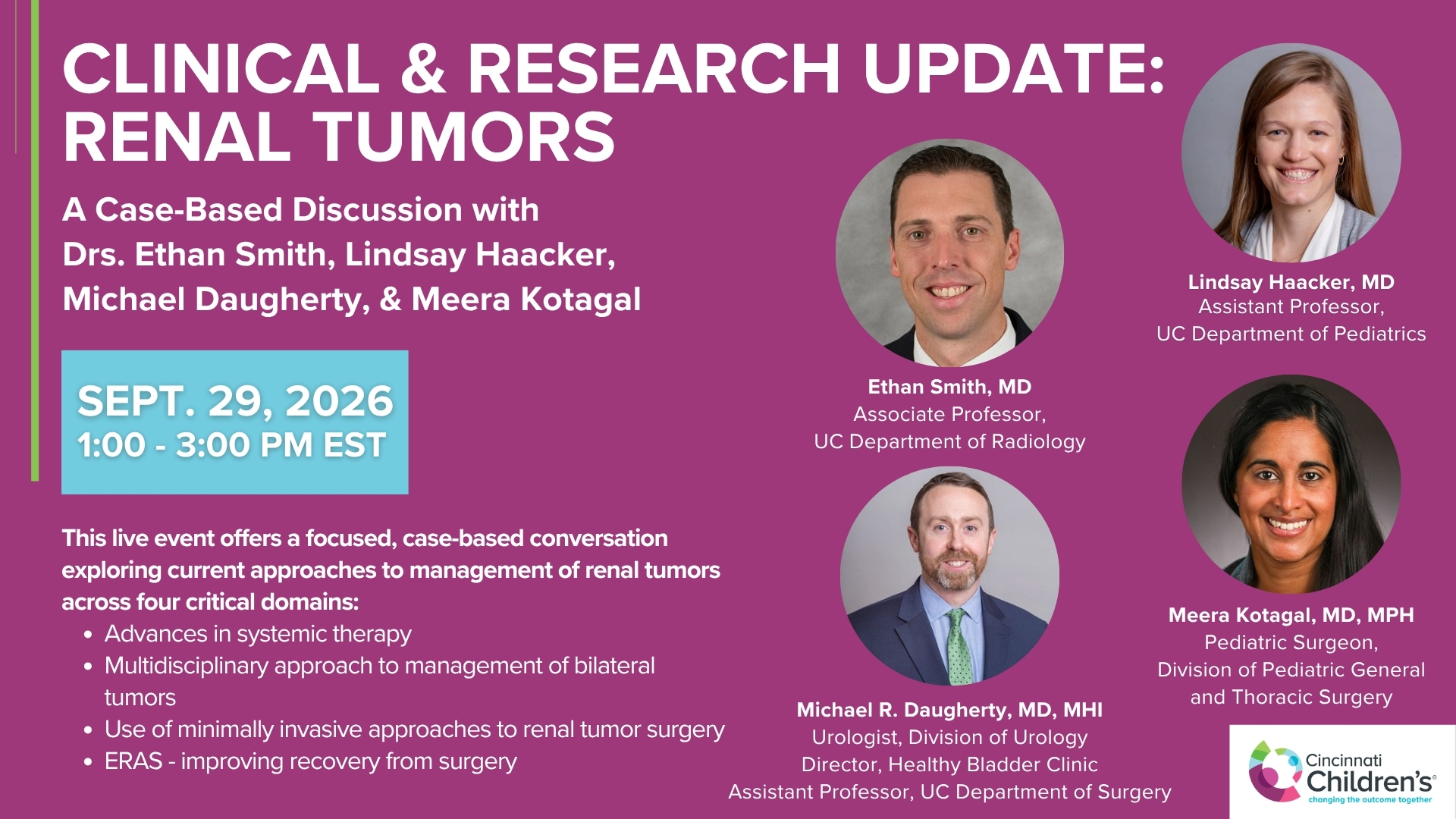
Clinical & Research Update: Renal Tumors with Drs. Ethan Smith, Lindsay Haacker, Michael Daugherty, and Meera Kotagal
71 min · Published Sep 2026
Video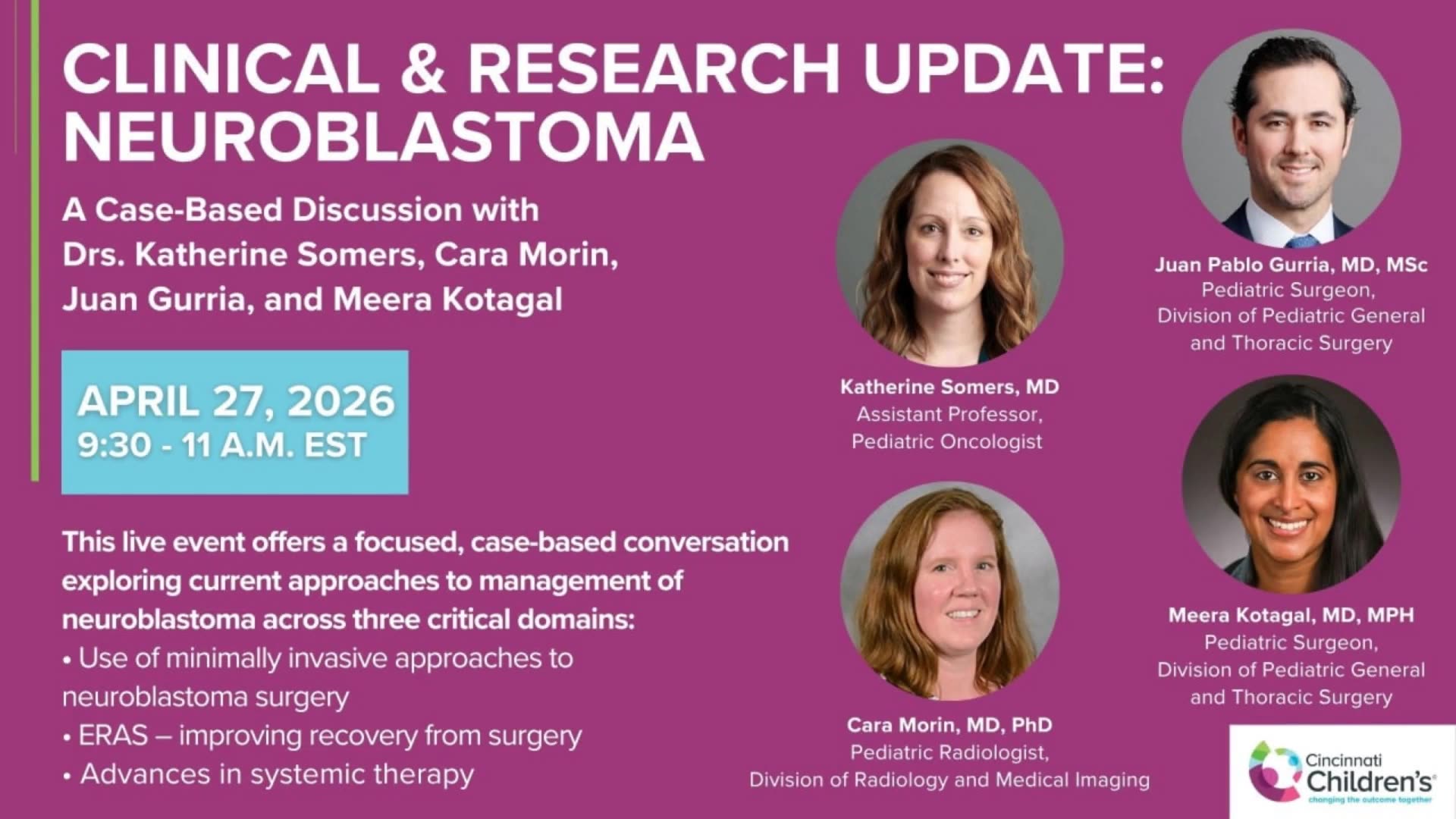
Clinical & Research Update: Neuroblastoma with Drs. Katherine Somers, Cara Morin, Juan Gurria, and Meera Kotagal
67 min · Published Sep 2026
Video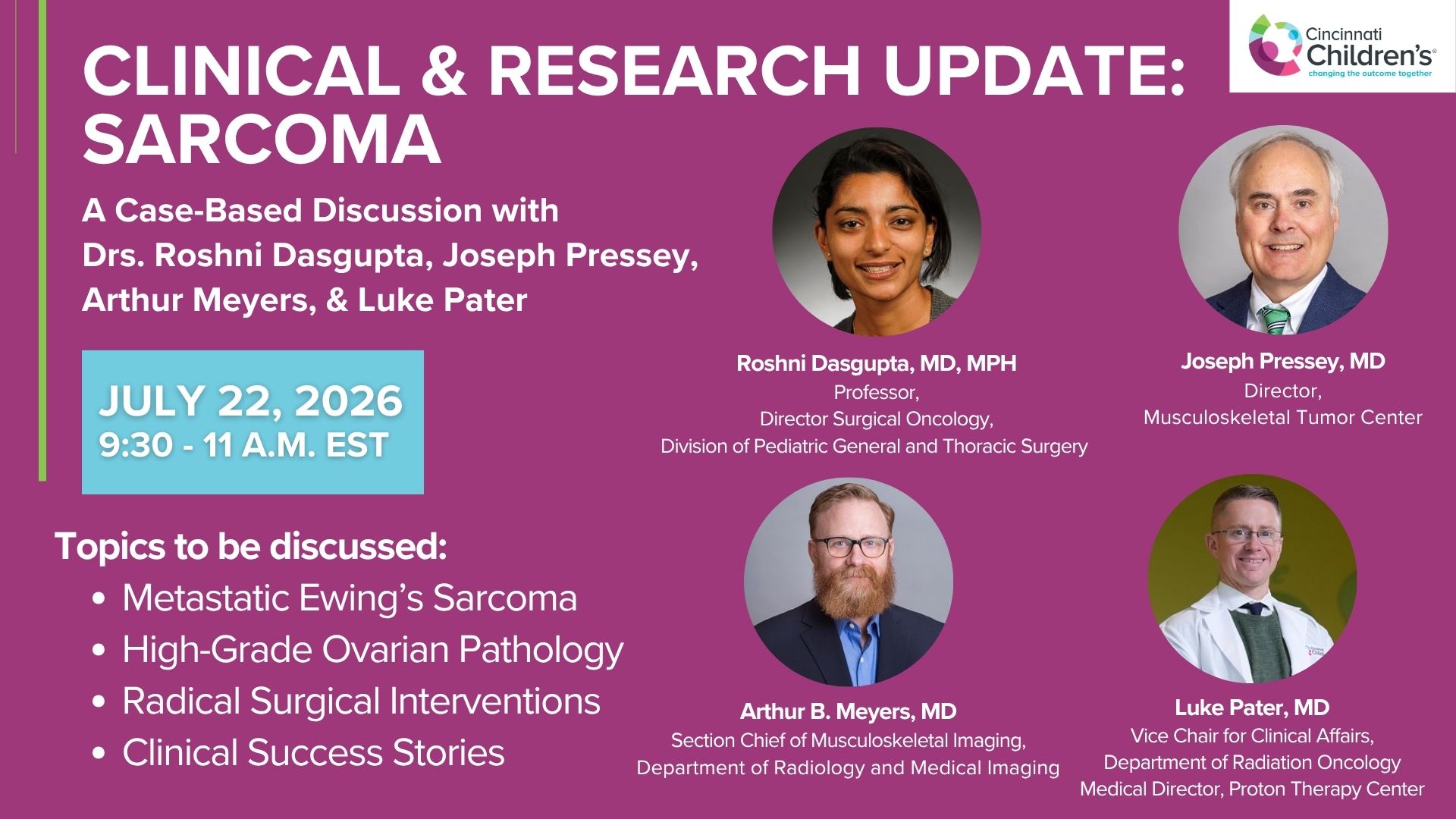
Clinical & Research Update: Sarcoma w/ Drs. Roshni Dasgupta, Joseph Pressey, Arthur Meyer, Luke Pater
66 min · Published Sep 2026
Video
2026 Laparoscopic Pediatric Hernia Repair
123 min · Published Jun 2026
Video
Beyond the Spectrum: Diagnosis, Myths & Management - Caitlin Couch & Leslie Lopez - APP Conference 2026
50 min · Published May 2026
Video
Dysautonomia: Navigating the Journey - Martha Willis - APP Conference 2026
55 min · Published May 2026
What the experts said
Trisomy 13 and 18 were first described in back-to-back case reports in The Lancet in 1960.
In Weber et al.'s 1967 case series, about 28% of infants with trisomy 13/18 had died by 4 weeks of age and 87% had died by their first birthday.
Literature from the 1980s and 1990s showed median survival for trisomy 18 ranging from 2.5 days to 2 weeks depending on the study.
The conventional or historical approach to management of trisomy 13/18 was to offer only comfort care and withhold technological support such as mechanical ventilation or surgery.
A 2008 survey showed the conventional approach was a very commonly held view among neonatologists, but newer surveys suggest perspectives are changing.
Medical interventions offered to infants with trisomy 13/18 have changed dramatically over the past 5-10 years in terms of delivery room resuscitation and NICU care including surgical care.
Quantitative futility means the medical intervention doesn't work at all; for example, mechanical ventilation will treat apnea, so calling it futile wouldn't apply in that situation.
The Ontario study (Nelson et al., JAMA 2016) was a retrospective cohort study spanning 1991-2012 with 174 trisomy 13 and 454 trisomy 18 infants, and the authors did not see a change in survival over time.
In the Ontario study, the incidence was 6 per 100,000 live births for trisomy 13 and 8.8 per 100,000 live births for trisomy 18.
Ontario survival curves show a steep drop-off in survival in the first month and especially the first week of life, but after that survival plateaus significantly, especially after 6 months of age.
In the Ontario study, for trisomy 13, of infants alive at 30 days, 1-year survival was 47%, and of those alive at 6 months, 10-year survival was approximately 50%.
In the Ontario study, for trisomy 18, of infants alive at 30 days, 1-year survival was 36%, and of those alive at 6 months, 10-year survival was 60%.
In the Ontario study, 41 of 174 trisomy 13 infants received surgical procedures including major cardiac surgical procedures, GI procedures including G-tube, and tracheostomy placement.
There is selection bias in which infants receive surgeries; many receiving surgeries are those who have already survived the first month or several months of life when mortality is highest.
The Cincinnati neonatology department covers all level 1 and level 2 nurseries in addition to NICUs, allowing capture of all live births in the region.
The Cincinnati study spanned January 1, 2012 to December 31, 2018 and included 125 fetuses or infants with trisomy 13 or 18.
The Cincinnati live birth rate was 1 per 10,000 for trisomy 13 and 1.86 per 10,000 for trisomy 18, roughly double the rates in the Ontario study.
In the Cincinnati study, spontaneous loss rates were about 6.5% for pregnancies prior to 20 weeks gestation and around 19% for pregnancies after 20 weeks gestation, totaling about 25%.
In the Cincinnati study, the elective termination rate was around 17% and 58% of pregnancies ended in live birth.
In the Cincinnati cohort, cesarean section rate was 49%, preterm labor was 14%, delivery for maternal indications was 16.7%, and delivery for fetal well-being was 16.7%.
In the Cincinnati study, 81% of diagnoses were made prenatally, most confirmed by amniocentesis, though a few by CVS.
Cell-free fetal DNA was performed in 50 Cincinnati pregnancies and reported as high risk in 92%, but 4 of 50 had low-risk results despite confirmed trisomy 13 or 18 diagnosis (all false negatives were trisomy 18).
In the Cincinnati cohort, 24 cases had postnatal diagnosis; 12 had high-risk non-invasive testing prior to delivery, 2 had low-risk cell-free fetal DNA, and the remainder had declined or failed testing.
In the Cincinnati study, median survival for trisomy 13 was 7 days with one child alive at 637 days at data collection.
In the Cincinnati study, median survival for trisomy 18 was approximately one month with one child still alive at about 7.5 years at data collection.
In the Cincinnati cohort, the breakdown of initial goals of care was approximately 50% choosing full intensive care as indicated, 40% comfort care, and 10% non-invasive support (high-flow nasal cannula, standard nasal cannula, or NG feeds without mechanical ventilation or surgery).
In the Cincinnati cohort, about 25% of children across both trisomy groups received mechanical ventilation (slightly more in trisomy 13, slightly fewer in trisomy 18).
In the Cincinnati data, of 27 infants alive at one month, approximately 50% were alive at 1 year of age.
In the Cincinnati study, about 25% received surgical intervention (slightly more for trisomy 18, slightly less for trisomy 13), with some infants receiving multiple procedures.
Factors associated with mortality in the Cincinnati study were trisomy 13 (vs 18), initial goals of care, extremely low birth weight, and extreme prematurity; no obvious major differences were found for common congenital anomalies.
Fetuses and infants with trisomy 13 and 18 are at relatively high risk of intrauterine fetal demise or spontaneous loss (around 25% total in the Cincinnati study).
A growing body of evidence suggests that both medical and surgical interventions can increase survival rates in trisomy 13/18, though these infants have higher rates of morbidity and mortality associated with procedures.
Long-term survival with trisomy 13 or 18 is possible, and even with a comfort care approach, long-term survival could be a potential outcome.
Counseling at all stages of care should be tailored to each family and child, should be multidisciplinary and data-driven, and should adapt to multiple risk factors such as gestational age, birth weight, and complexity of surgical anomalies.
It is difficult to tease apart from retrospective studies whether families choosing more intensive care do so because their baby is term with fewer anomalies, or whether the interventions actually extend life.
Prenatal diagnosis correlates with shorter survival compared to postnatal diagnosis in many retrospective studies of trisomy 13/18.
The difference in survival between prenatal and postnatal diagnosis is likely related to the time families have to prepare; postnatal diagnosis families are dealing with shock and upset during the NICU period when medical decisions are being made.