

From
Live Event Content
James Cnota, MD - 2024 Fetal Care Center Navigating Perinatal Care for Trisomy 13 & 18
With Dr. James Cnota
Educational content from recorded physician discussions — not medical advice. Talk to your (or your child's) care team about your situation.
Video
Laura Glaganski, MD & Jagroop (Rupi) Parikh - 2024 Fetal Care Center Navigating Perinatal Care for Trisomy 13 & 18
24 min · Published Dec 2024
Video
Natasha Henner, MD - 2024 Fetal Care Center Navigating Perinatal Care for Trisomy 13 & 18
33 min · Published Dec 2024
Video
Dan Swarr, MD - 2024 Fetal Care Center Navigating Perinatal Care for Trisomy 13 & 18
26 min · Published Dec 2024
Video
John Carey, MD - 2024 Fetal Care Center Navigating Perinatal Care for Trisomy 13 & 18
31 min · Published Dec 2024
Video
Introduction - 2024 Fetal Care Center Navigating Perinatal Care for Trisomy 13 & 18
2 min · Published Dec 2024
Video
Omphalocele & Gastroschisis
Dr. Todd Ponsky · 9 min · Published Mar 2022
Only a few other public items share this expert — go deeper there →
Video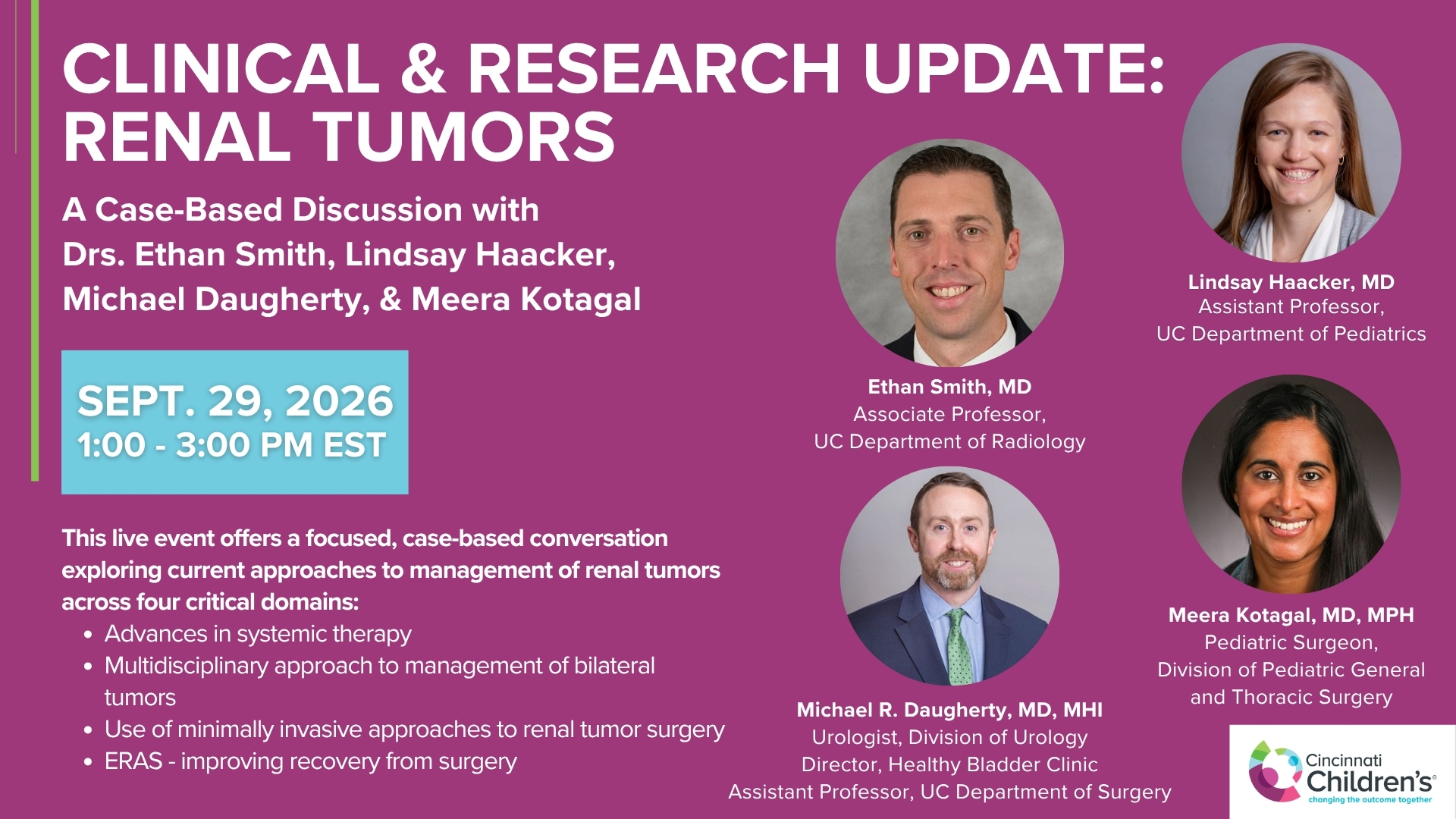
Clinical & Research Update: Renal Tumors with Drs. Ethan Smith, Lindsay Haacker, Michael Daugherty, and Meera Kotagal
71 min · Published Sep 2026
Video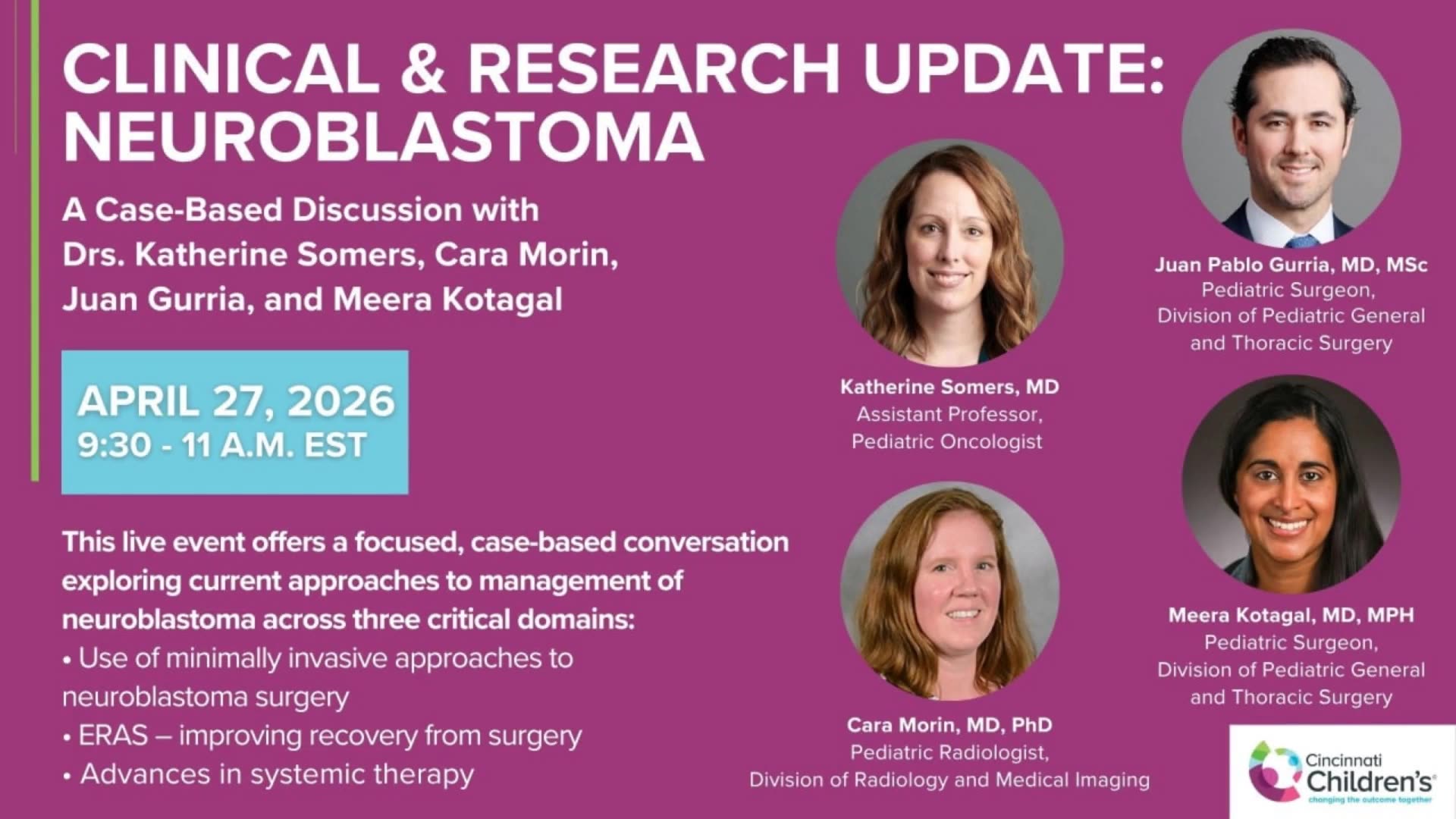
Clinical & Research Update: Neuroblastoma with Drs. Katherine Somers, Cara Morin, Juan Gurria, and Meera Kotagal
67 min · Published Sep 2026
Video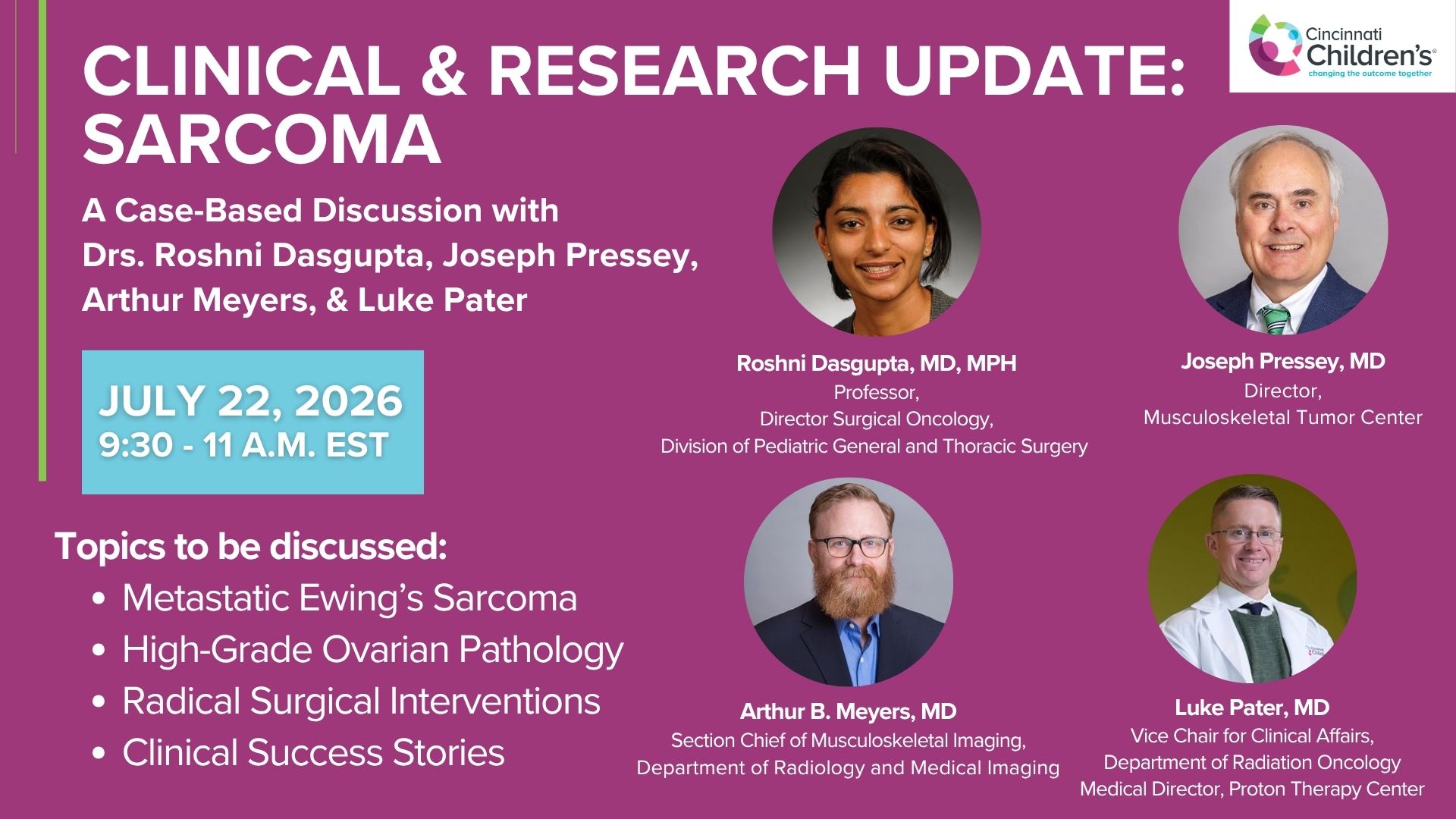
Clinical & Research Update: Sarcoma w/ Drs. Roshni Dasgupta, Joseph Pressey, Arthur Meyer, Luke Pater
66 min · Published Sep 2026
Video
2026 Laparoscopic Pediatric Hernia Repair
123 min · Published Jun 2026
Video
Beyond the Spectrum: Diagnosis, Myths & Management - Caitlin Couch & Leslie Lopez - APP Conference 2026
50 min · Published May 2026
Video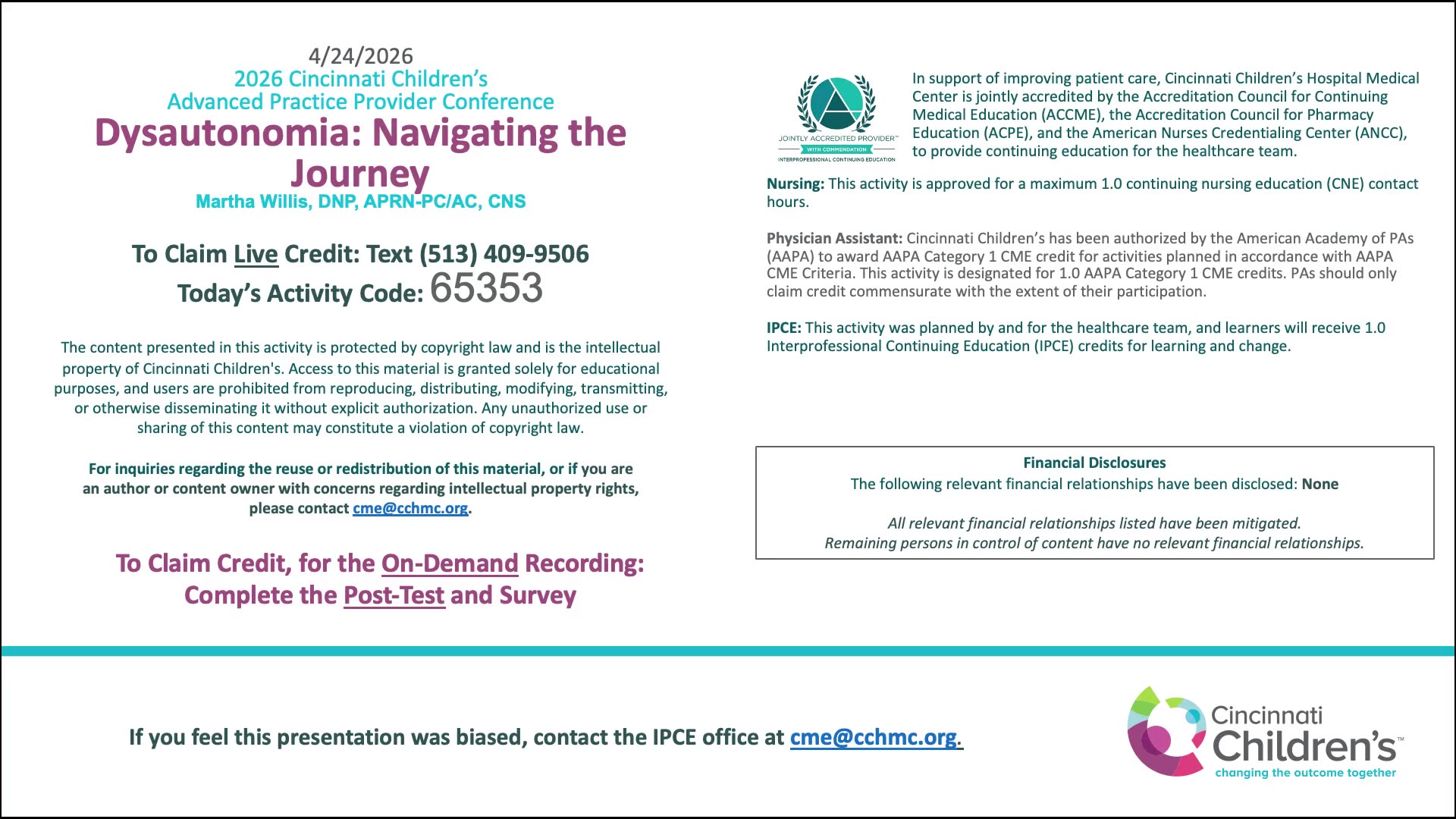
Dysautonomia: Navigating the Journey - Martha Willis - APP Conference 2026
55 min · Published May 2026
What the experts said
CHD is present in 80 to 90% of children with trisomy 13 and 18, with all types present ranging from mild to moderate to severe in complexity.
The complexity seen in prenatal cohorts is typically more severe than in postnatal cohorts, which influences counseling and outcomes.
Polyvalvular dysplasia (redundant and thickened valve) is a hallmark of trisomy 13-18, can affect any of the four cardiac valves, and typically is not an important driver of cardiac symptoms but points toward genetic diagnosis.
In trisomy 13, the most common lesions are patent ductus arteriosus (32%), atrial septal defects (27%), and ventricular septal defects (28%), all resulting in left-to-right shunting.
Tetralogy of Fallot is the most common right-to-left shunt in trisomy 13, resulting in cyanosis depending on severity.
In trisomy 18, ventricular septal defect is by far the most prevalent cardiac diagnosis.
There is a very steep inflection in survival as gestational age increases for cardiac patients, with a particularly large gap between cardiac and non-cardiac patients in the 28 to 33 weeks gestation range.
The airway is a challenging problem for cardiac surgery and can complicate liberating patients from mechanical ventilation after surgery for simple shunts.
Pulmonary hypertension in trisomy 13/18 is unique in that it is early and accelerated in onset, which is guiding current trends in timing of cardiac surgery.
Myocardial dysfunction seems to be more common in trisomy 13/18 patients and adds risk to cardiac interventions (institutional observation being investigated for publication).
Some babies with trisomy 13/18 do not have the normal physiologic drop in pulmonary vascular resistance, which greatly increases surgical risk.
For children with large VSD without trisomy 13/18, fixed pulmonary vascular resistance is not a concern until well into the first year of life, but in trisomy 13/18 this can happen much earlier in the first months.
Multi-center FIS database data show a clear trend of increasing numbers of cardiac surgeries being offered to trisomy 13/18 patients, with 74 centers involved.
In the most contemporary multi-center dataset, only 12% of trisomy 13 and 17% of trisomy 18 patients underwent cardiac surgery.
Inpatient operative survival to discharge was over 90% for both trisomy 13 and 18 in the multi-center study.
Most PDAs in trisomy babies can be closed in the cath lab today, though some require surgical ligation based on ductal morphology.
Ductal stenting has evolved in the last 10 years to be used widely for various forms of congenital heart disease with reduced pulmonary blood flow, including tetralogy of Fallot in trisomy patients.
Pulmonary flow restrictors (vascular plugs with small holes) can be placed percutaneously in the cath lab to reduce left-to-right shunt symptoms as a palliative step, replacing historical use of pulmonary bands.
Cincinnati Children's typically performs formal airway evaluation before cardiac surgery and screens for hepatoblastoma through referring centers.
Since 2019, Cincinnati Children's has performed 17 index cardiopulmonary bypass procedures, mostly for simple shunts but including 6 cases of tetralogy and double outlet right ventricle, with 94% operative survival.
Improved outcomes are attributed to both careful case selection and institutional learning about postoperative intensive care for trisomy 13/18 patients.
Assessment of pulmonary vascular bed status and airway status are critically important for case selection beyond just the cardiac disease.
When the heart is enlarged, lungs are flooded, and BNP is high, cardiac catheterization is not needed before considering VSD closure.
When a VSD is large and non-restrictive, there will never be a pressure gradient, so the RV will always be at systemic pressure.
Cardiac catheterization is performed when the clinical puzzle doesn't fit together (small LV, baby not breathing fast) to assess pulmonary hypertension before surgery.
The 2023 AATS manuscript recommends that for infants with mild to moderate complexity CHD confined to hospital, cardiac surgery is reasonable if the hemodynamic consequence prohibits discharge.
For infants with severe complexity and single ventricle CHD, the AATS recommendation is that it might be reasonable to not offer cardiac surgery due to anticipated poor outcomes related to pulmonary vascular disease and respiratory function.
For patients with mild to moderate complexity CHD who are at home or need recurrent admissions, timely elective cardiac repair is reasonable according to AATS guidelines.
AATS guidelines recommend that cardiac surgery involving cardiopulmonary bypass might be considered once other defects (such as esophageal atresia) are adequately addressed.
For ventilator-dependent patients, repair of mild to moderate complexity CHD may be considered if respiratory disease severity is not prohibitive, and long-term tracheostomy should be discussed as a possibility.
Because trisomy 13/18 patients are prone to early pulmonary hypertension, early cardiac surgery is reasonable in mild to moderate complex disease to prevent irreversible pulmonary vascular changes.