

From
Live Event Content
Laura Glaganski, MD & Jagroop (Rupi) Parikh - 2024 Fetal Care Center Navigating Perinatal Care for Trisomy 13 & 18
With Dr. Laura Glaganski & Dr. Jagroop (Rupi) Parikh
Educational content from recorded physician discussions — not medical advice. Talk to your (or your child's) care team about your situation.
Video
James Cnota, MD - 2024 Fetal Care Center Navigating Perinatal Care for Trisomy 13 & 18
31 min · Published Dec 2024
Video
Dan Swarr, MD - 2024 Fetal Care Center Navigating Perinatal Care for Trisomy 13 & 18
26 min · Published Dec 2024
Video
Natasha Henner, MD - 2024 Fetal Care Center Navigating Perinatal Care for Trisomy 13 & 18
33 min · Published Dec 2024
Video
John Carey, MD - 2024 Fetal Care Center Navigating Perinatal Care for Trisomy 13 & 18
31 min · Published Dec 2024
Video
Introduction - 2024 Fetal Care Center Navigating Perinatal Care for Trisomy 13 & 18
2 min · Published Dec 2024
Video
Omphalocele & Gastroschisis
Dr. Todd Ponsky · 9 min · Published Mar 2022
Only a few other public items share this expert — go deeper there →
Video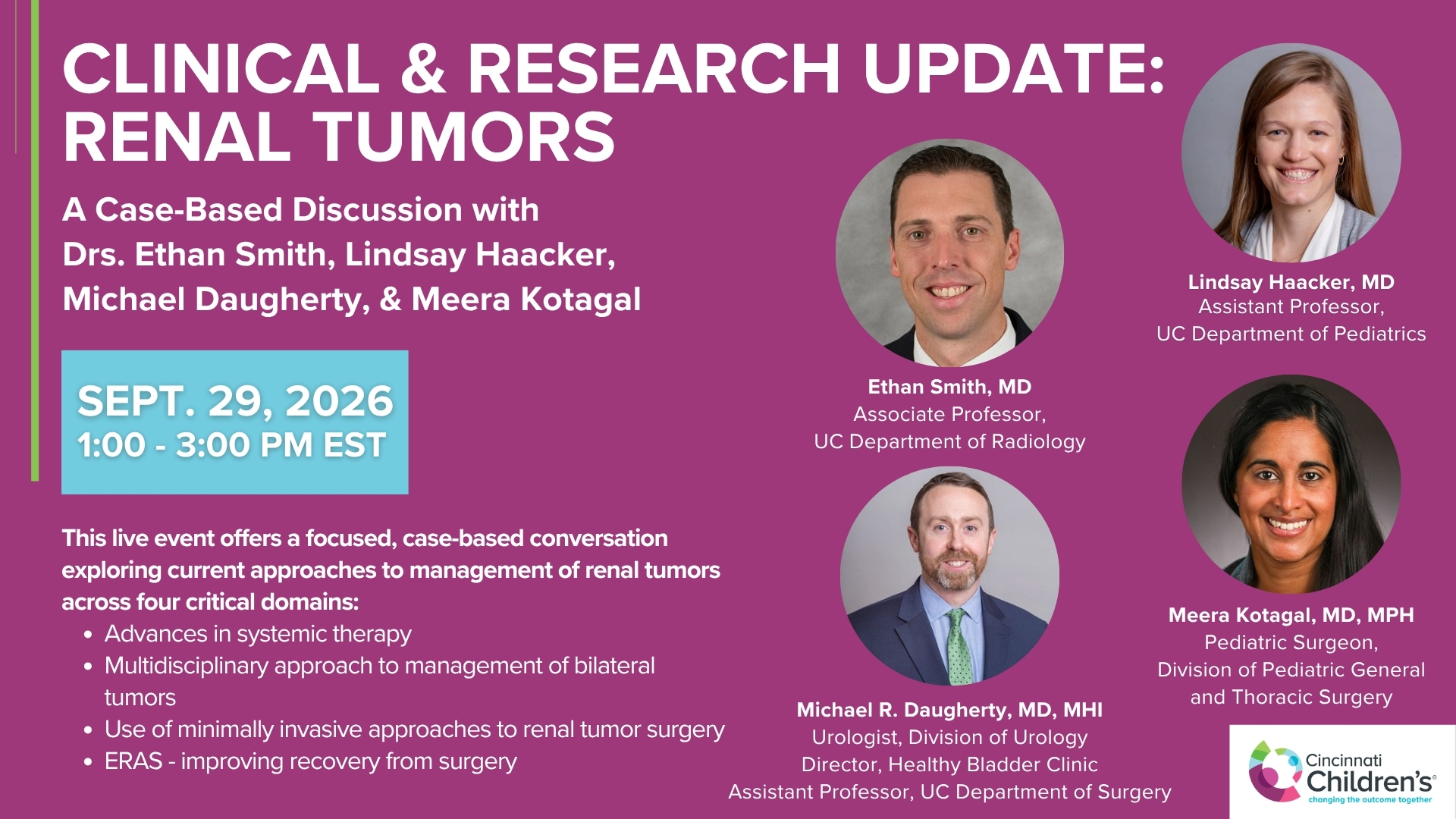
Clinical & Research Update: Renal Tumors with Drs. Ethan Smith, Lindsay Haacker, Michael Daugherty, and Meera Kotagal
71 min · Published Sep 2026
Video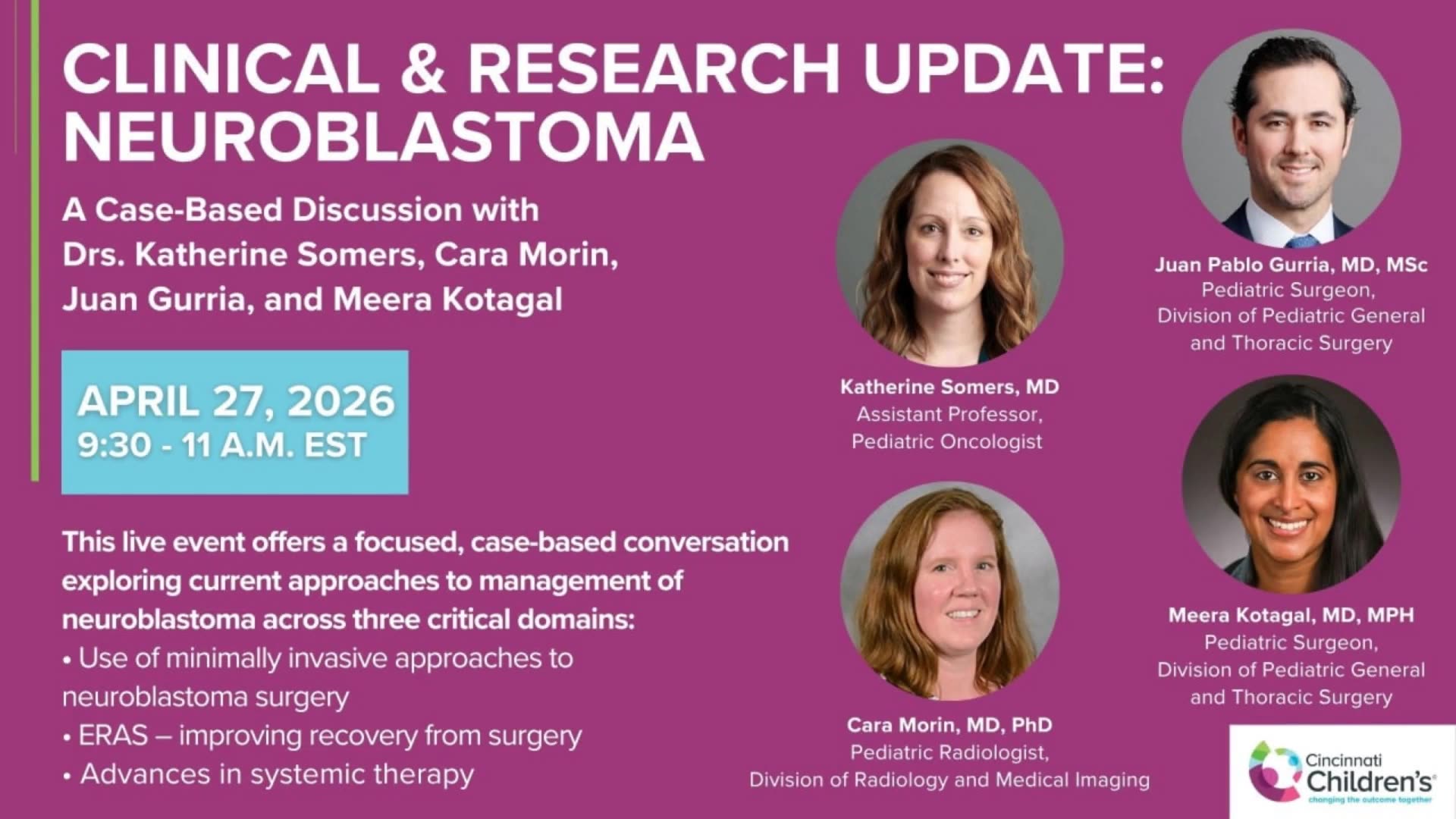
Clinical & Research Update: Neuroblastoma with Drs. Katherine Somers, Cara Morin, Juan Gurria, and Meera Kotagal
67 min · Published Sep 2026
Video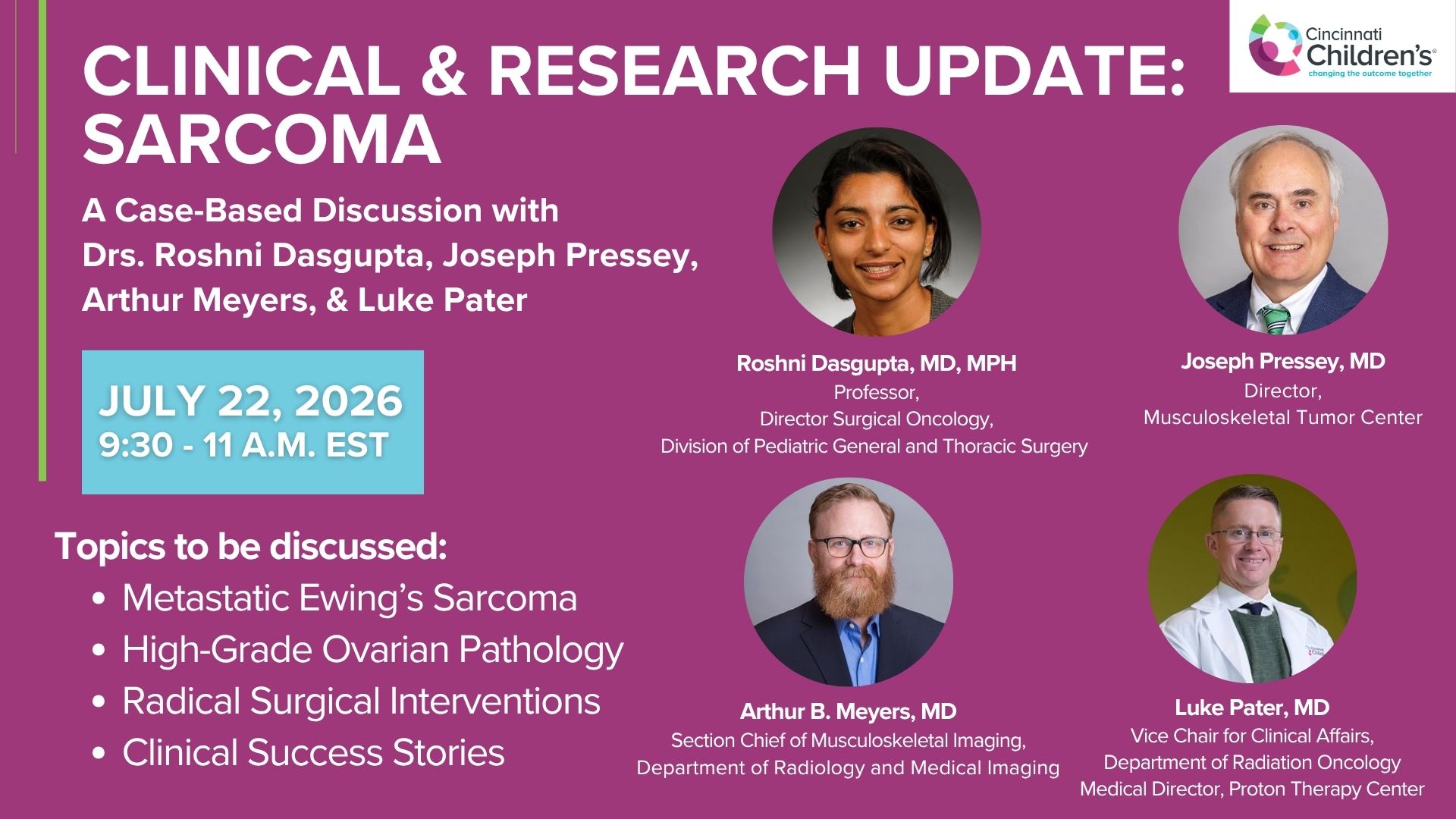
Clinical & Research Update: Sarcoma w/ Drs. Roshni Dasgupta, Joseph Pressey, Arthur Meyer, Luke Pater
66 min · Published Sep 2026
Video
2026 Laparoscopic Pediatric Hernia Repair
123 min · Published Jun 2026
Video
Beyond the Spectrum: Diagnosis, Myths & Management - Caitlin Couch & Leslie Lopez - APP Conference 2026
50 min · Published May 2026
Video
Dysautonomia: Navigating the Journey - Martha Willis - APP Conference 2026
55 min · Published May 2026
What the experts said
Tracheomalacia improves with time and growth, but severe malacia often requires tracheostomy and long-term mechanical ventilation.
Trisomy 13/18 patients cannot be taken care of in an ambulatory surgery setting due to their comorbidities; they require inpatient care with multidisciplinary and subspecialty emergency care available.
Preoperatively, anesthesia requires recent EKG, echo, and cardiology visit; all patients come for an anesthesia consult ahead of time to avoid day-of-surgery cancellations.
Careful inductions are critical in trisomy 13/18 to avoid hypercarbia and pulmonary hypertension, which is very challenging to manage intraoperatively.
Postoperatively, managing opioids is important to prevent hypoxia and hypercarbia in patients with central and obstructive sleep apnea.
Opioid-free anesthetics using adjuvants (IV Tylenol, Toradol) and regional anesthesia (caudal, nerve blocks) can eliminate postoperative apnea risk.
Elective surgeries like G-tube placement can be delayed following planned cardiac repair to avoid anesthetic risk.
The preference is for G-tubes over GJ-tubes due to risk of perforation with GJ-tubes; a 5 kg weight cutoff is used at this institution.
For low birth weight children needing post-pyloric feeding, a fluoroscopic nasojejunal tube can be placed to allow growth before GJ-tube placement.
23% of patients with trisomy 13 and 18% of patients with trisomy 18 underwent surgery in the Ontario longitudinal population study.
41 children with trisomy 13 underwent 135 surgical procedures; 39% had one lifetime procedure, but 15 children had four or more lifetime procedures.
35 children with trisomy 18 underwent 92 surgical procedures.
Median survival after first surgery was more than one year in all organ system categories except eye surgeries and cardiac surgeries in trisomy 18.
In the Indiana retrospective study (1990–2020), 53% of 117 patients underwent a procedure, with median age of first procedure 65 days.
Higher birth weight and later gestational age were associated with lower surgical mortality in trisomy 13/18.
Patients with other chromosome 18 variants (including mosaicism) had lower surgical mortality.
General surgical anomalies (including esophageal atresia) were associated with higher surgical mortality.
Neurologic procedures, ENT procedures, abdominal wall defects, genitourinary procedures, and endocrine comorbidities were not associated with increased surgical mortality.
In the Cincinnati Children's bronchoscopy series (2011–2021), all patients with trisomy 13 had more than three significant airway findings, and most trisomy 18 patients had two or more significant findings.
65% of trisomy 13/18 patients who underwent bronchoscopy at Cincinnati Children's required tracheostomy, and almost all required mechanical ventilation.
Previous studies showed a tracheostomy rate around 17% in trisomy 13/18, but the Cincinnati series found 65% in patients who underwent airway evaluation.
In a pooled analysis of 70 trisomy 18 patients with hepatoblastoma, 64% had surgical treatment; tumors were more solitary, less multifocal, and smaller overall.
Only one-fifth of hepatoblastomas in trisomy 18 were identified through screening.
The most common reasons patients with trisomy 18 and hepatoblastoma did not pursue surgery were severe cardiopulmonary comorbidities, advanced hepatoblastoma, and family decision.
Five-year survival for trisomy 18 patients with hepatoblastoma receiving multimodal treatment was 43.7%, compared to 76.6% in patients without trisomy 18.
Patients with trisomy 18 and hepatoblastoma have undergone liver transplant to provide curative treatment.
Mask ventilation in trisomy 13/18 patients was found to be nearly 30-fold higher in difficulty compared to other patients of their age and weight.