

From
StayCurrentMD
Total pancreatectomy with islet autotransplantation (TPIAT) - Cincinnati Children's Pancreas Care Center
With Dr. Juan Gurria & Dr. Rita Bottino
Educational content from recorded physician discussions — not medical advice. Talk to your (or your child's) care team about your situation.
Video
Pancreatitis in pediatric patients with pancreatic solid pseudopapillary neoplasms- a single center experience
59 s · Published Apr 2026
Video
Welcome and Introductions: Pancreatic Disease
Dr. Todd Ponsky · 6 min · Published Sep 2016
Video
Update Course 2023 - Updates in Pancreatitis
32 min · Published Aug 2023
Video
Function Tests & Pain Management: Pancreatic Disease
26 min · Published Sep 2016
Video
Total Pancreatectomy with Islet Autotransplantation: Pancreatic Disease
47 min · Published Sep 2016
Video
Pancreas Care Updates 2020 - FULL SHOW
124 min · Published Dec 2020
Podcast
Update Course Rewind: Pediatric Biliary Stones - Preventing Gallstone Pancreatitis 2024
Jeffrey Ponsky · 3 min · Published Aug 2025
Video
Update Course Rewind: Pediatric Biliary Stones - Surgery First Mindset 2024
Dr. Todd Ponsky · 7 min · Published Jul 2025
Video
Multi-Institutional Analysis of Choledocholithiasis in Pediatric vs Adult Patients
59 s · Published Mar 2025
Video
Chronic Pancreatitis - Pancreatic Pathologies by Cincinnati Children's Pancreas Care Center
CCHMC Pediatric Surgery · 8 min · Published Nov 2024
Video
Exploración laparoscópica trancística del conducto biliar común en pacientes pediátricos con coledocolitiasis
1 min · Published Jul 2024
Podcast
Case-Based Journal Review: Cholelithiasis 2024
18 min · Published Jul 2024
Podcast
Update Course Rewind 2025: Robotics in Pediatric Surgery: Which indications benefit the most?
Juan Pablo Gurria · 4 min · Published Jun 2026
Video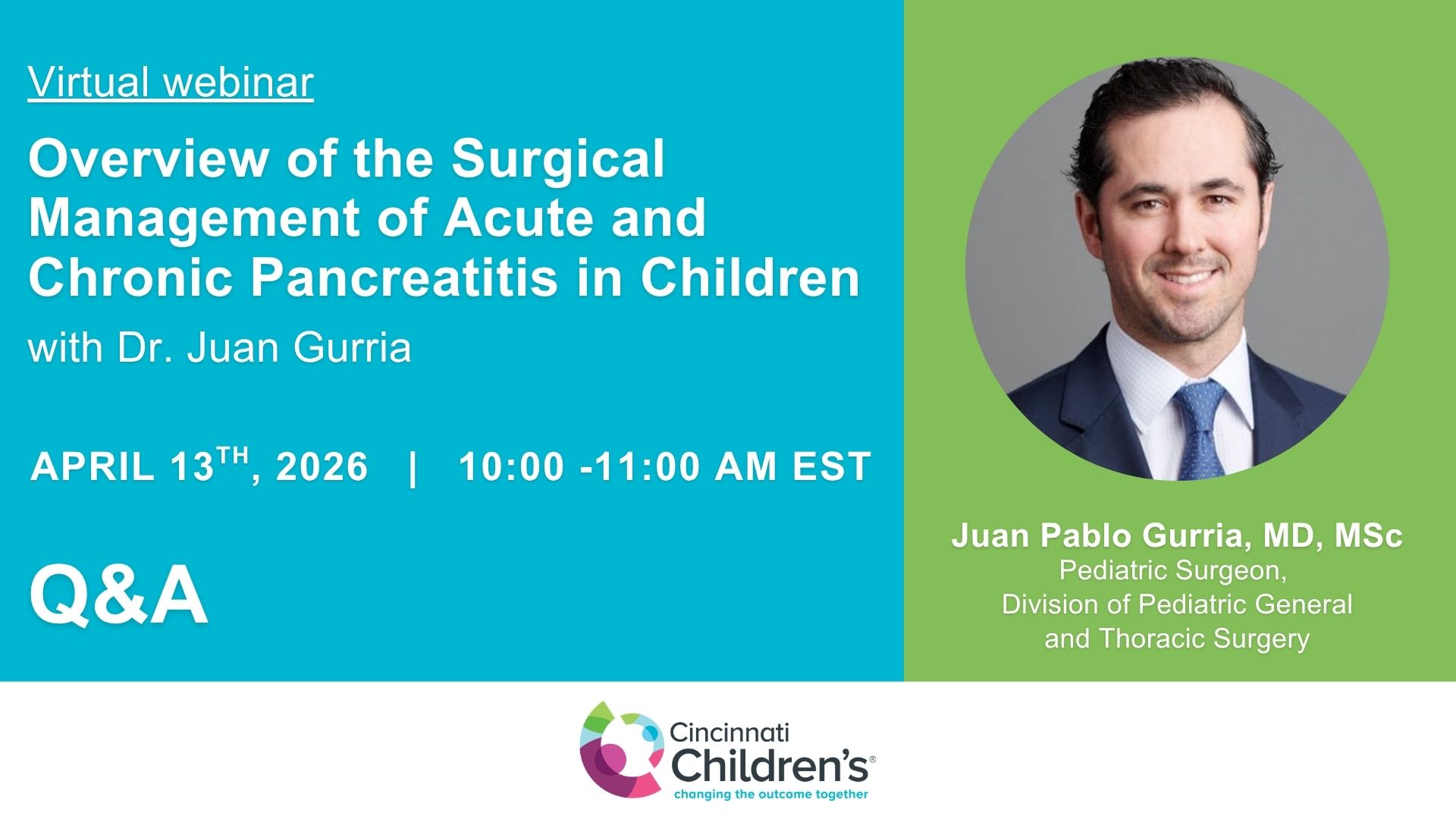
Overview of the Surgical Management of Acute and Chronic Pancreatitis in Children with Dr. Juan Gurria
66 min · Published Apr 2026
Video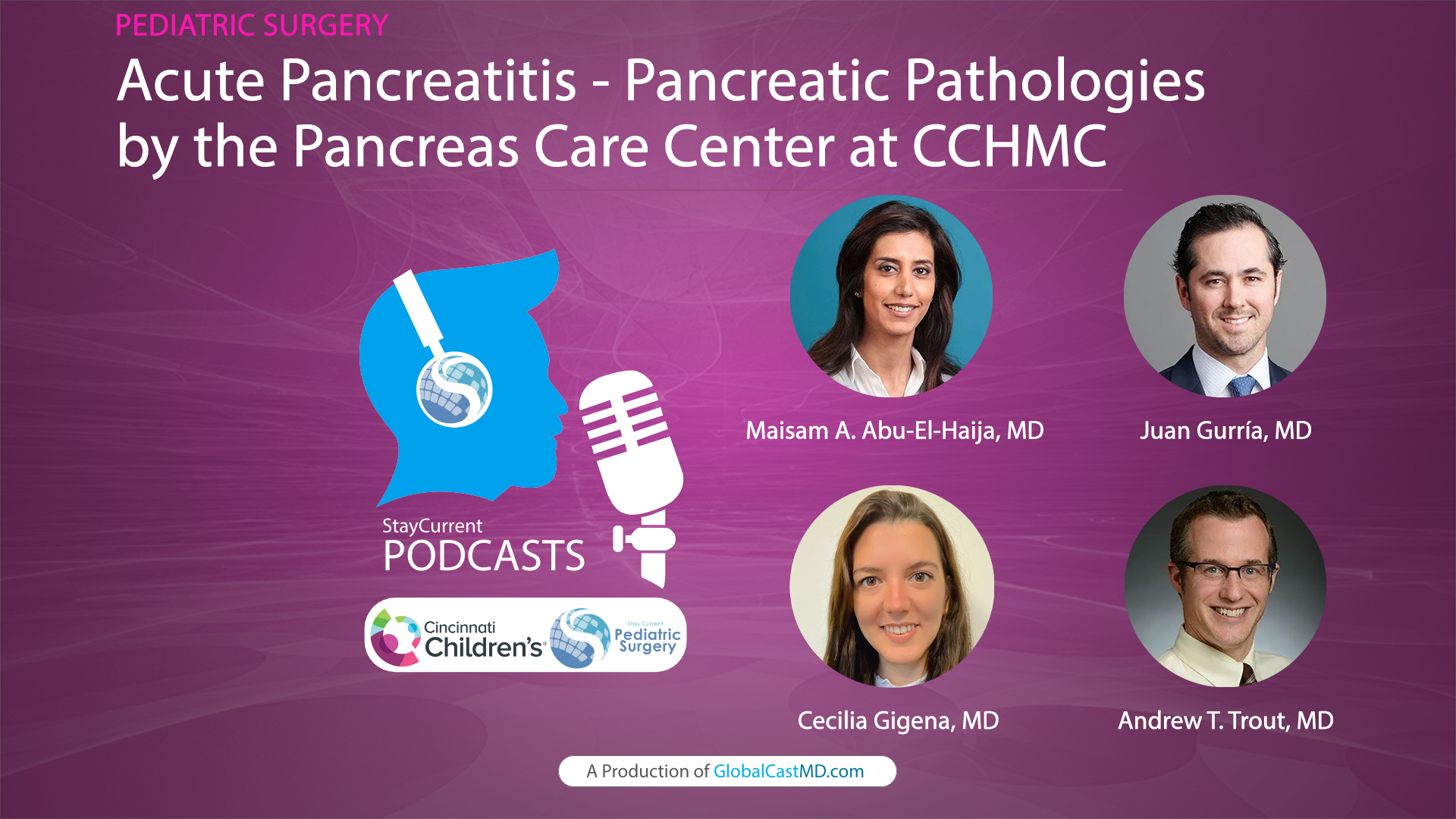
Acute Pancreatitis - Pancreatic Pathologies by the Pancreas Care Center at CCHMC
CCHMC Pediatric Surgery · 4 min · Published Sep 2024
Video
Update Course Rewind: 2023 Top Ten Key Takeaways
16 min · Published Jun 2024
Video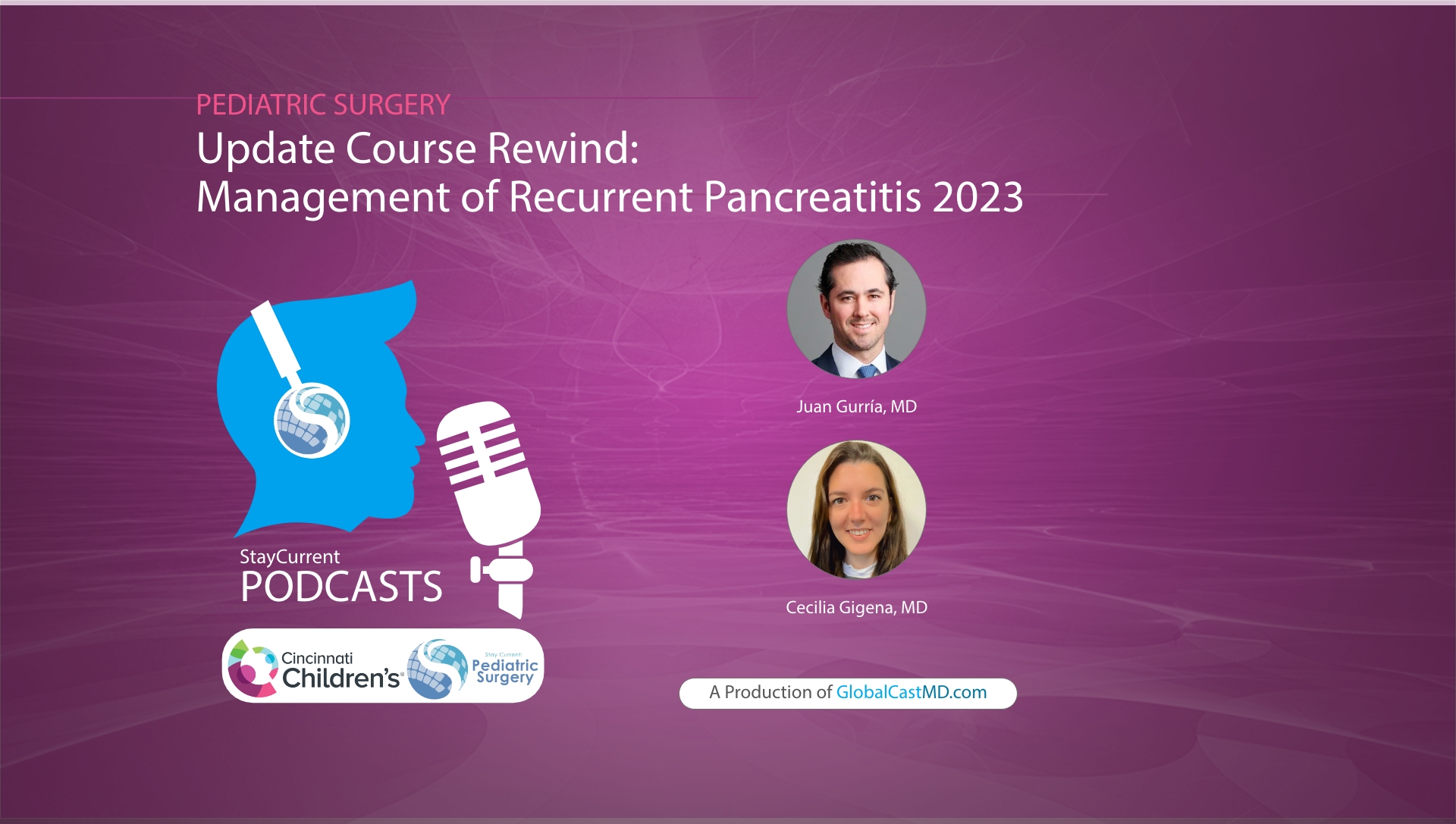
Update Course Rewind: Management of Recurrent Pancreatitis
CCHMC Pediatric Surgery · 6 min · Published May 2024
Video
Update Course Rewind: Management of Chronic Pancreatitis 2023
8 min · Published Apr 2024
Video
Intestinal Atresia Types Explained: Grossfeld Classification for Pediatric Surgery
1 min · Published Sep 2026
Video
Derivation and validation of the Pediatric Community-Acquired Pneumonia Severity (PedCAPS) score: A prospective cohort study
50 s · Published Sep 2026
Video
FETO for Late-Diagnosed Severe Congenital Diaphragmatic Hernia (CDH) at Cincinnati Children's with Dr. Beth Rymeski
4 min · Published Sep 2026
Video
Severe Congenital Diaphragmatic Hernia (CDH) Case: FETO Management & Unexpected Findings with Dr. Beth Rymeski
3 min · Published Sep 2026
Video
Fetoscopic Endoluminal Tracheal Occlusion (FETO) Procedure: Step-by-Step Guide with Dr. Beth Rymeski
4 min · Published Sep 2026
Video
Choledochal Cyst Types Explained: Pediatric Surgery Fundamentals
1 min · Published Sep 2026
What the experts said
TPIAT is one of the most complex abdominal surgical procedures performed in children.
Surgical indications for TPIAT are for patients with either chronic or acute recurrent pancreatitis.
Patients are candidates for TPIAT when all medical and endoscopic therapy has failed.
The Pancreas Care Center team includes GI, social worker, endocrine, surgery, radiology, genetics, behavioral health, physical therapy, anesthesia, and pain team.
The entire team reviews and votes patients in for surgery to determine if they are candidates for TPIAT.
Patients are prepared with vaccinations for potential splenectomy before TPIAT surgery.
Pain catheters are placed in the transversus abdominis muscle by pain specialists.
The pancreas in TPIAT patients has been injured for sometimes years, which makes the procedure quite challenging.
On the right side, the small intestine (duodenum) and liver hilum are mobilized, with careful identification of bile ducts and blood supply to the liver.
Blood supply to the head and entire body of the pancreas is preserved very carefully until the very last moment to avoid hypoxia of islet cells.
The lab cleans the pancreas by removing blood vessels, fat tissue, adipose tissue, and connective tissue.
Pancreatic ducts are isolated and cannulated to inject exocrine enzymes like collagenases and neutral proteases that break down the extracellular matrix holding cells together.
Islets can be further separated from acinar cells if necessary.
The main goal is to bring back to the operating table the highest number of islets possible because islet number correlates with good outcome.
The lab brings back to the operating room 1, 2, or 3 bags containing cells suspended in medium with albumin, heparin, and antibiotics.
During islet processing, the surgical team performs reconstruction of the gastrointestinal tract by bringing a loop of duodenum up to the bile duct and reconnecting another loop of intestine to the duodenum past the pyloric muscle.
A feeding tube is placed to allow patients to be fed while important connections heal.
Drains are left where the spleen was removed and on top of the connection with the biliary tract.
Islet cells are transfused into the portal vein with the hope that they will implant in the liver and start producing insulin.
Portal vein pressures are constantly checked during islet infusion to prevent portal vein thrombosis, which could cause significant morbidity.
Patients are placed in the intensive care unit post-operatively to control hemodynamics and fluid shift balance.
Islet cells need to heal in a very homeostatic environment, requiring close monitoring of vital signs.
Glucose and insulin are controlled via exogenous infusions post-operatively.
Close attention to nutrition is key in the healing of connections between the bile tract and gastrointestinal tract.
Patients are deemed ready for discharge when pain is well controlled, they are on full feeds (via tube or by mouth), glucose is well controlled via continuous glucose monitoring, and they have received full education.
After discharge, local GI physicians continue to follow patients along with the Cincinnati Children's team.
TPIAT patients usually have a genetic mutation that drives the disease.
TPIAT patients typically present with chronic debilitating pain that can lead to opioid addiction or severe impairment of their mental health.
A central venous catheter is placed using ultrasound for vein puncture and fluoroscopy for appropriate insertion.
The procedure begins by mobilizing all organs from the left side of the abdomen, including the colon, stomach, and spleen.
The pancreas is disconnected from the GI tract at two places: after the pyloric muscle in the duodenum and downstream in the jejunum.
Injecting digestive enzymes into the pancreatic duct disintegrates the extracellular matrix, releasing islet cells and exocrine cells and turning the organ from solid to liquid form.
The maximum infusion volume is 5 mL per bag and 3 bags per patient to control the amount infused into the portal vein.