

From
StayCurrentMD
Surgical telementoring-emerging technologies: Comparative Technology in...
With Dr. Todd Ponsky · hosted by Dr. Todd Ponsky
Part of
Rectal Cancer 3 items
Educational content from recorded physician discussions — not medical advice. Talk to your (or your child's) care team about your situation.
Video
Best of the Best Gen Surg - How Far is Too Far Cost-effectiveness Analysis of Regionalized Rectal Cancer Surgery - Dr. Leeds
12 min · Published Sep 2022
Video
2019 Chandler Lecture: Dr. Marc Levitt
Marc Levitt · 41 min · Published Sep 2019
Podcast
Colon Cancer with Conor Delaney
26 min · Published Jan 2017
Video
Ulcerative Colitis and Familial Adenomatous Polyposis: Update Course 2016
46 min · Published Aug 2017
Podcast
Colorectal Cancer
Jeffrey Ponsky · 26 min · Published Jun 2016
Video
Acute Cholecystitis
Todd Ponsky · 32 min · Published Jul 2026
Video
Update Course Rewind 2025: Updates in NEC Management
11 min · Published Jul 2026
Video
Pediatric Pre-Operative Bowel Prep
Todd Ponsky · 1 min · Published Jul 2026
Video
Journal of Pediatric Surgery Article Review: September 2021
Todd Ponsky · 11 min · Published Jul 2026
Video
22. HerniaTalk LIVE Q&A: Pediatric Hernias
Todd Ponsky · 59 min · Published Jul 2026
Video
ATLS 2021 Pediatric Surgery Update
Todd Ponsky · 16 min · Published Jul 2026
Video
Intestinal Atresia Types Explained: Grossfeld Classification for Pediatric Surgery
1 min · Published Sep 2026
Video
Derivation and validation of the Pediatric Community-Acquired Pneumonia Severity (PedCAPS) score: A prospective cohort study
50 s · Published Sep 2026
Video
FETO for Late-Diagnosed Severe Congenital Diaphragmatic Hernia (CDH) at Cincinnati Children's with Dr. Beth Rymeski
4 min · Published Sep 2026
Video
Severe Congenital Diaphragmatic Hernia (CDH) Case: FETO Management & Unexpected Findings with Dr. Beth Rymeski
3 min · Published Sep 2026
Video
Fetoscopic Endoluminal Tracheal Occlusion (FETO) Procedure: Step-by-Step Guide with Dr. Beth Rymeski
4 min · Published Sep 2026
Video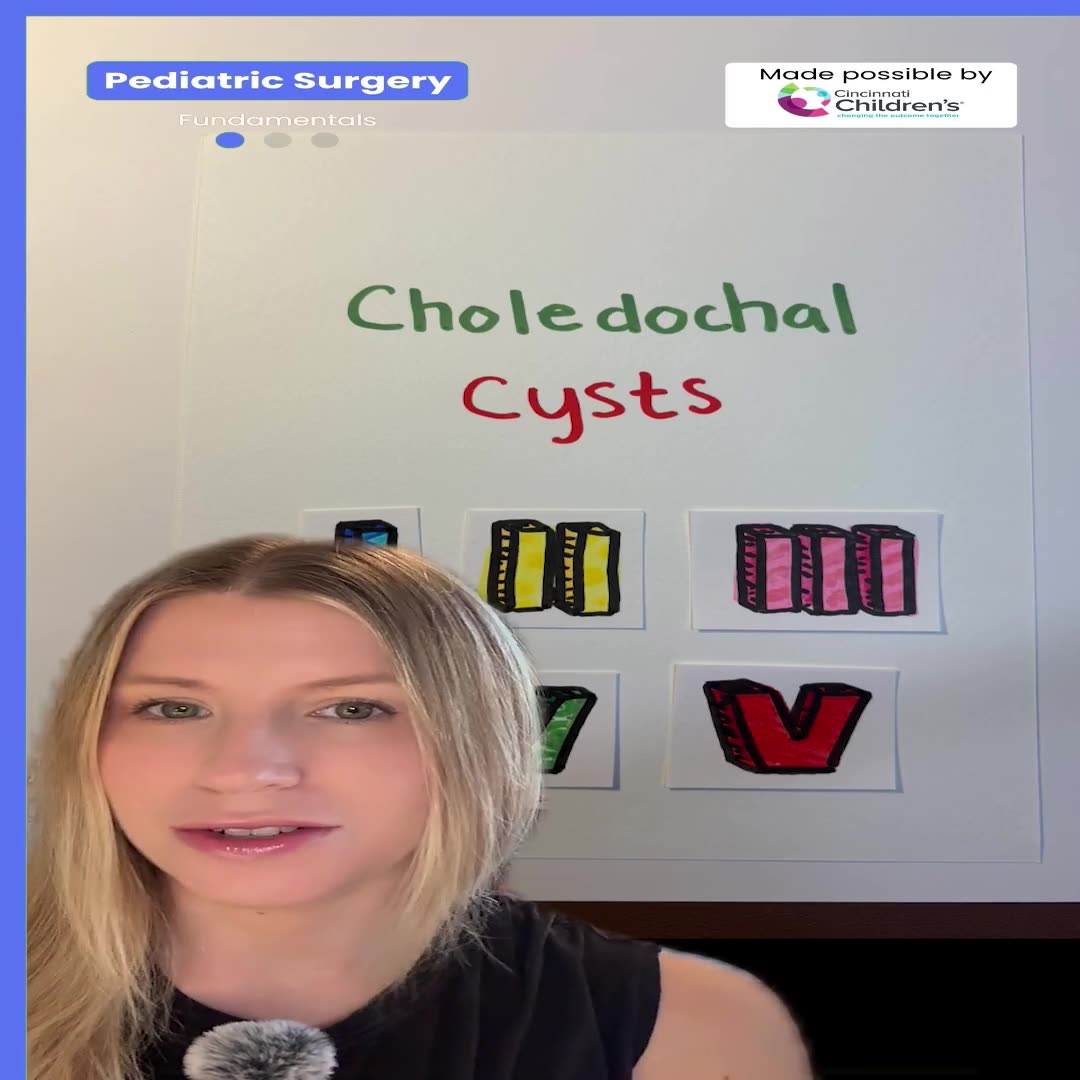
Choledochal Cyst Types Explained: Pediatric Surgery Fundamentals
1 min · Published Sep 2026
What the experts said
Telestration reduces errors by more than 30% in surgical telementoring
Skype for Business is approved by Scandinavian authorities for medical use but not yet HIPAA compliant in the United States
Most remote desktop systems require a separate line for audio, which can be a challenge
The STAR platform can be used for open surgery but not yet for laparoscopic surgery
Telementoring is particularly valuable in geographically large areas like Norway, Africa, and the US where surgeons may not have enough experience with specific techniques
Telementoring is challenging time-wise because watching someone perform a 3-hour operation requires significant mentor availability unless structured as on-call consultation
Integrating telementoring into structured training programs may be one of the keys to successful implementation
When using laparoscopic video for telestration, if the camera holder moves the camera, the telestration lines move and no longer correspond to the anatomy
Educational experts outside surgery can help inform best practices for teaching over distance and using telementoring platforms
Surgical telementoring requires three elements: a known mentor-mentee relationship, an educational framework (not teleconsultation), and local surgical expertise to manage the disease process
A Houston-Melbourne collaboration successfully telementored 25 retroperitoneoscopic adrenalectomy cases using Skype, concluding it is a feasible platform
The first published study on remote desktop systems for surgical telementoring was by Gambadero and Marcus in London in 2007 for laparoscopic gynecological surgery
The OR Network platform has telementored 500 laparoscopic procedures from the United Kingdom to Tanzania
The STAR (System for Telementoring with Augmented Reality) platform allows participants to complete tasks with fewer placement errors and fewer focus shifts by overlaying transparent telestration directly on the surgical field
Indian colleagues created a surgical telementoring setup using a repurposed laparoscopic camera for video capture at a cost of only $400-500