

Educational content from recorded physician discussions — not medical advice. Talk to your (or your child's) care team about your situation.
Video
Acute and Acute Recurrent Pancreatitis: Pancreatic Disease
56 min · Published Sep 2016
Podcast
Acute Pancreatitis
45 min · Published Jul 2017
Video
Chronic Pancreatitis, Function Tests, & Pain Management: Pancreatic Disease
51 min · Published Sep 2016
Video
Welcome and Introductions: Pancreatic Disease
Dr. Todd Ponsky · 6 min · Published Sep 2016
Video
Endoscopic & Surgical Interventions: Pancreatic Disease
55 min · Published Sep 2016
Video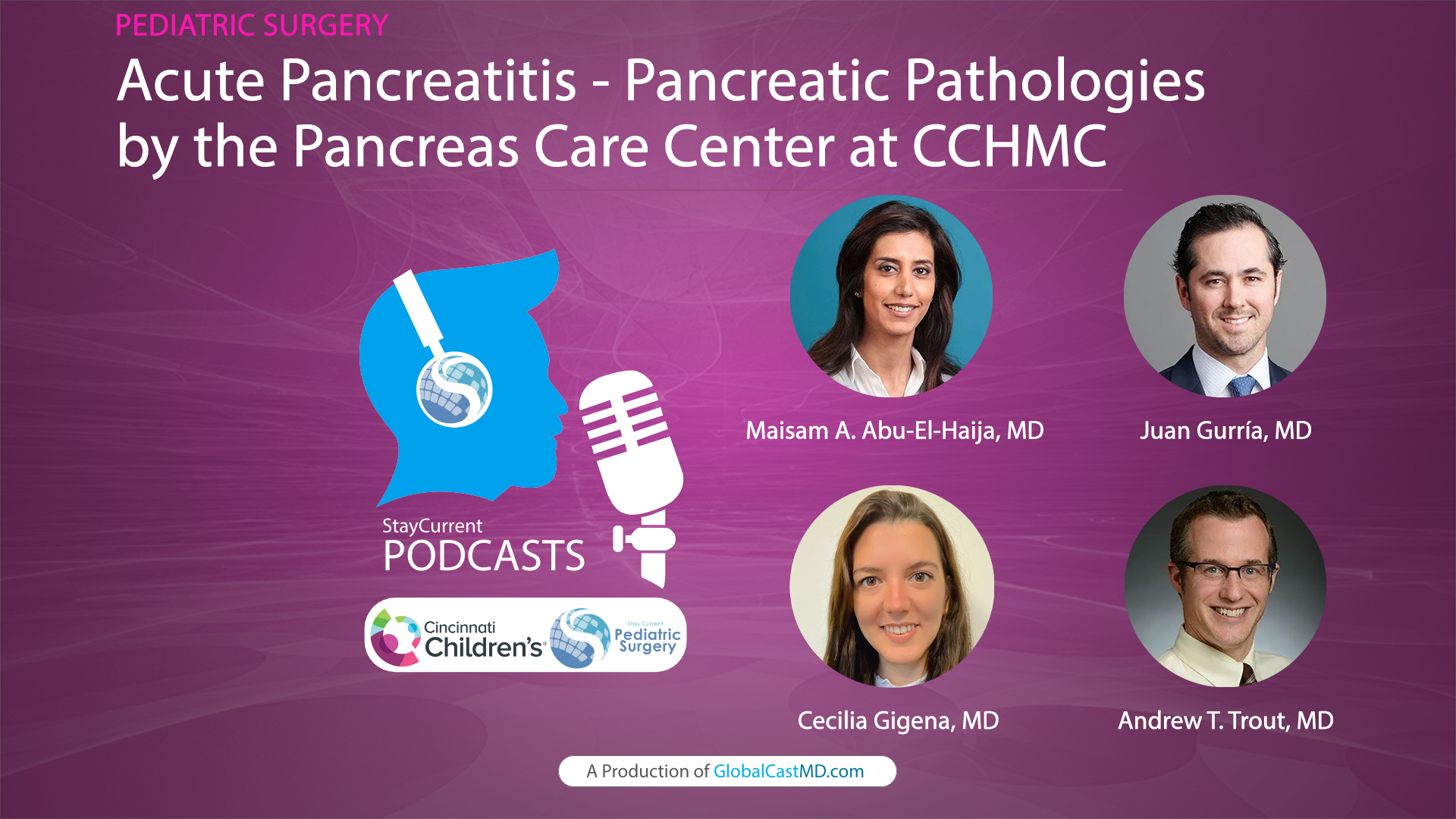
Acute Pancreatitis - Pancreatic Pathologies by the Pancreas Care Center at CCHMC
CCHMC Pediatric Surgery · 4 min · Published Sep 2024
Video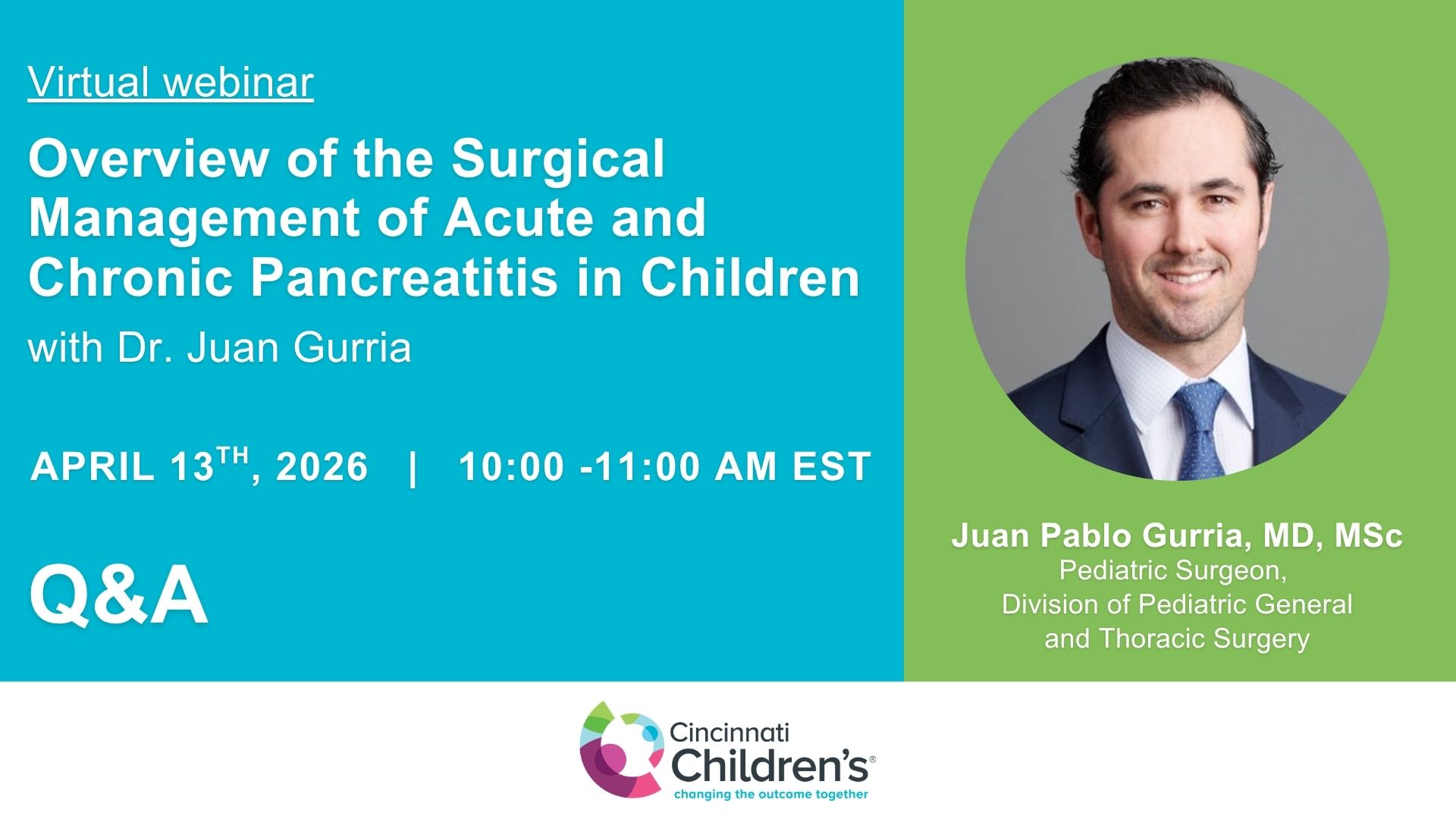
Overview of the Surgical Management of Acute and Chronic Pancreatitis in Children with Dr. Juan Gurria
66 min · Published Apr 2026
Video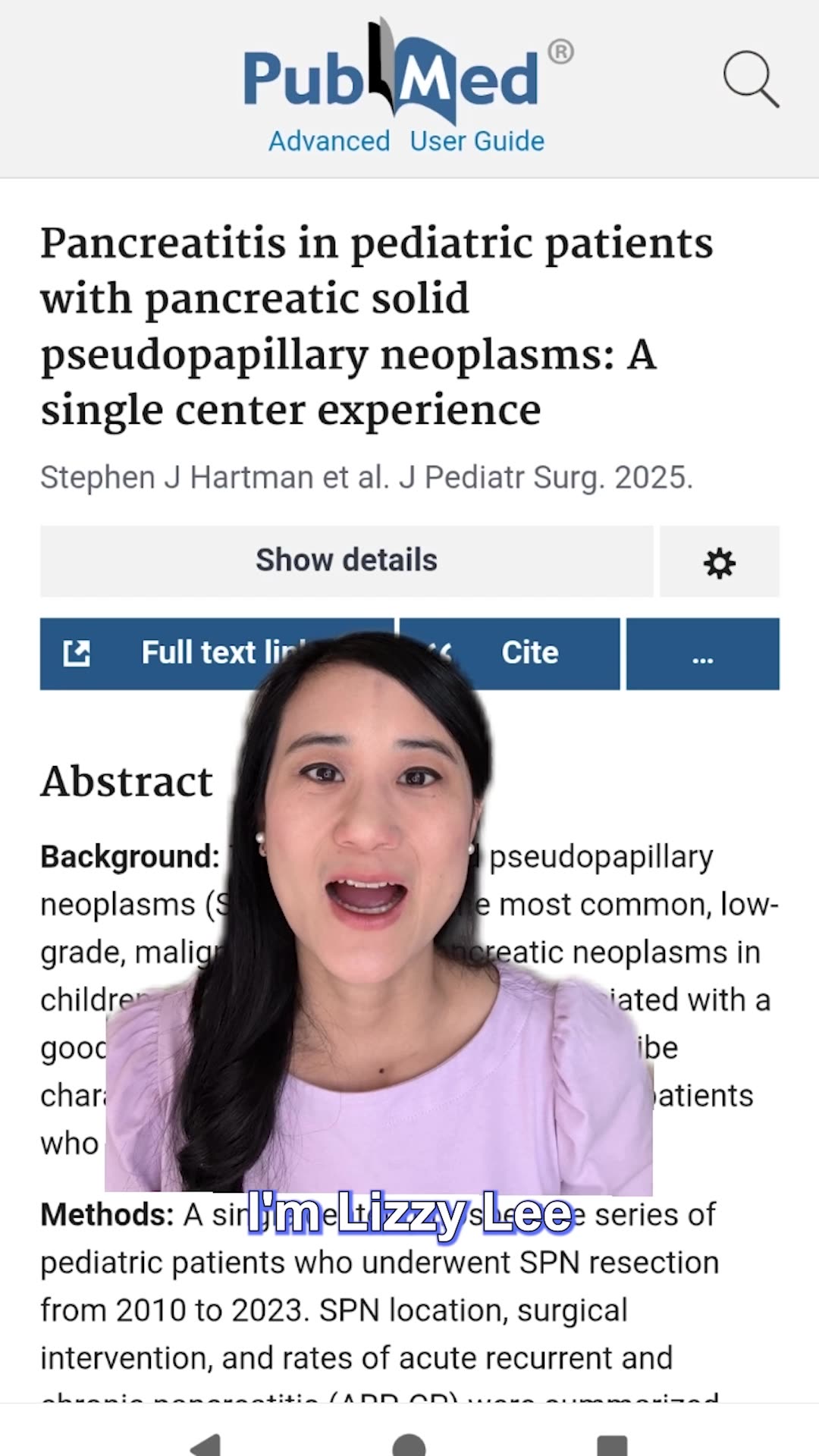
Pancreatitis in pediatric patients with pancreatic solid pseudopapillary neoplasms- a single center experience
59 s · Published Apr 2026
Podcast
Update Course Rewind: Pediatric Biliary Stones - Preventing Gallstone Pancreatitis 2024
Jeffrey Ponsky · 3 min · Published Aug 2025
Video
Update Course Rewind: Pediatric Biliary Stones - Surgery First Mindset 2024
Dr. Todd Ponsky · 7 min · Published Jul 2025
Video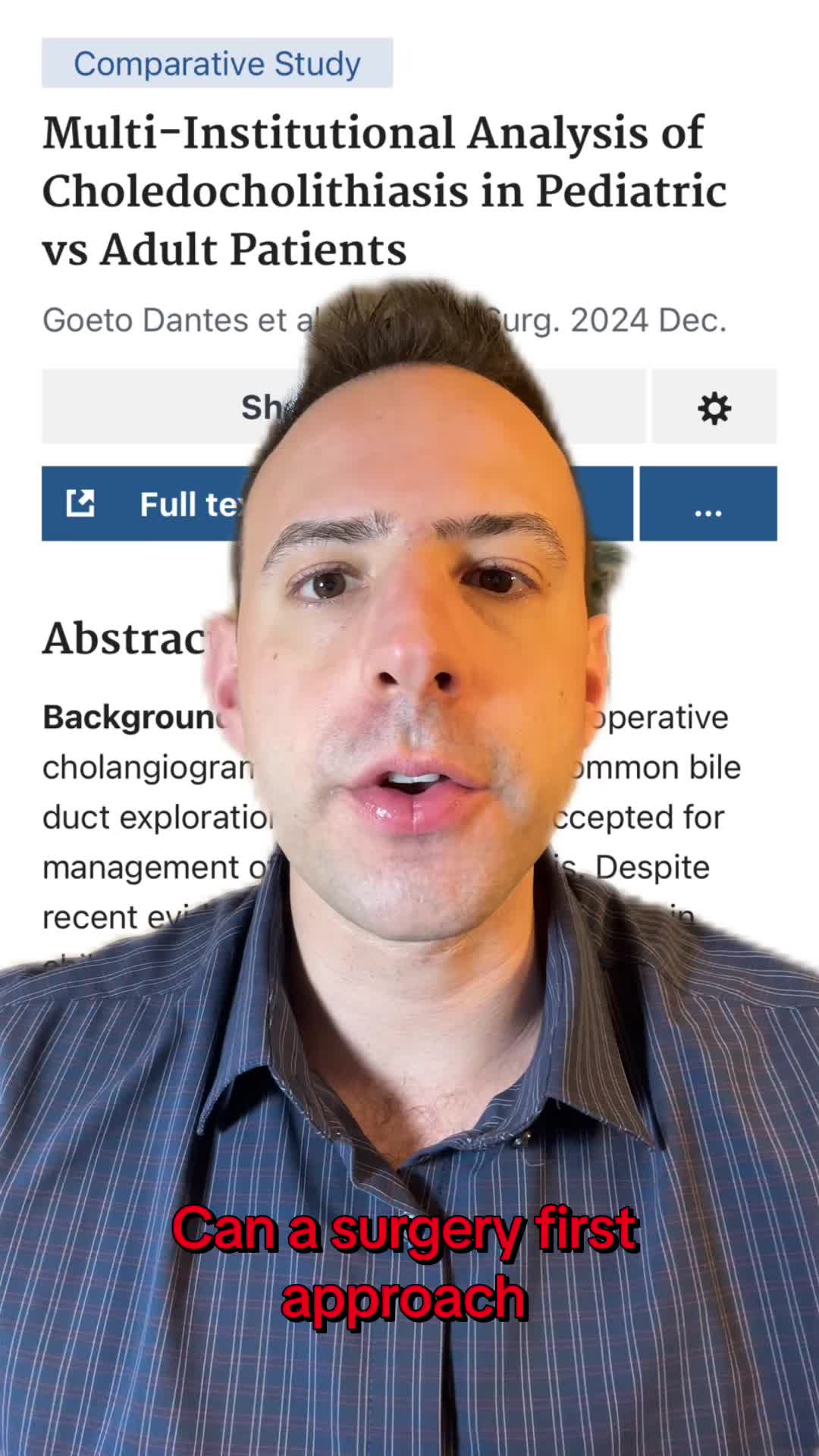
Multi-Institutional Analysis of Choledocholithiasis in Pediatric vs Adult Patients
59 s · Published Mar 2025
Video
Total pancreatectomy with islet autotransplantation (TPIAT) - Cincinnati Children's Pancreas Care Center
CCHMC Pediatric Surgery · 10 min · Published Dec 2024
Video
Intestinal Atresia Types Explained: Grossfeld Classification for Pediatric Surgery
1 min · Published Sep 2026
Video
Derivation and validation of the Pediatric Community-Acquired Pneumonia Severity (PedCAPS) score: A prospective cohort study
50 s · Published Sep 2026
Video
FETO for Late-Diagnosed Severe Congenital Diaphragmatic Hernia (CDH) at Cincinnati Children's with Dr. Beth Rymeski
4 min · Published Sep 2026
Video
Severe Congenital Diaphragmatic Hernia (CDH) Case: FETO Management & Unexpected Findings with Dr. Beth Rymeski
3 min · Published Sep 2026
Video
Fetoscopic Endoluminal Tracheal Occlusion (FETO) Procedure: Step-by-Step Guide with Dr. Beth Rymeski
4 min · Published Sep 2026
Video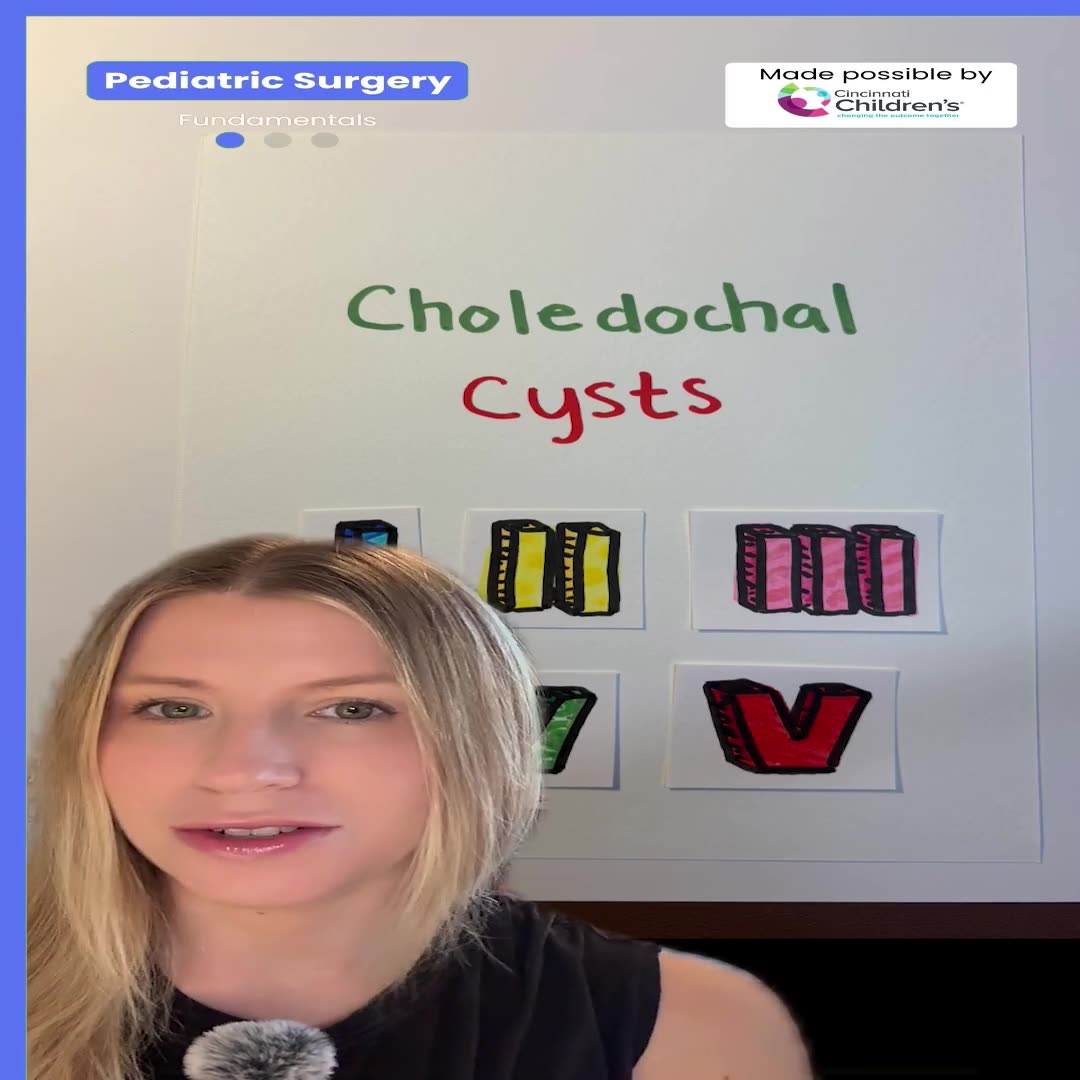
Choledochal Cyst Types Explained: Pediatric Surgery Fundamentals
1 min · Published Sep 2026
What the experts said
ERCP was introduced in the 1970s as a purely diagnostic modality
ERCP has evolved from a diagnostic to a more therapeutic modality over time
Advances in radiology have enabled non-invasive identification of abnormalities, contributing to ERCP's shift toward therapeutic use
CT provides value in complex cases and complex patients for pancreatic imaging
Severe scoliotic curvature and spinal hardware make it difficult to get a good ultrasound
Fluid collection replacing a large chunk of pancreas with no preserved pancreatic tissue around it indicates an area of necrosis or walled off necrosis
Once you have a lay of the land with CT, you can use ultrasound to target and look at areas of interest in complex cases
If ultrasound findings change dramatically or you're not getting a good sense of things, you may need to go back to cross-sectional imaging (CT or MRI)
Ultrasound is a good modality to follow patients serially over time because it's easier on patients and lacks ionizing radiation
Spinal fusion rods make it challenging to identify and visualize normal ductal structures during ERCP
Pancreatic sphincterotomy and pancreatic duct stent placement allow flow of pancreatic juices to the path of least resistance with hopes of resolving duct defects
The decision to proceed with ERCP is based on clinical suspicion for pancreatic duct leak and the type of expertise available at the institution
There is a growing number of pediatric gastroenterologists becoming skilled in performing ERCP
ERCP is invasive and has the potential to exacerbate pancreatitis
The goal of ERCP in this setting is to be therapeutic
Watchful waiting was an extension of the conservative approach already attempted in this case
Continuing conservative management was not acceptable to the family
A patient with an enlarging collection is potentially failing watchful waiting