

From
StayCurrentMD
Thoracoscopic Left Lower Lobectomy Technique by Dr. Steven Rothenberg: How I...
With Dr. Steven Rothenberg · hosted by Dr. Todd Ponsky
Educational content from recorded physician discussions — not medical advice. Talk to your (or your child's) care team about your situation.
Video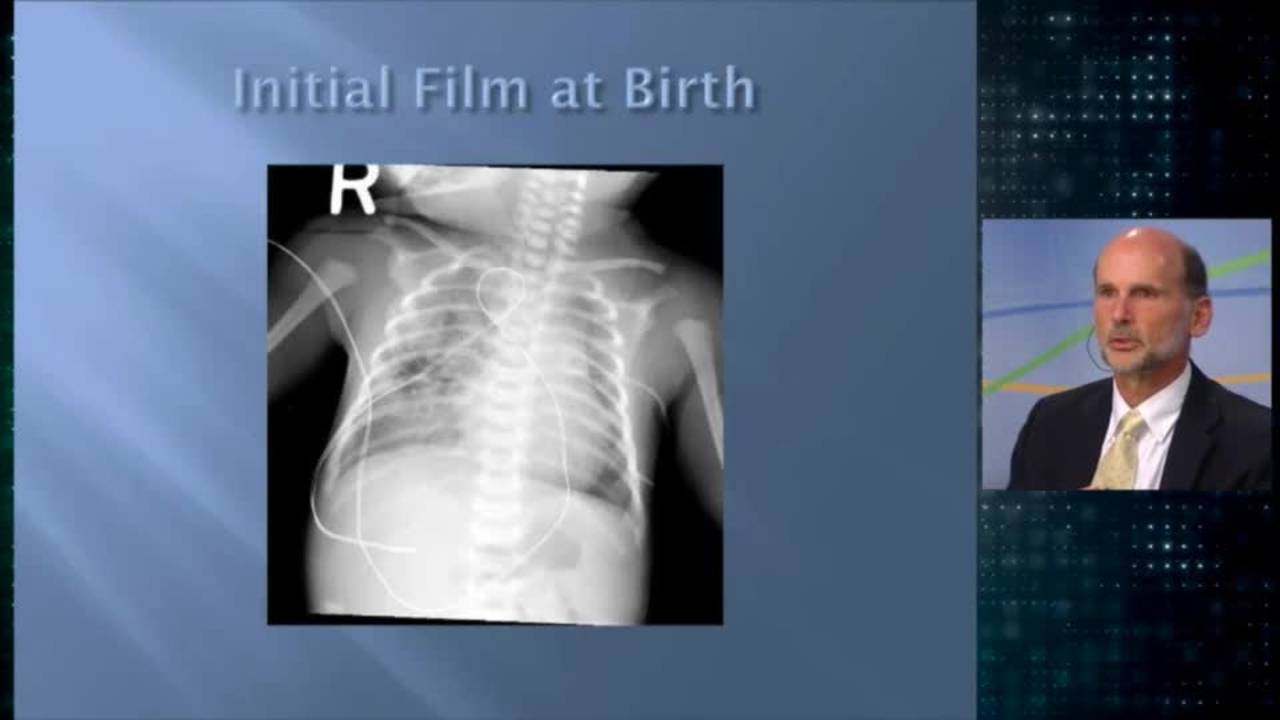
Congenital Cystic Lung Lesions: Update Course 2014
Dr. Steve Rothenberg · 24 min · Published Nov 2018
Video
Thoracoscopic Right Upper Lobectomy in a 3-Month-Old with Incomplete Fissures
Dr. Steve Rothenberg · 20 min · Published May 2026
Podcast
Case Based Journal Review - CPAM in 2022
12 min · Published Apr 2022
Video
Thoracoscopic Left Lower Lobectomy for Congenital Pulmonary Airway Malformation
9 min · Published Feb 2020
Video
LLL intra lobar JRS
Dr. Steve Rothenberg · 4 min · Published May 2026
Video
Should We Resect Asymptomatic CPAM Flake vs Langer
Dr. Steve Rothenberg · 14 min · Published May 2019
Video
Ladd Medal Award Presentation Honoring Dr. Steven Rothenberg's Pioneering Minimally Invasive Pediatric Surgery
Dr. Steve Rothenberg · 33 min · Published May 2026
Video
PDA ligation by Dr. Steven Rothenberg
Dr. Steve Rothenberg · 6 min · Published Jun 2023
Video
Update Course Rewind: Pectus Excavatum 2021
Dr. Todd Ponsky · 11 min · Published Aug 2022
Podcast
Update Course Rewind: Magnet Therapy for Esophageal Atresia
10 min · Published Dec 2021
Video
Update Course Rewind: Thoracotomy vs VATS for Lung Metastases
Dr. Todd Ponsky · 9 min · Published Dec 2021
Video
Thoracoscopic TEF Repair, Is It Really Better Than Open? Update Course 2018
18 min · Published Aug 2018
Video
Intestinal Atresia Types Explained: Grossfeld Classification for Pediatric Surgery
1 min · Published Sep 2026
Video
Derivation and validation of the Pediatric Community-Acquired Pneumonia Severity (PedCAPS) score: A prospective cohort study
50 s · Published Sep 2026
Video
FETO for Late-Diagnosed Severe Congenital Diaphragmatic Hernia (CDH) at Cincinnati Children's with Dr. Beth Rymeski
4 min · Published Sep 2026
Video
Severe Congenital Diaphragmatic Hernia (CDH) Case: FETO Management & Unexpected Findings with Dr. Beth Rymeski
3 min · Published Sep 2026
Video
Fetoscopic Endoluminal Tracheal Occlusion (FETO) Procedure: Step-by-Step Guide with Dr. Beth Rymeski
4 min · Published Sep 2026
Video
Choledochal Cyst Types Explained: Pediatric Surgery Fundamentals
1 min · Published Sep 2026
What the experts said
The procedure uses 3mm sealer and 5mm stapler for thoracoscopic left lower lobectomy in an infant with CPAM
Right mainstem intubation is used to obtain left lung collapse
Camera port is placed anterior to tip of scapula in approximately 5th intercostal space in posterior axillary line
In lower lobectomies, always look for systemic artery even if not identified on CT scan, as hybrid sequestration-CPAM lesions with large vessels are occasionally missed
Seal-and-tear technique eliminates need for sharp dissection when mobilizing inferior pulmonary ligament
Changing camera angle 30 degrees gives better orientation during fissure dissection
In incomplete fissures, lung parenchyma is gone through layer at a time to expose pulmonary artery
Superior segmental artery usually comes off separately from basal trunk and is best isolated alone
Char buildup on sealer should be intermittently removed and cleaned by scrub nurse
Double-seal technique: make two separate seals 3-4mm apart (one proximal, one distal) and cut between them to ensure no bleeding or leak
By making two seals and only partially dividing vessel, control is maintained if bleeding occurs before vessel ends separate and retract
Even in asymptomatic CPAM patients, enlarged inflamed lymph nodes are often seen due to chronic inflammation
In asymptomatic patients one year of age, it is not unusual to have fissure obliterated by inflammation and enlarged lymph nodes
Bronchus can be used as tactile landmark to help dissect out pulmonary artery due to segmental anatomy of lung
Taking superior segmental artery first before main trunk gives more length on main trunk for safe ligation and division
Stapler is compressed and held for count of 10 seconds to allow staples to completely form
In thoracoscopic approach, it is often easier to take bronchus first, which leaves pulmonary vein well exposed, unlike open surgery sequence of artery-vein-bronchus
In children over 2-3 months of age, separating superior segmental bronchus from basal bronchi is preferable due to bronchus size to ensure adequate division and seal with stapler
Bronchus is compressed before stapler insertion to ensure adequate fit and aid in staple formation
5mm stapler works well in children under 10kg; in larger children bronchi may be too large and surgeon must evaluate case by case
This minimally edited procedure took 45 minutes in real time
Patient had chest tube removed on first postoperative day and was discharged that evening
Sealer works extremely well on lung tissue for completing incomplete fissures and performing segmental resections with no problems with bleeding or air leak
Pathology confirmed type 2 CPAM
When taking pulmonary vein trunk, staple line must be well away from base of vein and pericardium (at least 2cm), with ability to grasp trunk proximal to stapler in case of leak