

From
StayCurrentMD
Surgical Skill Acquisition in the Modern Era: Comparative Technology in...
With Dr. Todd Ponsky
Part of
Trauma 10 items
Educational content from recorded physician discussions — not medical advice. Talk to your (or your child's) care team about your situation.
Video
Differences Between Pediatric & Adult Trauma Centers
3 min · Published Mar 2017
Video
VTE PPX in High Risk Trauma Patients: 2018 Pediatric Surgery Practice Gap #7
Dr. Todd Ponsky · Published Jun 2019
Video
Pediatric Gun Violence: Pediatric Trauma Series 2017
22 min · Published Jan 2018
Podcast
#APSA50: Social Determinants of Health
47 min · Published Jun 2019
Video
APSA Article of Interest: REBOA in Pediatric Trauma
Published Sep 2022
Video
Update Course Rewind: Firearm Advocacy as a Pediatric Surgeon 2022
Dr. Todd Ponsky · Published Jul 2023
Video
Acute Cholecystitis
Todd Ponsky · 32 min · Published Jul 2026
Video
Update Course Rewind 2025: Updates in NEC Management
11 min · Published Jul 2026
Video
Pediatric Pre-Operative Bowel Prep
Todd Ponsky · 1 min · Published Jul 2026
Video
Journal of Pediatric Surgery Article Review: September 2021
Todd Ponsky · 11 min · Published Jul 2026
Video
22. HerniaTalk LIVE Q&A: Pediatric Hernias
Todd Ponsky · 59 min · Published Jul 2026
Video
ATLS 2021 Pediatric Surgery Update
Todd Ponsky · 16 min · Published Jul 2026
Video
Intestinal Atresia Types Explained: Grossfeld Classification for Pediatric Surgery
1 min · Published Sep 2026
Video
Derivation and validation of the Pediatric Community-Acquired Pneumonia Severity (PedCAPS) score: A prospective cohort study
50 s · Published Sep 2026
Video
FETO for Late-Diagnosed Severe Congenital Diaphragmatic Hernia (CDH) at Cincinnati Children's with Dr. Beth Rymeski
4 min · Published Sep 2026
Video
Severe Congenital Diaphragmatic Hernia (CDH) Case: FETO Management & Unexpected Findings with Dr. Beth Rymeski
3 min · Published Sep 2026
Video
Fetoscopic Endoluminal Tracheal Occlusion (FETO) Procedure: Step-by-Step Guide with Dr. Beth Rymeski
4 min · Published Sep 2026
Video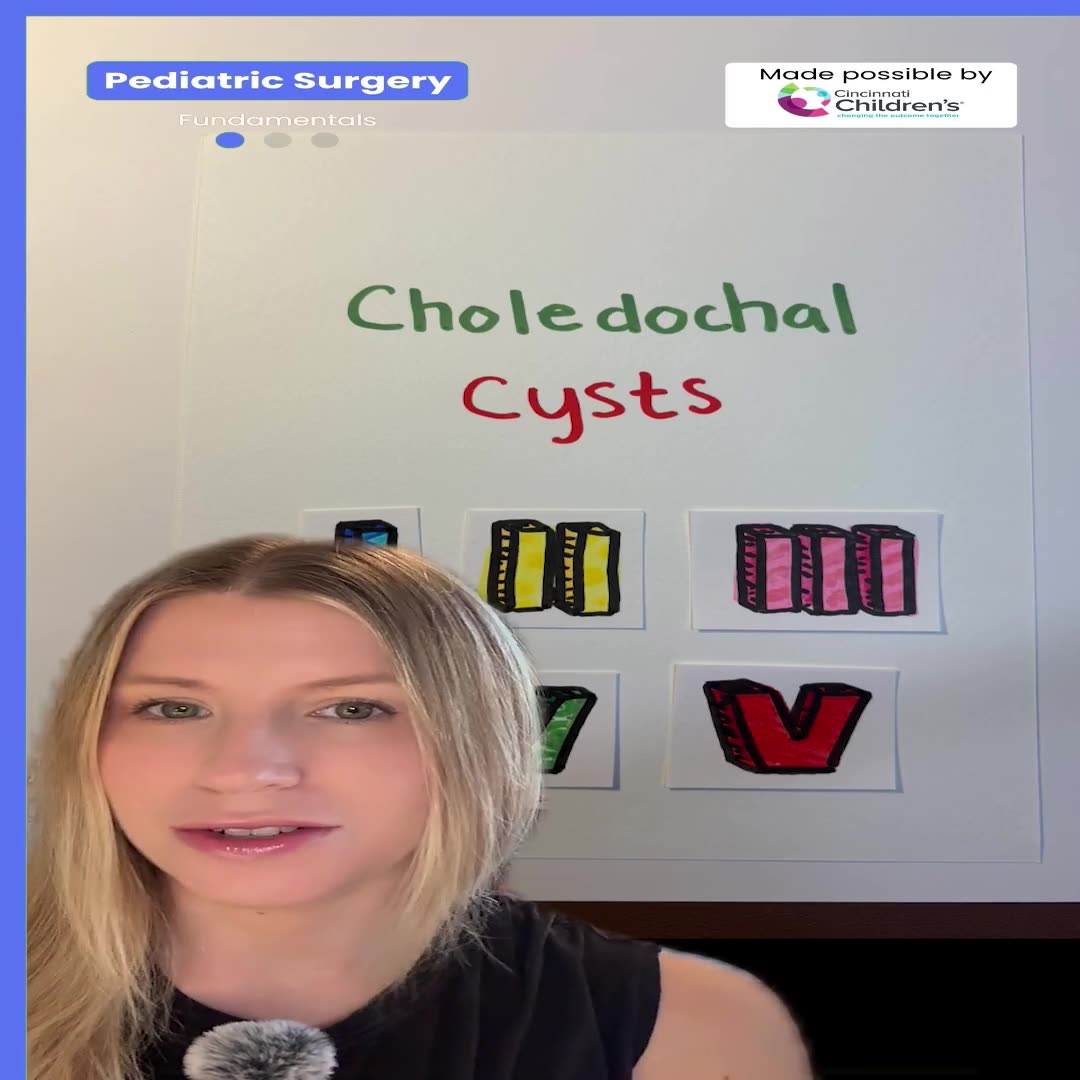
Choledochal Cyst Types Explained: Pediatric Surgery Fundamentals
1 min · Published Sep 2026
What the experts said
The traditional surgical apprenticeship model involves three stages: expert performs while trainee watches, trainee performs with expert watching carefully, and trainee performs almost autonomously with minimal oversight
The skill acquisition model consists of five steps: course attendance, trainee observes expert, trainee performs with expert watching, telementoring, and teleproctoring
Telementoring should be introduced at step 4 of the skill acquisition model, not at step 1
Virtual courses allow surgeons to learn without traveling, using the internet in ways that make sense
The first telementoring case used Skype for a baby requiring lung resection, with verbal pointing only and no telestration capability
Verbal pointing without telestration was really difficult for guiding surgical procedures remotely
The Visitor One solution provides robust telestration capability with integrated drawing features
The Norwegian group (Etai Bogen and colleagues) developed an off-the-shelf telestration solution using Androids and iPads
The surgeon performing the operation must be capable of completing it independently because technology may fail or internet connection may be lost
The mentor should provide tips and tricks but not serve as a crutch for the operating surgeon
An emergency 'break the glass' telementoring model could help non-pediatric trauma centers manage unstable pediatric trauma patients who cannot be transferred
The emergency co-pilot or virtual first assistant model is debated because it involves guidance from someone the surgeon has never met before, without prior relationship
Brian has been the leader in defining how to incorporate telementoring into the educational training model
The staged skill acquisition model (course, expert performs, trainee performs with expert present, then telementoring) is becoming the more accepted approach
Key barriers to telementoring implementation include medical-legal issues, licensing, credentialing, technology costs, and compensation for expert time
For global-scale telementoring, experts will need justification for not spending time in their own operating rooms, suggesting volunteer goodwill alone is insufficient
Project 6 and the American College of Surgeons Education Committee (David Hoyt and Sadiva) are actively pushing telementoring initiatives
Demand for telementoring has come primarily from rural surgeons working alone who want assistance without sending all patients to tertiary centers
Polling of rural surgeons confirmed they want telementoring services
The Akron-Tromsø project tested whether laparoscopic non-mesh hernia repair could be taught using the complete skill acquisition model
The Akron-Tromsø project was led by Knut, Etai Bogan, and Ralph Ole
The Akron-Tromsø project progression included: virtual course viewing, in-person demonstration by expert, trainee performing with expert present, telementoring with expert in same building, and finally telementoring from across the ocean
Peter Gessing is a talented general surgeon in Tromsø who also performs pediatric surgery
The final telementoring session occurred at 3 AM (speaker's time) for a full day of cases in Tromsø using iPad drawing system
True skill acquisition of new surgical techniques requires more than a simulation course or lecture alone
Virtual presence can facilitate skill acquisition but must be an element of a robust model where a relationship is established and both parties become comfortable with each other
Sir William Osler established that medical training should include residency, bringing doctors to patients rather than relying solely on lectures
Dr. William Halstead, a surgeon, created surgical residency based on Osler's residency concept
Medical knowledge doubles every 18 months according to Brian's earlier statement
Telestration lines move when the camera moves during surgery, which is a technical limitation