

From
Live Event Content
BOB Ped Surg 2023 - Steven Scoville, IPSO - Presentation
With Dr. Stephen Scoville
Educational content from recorded physician discussions — not medical advice. Talk to your (or your child's) care team about your situation.
Video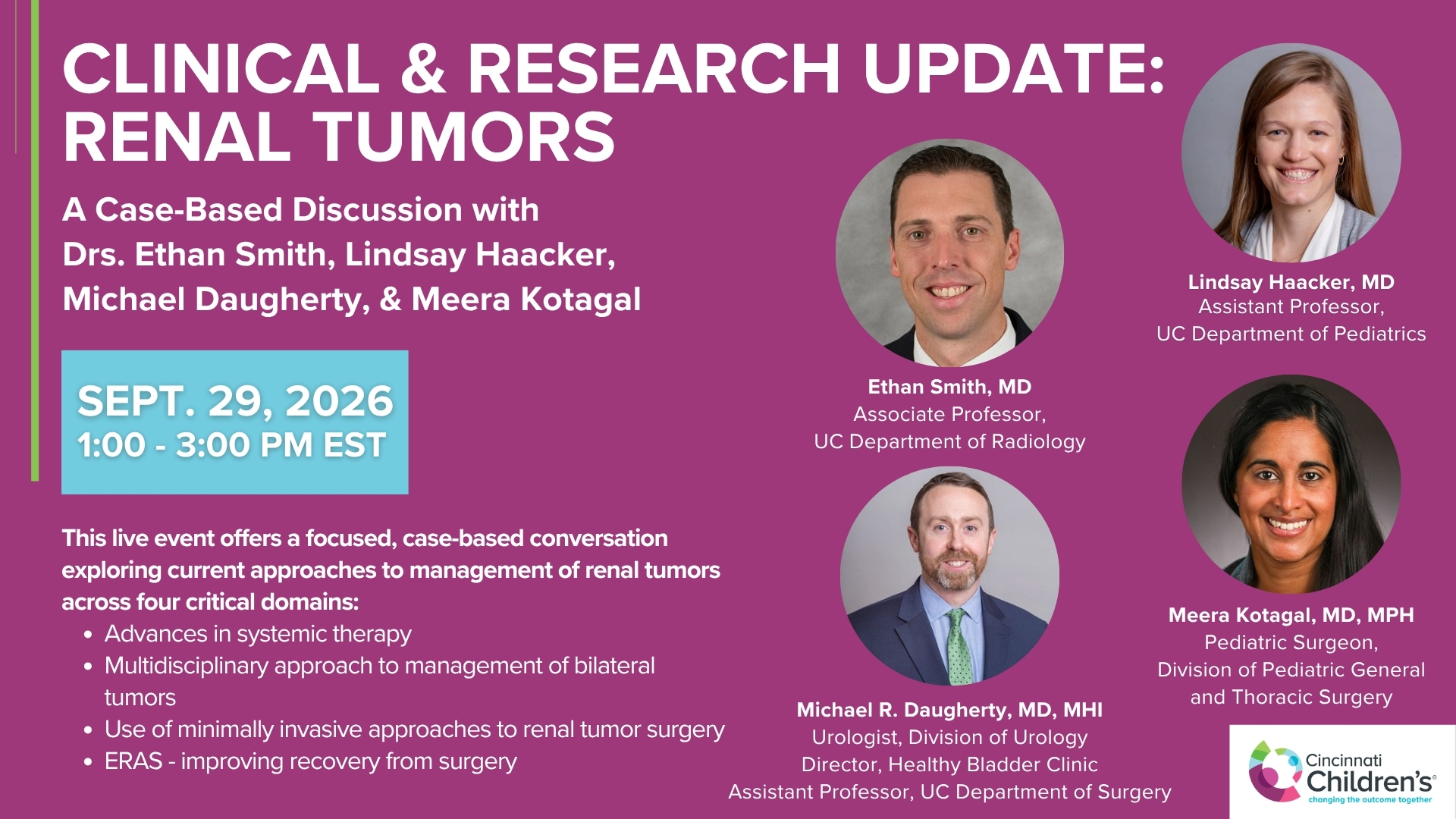
Clinical & Research Update: Renal Tumors with Drs. Ethan Smith, Lindsay Haacker, Michael Daugherty, and Meera Kotagal
71 min · Published Sep 2026
Video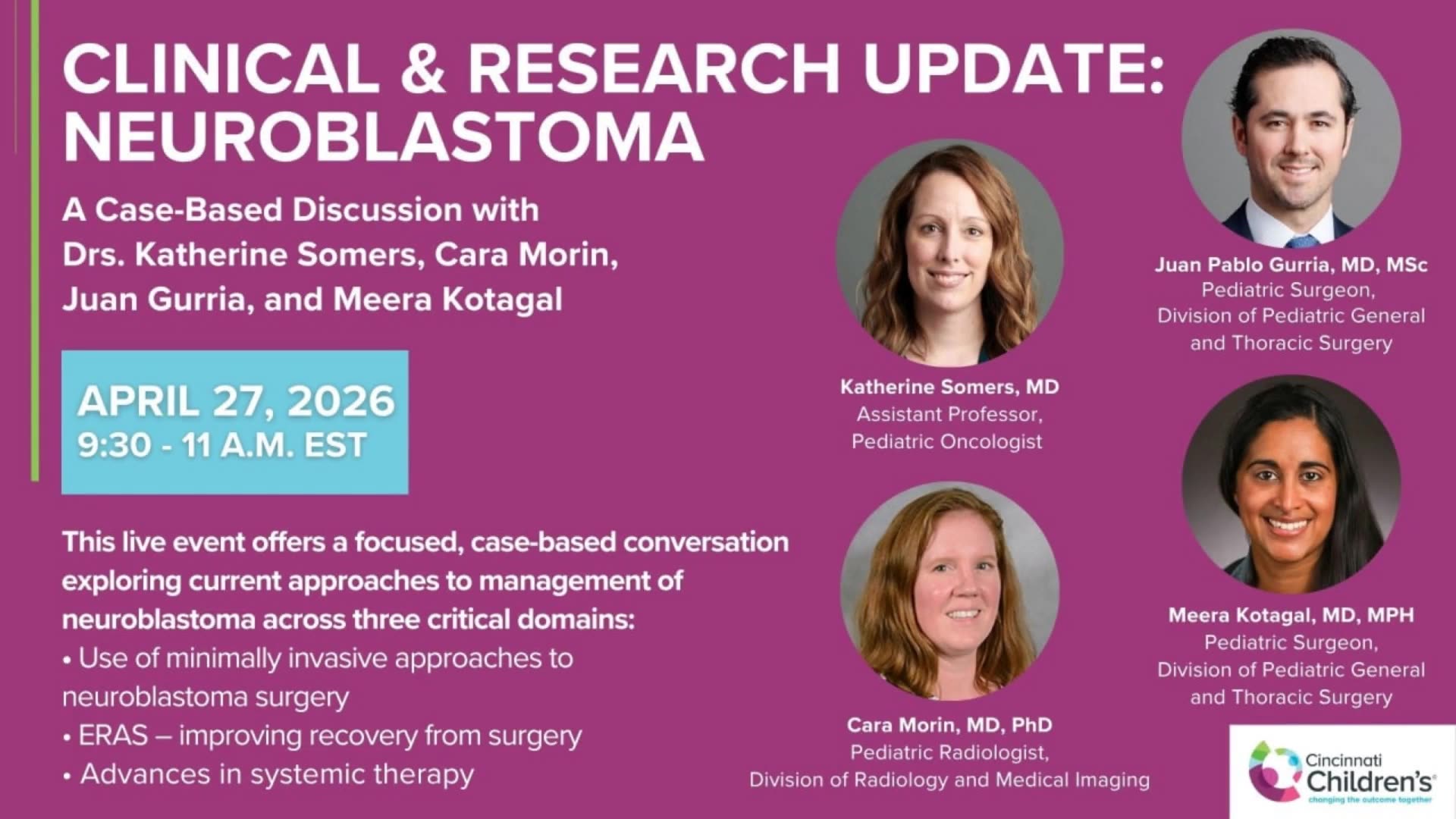
Clinical & Research Update: Neuroblastoma with Drs. Katherine Somers, Cara Morin, Juan Gurria, and Meera Kotagal
67 min · Published Sep 2026
Video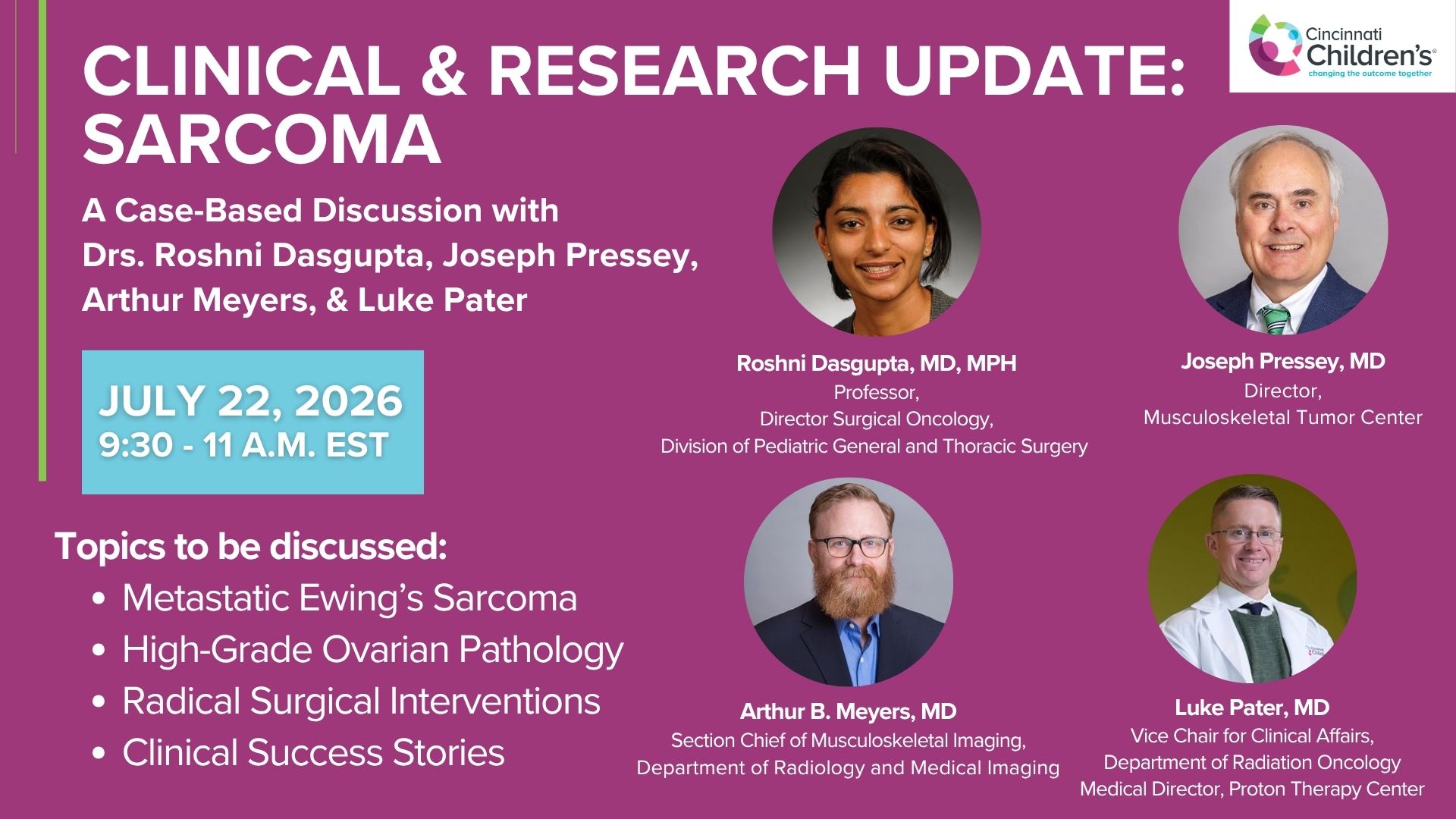
Clinical & Research Update: Sarcoma w/ Drs. Roshni Dasgupta, Joseph Pressey, Arthur Meyer, Luke Pater
66 min · Published Sep 2026
Video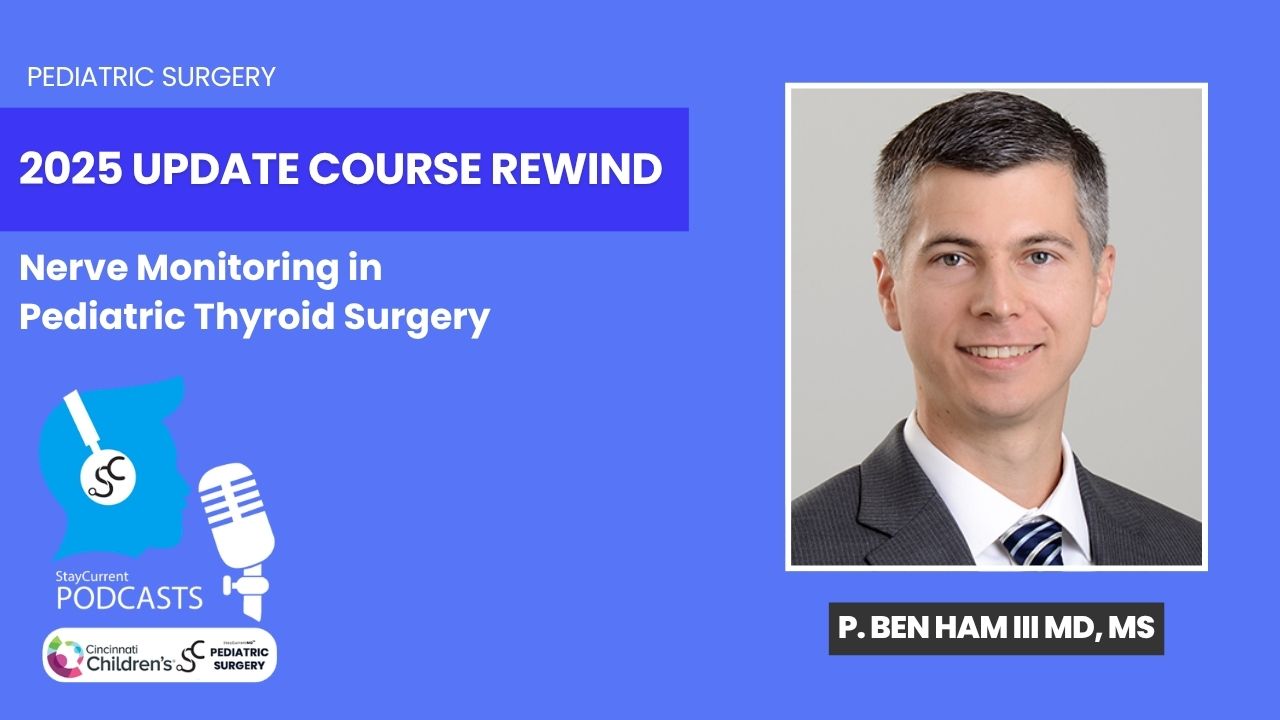
Update Course Rewind 2025: Nerve Monitoring in Pediatric Thyroid Surgery
6 min · Published Jul 2026
Video
Journal of Pediatric Surgery Article Review: June 2023, AAP Issue
Todd Ponsky · 13 min · Published Jul 2026
Video
Pediatric Surgical Oncology Research Collaborative (PSORC): Studying Rare Pediatric Tumors
56 s · Published May 2026
Video
2026 Laparoscopic Pediatric Hernia Repair
123 min · Published Jun 2026
Video
Beyond the Spectrum: Diagnosis, Myths & Management - Caitlin Couch & Leslie Lopez - APP Conference 2026
50 min · Published May 2026
Video
Dysautonomia: Navigating the Journey - Martha Willis - APP Conference 2026
55 min · Published May 2026
Video
Everything You Ever Wanted to Know About G-tubes But Were Afraid to Ask - Betsy Gerrein - APP Conference 2026
30 min · Published May 2026
Video
Take My Breath Away - Carolyn Grad, Mark Washam, & Katie Holtman - APP Conference 2026
58 min · Published May 2026
Video
Central Lines...WHAT? - Richelle Guinigundo - APP Conference 2026
26 min · Published May 2026
What the experts said
Pediatric melanoma has approximately 500 new cases diagnosed annually in children less than or equal to 18 years old.
Compared to adults, childhood melanoma is associated with delayed diagnosis and more frequently has nodal involvement.
Childhood melanoma has unique disease mechanisms compared to adult melanoma.
Management of pediatric melanoma is based on adult studies despite differences from adult disease.
Melanoma management is largely based on depth of the tumor and presence of metastatic disease.
Tumors less than 0.8 millimeters thick are largely managed with wide local excision.
Tumors greater than or equal to 0.8 millimeters or less than 0.8 millimeters with high risk features without metastatic involvement typically undergo wide local excision with sentinel lymph node biopsies.
If sentinel lymph node biopsy is positive, patients typically undergo ultrasound observation versus completion lymph node dissection, which has a high risk of morbidity.
Two adult trials (DCOG SLT and MSLT2) showed no significant difference in outcomes for low to intermediate risk patients with positive sentinel lymph node biopsies who were followed with ultrasound observation versus completion lymph node dissections.
There is no pediatric data to support ultrasound observation versus completion lymph node dissection for positive sentinel lymph node biopsies.
In this study of 252 pediatric melanoma patients, race was predominantly white, consistent with prior literature.
Breslow depth ranged from tumor in situ to 20 millimeters with a median of 2.55 millimeters.
Of 227 patients who underwent wide local excision with sentinel lymph node biopsies, 115 (approximately 51%) had positive sentinel lymph node biopsies.
Patients who underwent completion lymph node dissection were significantly older than those who underwent ultrasound observation.
Patients who underwent completion lymph node dissection were more likely to receive adjuvant therapy compared to ultrasound observation.
There was no significant difference in recurrence or death from disease between ultrasound observation and completion lymph node dissection groups.
Positive sentinel lymph node biopsies had significantly higher rate of disease recurrence at 18% compared to 3% for negative sentinel lymph node biopsy group.
Only 21% of patients who underwent completion lymph node dissection had additional positive nodal disease.
Rate of recurrence was not significantly different between completion lymph node dissection patients with or without additional nodal burden.
Recurrence was associated with positive sentinel lymph node disease, deeper Breslow depth, greater use of adjuvant therapy, and higher rate of death.
Pediatric melanoma presents as advanced disease with nearly 50% positive sentinel lymph node biopsy rate.
Management of nodal disease (ultrasound observation vs completion lymph node dissection) had no significant impact on disease outcomes with respect to recurrence or death from disease.
Findings of additional nodal disease in completion lymph node dissection did not significantly correlate with recurrence.
Recurrence most strongly associated with positive sentinel lymph node biopsies and deeper Breslow depth.