

From
StayCurrentMD
Journal of Pediatric Surgery Article Review: June 2023, AAP Issue
With Dr. Colin Martin & Dr. Brad Warner & Dr. Andrew Fleming · hosted by Dr. Cecilia Gigena & Dr. M. Tom Bash & Dr. Todd Ponsky
Part of
Pediatric Oncology 692 items
Educational content from recorded physician discussions — not medical advice. Talk to your (or your child's) care team about your situation.
Video
Transition of Care - Alcohol and Smoking
4 min · Published Nov 2023
Video
ERNICA Research Collaboration Webinar on Quality of Life
61 min · Published Nov 2023
Video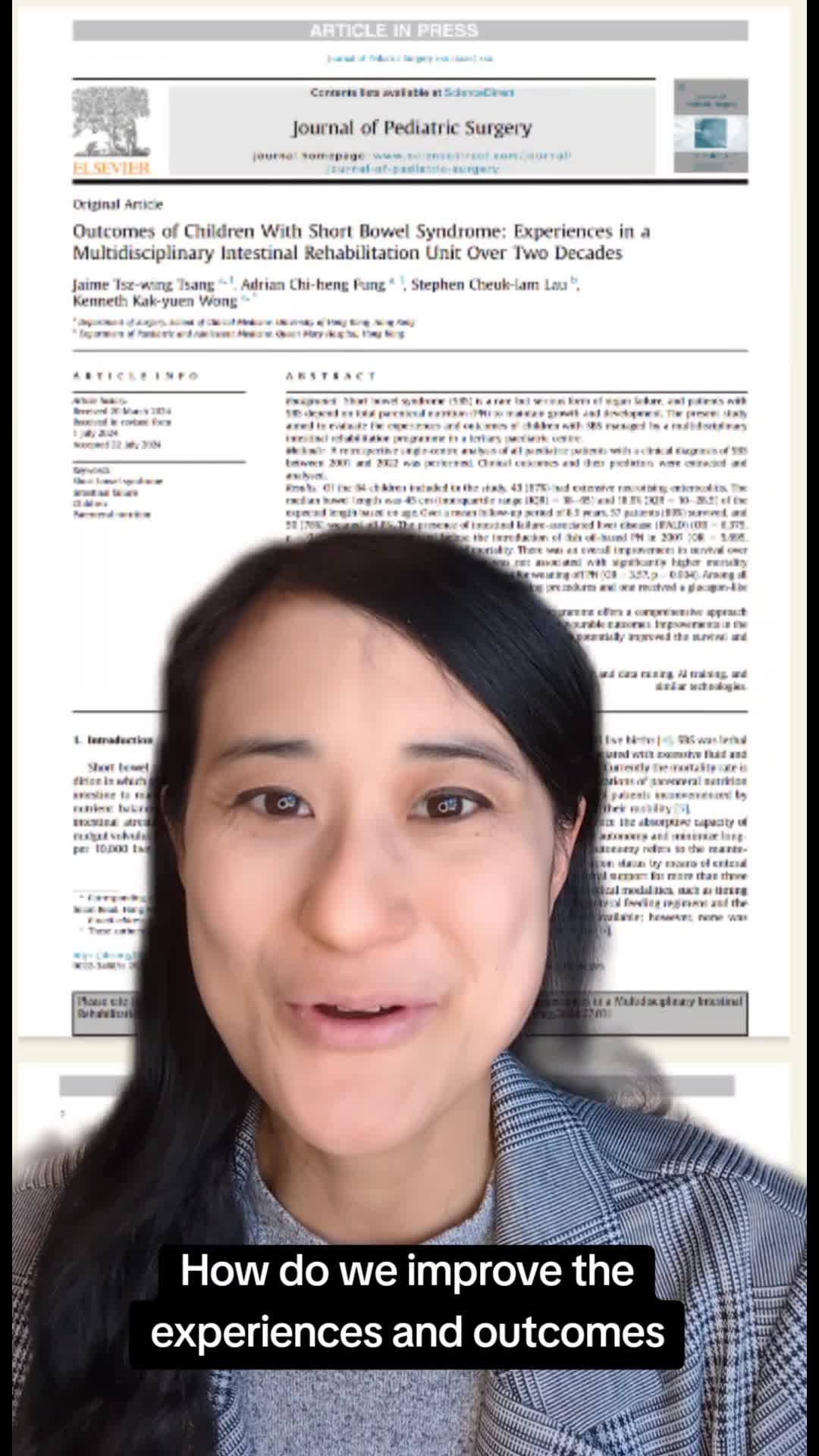
Outcomes of Children With Short Bowel Syndrome: Experiences in a Multidisciplinary Intestinal Rehabilitation Unit Over Two Decades
45 s · Published Mar 2025
Video
Impact of social determinants of health on outcomes in pediatric short bowel syndrome...
43 s · Published Aug 2026
Video
Disruption of enterohepatic Circulation of Bile acids ameliorates small bowel resection associated hepatic injury
59 s · Published Aug 2023
Podcast
Intestinal Rehabilitation Episode 8: Refeeding of an Older Patient
12 min · Published Oct 2023
Video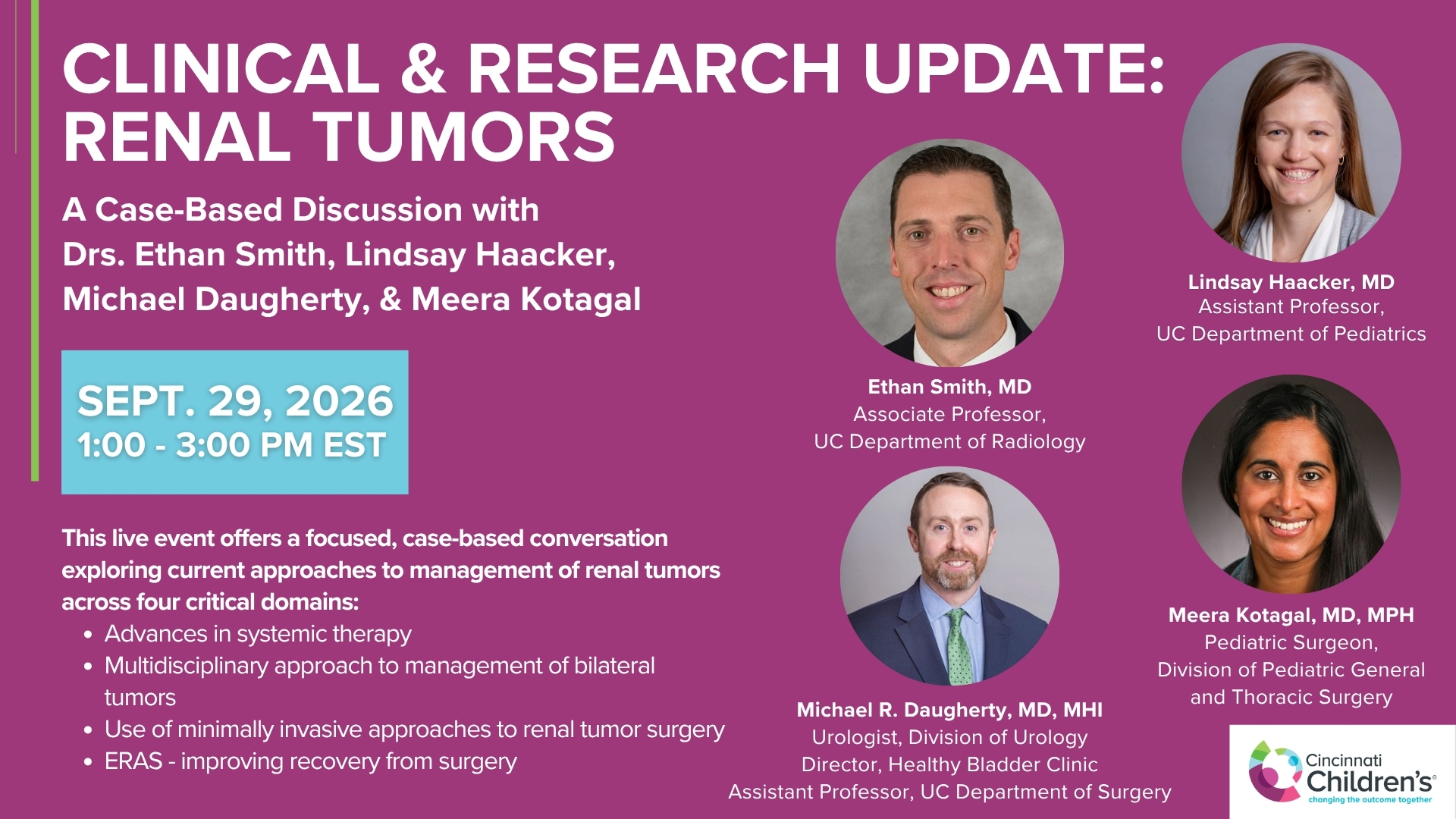
Clinical & Research Update: Renal Tumors with Drs. Ethan Smith, Lindsay Haacker, Michael Daugherty, and Meera Kotagal
71 min · Published Sep 2026
Video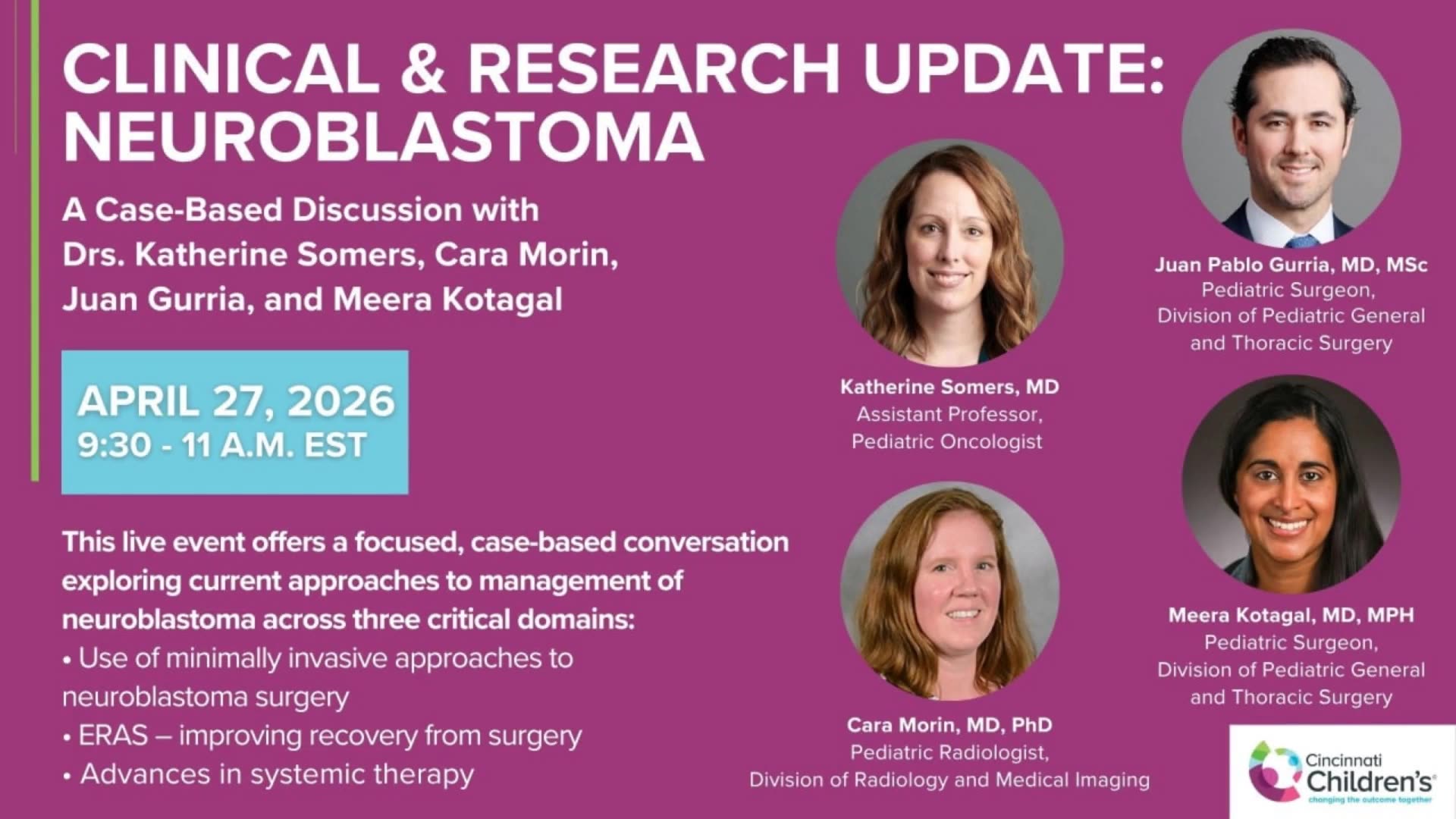
Clinical & Research Update: Neuroblastoma with Drs. Katherine Somers, Cara Morin, Juan Gurria, and Meera Kotagal
67 min · Published Sep 2026
Video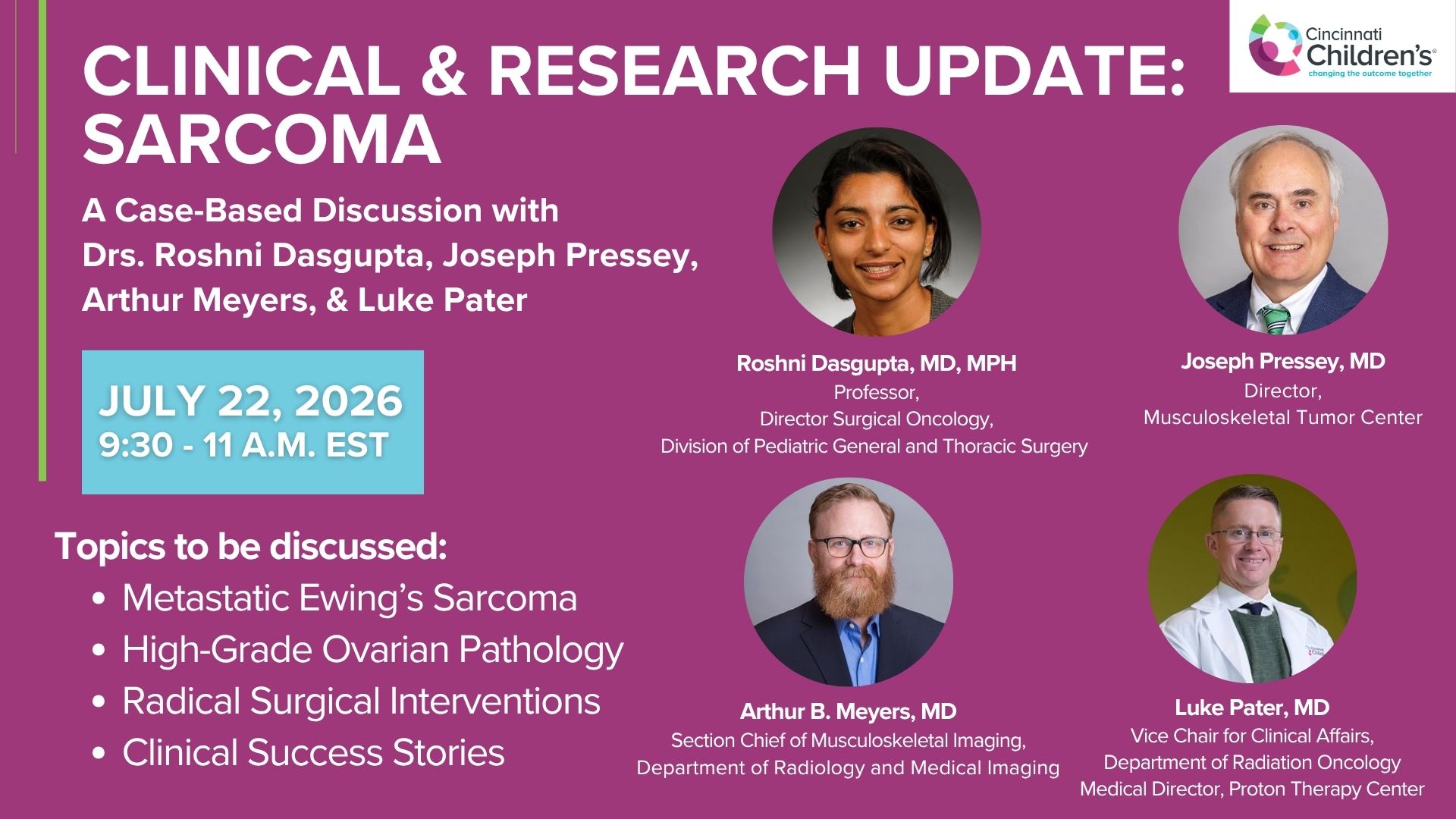
Clinical & Research Update: Sarcoma w/ Drs. Roshni Dasgupta, Joseph Pressey, Arthur Meyer, Luke Pater
66 min · Published Sep 2026
Video
Update Course Rewind 2025: Nerve Monitoring in Pediatric Thyroid Surgery
6 min · Published Jul 2026
Video
Pediatric Surgical Oncology Research Collaborative (PSORC): Studying Rare Pediatric Tumors
56 s · Published May 2026
Video
Pooling Patients to Study Rare Pediatric Tumors: An Introduction to PSORC
56 s · Published May 2026
Video
Intestinal Atresia Types Explained: Grossfeld Classification for Pediatric Surgery
1 min · Published Sep 2026
Video
Derivation and validation of the Pediatric Community-Acquired Pneumonia Severity (PedCAPS) score: A prospective cohort study
50 s · Published Sep 2026
Video
FETO for Late-Diagnosed Severe Congenital Diaphragmatic Hernia (CDH) at Cincinnati Children's with Dr. Beth Rymeski
4 min · Published Sep 2026
Video
Severe Congenital Diaphragmatic Hernia (CDH) Case: FETO Management & Unexpected Findings with Dr. Beth Rymeski
3 min · Published Sep 2026
Video
Fetoscopic Endoluminal Tracheal Occlusion (FETO) Procedure: Step-by-Step Guide with Dr. Beth Rymeski
4 min · Published Sep 2026
Video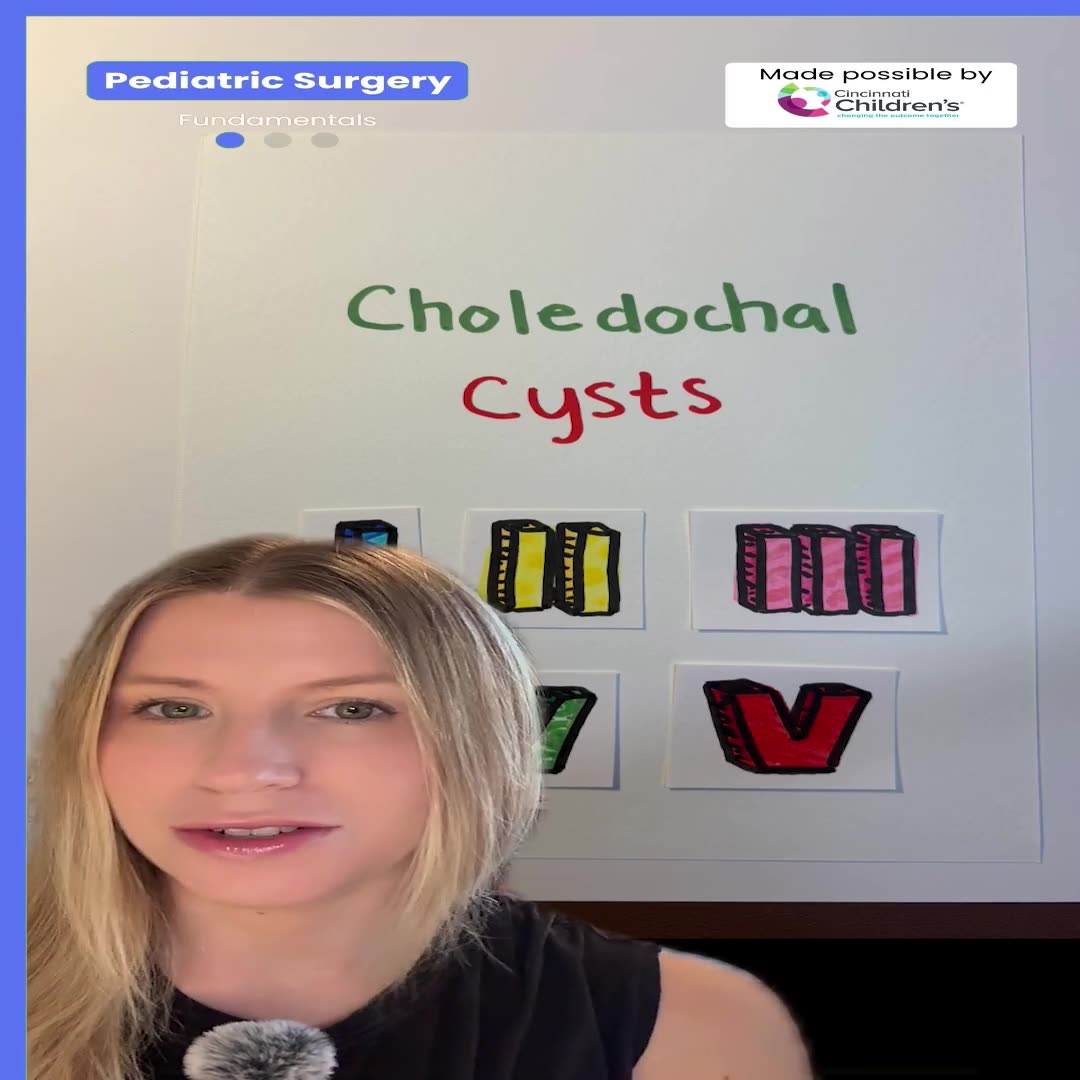
Choledochal Cyst Types Explained: Pediatric Surgery Fundamentals
1 min · Published Sep 2026
What the experts said
The ileocecal region may not be important to preserve in short bowel syndrome and may actually be injurious to the liver.
Administration of a specific bile acid that is more lipophilic and hepatoprotective could be potential therapy for patients with cholestatic liver disease after massive intestinal resection.
In clinical practice, surgeons cannot choose which segment of intestine to remove—they must remove what is dead and would never intentionally remove viable tissue.
Once no-evidence-of-disease status was achieved, the 10-year overall survival among high-risk hepatoblastoma patients was similar to patients who were not high-risk.
There is no threshold for disease burden that precludes aggressive pursuit of no-evidence-of-disease status in children with hepatoblastoma.
The way to achieve esophageal atresia surveillance is to have a formal aerodigestive team.
Proximal small bowel resection results in greater oxidative stress in the liver compared to distal resection, as evidenced by elevated messenger RNA transcripts for tumor necrosis factor alpha, NADPH oxidase, and glutathione synthase.
46 of 50 hepatoblastoma patients underwent resection using adjuvant techniques including total hepatic vascular exclusion, vascular reconstruction, biliary reconstruction, or en-bloc resection and total hepatectomy with transplantation.
82% of hepatoblastoma patients (41 out of 50) achieved no-evidence-of-disease status through aggressive surgical management.
14 high-risk hepatoblastoma patients underwent a median of 2.5 pulmonary metastasectomies (7 for unilateral disease, 7 for bilateral disease) with a median of 4.5 nodules resected.
5 high-risk hepatoblastoma patients relapsed and 3 of them were saved.
The esophageal atresia surveillance survey had a 77% response rate from 181 physicians at 19 institutions.
Only 36% of institutions perform routine upper GI endoscopy in esophageal atresia patients regardless of symptoms, despite evidence showing these patients should be surveilled.
Without proper surveillance, esophageal atresia patients are at risk for esophageal cancer and chronic dysmotility as they survive into adulthood.