

From
StayCurrentMD
Options for Male Fertility Preservation: Pediatric Oncofertility 2017
With Dr. Shrine
Part of
Pediatric Oncology 692 items
Educational content from recorded physician discussions — not medical advice. Talk to your (or your child's) care team about your situation.
Video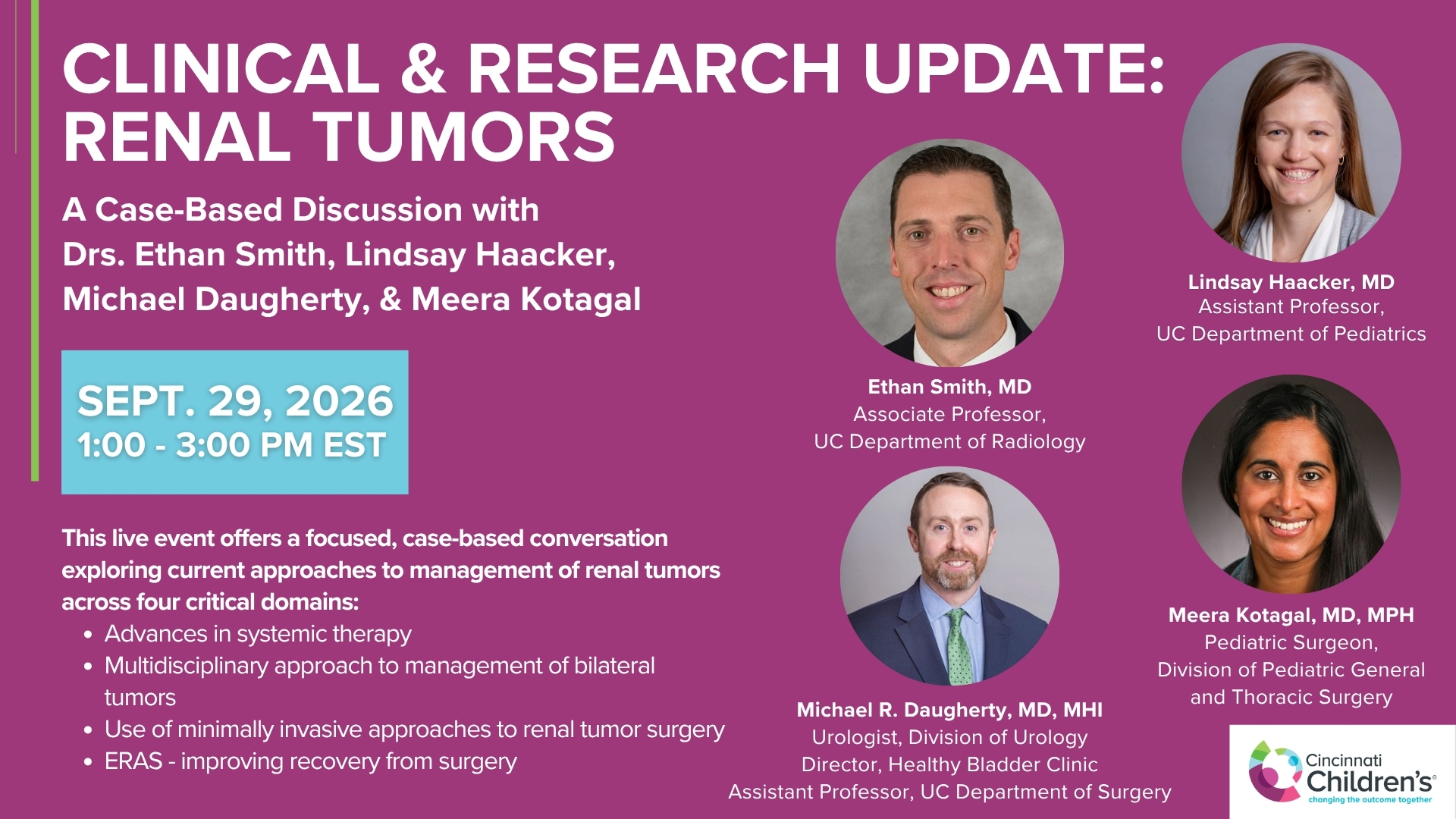
Clinical & Research Update: Renal Tumors with Drs. Ethan Smith, Lindsay Haacker, Michael Daugherty, and Meera Kotagal
71 min · Published Sep 2026
Video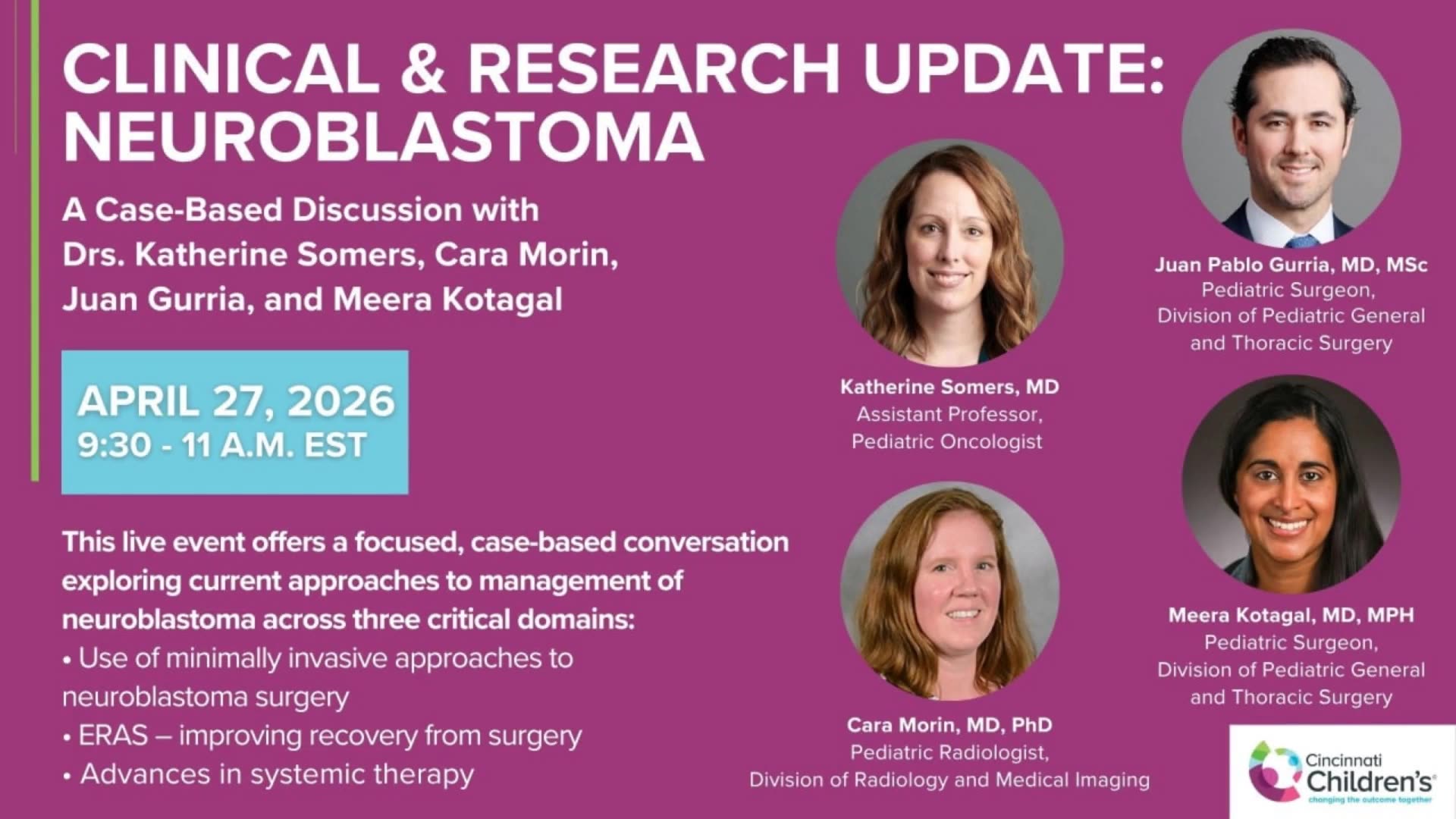
Clinical & Research Update: Neuroblastoma with Drs. Katherine Somers, Cara Morin, Juan Gurria, and Meera Kotagal
67 min · Published Sep 2026
Video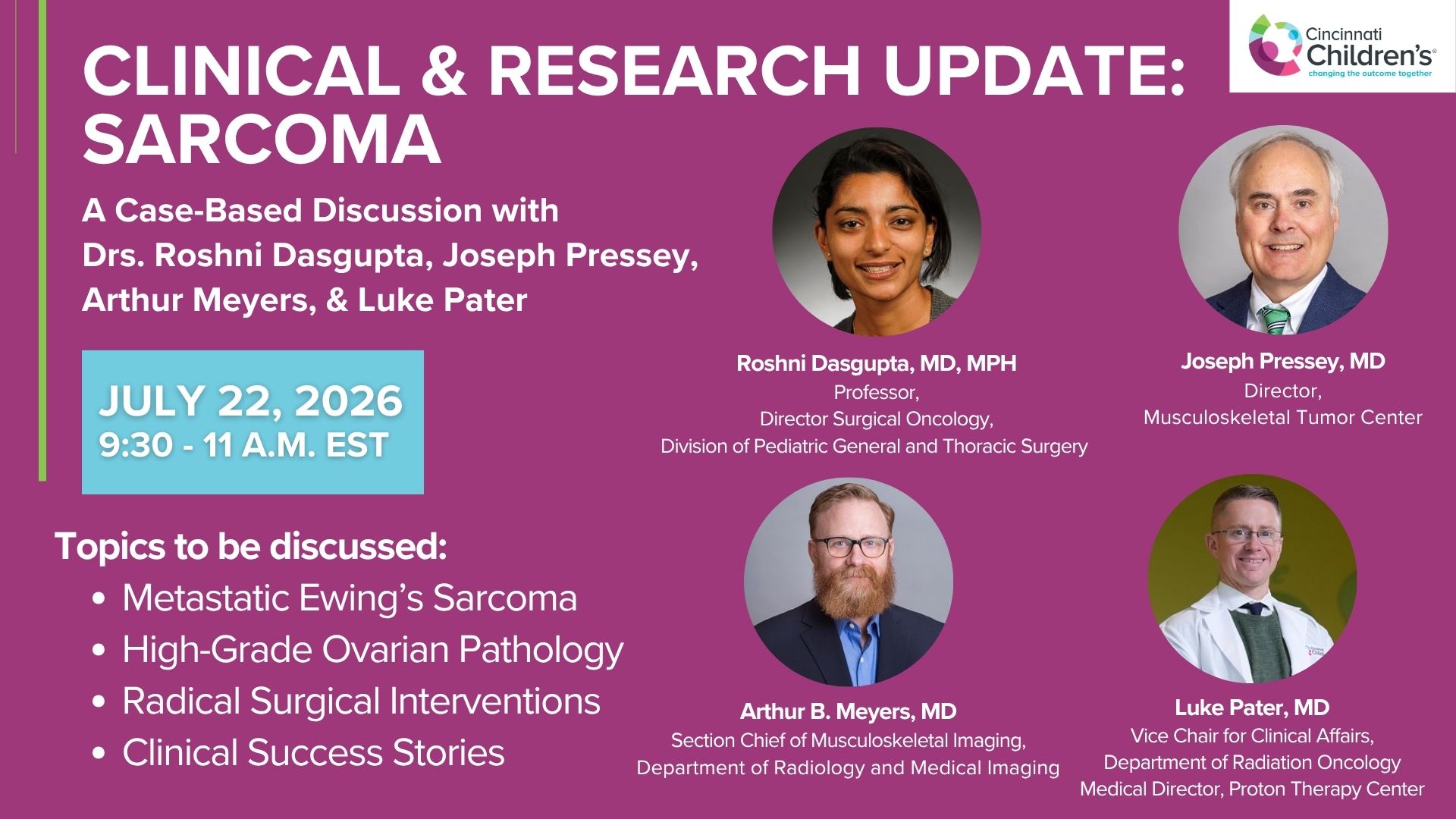
Clinical & Research Update: Sarcoma w/ Drs. Roshni Dasgupta, Joseph Pressey, Arthur Meyer, Luke Pater
66 min · Published Sep 2026
Video
Update Course Rewind 2025: Nerve Monitoring in Pediatric Thyroid Surgery
6 min · Published Jul 2026
Video
Journal of Pediatric Surgery Article Review: June 2023, AAP Issue
Todd Ponsky · 13 min · Published Jul 2026
Video
Pediatric Surgical Oncology Research Collaborative (PSORC): Studying Rare Pediatric Tumors
56 s · Published May 2026
Only a few other public items share this expert — go deeper there →
Video
Intestinal Atresia Types Explained: Grossfeld Classification for Pediatric Surgery
1 min · Published Sep 2026
Video
Derivation and validation of the Pediatric Community-Acquired Pneumonia Severity (PedCAPS) score: A prospective cohort study
50 s · Published Sep 2026
Video
FETO for Late-Diagnosed Severe Congenital Diaphragmatic Hernia (CDH) at Cincinnati Children's with Dr. Beth Rymeski
4 min · Published Sep 2026
Video
Severe Congenital Diaphragmatic Hernia (CDH) Case: FETO Management & Unexpected Findings with Dr. Beth Rymeski
3 min · Published Sep 2026
Video
Fetoscopic Endoluminal Tracheal Occlusion (FETO) Procedure: Step-by-Step Guide with Dr. Beth Rymeski
4 min · Published Sep 2026
Video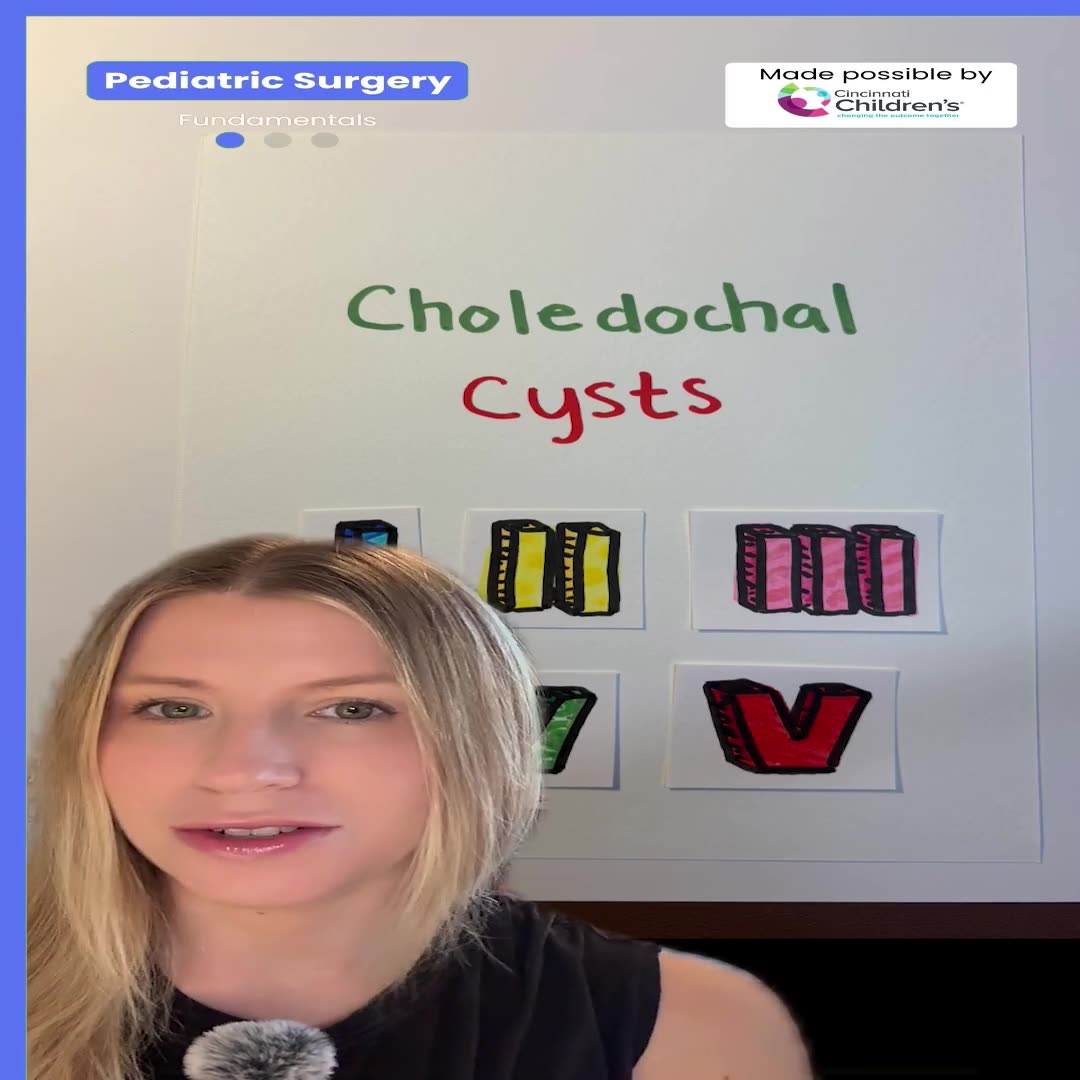
Choledochal Cyst Types Explained: Pediatric Surgery Fundamentals
1 min · Published Sep 2026
What the experts said
The testes has a greater chemo and radio sensitivity than the ovaries.
Chemotherapeutic agents used for pediatric cancer treatment readily cross the blood testes barrier and primarily affect cells undergoing spermatogenesis due to their high mitotic rate.
Leydig cells that produce testosterone are less sensitive to chemotherapy but can have sensitivity to radiation at very high doses.
Males have no protective effect of receiving treatment at a younger age, which differs from females.
Retroperitoneal lymph node dissections for testicular cancer can damage sympathetic nerves that control antegrade ejaculation, leading to fertility issues.
Electroejaculation with insertion of a probe into the rectum can harvest a specimen and needs to be performed under general anesthesia.
Sperm cryopreservation should be offered prior to treatment, as the quality of semen analysis and DNA integrity can be compromised after even a single course of treatment.
Stage of puberty development (typically Tanner stage 3 or above) is a better indicator than age for determining when to offer sperm cryopreservation.
Testicular sperm extraction (TESE) involves retrieval of sperm from focal areas of spermatogenesis in the seminiferous tubules for later use with ICSI.
Microscopic assistance in TESE allows better identification of tubules that potentially contain sperm and has improved retrieval rates in adult literature.
Fertility preservation before puberty in males is challenging due to the absence of mature sperm that can be cryopreserved.
Preserving fertility in prepubertal males is contingent on future development of experimental therapies for maturation of spermatogonial stem cells to sperm.
Spermatogonial stem cell therapies developed in animal models include direct transplantation into the testicle, transplantation of testicular tissue as autologous or xenograft, and in vitro sperm maturation, but none have been performed successfully in humans.
Testicular tissue cryopreservation involves harvesting immature testicular tissue prior to treatment initiation and cryopreservation with slow freezing techniques.
At Cincinnati Children's, testicular tissue cryopreservation eligibility includes pediatric males 6 months to 17 years with >80% risk of long-term azoospermia, and adults 18-25 years with 21-79% risk.
The excisional biopsy is coordinated with other surgical procedures to minimize anesthetic risk and expedite treatment initiation, performed through a transscrotal approach.
75% of harvested testicular tissue is stored at Reprotech for patient use and 25% is designated for research at McGee Women's Research Institute.
No successful retrieval of mature sperm or pregnancies from cryopreserved testicular tissue have been reported to date in humans.
Risk categories for testicular tissue cryopreservation are based on chemotherapy regimen, radiation therapy, and cumulative dosing using cyclophosphamide equivalent dosing published by Dan Green in 2014.
The American Society of Clinical Oncology recommends that sperm cryopreservation should be offered to all peri and postpubertal adolescents who are able to provide a semen specimen.
In a Philadelphia cohort, azoospermia was present in only 16.9% of untreated patients versus 84% of patients who were treated and then subsequently tried to perform sperm cryopreservation.
Several centers have demonstrated successful sperm banking in greater than 80% of patients, with a median of 1.5 attempts and 7 samples per patient.
Studies have shown that adequate semen specimens can be obtained in adolescents as young as 11 years of age.
In the Philadelphia study, semen volume, total motile count, and rate of azoospermia improved with increasing age on both univariate and multivariate analysis.
In the youngest age group (11-14 years), 65% of patients were able to successfully sperm bank.
The mean and median semen volume, concentration, and motility in the adolescent cohort were greater than WHO criteria derived from fertile adult males.
Successful sperm retrieval with TESE has been reported in 47% of patients prior to chemotherapy and 37-65% after chemotherapy.
In a study subset of adolescents and young adults aged 11-19 years, 33% sperm retrieval rate was reported prior to treatment.
Sperm was successfully extracted from an adolescent as young as 11 years of age, but not from any child below Tanner stage 3 development.
Studies have demonstrated high satisfaction and acceptance of risk for testicular tissue cryopreservation among patients and families.